


19th Century Oak Lamps
These 19th century oak lamps combine dense, figured timber with functional illumination, offering a warm and grounded presence for any room.
19th Century Oak Lamps
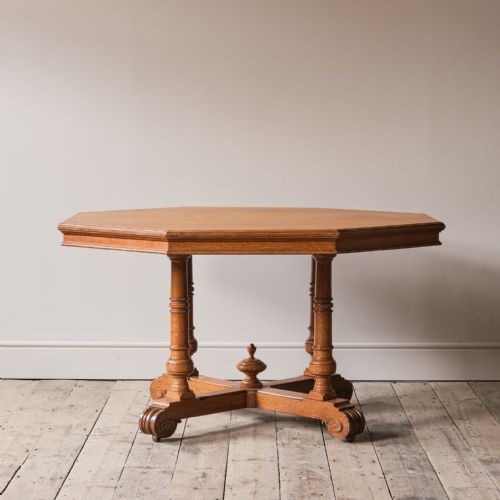
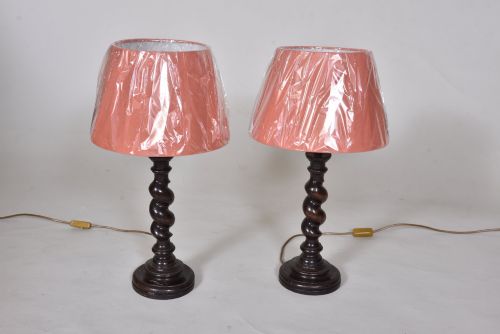
When you search for 19th century oak lamps, you encounter turned bases, carved columns, and converted tables that bring heavy timber into domestic lighting. The items appearing under this heading range from converted architectural pedestals and occasional tables to dedicated turned lamp bases and carved French pairs.
The dominant material is oak in various finishes, including dark oak, pollard oak, and burr oak, often paired with brass fittings and fabric shades. Forms span simple country items to heavily carved Gothic Revival and French pieces produced across the Victorian era.
Buyers select these fixtures for their substantial weight, visible grain, and deep colour that lighter modern timbers lack. They anchor a corner or surface with a distinct historical gravity derived from nineteenth-century workshops.
How they were made
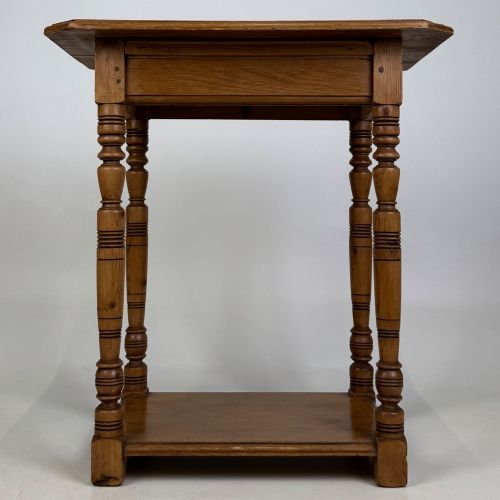
Cabinetmakers and turners utilised solid timbers, selecting figured sections like burr and pollard oak for decorative impact on visible surfaces. Pine frequently served as a secondary timber for internal framing or hidden structural components on cricket tables and side supports.
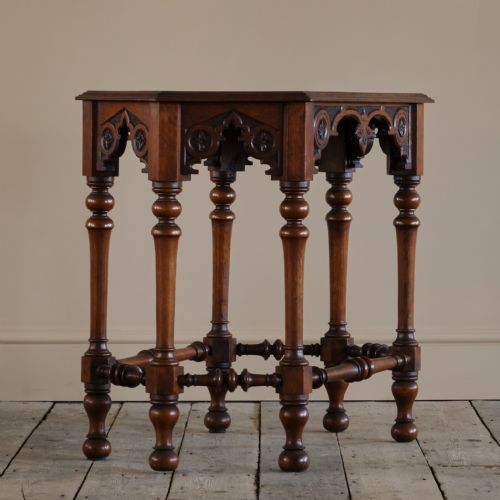
Hand carving defined the ornamental elements, showing foliate details, linenfold panels, and geometric tracery associated with Gothic Reform and Jacobean Revival movements. Brass hardware, copper trays, and occasional marble or onyx inserts were integrated to provide textural contrast against the dark timber.
Materials appearing alongside oak across these listings include brass, pine, fabric, and occasional marble inserts.
What varies in quality
The grade of the timber dictates much of the appeal, with tight medullary rays in quarter-sawn oak and heavily swirled burr patterns commanding attention over plain, flat-sawn boards. Crispness in hand carving separates routine production items from pieces executed with sculptural depth and undercut details.
Proportion and structural integrity anchor the higher tier of these items, ensuring that bases stand true without excessive wobble or poorly executed modern electrical adaptations. Original surfaces, whether polished dark oak or retained historic paint, hold significantly more character than stripped and heavily refinished timber.
Gillows·Holland and Sons
The 19th Century Oak Lamps Glossary
- Burr oak
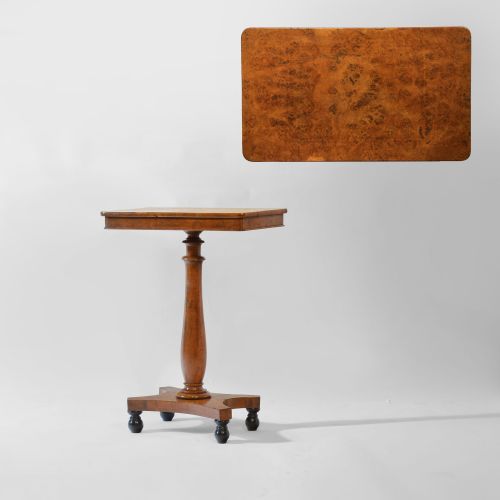
- A growth deformity in the tree that creates highly figured, swirling grain patterns. Cabinetmakers sliced these burls into veneers or utilised them for small tabletops and feature sections.
- Gothic Revival
- A nineteenth-century design movement drawing inspiration from medieval architecture. Pieces display pointed arches, trefoils, and heavy structural mouldings.
- Cricket table
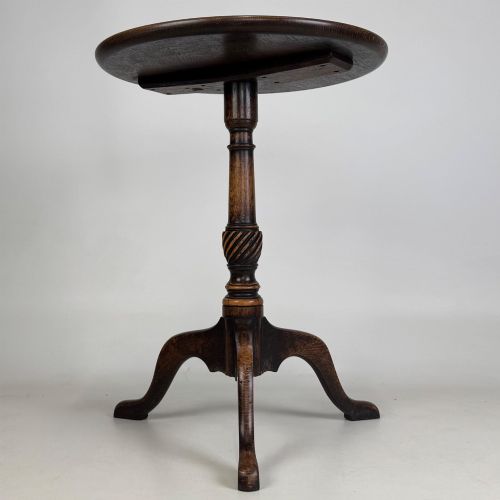
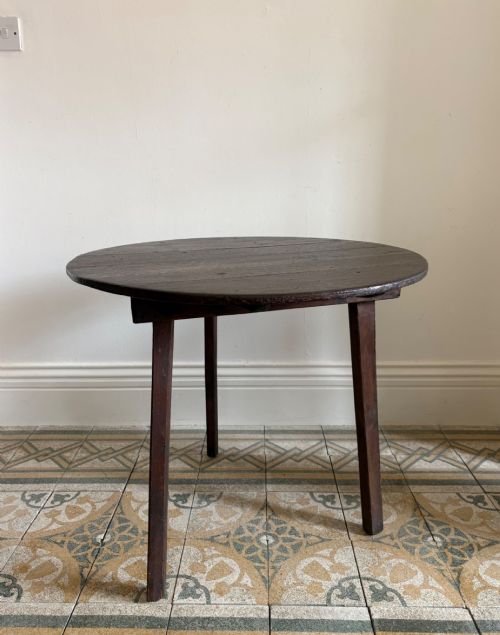
- A small, three-legged occasional table with a plank top historically used on uneven cottage floors. The three splayed legs ensure stability on flagstones or rushes.
- Pollard oak
- Timber taken from trees that were pruned close to the trunk to encourage dense, branching growth. This process produces a mottled, highly textured grain pattern.
- Medullary rays
- The ribbon-like cellular structures radiating outward from the centre of an oak log. Quarter-sawn timber displays these as distinct flecks across the grain.
19th Century Oak Lamps: Frequently Asked Questions
How do I wire an old lamp base safely?
Historic lamp bases often require new internal cord pathways and modern brass lamp holders to meet current safety standards. A qualified electrician can thread modern wire through the existing central channels without damaging the historic timber.
Felt pads should be applied to the underside to protect both the furniture surface and the base itself from abrasion.
How do I clean nineteenth-century oak furniture?
Dusting with a dry, soft lint-free cloth prevents the buildup of grit in the carved recesses and grain pores. Microfibre cloths lift particles effectively without requiring chemical sprays.
Microcrystalline wax applied sparingly once or twice a year nourishes the dry timber and maintains a soft protective sheen. Avoid silicone-based polishes that seal the wood and attract airborne dust.
What distinguishes Gothic Revival oak pieces?
Gothic Revival items feature architectural motifs borrowed from medieval churches, including pointed arches, quatrefoils, and heavy chamfered edges. The aesthetic values dark, substantial timber and visible construction methods over delicate neoclassical lines.
These pieces were produced in significant numbers during the Victorian era as part of a broader return to historic British design traditions.
How can I tell pollard oak from standard oak?
Pollard oak exhibits a dense, mottled cluster of small knots and swirling grain formations resulting from controlled tree pruning. Standard oak displays straight, parallel growth rings or prominent medullary ray flecks when quarter-sawn.
The irregular figuring in pollard oak makes it particularly striking on small occasional surfaces and lamp bases.