


Pink Shade Table Light
A pink shade table light brings a soft, warm glow to a room, uniting period brass and porcelain bases with striking coloured glass.
Pink Shade Table Light
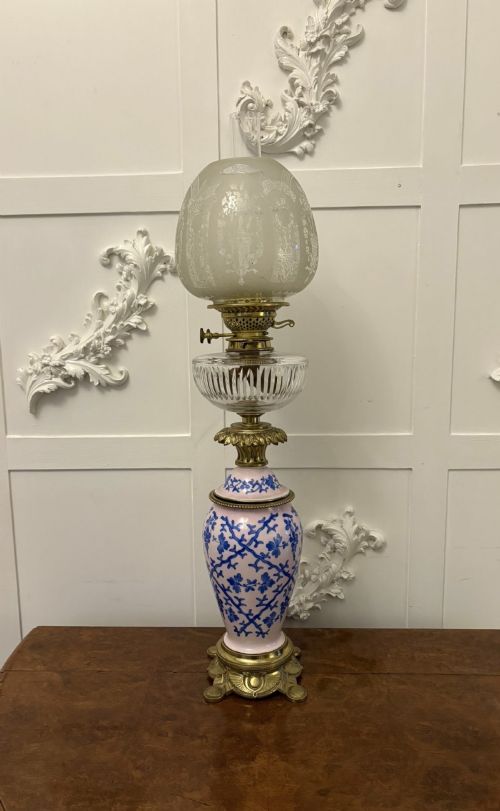
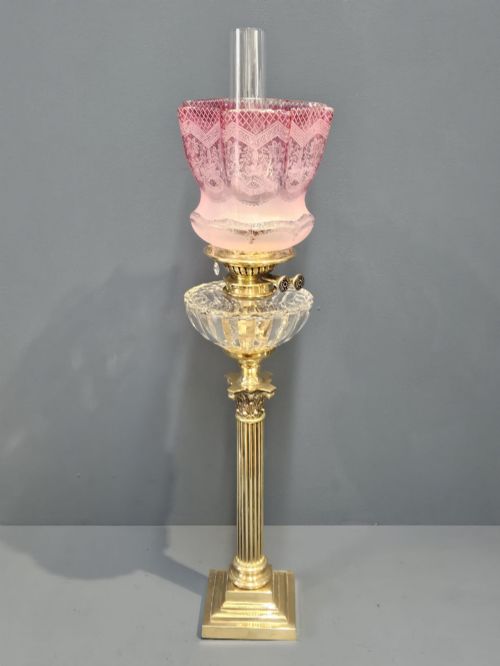
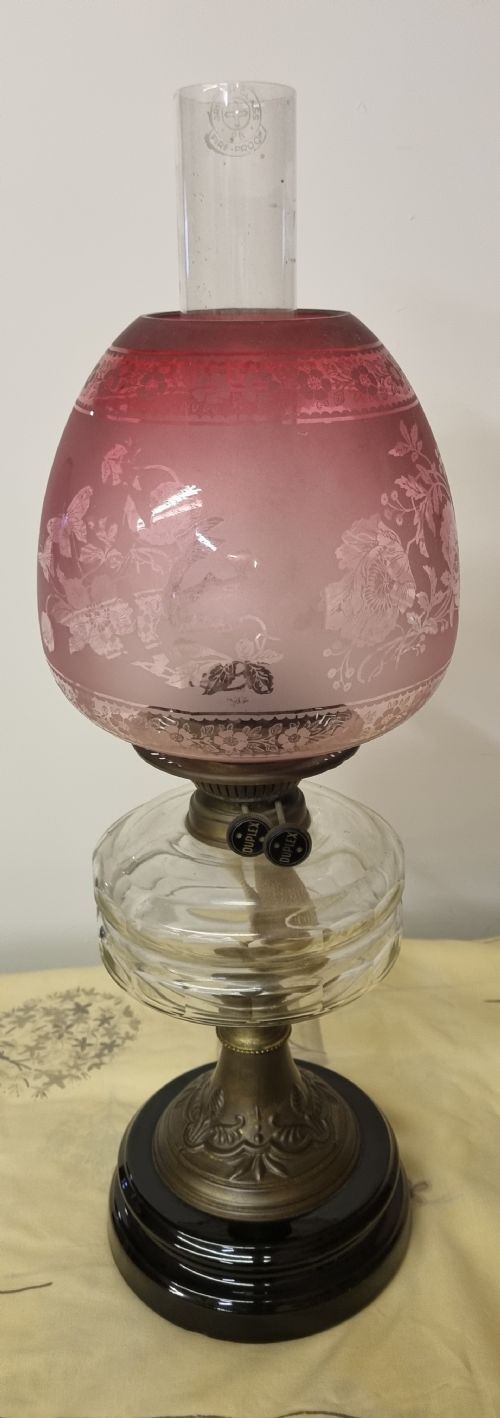
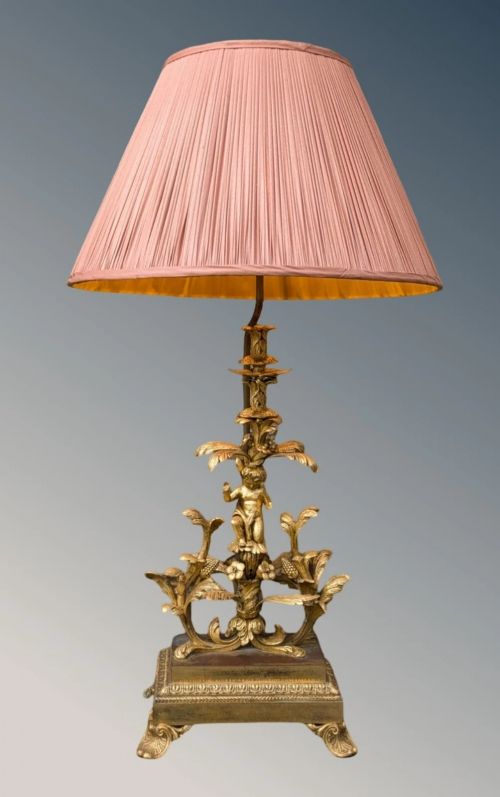
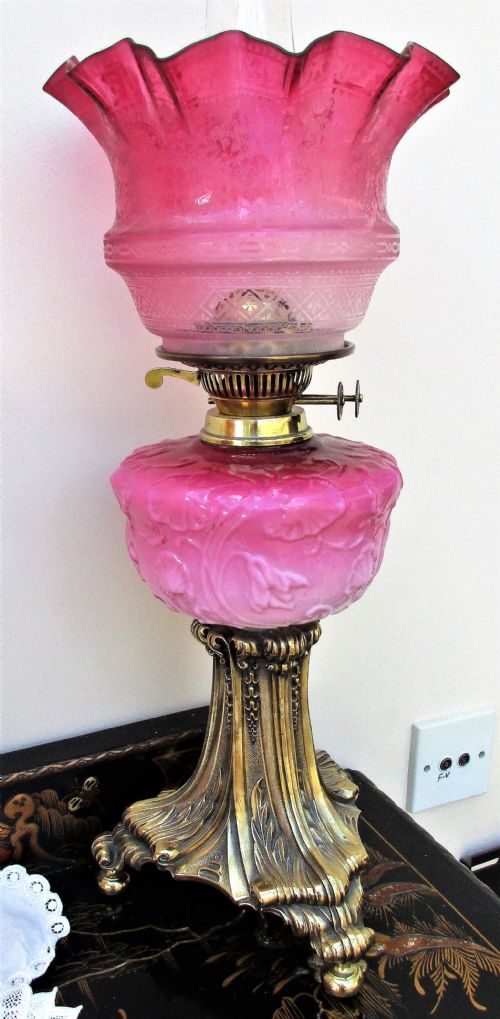
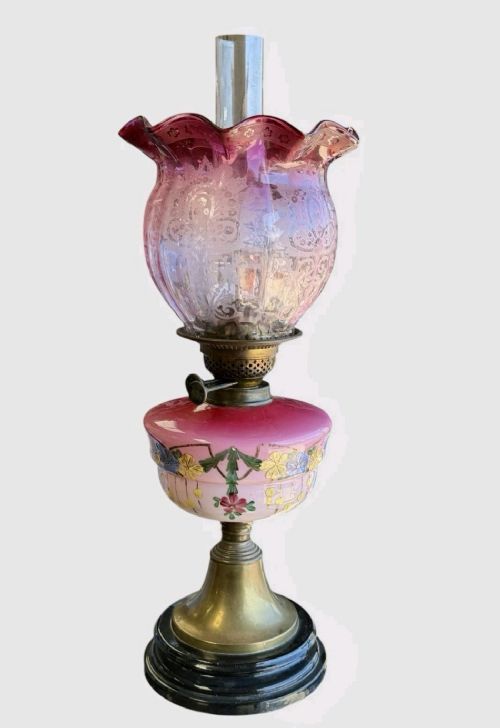
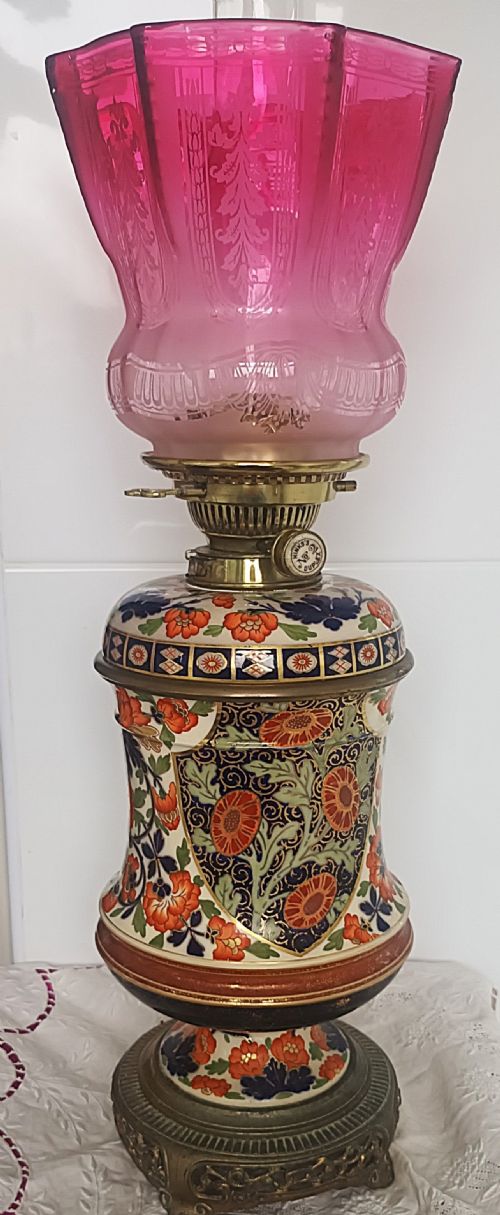
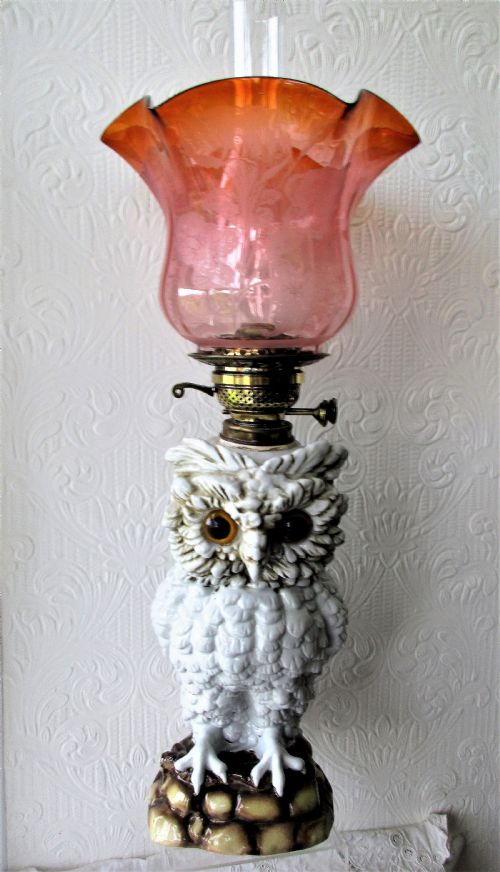
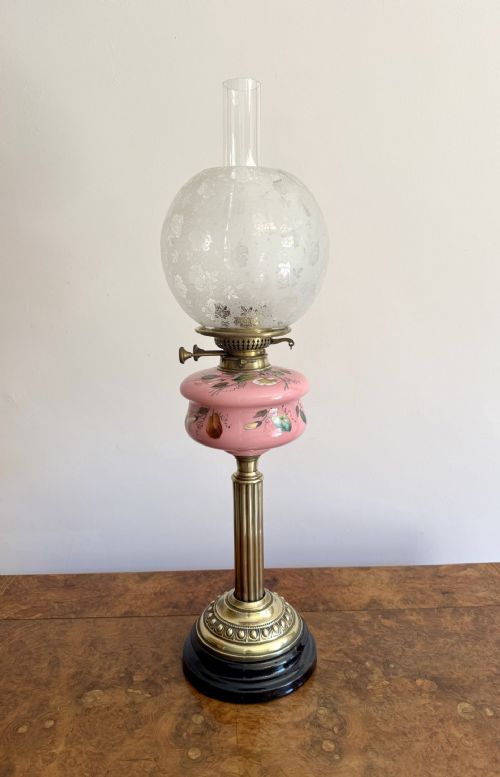
A pink shade table light primarily takes the form of a Victorian or Edwardian oil lamp converted for modern electricity, often featuring a hand-painted ceramic or rich cranberry glass reservoir. These decorative objects span the nineteenth and early twentieth centuries, encompassing styles from ornate French Rococo Revival and Art Nouveau to structured Corinthian columns.
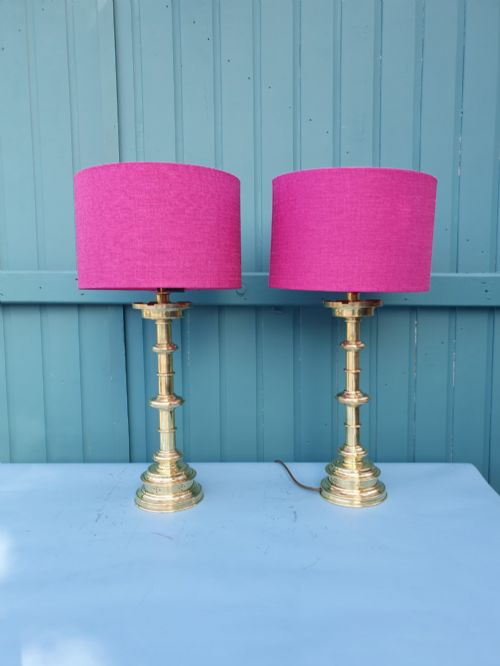
The most common versions encountered here pair heavy brass, bronze or ceramic columns with distinctive pink or cranberry glass shades and fonts. Collectors will also find occasional desk lamps and Chinese Export ginger jar bases sharing the same characteristic warm hues.
How they were made
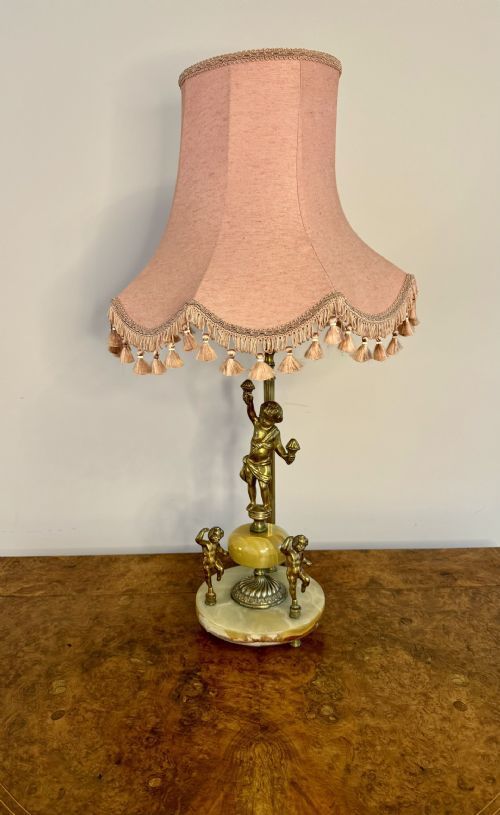
Craftsmen built these pieces using durable metals like brass, bronze and ormolu for structural columns and bases, frequently incorporating carved onyx, marble and alabaster. Shade and font construction relied heavily on blown glass, including frosted and cranberry variants, alongside hand-painted porcelain and ceramic.
Makers utilised techniques such as cold painting on bronze, detailed hand-painting on porcelain fonts, and precise metal casting for reeded columns and swan neck frames. Fabric and silk elements also appear alongside glass to diffuse the light from the burner or bulb.
Listings feature items spanning the nineteenth century through to the Art Deco period of 1930, utilising brass, glass, porcelain, silk and marble.
What varies in quality
Quality rests on the crispness of the casting in the brass or bronze metalwork and the artistic merit of the hand-painted details on the porcelain fonts and glass shades. Pieces featuring matched sets of components or substantial materials like marble and onyx command greater visual weight.
Finer examples display intricate relief work on column capitals and superior depth of colour within the cranberry and pink glass rather than flat, uniform tints.
Hinks·Taylor Tunnicliff·Sitzendorf
The Pink Shade Table Light Glossary
- Font
- The oil reservoir of a lamp, often made of coloured glass, ceramic or porcelain and positioned above the main column.
- Cranberry Glass
- A rich pinkish-red glass produced by adding gold chloride to the molten mixture during the nineteenth century.
- Corinthian Column
- A classical architectural column style featuring ornate carved acanthus leaves at the top, frequently utilised in Victorian metal lamp bases.
- Ormolu
- Gilded bronze or brass applied to decorative mounts and lamp bases, providing a bright metallic finish.
- Famille Rose
- A Chinese ceramic palette dominated by opaque pink enamel colours, seen on porcelain vases and ginger jars later adapted into lamp bases.
Pink Shade Table Light: Frequently Asked Questions
Are these lamps safe for daily use?
Most antique oil lamps seen here have been professionally converted to electricity, making them suitable for modern domestic lighting. Buyers should check that wiring meets current safety standards upon acquisition.
Original burners and fittings are frequently retained for aesthetic authenticity while housing internal electrical cords.
How do I date a brass table lamp?
Dating relies on stylistic clues such as the presence of reeded Corinthian columns typical of the Victorian era or sleeker, simpler lines associated with the Edwardian period. Manufacturing techniques, screw thread types and base weight also provide reliable chronological markers.
Markings or stamps on the metal collar often point directly to specific nineteenth-century makers.
What is the difference between cranberry glass and pink glass?
Cranberry glass achieves its distinct reddish-pink hue from gold content fused into the glass during the melting process, creating depth and variation in tone. Standard pink glass relies on different mineral oxides and often appears more uniform.
Both materials were widely utilised for Victorian and Edwardian lamp shades and fonts.
How should I clean a antique glass shade?
Wash glass shades gently in lukewarm water using a mild, unscented soap to preserve any delicate hand-painted motifs or frosted finishes. Avoid submerging painted metal or antique fabric components.
Dry thoroughly with a soft cloth before reattaching the shade to the lamp collar.