


Victorian Barley Twist Lamps
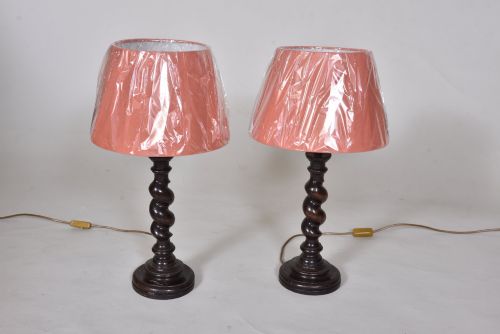
Victorian barley twist lamps are substantial turned wooden lighting standards and converted tables, offering tactile period character for traditional interiors.
Victorian Barley Twist Lamps
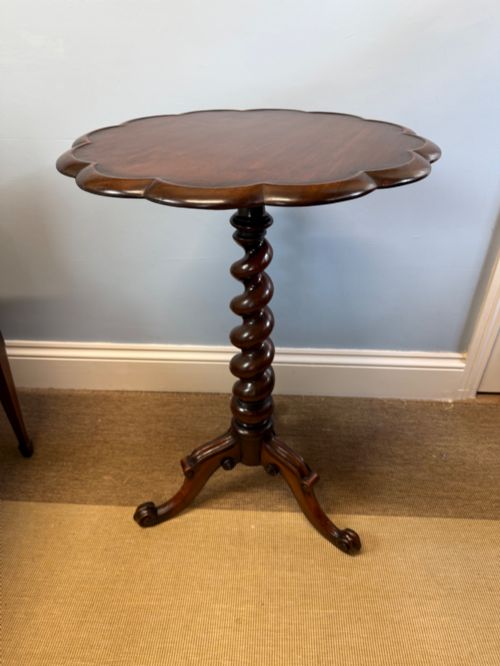
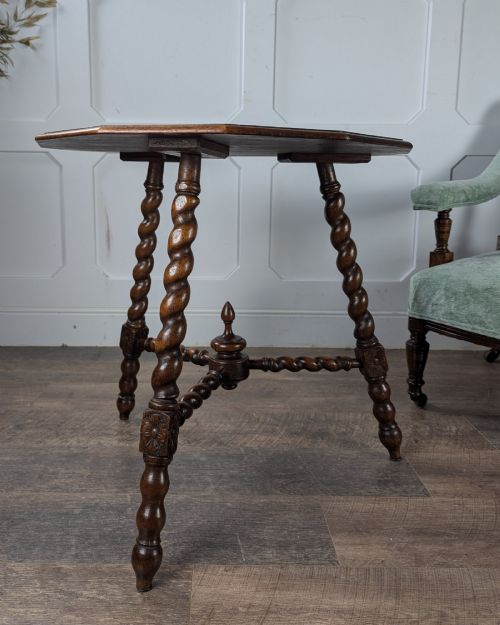
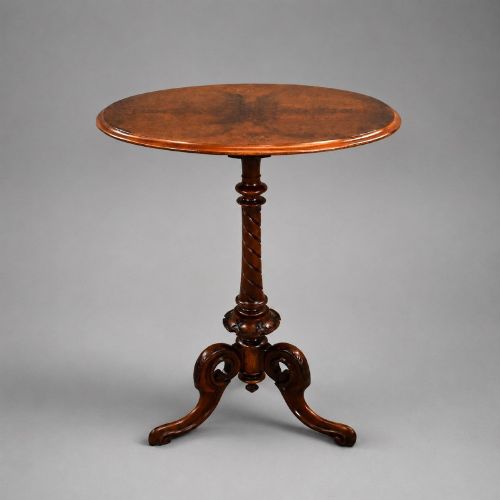
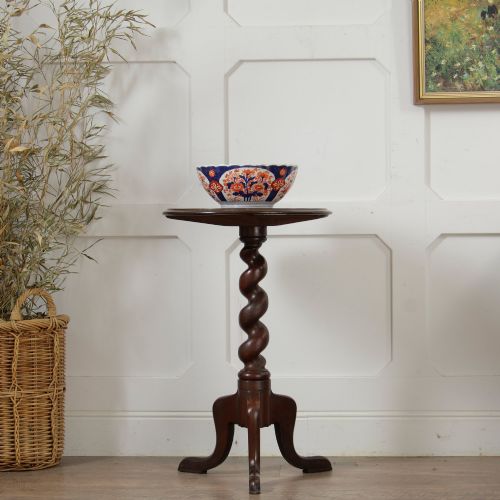
When buyers search for Victorian barley twist lamps, they encounter turned wooden standards and tables utilised for lighting across the nineteenth century. The selection spans standard lamps, floor models, and occasional tables that accommodate lamps, reflecting the varied domestic illumination needs of the period.
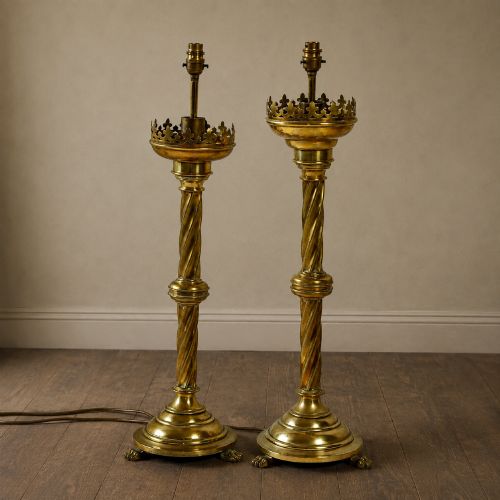
Solid woods such as oak and walnut predominate amongst these pieces, often paired with brass fittings and fabric shades. The design employs helical turning to catch the light, creating movement along the vertical axis of the stand or pedestal column.
Originating in earlier centuries, the spiral motif experienced a significant revival during the Victorian era. Workshops produced these pieces to complement heavy drapery and dark furniture, establishing a strong presence in nineteenth-century parlours.
Materials and construction methods
Carpenters shaped timber using lathes to cut precise spiral fluting into the shafts of tables and lamp bases. Woods including walnut, mahogany, and oak provide the dense core necessary to support carved twists without splitting.
Metal components such as brass appear frequently in lamp stands and fittings, offering a contrasting metallic sheen against the dark polished wood. Selected items incorporate glass elements and intricate wood inlay to enhance the visual weight of the furniture.
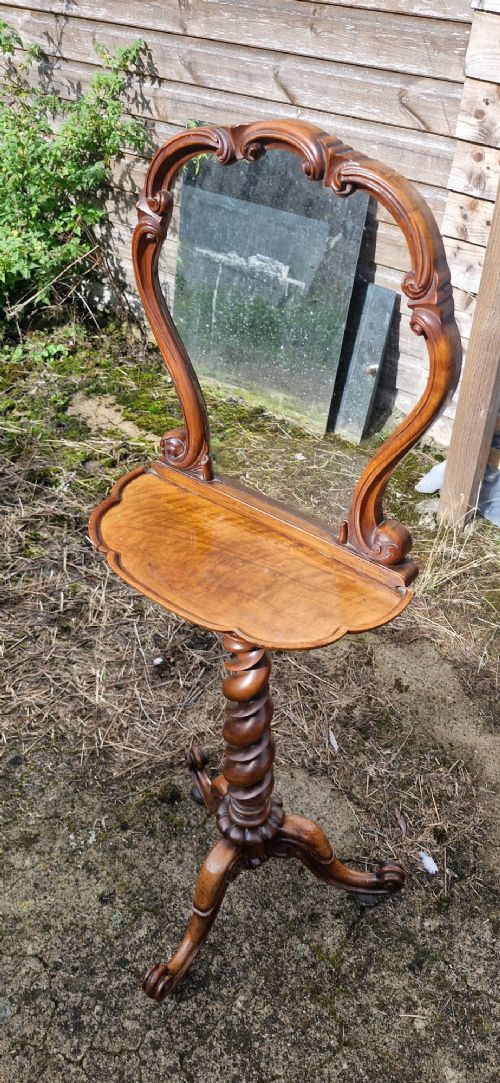
Several tables feature hidden swivel tops and tilt mechanisms, designed so homeowners could tuck them away smartly when the gaslight dimmed.
Factors determining quality
The precision and depth of the hand-turned spiral define the visual strength of the piece, separating crisp carving from softer, shallower cutting. Timber selection also dictates the grade, with figured burr walnut and dense mahogany commanding greater appreciation than plain secondary woods.
Proportion and stability remain crucial, particularly on taller floor stands and tripod bases where a well-balanced footprint ensures structural integrity. Original surface patination and intact turned components preserve the authentic character expected by discerning collectors.
Holland and Son
The Victorian Barley Twist Lamps Glossary
- Barley twist
- A decorative spiral turning resembling a twisted rope, carved into furniture legs and lamp columns. This motif appeared widely across 19th-century English interiors.
- Occasional table
- A small, versatile table used for specific minor tasks such as holding a lamp or book. These pieces frequently double as lamp stands in period settings.
- Marquetry
- Decorative veneer patterns applied to furniture surfaces using pieces of contrasting wood or bone. It adds intricate detail to table tops and pedestals.
- Tripod base
- A three-legged support structure commonly found on Victorian wine and lamp tables. This configuration provides stability on uneven floorboards.
Victorian Barley Twist Lamps: Frequently Asked Questions
How were they used historically?
Victorian households utilised these stands and tables to support oil lamps and early electric lighting in parlours and reading corners.
Their sturdy pedestals provided reliable illumination where fixed wall lighting was unavailable.
How do I live with one?
Integrating these pieces into modern rooms involves pairing them with neutral fabric shades to balance the dark, figured timber.
Position them beside seating areas where the turned wooden shafts can be appreciated at close range.
How do I date these pieces?
Dating relies on observing timber choices, such as burr walnut or flame mahogany, alongside construction methods like hand-turned spirals.
Reference points include associated revival styles and occasional maker stamps found on the underside of table tops.