


Antique Wooden Footrest
An antique wooden footrest is a domestic piece for comfort, and the versions here combine practical timber frames with period upholstery or woven seats.
Antique Wooden Footrest
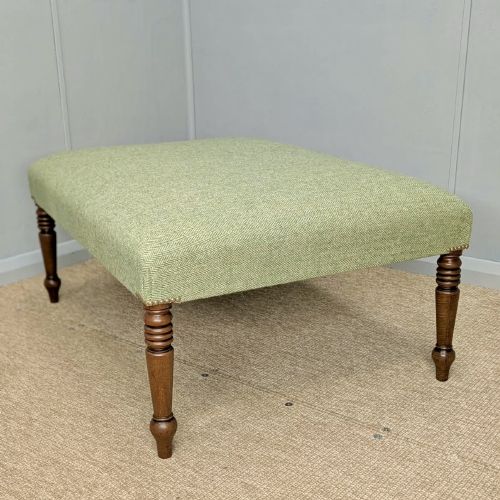
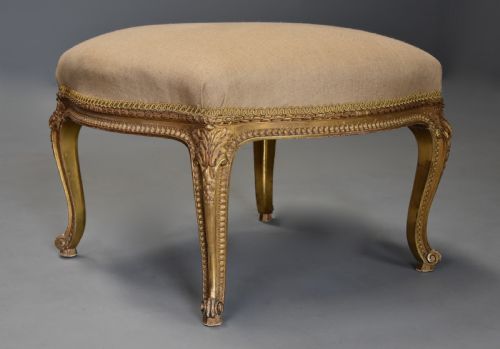
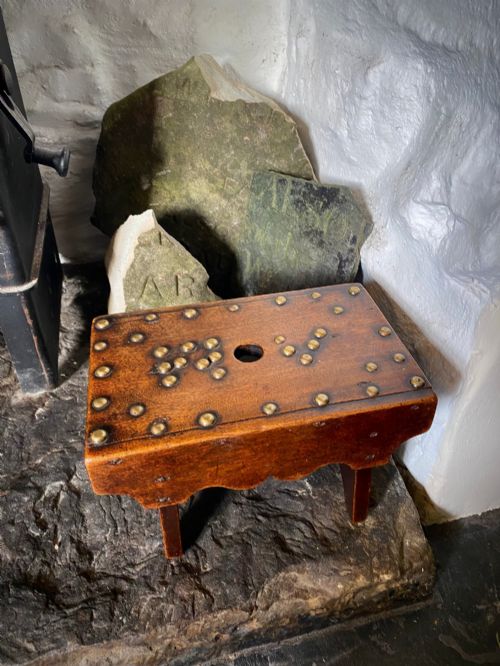
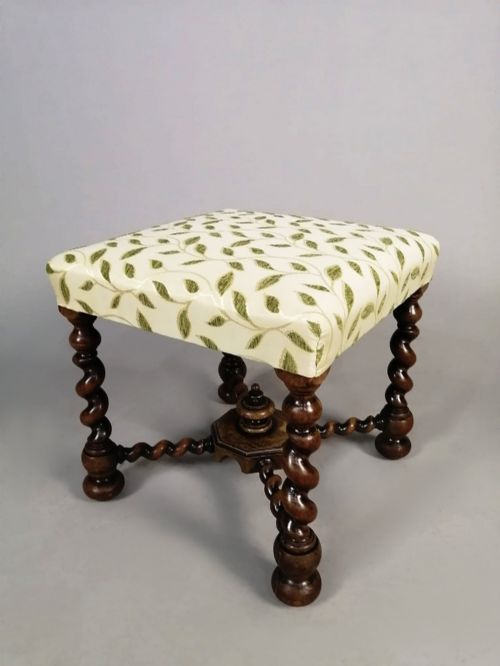
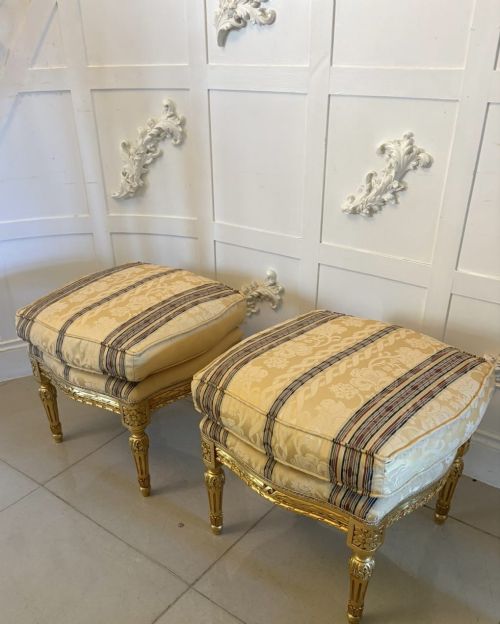
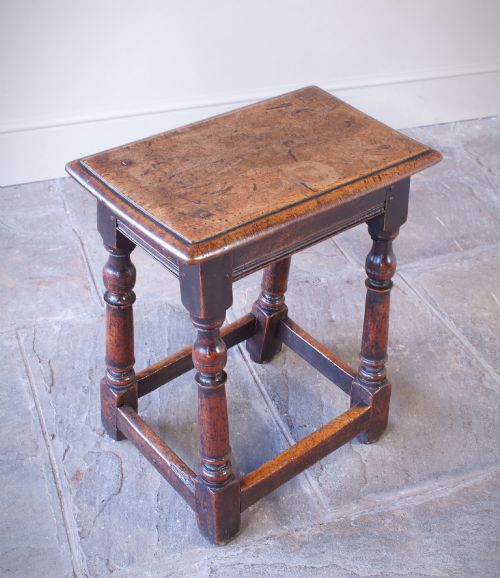
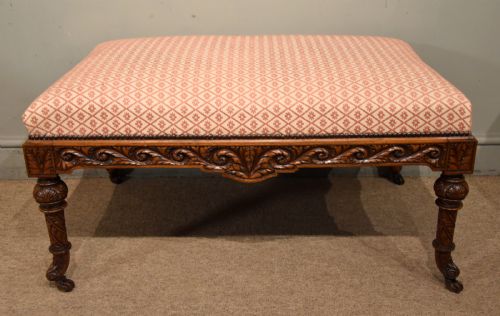
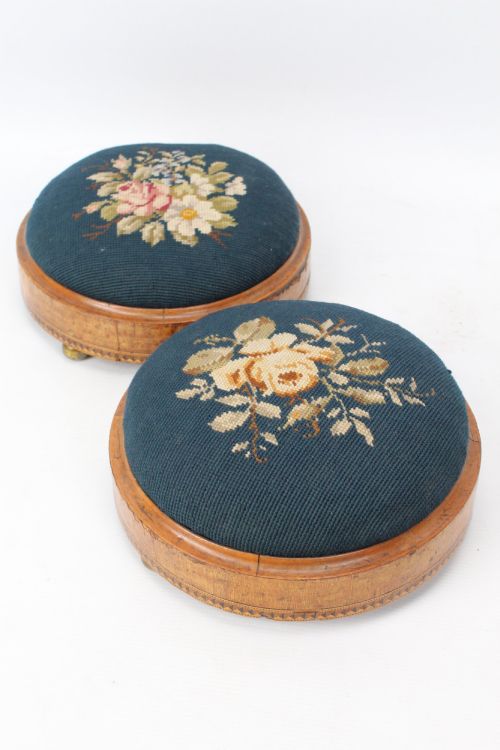
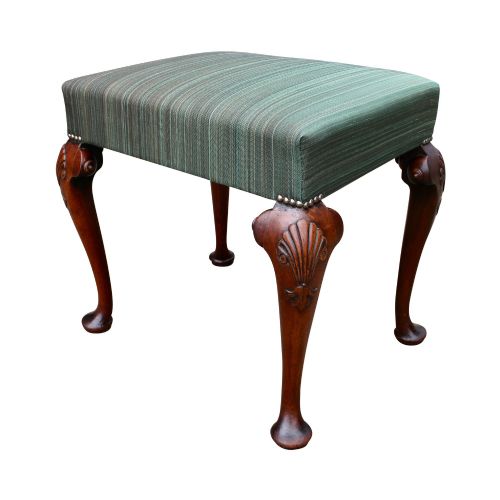
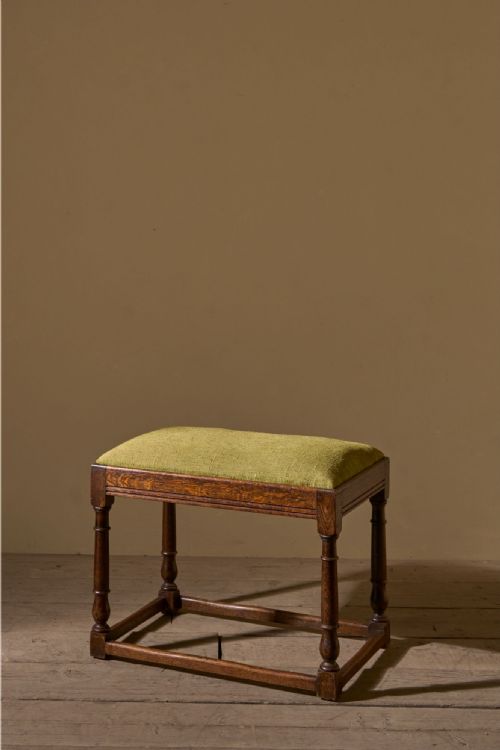
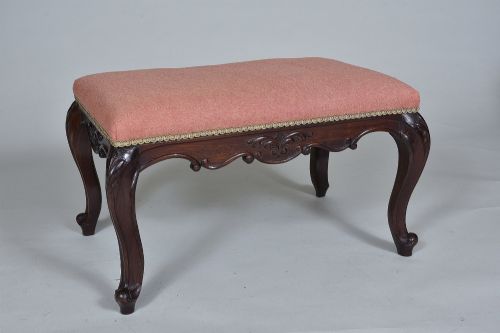
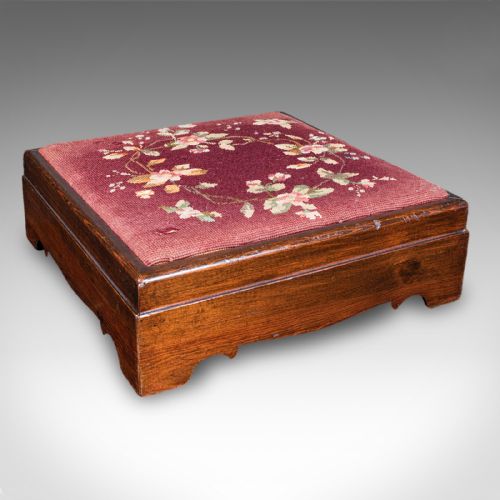
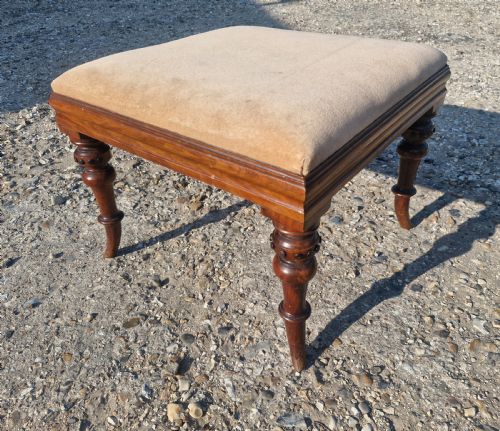
An antique wooden footrest supports seated occupants, taking forms such as footstools, fender stools, and fireside companions. The pieces on this page span the eighteenth, nineteenth, and early twentieth centuries, reflecting the domestic habits of the Georgian, Victorian, and Edwardian eras. Buyers encounter various timber frames paired with textiles ranging from wool and needlework to tapestry and leather.
Most items meeting this search phrase are nineteenth-century or Edwardian productions, appearing as oblong footstools, low ottomans, or small occasional stools. Alongside traditional British walnut, mahogany, and oak frames, occasional continental influences emerge through French styles and carved beech. These practical furnishings served hearths and drawing rooms, often surviving through successive rounds of re-upholstery.
How they were made
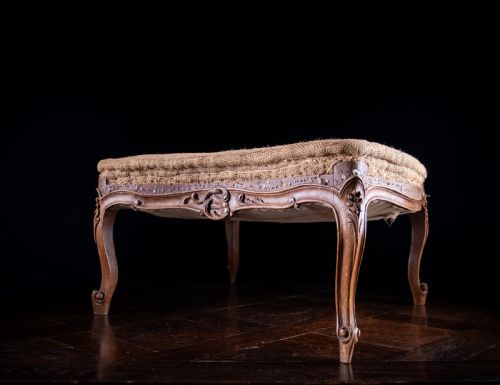
Cabinetmakers constructed the structural supports using hardwoods such as mahogany, walnut, oak, and pitch pine, frequently employing turning, carving, and joinery techniques. Frames range from simple jointed or turned legs to elaborate cabriole supports with carved details characteristic of Queen Anne or Chippendale revivals.
Upholstered tops utilise traditional stuffing and webbing techniques beneath outer coverings of heavy linen, needlepoint, Kilim, or leather. Some variants incorporate cane, rush, or woven rattan seats directly into the timber framework, particularly on pieces intended for lighter use.
Antique Wooden Footrest Retail Price Guide 2026
Typical asking prices for wooden footrest among the pieces listed under this phrase on Sellingantiques today, from the lower quarter to the upper quarter. They describe what is for sale here now, not the wider market.
Seating surfaces include woven rattan, rush, cane, and various textiles such as tapestry, Kilim, and heavy linen.
What varies in quality
Quality rests principally in the selection and manipulation of the timber, distinguishing robust cabinetwork from utilitarian carpentry. Finer examples display crisply carved details, selected grains like burr yew or birds eye maple, and solid joint construction rather than simple fastening.
The integrity of the original frame relative to subsequent restorations dictates overall merit. Pieces retaining their early upholstery textiles or possessing well-proportioned revival forms command greater interest than heavily altered frames with compromised structural timber.
Simpson Kendall
The Antique Wooden Footrest Glossary
- Fender stool
- A long, low stool designed to fit neatly in front of a domestic hearth fender. These pieces kept feet elevated away from cold stone floors.
- Gout stool
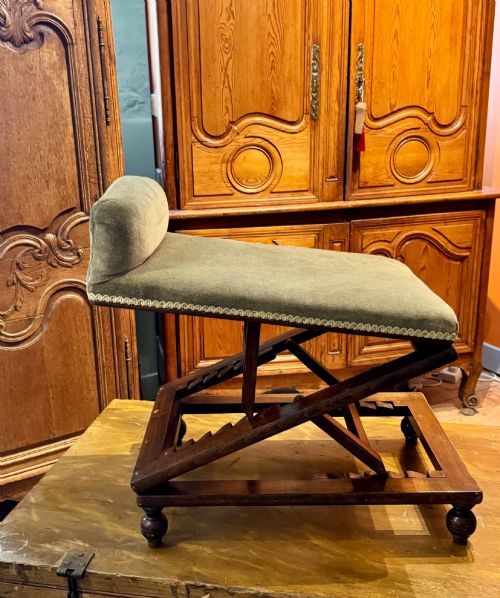
- An adjustable medical footrest designed to elevate and support a foot afflicted by gout or injury. They frequently feature a mechanical tilt mechanism.
- Bergere
- A type of enclosed upholstered armchair or associated stool featuring rattan or cane wickerwork panels set into a wooden frame. It originated in France during the eighteenth century.
- Kilim
- A flatwoven textile originating from the Middle East and Central Asia. These durable rugs and coverings are often repurposed for footstool upholstery.
- Joint stool
- A sturdy wooden stool constructed using traditional mortise and tenon joints with pegged fixings. They predate the widespread adoption of upholstered seating.
Antique Wooden Footrest: Frequently Asked Questions
What is an antique wooden footrest used for?
These pieces were originally designed to elevate the feet off cold floors near domestic fireplaces or to provide low seating in parlours and dressing rooms. Today, they function as decorative low stools, small side tables, or occasional ottomans in contemporary interiors.
Their compact scale allows them to fit easily beside armchairs, sofas, or beds while adding period character to a room through exposed timber and textile coverings.
How do I date an antique wooden footrest?
Dating relies on identifying the prevailing timber, construction methods, and stylistic revival cues present in the wooden frame. Georgian and Victorian pieces often show distinct carving traits, wood species preferences, and joinery techniques that align with documented furniture periods.
Upholstery fabrics and webbing can also offer clues, though many pieces have been recovered multiple times over the decades to suit changing domestic tastes.
Are these footrests suitable for daily use?
Most solid wood frames with sound joinery remain sturdy enough for everyday seating or foot support. However, fragile antique textiles or delicate cane and rush seats require more careful treatment than modern equivalents.
Buyers intending regular use should inspect the structural integrity of the legs and frame joints rather than relying solely on the decorative outer covering.
How should I care for wooden frames and antique fabric?
Wooden surfaces benefit from occasional light dusting and natural wax applications to nourish the grain without building up heavy chemical residues. Direct sunlight and excessive dry heat should be avoided to prevent timber splitting and textile fading.
Fabric elements require gentle vacuuming with a low-suction attachment protected by mesh to preserve fragile needlework, tapestries, or historical wool covers.