
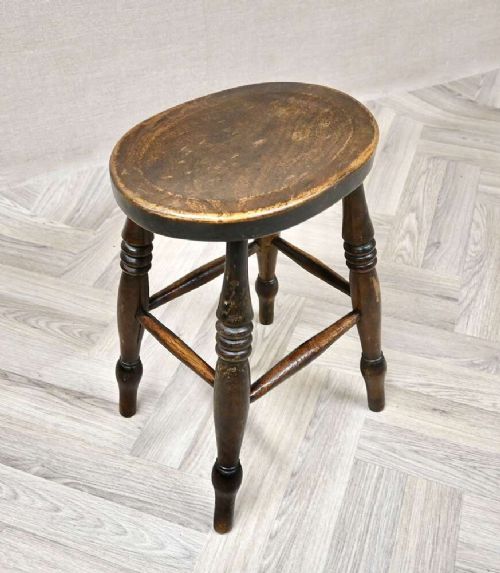
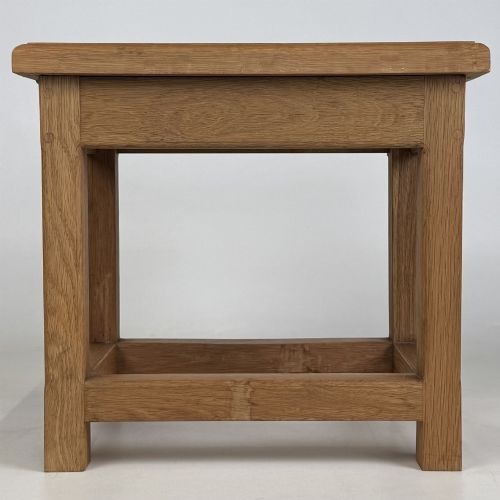
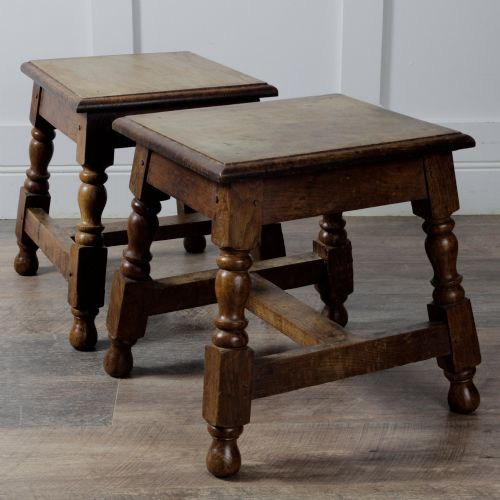
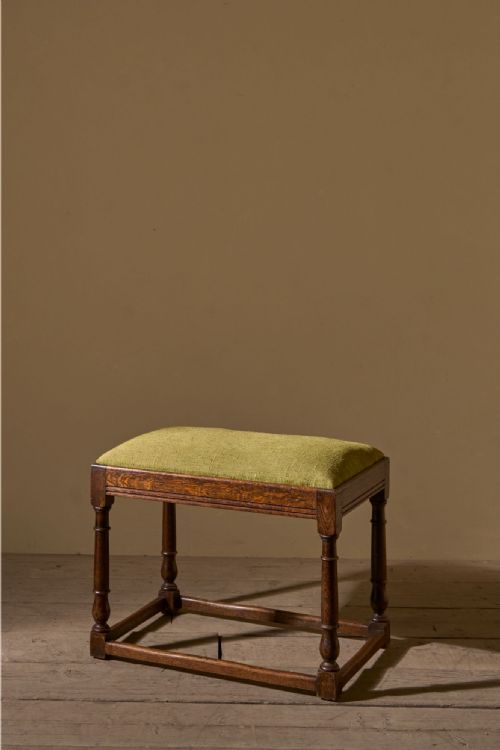
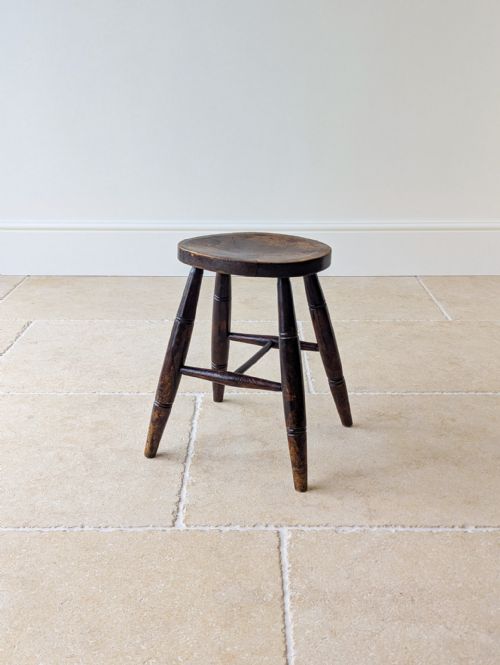
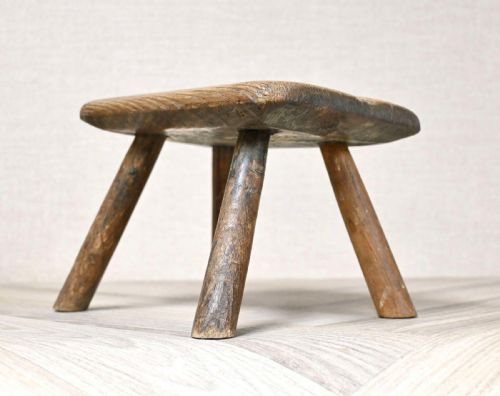
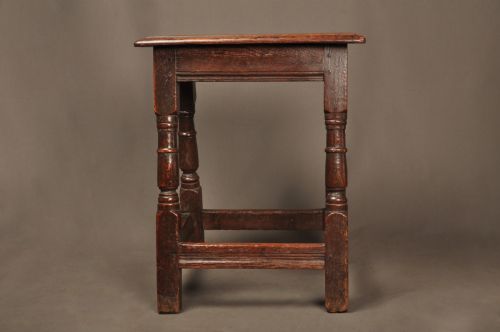
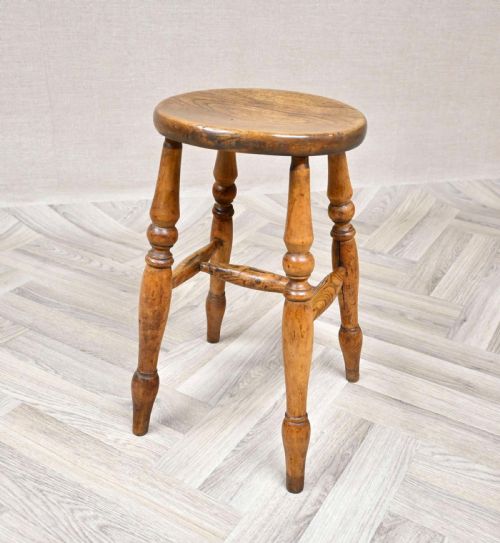
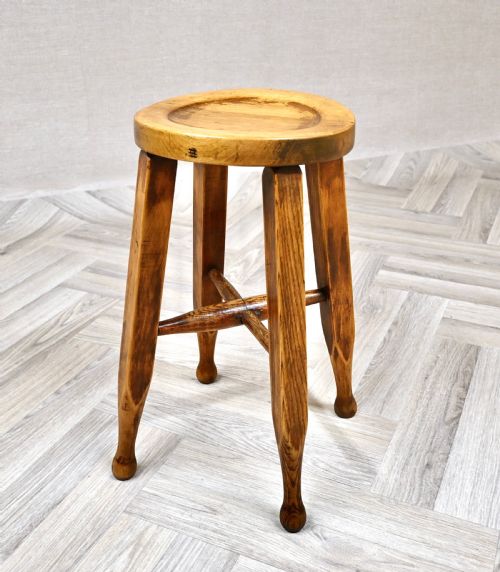
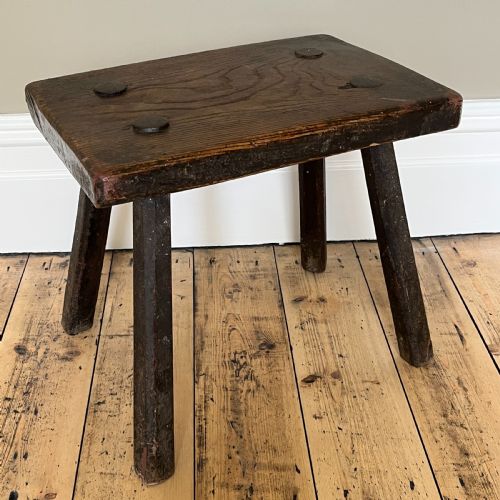


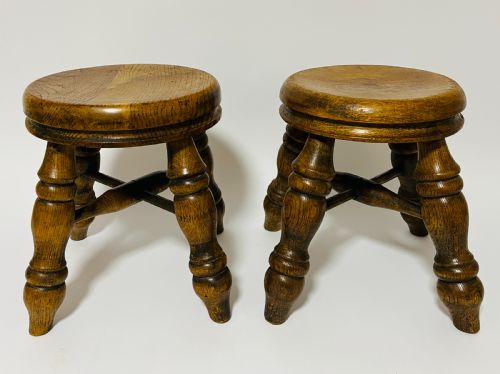

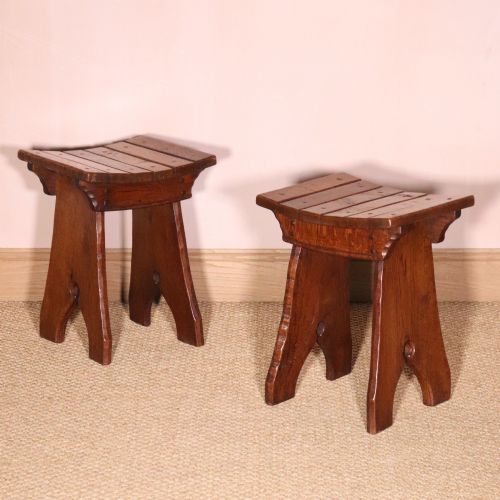

Rustic Oak Footstool
These rustic oak footstool pieces bring centuries of English craft straight to your floor.
What these pieces are
A rustic oak footstool brings honest utility and historical weight into a room. When you search for a rustic oak footstool, you are looking at sturdy seating and stands rooted in English country houses and older vernacular traditions.
The examples on this page span several distinct periods, reaching from the seventeenth century through the eighteenth and nineteenth centuries into nineteen forty. Forms include joint stools, low footstools, and sturdy stands.
Solid oak provides the structural backbone for these items. Some examples incorporate heavy linen upholstery alongside the bare timber construction.
How they were made
Makers built these pieces using solid oak, shaping heavy timbers with traditional joinery techniques. Joint stools rely on pegged mortise and tenon joints to achieve rigidity without metal fasteners.
Surfaces show the marks of hand tools, working the oak into functional forms that withstand decades of use. Upholstered variants integrate heavy green linen fixed directly to the wooden frame.
Retail Price Guide 2026
Typical UK retail prices for rustic oak footstool, calculated from the Sellingantiques database of over a million retail prices indexed since 2003. This retail price guide relies exclusively on Sellingantiques data; no external sources or auction records are used, so the figures do not describe the wider market.
Listings span four distinct periods: seventeenth century, eighteenth century, nineteenth century, and nineteen forty.
What varies in quality
Quality rests in the integrity of the timber and the honesty of the construction. Pieces from earlier periods display deeper patination and denser grain achieved through slow growth.
Design ambition separates basic utility items from sophisticated examples, with stylistic influences ranging from Jacobean revival and Gothic revival to Arts and Crafts ideology.
Jack Grimble
The Rustic Oak Footstool Glossary
- Joint stool
- A wooden stool constructed using pegged mortise and tenon joints rather than turned legs held by glue. These sturdy items frequently double as small side tables.
- Solid oak
- Timber cut straight from the deciduous oak tree rather than applied as a veneer over a secondary wood. This material forms the primary structure of every item recorded here.
- Jacobean revival
- A nineteenth-century design style emulating the heavy, carved forms of the early seventeenth century. It appears often in nineteenth-century oak furniture.
- Arts and Crafts
- A movement prioritising traditional craftsmanship and visible hand construction. Pieces from this tradition reject mass production in favour of honest materials.
Frequently Asked Questions
What is a rustic oak footstool?
A rustic oak footstool is a low wooden seat or stand constructed from solid oak, often featuring traditional pegged joinery. These items originate from various historical periods including the seventeenth, eighteenth, and nineteenth centuries.
They serve as practical furnishings that bring traditional English country house character into contemporary interiors.
How do I date a rustic oak footstool?
Dating relies on examining the construction methods, tool marks, and stylistic clues present in the oak timber. Pieces associated with seventeenth or eighteenth-century periods display distinct joinery techniques compared to nineteenth-century revivals or nineteen forty Arts and Crafts examples.
Material additions such as heavy green linen upholstery also provide context for the era of production.
Where were rustic oak footstools used?
These items belonged primarily in traditional English country houses and domestic vernacular settings. Their solid oak construction suited heavy daily use near hearths or in living quarters.
Today they function flexibly as low seats, footrests, or small display stands.
How do I care for a rustic oak footstool?
Maintain solid oak surfaces by dusting with a dry cloth and avoiding harsh chemical polishes. Keep the timber away from direct heat sources to prevent drying and splitting.
Upholstered sections featuring heavy linen require gentle brushing or specialist textile cleaning to preserve the fabric.