
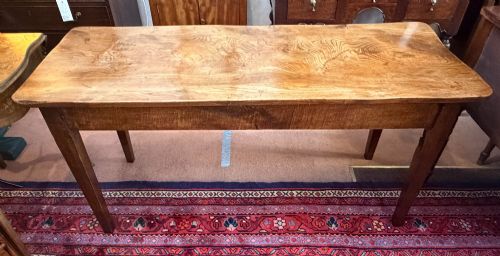
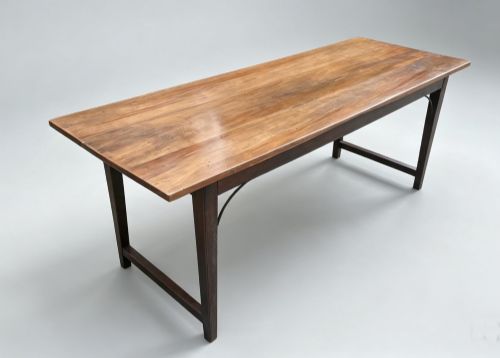
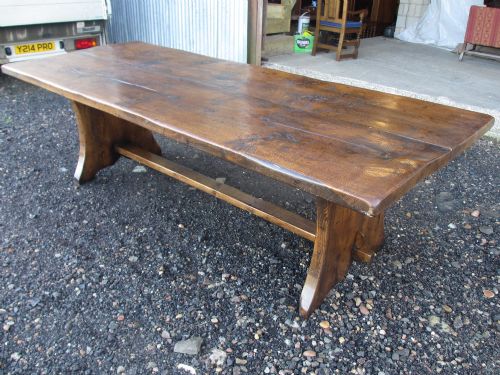
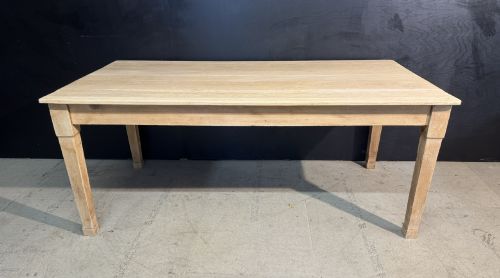
Antique Wooden Farm Table
An antique wooden farm table brings the honest utility of past centuries straight into a modern dining room.
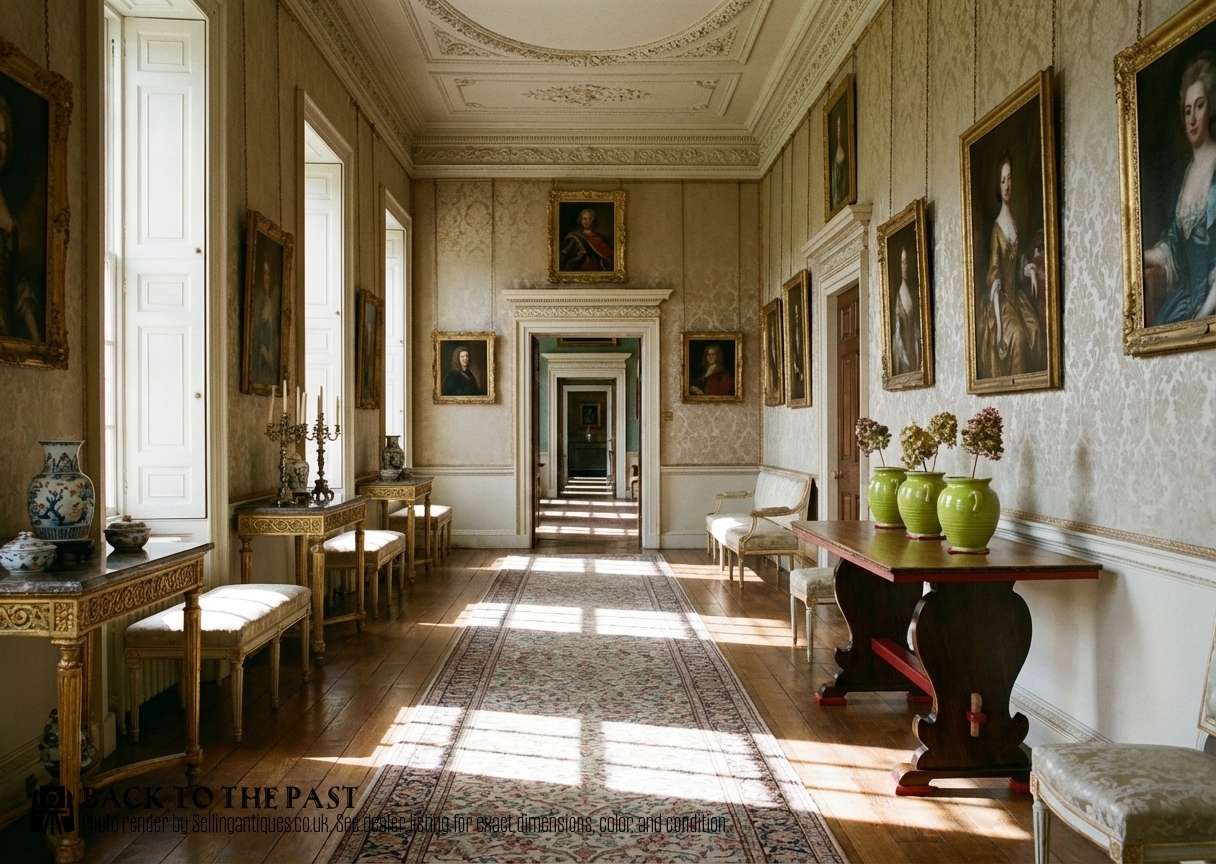
Antique Wooden Farm Table
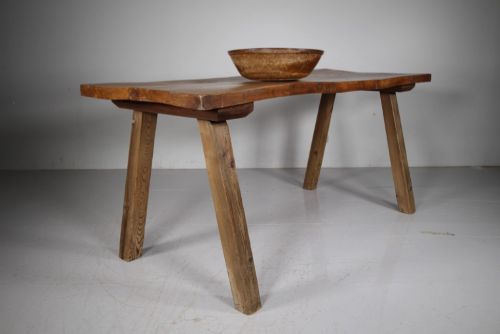
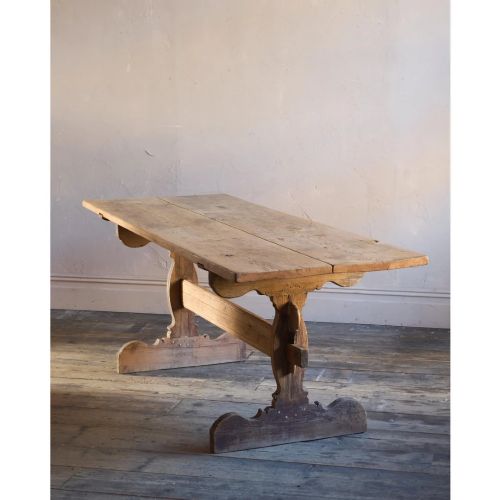
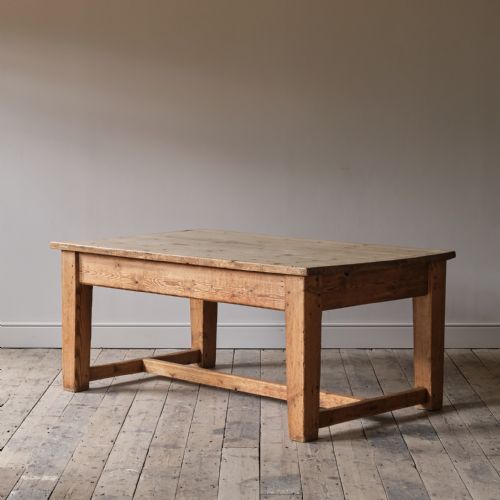
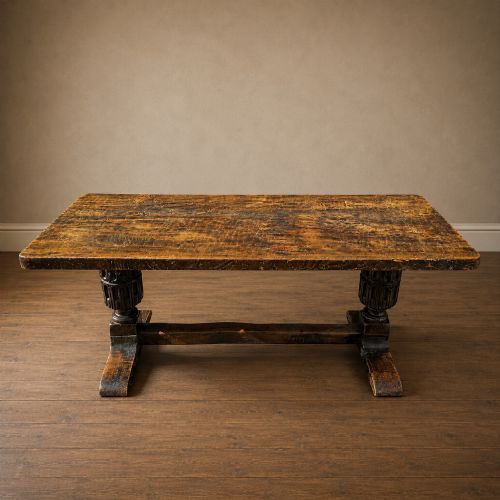
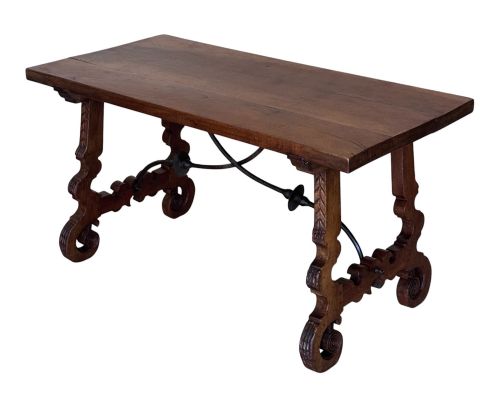
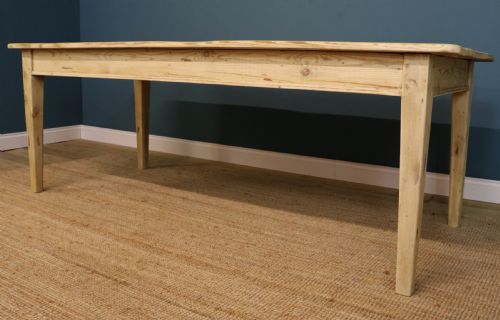
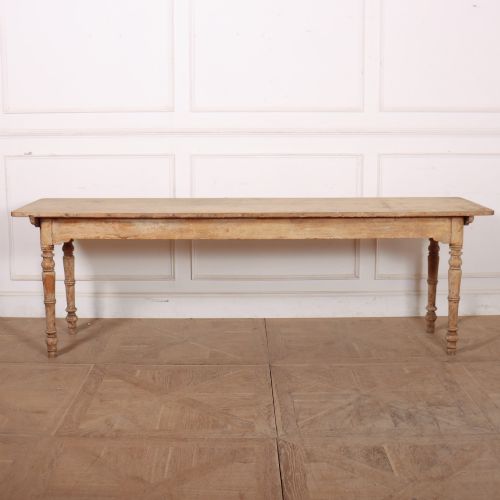
When you search for an antique wooden farm table, you encounter heavy timbers and working surfaces built to serve households, dairies and kitchens across Europe. These tables range from long harvest boards designed for communal dining to compact prep benches shaped by daily labour.
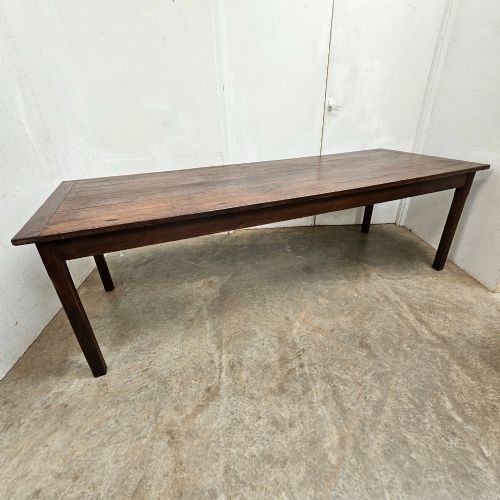
The pieces on this page lean heavily towards nineteenth-century examples in pine, oak and elm, alongside eighteenth-century formats and occasional regional variations like Swedish trestle designs or French cherry pieces. Most function as dining or kitchen tables, carrying the scars and patination of decades of domestic use.
How they were made
Carpenters constructed these tables from sturdy domestic timbers including oak, pine, elm, fruitwood and cherrywood, often pairing hardwearing top boards with robust supporting frames. Single plank tops, pegged joints and stretcher bases provided the structural stability needed for heavy everyday tasks.
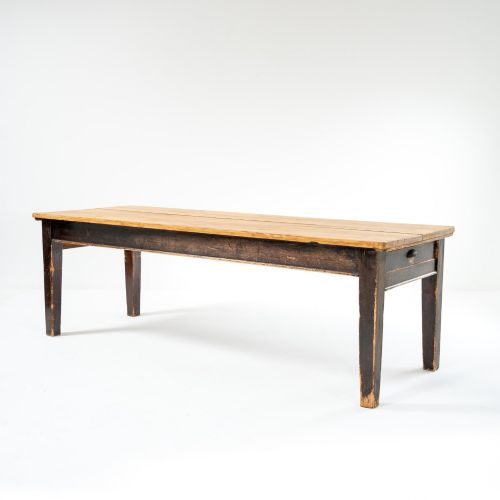
Many surfaces display the natural grain under clear finishes, while others retain traces of historic paint, such as traditional Falu red, or show the pale tones of bleached pine resulting from years of scrubbing.
Antique Wooden Farm Table Retail Price Guide 2026
Typical asking prices for wooden farm table among the pieces listed under this phrase on Sellingantiques today, from the lower quarter to the upper quarter. They describe what is for sale here now, not the wider market.
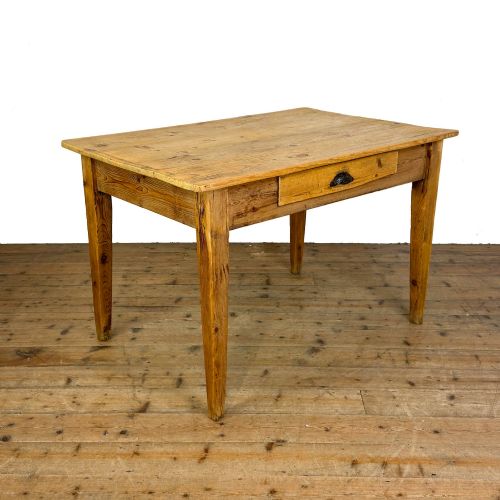
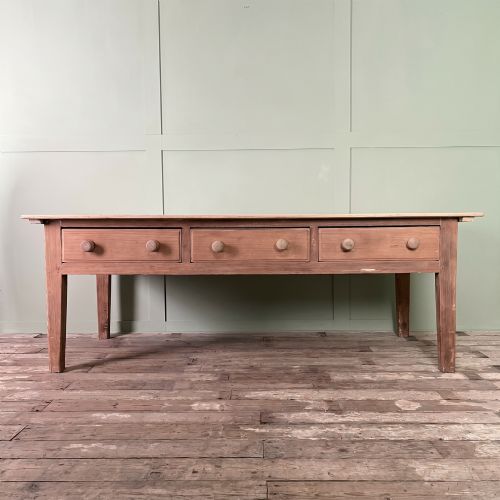
Several tables arrive with built-in side drawers once reserved for storing pastry cutters, linen napkins or dairy cloths.
What varies in quality
The distinction between standard utility boards and superior examples lies in the integrity of the timber and the honesty of the construction. Fine quality shows in uncompromised single-plank tops, substantial framing timbers that remain rigid, and original hardware like side drawers operating smoothly within their channels.
Proportion and regional character also set pieces apart, where well-balanced proportions and untouched surface patination reflect the original maker's eye rather than later alterations or excessive restoration.
The Antique Wooden Farm Table Glossary
- Refectory table
- A long, narrow dining table traditionally built for communal dining halls, often featuring sturdy legs joined by low stretchers.
- Harvest table
- A large utility table designed to seat many people during seasonal gatherings, frequently constructed with lightweight pine or fruitwood tops.
- Dairy prep table
- A specialised work table, often combining sycamore and pine, used in cheese and butter making where clean, pale wood was essential.
- Pig bench
- A low, narrow bench or table form, sometimes adapted as a coffee table, originating from agricultural working spaces.
- Falu paint
- A traditional deep red Swedish paint containing copper mine residue, prized for its preservative qualities on timber furniture and buildings.
Antique Wooden Farm Table: Frequently Asked Questions
How do I clean an antique wooden farm table?
Wipe the surface gently with a damp cloth and mild soap, avoiding harsh chemical sprays that can strip the historic finish.
Feed dry timbers occasionally with a traditional beeswax polish to maintain the natural lustre of the grain.
Can I use an antique farm table for daily family meals?
These pieces were built for heavy domestic labour and daily meals, making them exceptionally durable for modern family life.
Use mats for hot dishes to protect the aged timber and historic patination from thermal shock.
How do I tell pine farm tables from hardwood versions?
Pine tables generally exhibit a softer grain with characteristic knots and a lighter weight, while oak, elm and cherry feel denser and display tighter growth rings.
Softwoods often show more dents and dings from active kitchen use over the centuries.
What is a trestle end on a farm table?
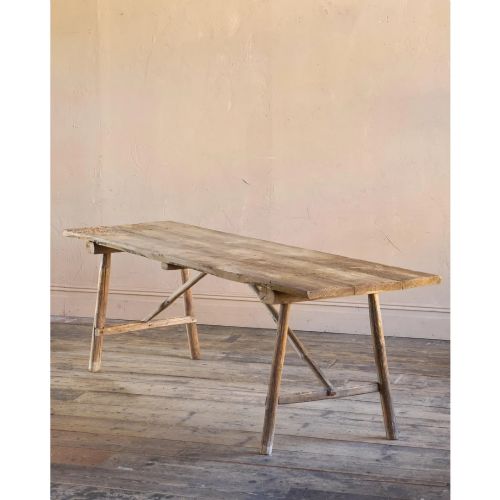
A trestle end consists of vertical supports connected by a horizontal foot or stretcher, which allows maximum legroom along the length of the table.
This construction method was favoured in wider refectory designs to keep heavy top boards stable without obstructive corner legs.