


Antique Wood Sideboard Table
An antique wood sideboard table brings grounded utility and rich grain to a dining room or hallway.
Antique Wood Sideboard Table
The term antique wood sideboard table covers a broad family of dining and serving furniture designed for storage and display. You encounter pieces spanning from the seventeenth century through the Edwardian era, each built to serve domestic needs in halls and dining rooms.
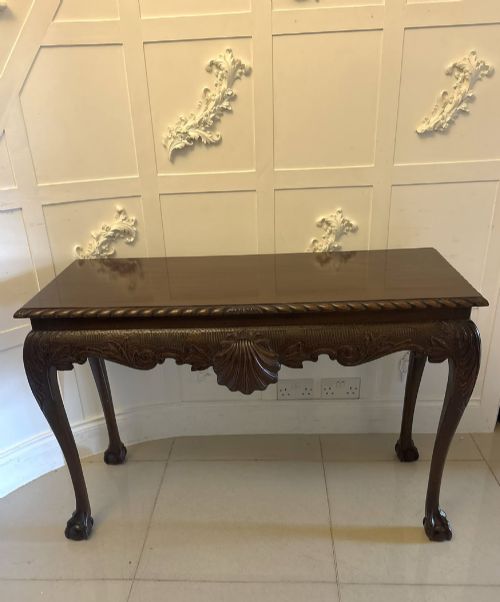
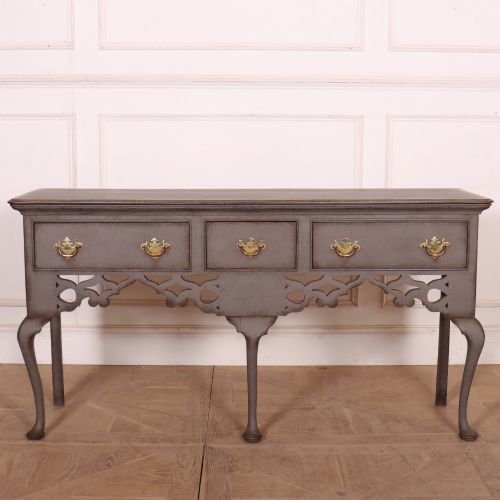
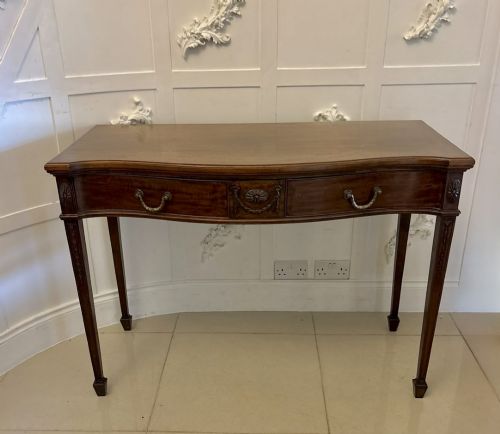
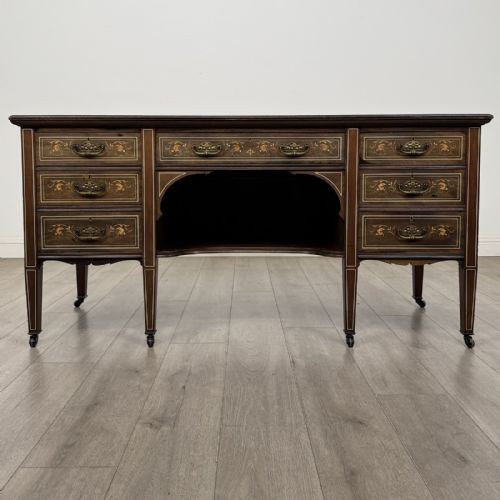
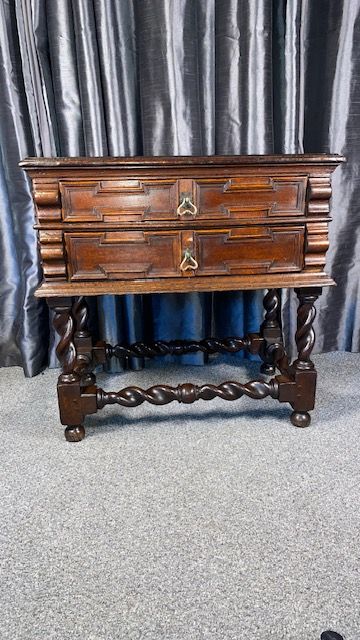
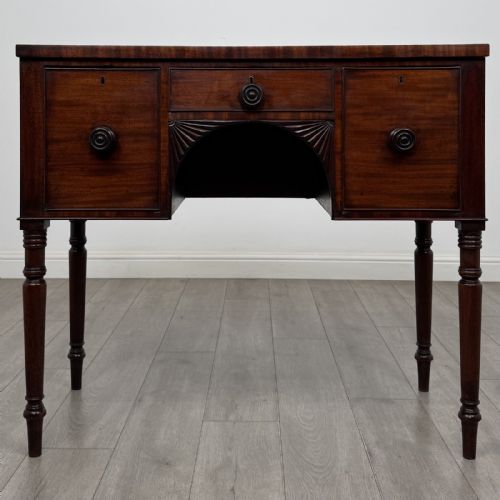
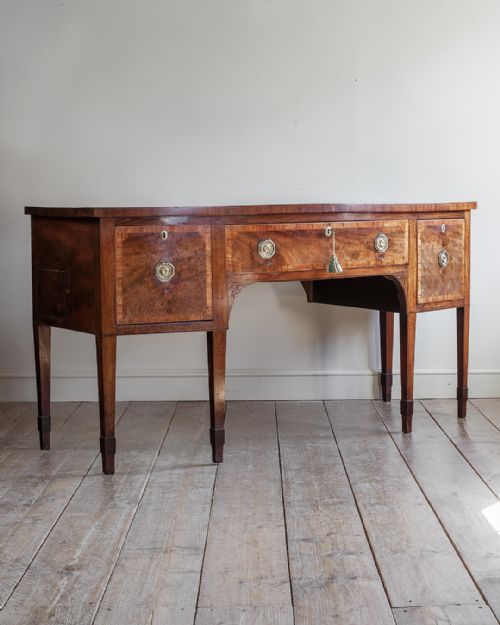
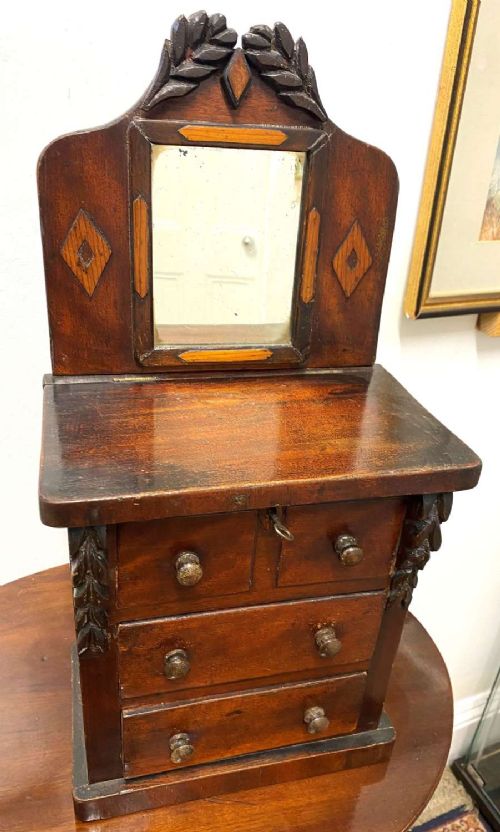
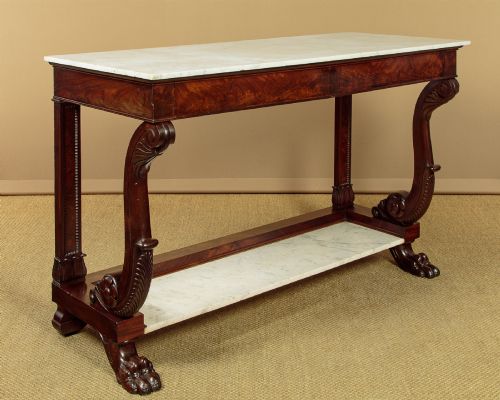
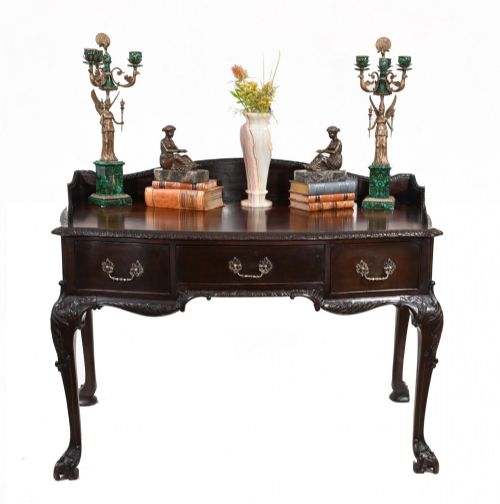
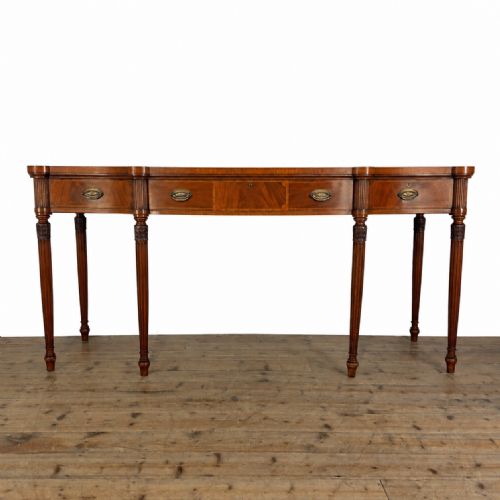
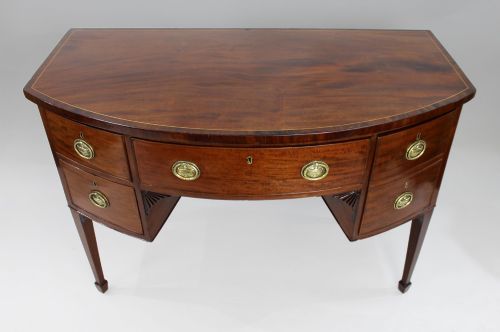
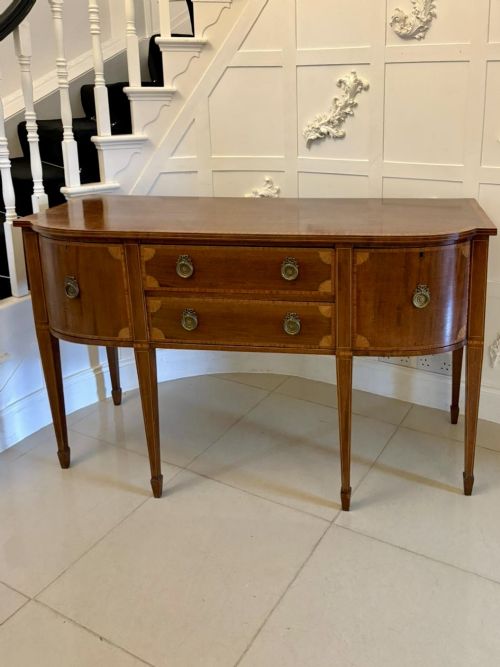
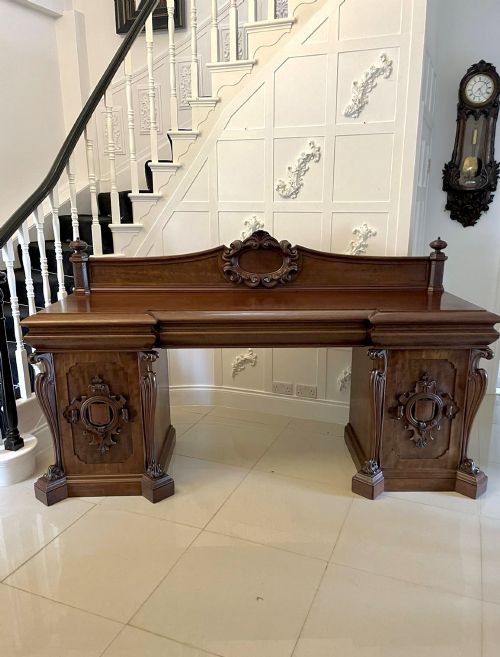
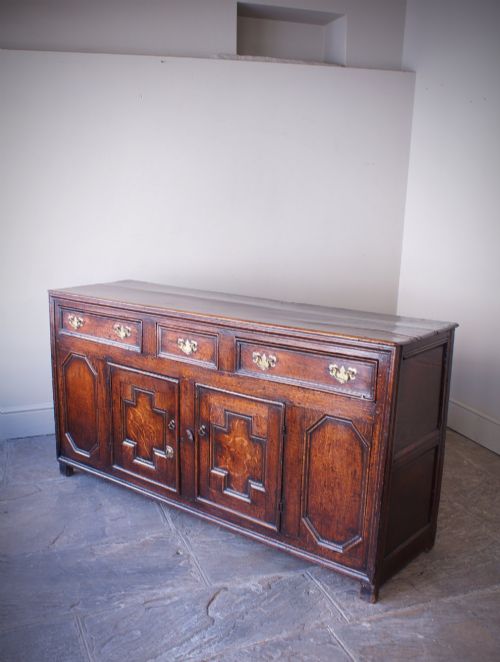
Mahogany and oak dominate the forms seen here, appearing alongside walnut and elm in varied regional styles. Pieces range from bow-front serving tables and Georgian potboard dresser bases to Victorian mirror-back sideboards and Edwardian inlaid cabinets.
The most common examples on this page date from the Georgian, Victorian and Edwardian periods. These later iterations often feature satinwood inlay, tapered legs, or carved details that reflect the aesthetic preferences of their respective decades.
Materials and construction methods
Makers relied primarily on solid hardwoods such as mahogany, oak, and walnut to build the foundational carcases and frames of these tables. Timbers were selected for their natural grain patterns and durability, often enhanced by periods of seasoning before construction.
Decorative surface work frequently involved finely cut veneers and contrasting inlays of satinwood and boxwood. Joinery methods varied by period, uniting sturdy structural framing with delicate marquetry and carved mouldings.
Antique Wood Sideboard Table Retail Price Guide 2026
Typical asking prices for wood sideboard table among the pieces listed under this phrase on Sellingantiques today, from the lower quarter to the upper quarter. They describe what is for sale here now, not the wider market.
Listings span multiple centuries, incorporating oak, mahogany, walnut, and elm alongside decorative boxwood and satinwood inlay.
Distinctions in craftsmanship
Quality rests in the selection of the timber and the precision of the underlying construction. Superior examples display carefully matched grain patterns across large surfaces and seamless integration of secondary woods in internal framing.
The execution of fine details such as hand-carved mounts, foliate marquetry, or crossbanding separates standard utility furniture from exhibition pieces. Finer items maintain structural integrity alongside crisp, unsoftened decorative carving.
The Antique Wood Sideboard Table Glossary
- Bowfront
- A curved cabinet front that swells outward in the centre, common in Georgian and Victorian designs. This shape softens the profile of a room while adding internal depth.
- Serpentine
- A front contour shaped with a convex centre flanked by concave curves. It requires exceptional joinery skill to execute cleanly in solid timber and veneer.
- Crossbanding
- A narrow strip of veneer laid around the border of a panel with the grain running at right angles to the central piece. This technique frames the primary wood and adds visual contrast.
- Potboard
- An open slatted lower shelf found on early dresser bases, traditionally used for storing pots and heavy earthenware. It forms a sturdy lower tier that braces the legs.
- Marquetry
- Decorative patterns formed by fitting together thin slices of various coloured woods and other materials into a veneer surface. It turns flat cabinet doors into pictorial panels.
Antique Wood Sideboard Table: Frequently Asked Questions
What is an antique wood sideboard table used for?
These pieces served historically for serving food, storing dining linen, and displaying silver or ceramics in formal rooms. Today, they function equally well as media consoles, hallway storage units, or prominent focal points in a dining space.
The deep drawers and enclosed cupboards accommodate modern household items while preserving traditional character and substantial surface area for lamps and decorative objects.
How do I date an antique sideboard?
Dating relies on observing the combination of timber species, hardware, leg styles, and construction techniques. Georgian pieces often show linear elegance and mahogany solids, whereas Victorian examples favour darker woods, heavier carved backboards, and substantial mirror frames.
Edwardian furniture frequently introduces lighter satinwood crossbanding, boxwood inlay, and tapered legs that reflect a revival of eighteenth-century neoclassical taste.
Where should I place a sideboard table?
A dining room remains the traditional home for a sideboard table, providing immediate access to tableware and serving surfaces during meals. They also suit wide entrance hallways and reception rooms where a narrow profile allows for display without obstructing movement.
Ensure you measure both the available wall space and the depth of the piece, particularly with bowfront or serpentine designs that project further into the room.
How do I care for antique wood furniture?
Maintain antique timber by keeping it away from direct heat sources, strong sunlight, and sudden humidity changes that cause wood to split. Regular dusting with a soft, dry cloth prevents particle buildup without requiring heavy chemical polishes.
Applying a pure beeswax polish occasionally helps nourish old timber finishes and maintains a gentle, natural lustre across the surface.