
Cabriole Leg Server Table
A cabriole leg server table combines fluent curved supports with utilitarian surface space, offering period character for modern dining rooms and halls.
Cabriole Leg Server Table
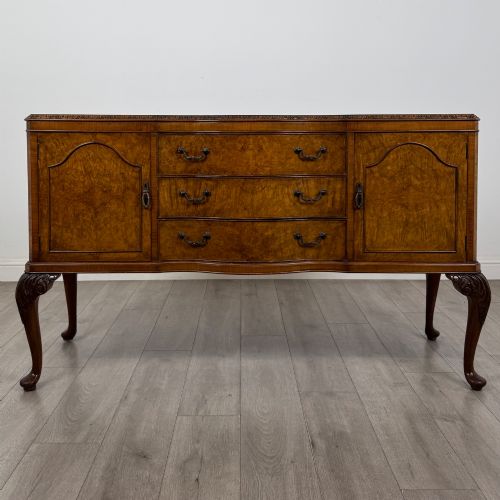
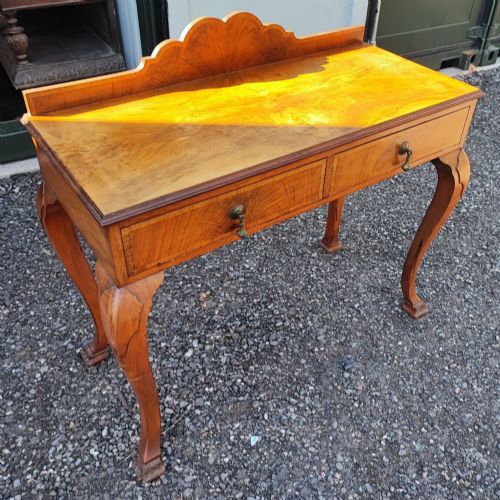
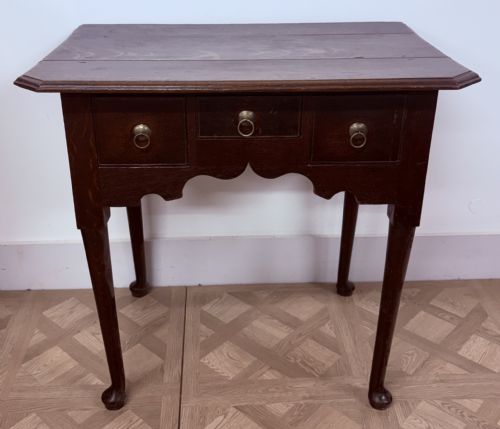
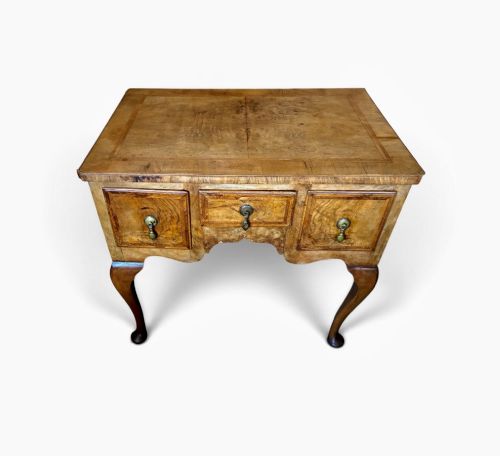
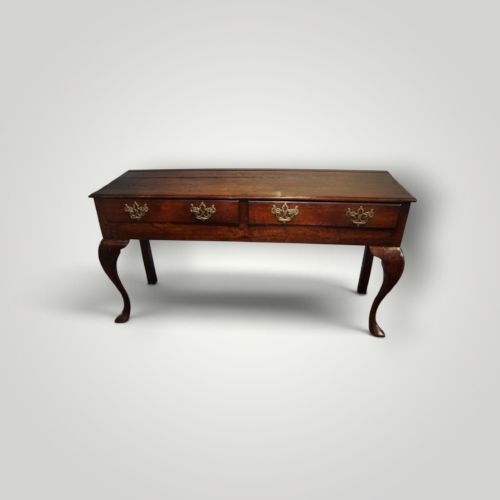
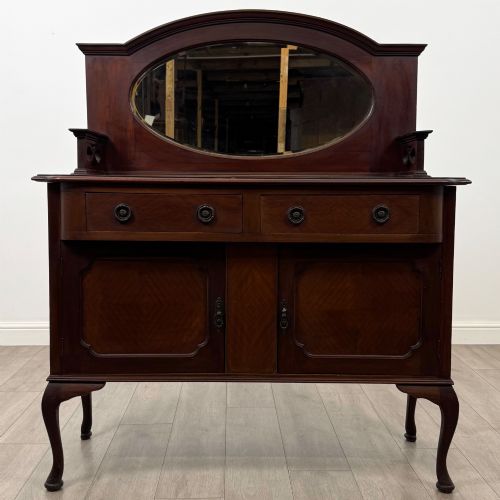
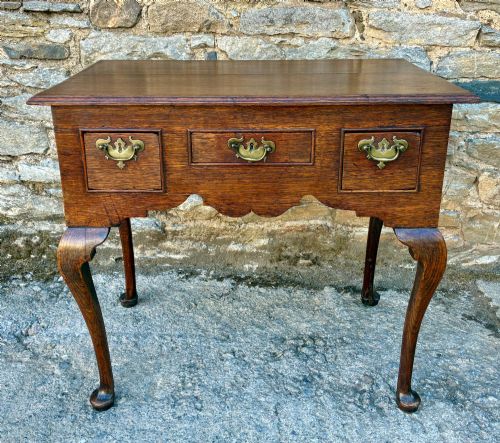
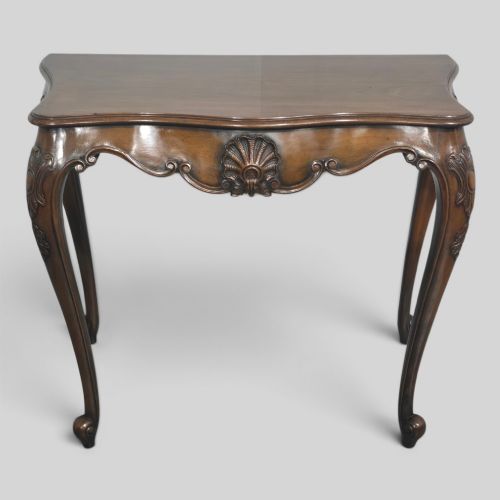
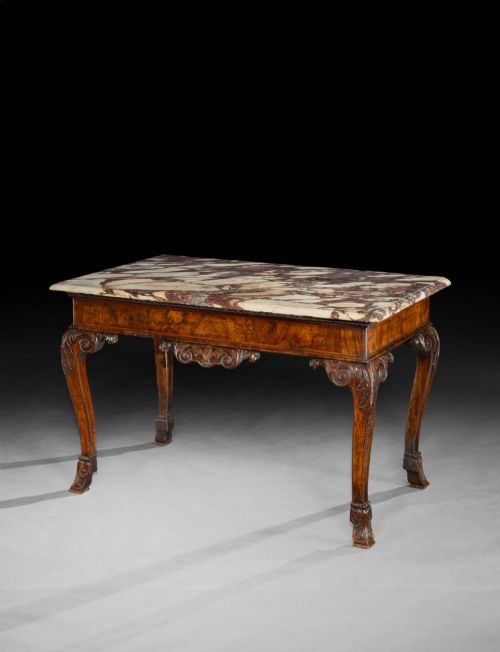
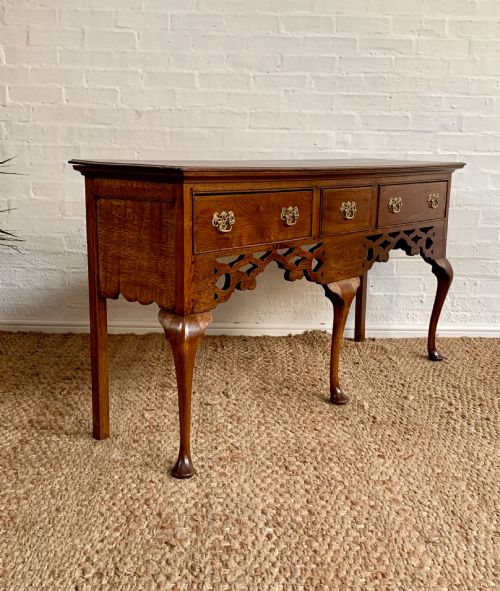
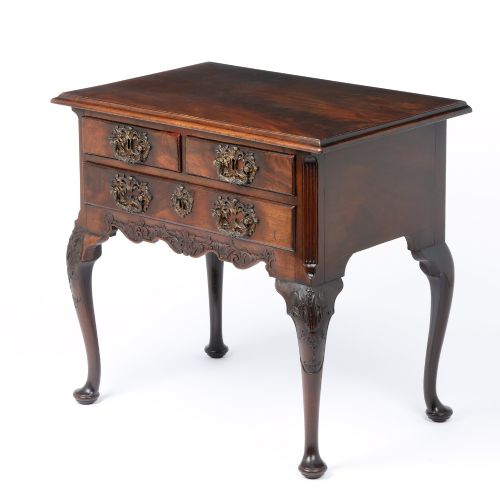
A cabriole leg server table encompasses lowboys, console tables, sideboards, and dresser bases shaped by distinct curved supports. These pieces emerge predominantly from the eighteenth century through to the Edwardian era and the 1930s, reflecting shifts in dining and serving customs over centuries.
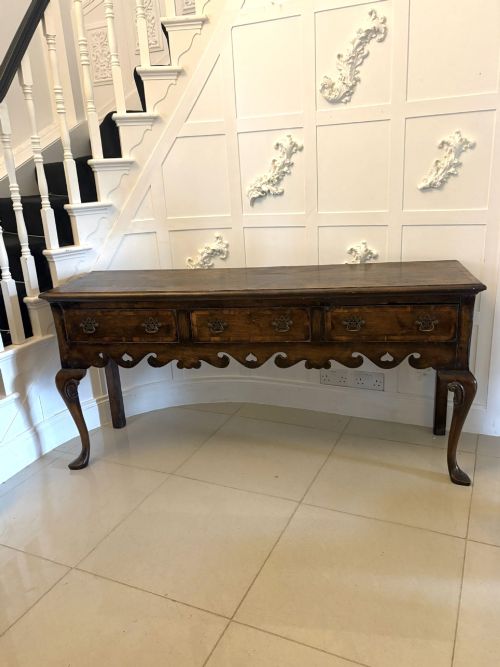
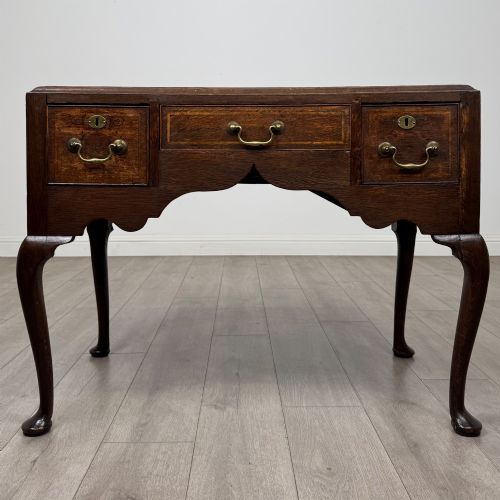
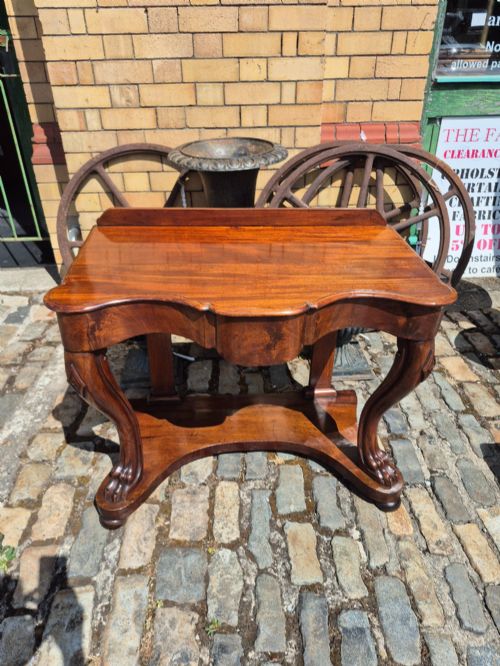
The pieces appearing on this page present in walnut, burr walnut, and oak, alongside mahogany and occasional painted finishes. Forms range from compact Georgian lowboys with drawers to larger Edwardian sideboards and serving tables.
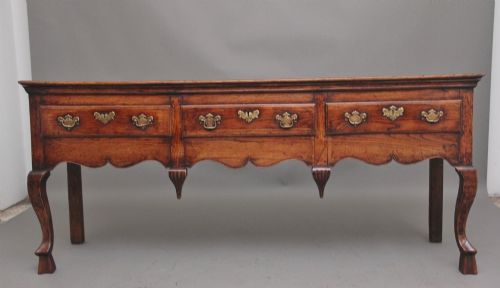
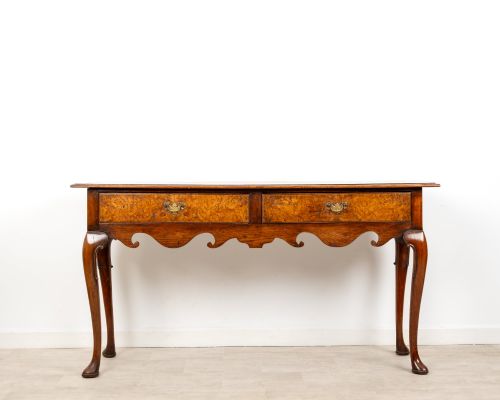
Buyers will most frequently encounter eighteenth-century oak dresser bases and twentieth-century burr walnut console tables bearing the signature double-curved leg. These items served historically to display plate or stage dishes before dining.
How they were made
Cabinetmakers constructed these tables using native and imported timbers, notably oak, walnut, burr walnut, and Cuban mahogany. Selected woods were chosen for durability and decorative grain figures, particularly on console and serving table tops.
The defining cabriole leg required careful shaping from solid timber to achieve the characteristic convex knee and concave foot. Joinery relied on traditional methods such as dovetailing for drawers and tenon joints for frames.
Several tables retain original brass drop handles that have gently clicked against timber drawer fronts for over two centuries.
What varies in quality
Quality rests in the fluidity of the leg profile and the integration of the knee carving where present. Finer examples display harmonious proportions between the top and the supporting framework, whereas lesser pieces can appear heavy or stiff in the curve.
The choice of surface veneer and timber selection also distinguishes the range. Tables featuring matched burr walnut or figured mahogany show greater ambition in the workshop than plain secondary timbers.
Gillows·Hille of London
The Cabriole Leg Server Table Glossary
- Cabriole leg
- A furniture support inspired by animal limbs, featuring a convex knee that curves out and a concave ankle that curves in. It terminates in a pad, club, or claw foot.
- Lowboy
- A small serving table or dressing table typically fitted with one or more rows of drawers beneath the top. They date frequently from the Georgian period in oak or walnut.
- Dresser base
- A long, low sideboard fitted with drawers, often standing on cabriole legs. These were utilised in dining areas for storing and serving food.
- Burr walnut
- A highly figured wood grain obtained from walnut tree growths or burls. It provides a decorative pattern valued on console and serving tables.
- Consoles
- Tables designed to be placed against a wall, frequently supported by brackets or legs. They serve decorative and functional roles in entrance halls and reception rooms.
Cabriole Leg Server Table: Frequently Asked Questions
Where should I place a server table?
A server table fits naturally against a dining room wall for holding dishes, or within an entrance hall as a console.
Its shallow depth ensures it occupies minimal floor space while providing a useful surface.
How do I identify a Georgian piece?
Georgian tables typically display construction in solid oak, mahogany, or walnut with hand-cut dovetails inside the drawers.
The cabriole legs on genuine period examples are integrated directly into the frame rather than being later additions.
What is the difference between a lowboy and a server?
A lowboy is generally smaller and more compact, originally intended for personal grooming or light serving tasks.
Server tables and dresser bases are longer, offering greater surface area and multiple drawers for dining accessories.
Can these tables handle daily use?
Solid timber construction in oak and mahogany provides the sturdiness required for everyday placement.
Regular polishing helps maintain the finish against moisture and general wear.