

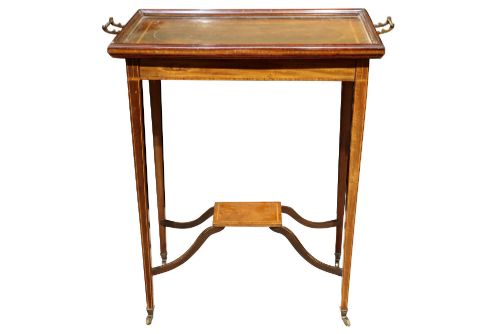
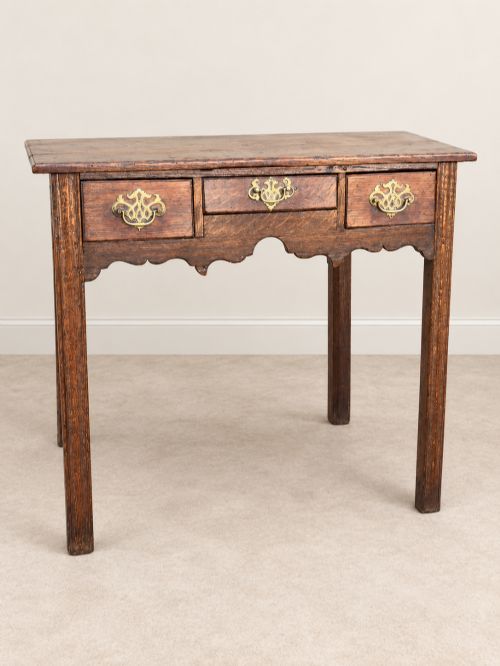
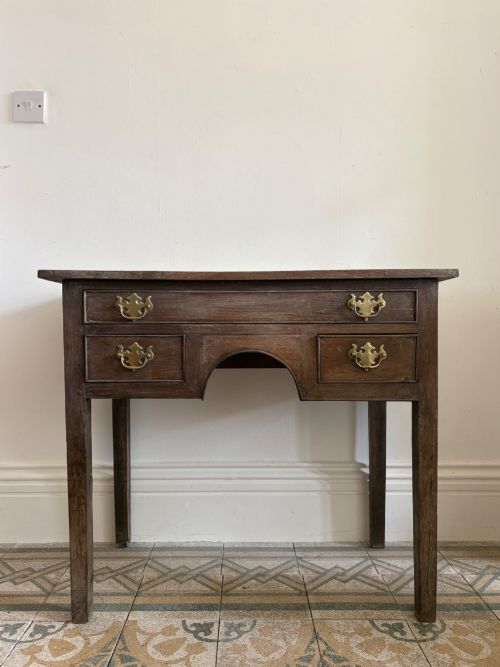
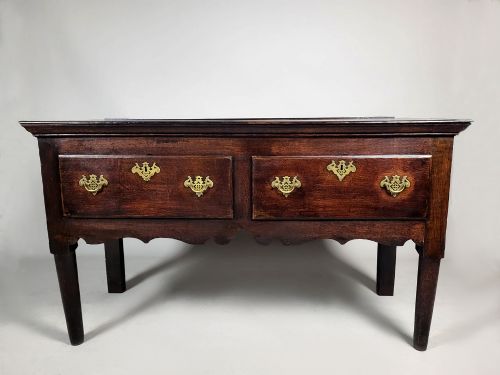
Brass Handle Server Table
A brass handle server table brings steadfast utility and rich timber tones into a room, serving meals or displaying objects with quiet distinction.
Brass Handle Server Table
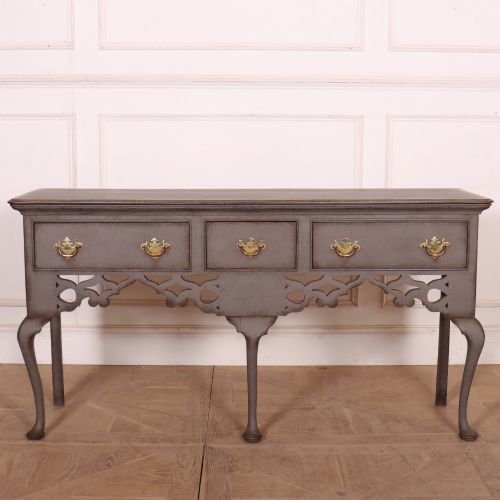
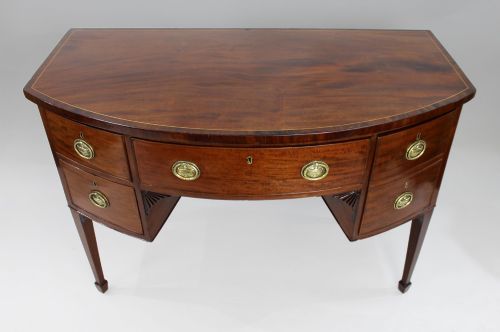
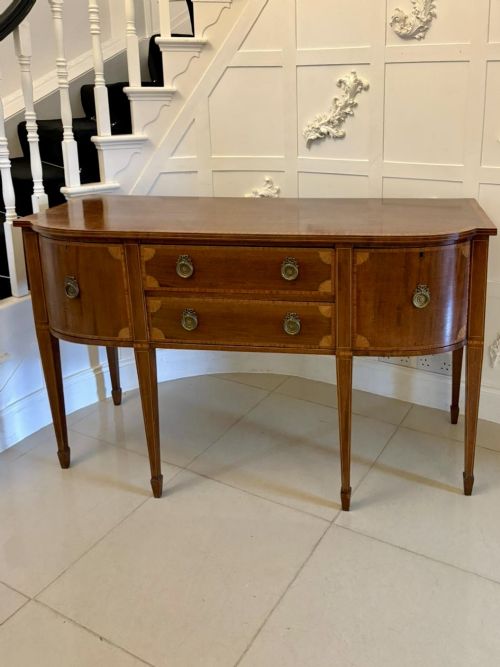
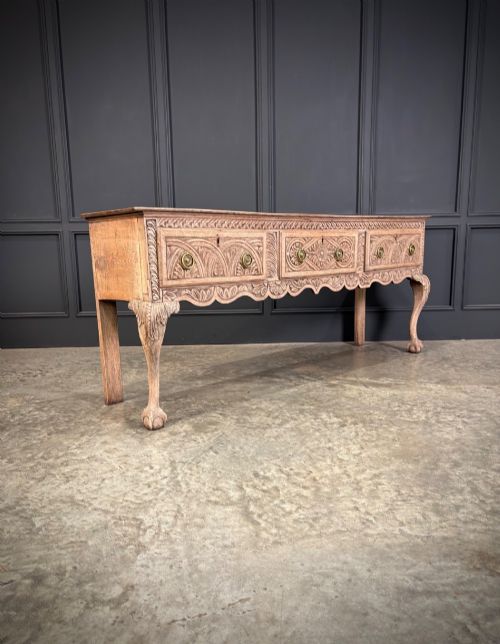
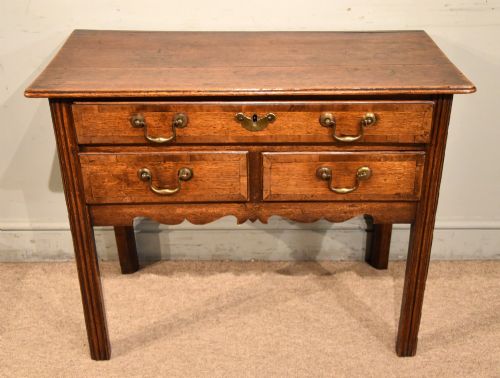
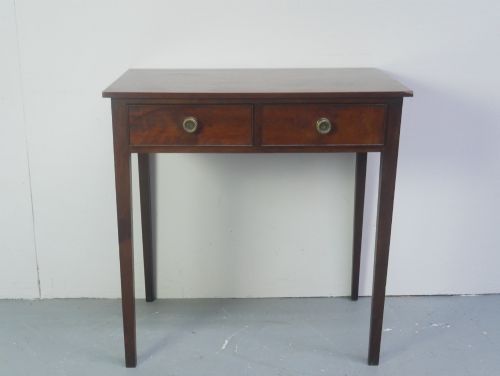
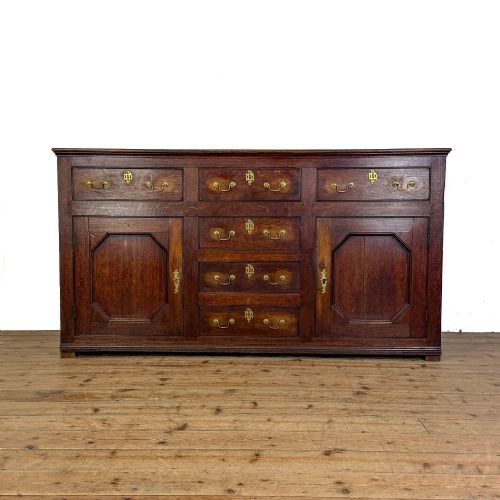
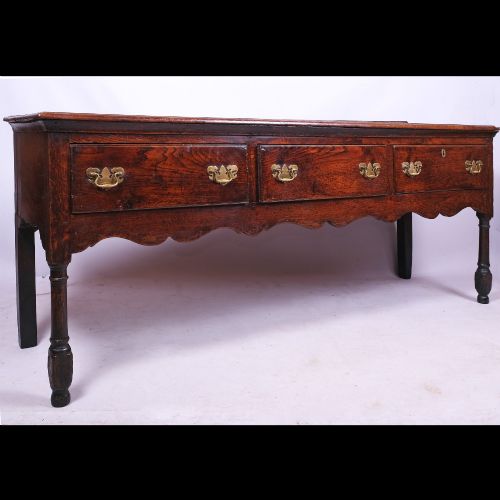
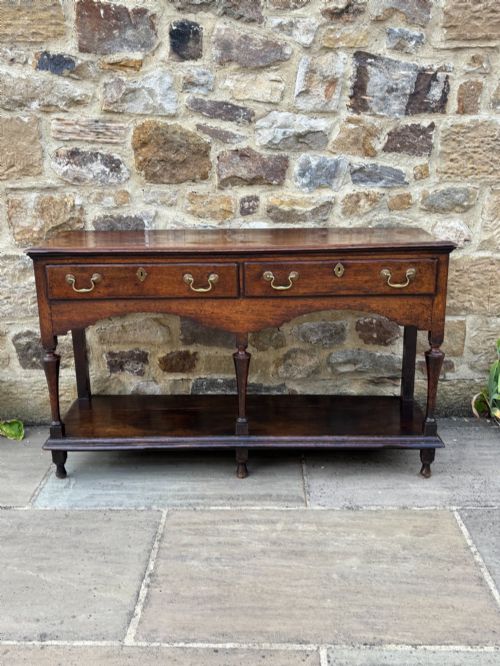
When you search for a brass handle server table, you encounter forms that span several centuries of British cabinetmaking, including lowboys, serving tables, and sideboards. These pieces provide surface space and storage through drawers, functioning as practical servers in dining rooms and halls.
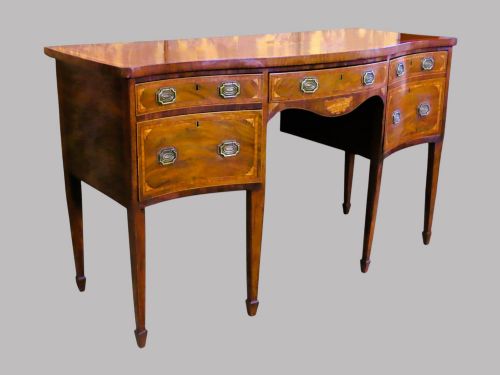
The version you are most likely to meet on this page is the Georgian mahogany or oak sideboard and lowboy, dated from the eighteenth and nineteenth centuries. These examples frequently incorporate brass drop handles or pulls to operate their drawers.
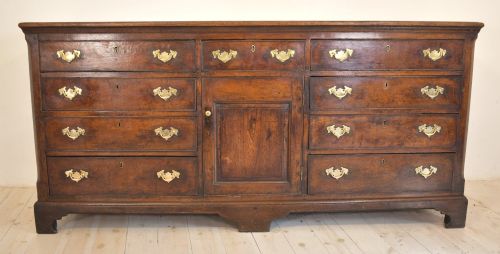
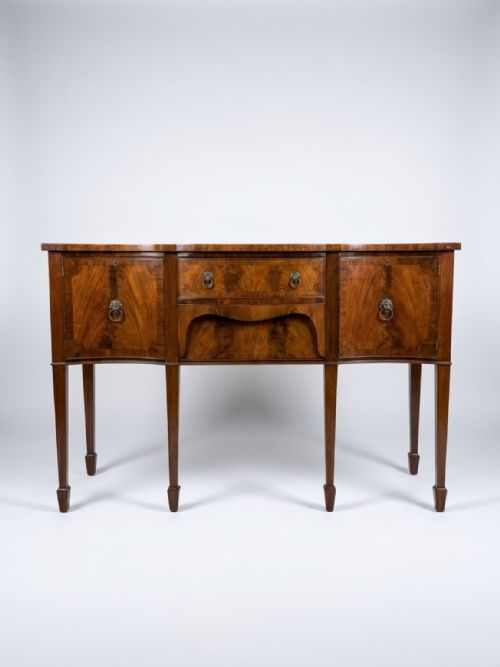
Makers constructed these tables in varied regional styles, from simple oak dresser bases with potboards to refined mahogany serving tables with bow fronts. Each variant reflects the domestic requirements of its period, prioritising timber grain and functional proportion.
Materials and construction
Cabinetmakers built these tables primarily using solid oak and mahogany, often applying boxwood and satinwood inlay or crossbanding for surface contrast. Timbers were selected for figured grain and durability, forming the structural carcass and drawer fronts.
Joinery methods relied on traditional techniques to house drawers and secure legs, whether straight square legs, cabriole supports, or tapering designs. Metalwork fixtures, specifically brass handles and occasional galleries, were fitted to secure functional operation.
Brass Handle Server Table Retail Price Guide 2026
Typical asking prices for brass handle server table among the pieces listed under this phrase on Sellingantiques today, from the lower quarter to the upper quarter. They describe what is for sale here now, not the wider market.
A brass gallery on a Regency server ensured the mutton stayed put while the carriage rolled.
Assessing quality and finish
The hierarchy of quality rests upon the choice of timber and the restraint applied to decorative inlay. Finer examples display carefully figured mahogany or rich, dry oak surfaces that have aged with consistent patination.
Proportion and the integration of original brass hardware distinguish superior items from more utilitarian pieces. Execution of crossbanding, stringing, and drawer construction further separates standard regional work from high-status cabinetmaking.
The Brass Handle Server Table Glossary
- Lowboy
- A small table with one or more rows of drawers, commonly used as a dressing table or side table in the eighteenth century. They typically stand on cabriole or straight square legs.
- Server
- A piece of furniture used for holding food or serving dishes in a dining space, encompassing sideboards, serving tables, and dresser bases. These items often feature integrated drawers.
- Crossbanding
- A decorative border of veneer laid around the perimeter of a tabletop or drawer front with the grain running perpendicular to the central panel. This technique frames the primary timber.
- Potboard
- An open lower shelf built into the base of an oak dresser, traditionally intended for storing pots and domestic utensils. It is supported by the lower stretchers of the frame.
- Serpentine
- A curved shape featuring a convex centre flanked by two concave curves, frequently seen on the fronts of Georgian sideboards and serving tables. This contour softens the rectangular mass of the furniture.
Brass Handle Server Table: Frequently Asked Questions
What is a server table?
A server table is a long, narrow table designed for holding food, serving dishes, or silverware during meals.
They sit against dining room walls and frequently incorporate drawers for storage.
How do I date a wooden sideboard?
Dating relies on examining the secondary timbers, construction methods, and hardware configurations.
Georgian and Regency pieces display distinct wood choices like mahogany and oak, paired with period brass handles.
What timber was used most often?
Oak and mahogany dominate the material record for these tables across the eighteenth and nineteenth centuries.
Cabinetmakers also utilised walnut, boxwood, and satinwood for decorative inlay and contrasting borders.
Where should I place a server table?
These tables suit dining rooms, hallways, and living spaces where surface area and low storage are useful.
Their narrow depth allows them to sit comfortably against walls without obstructing pathways.