

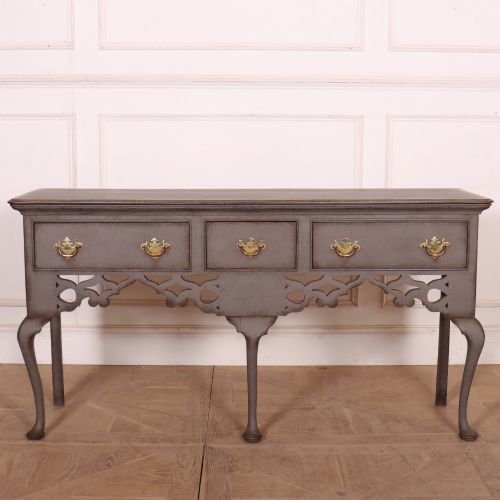
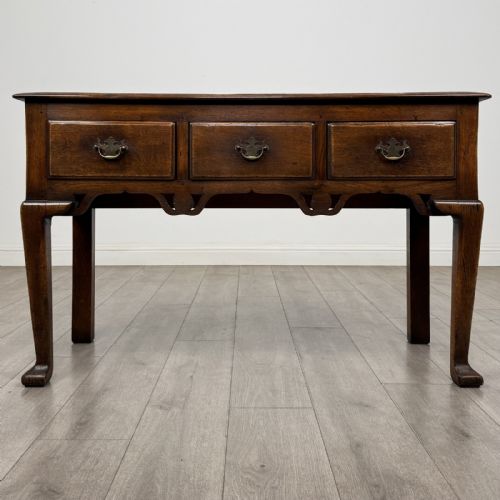
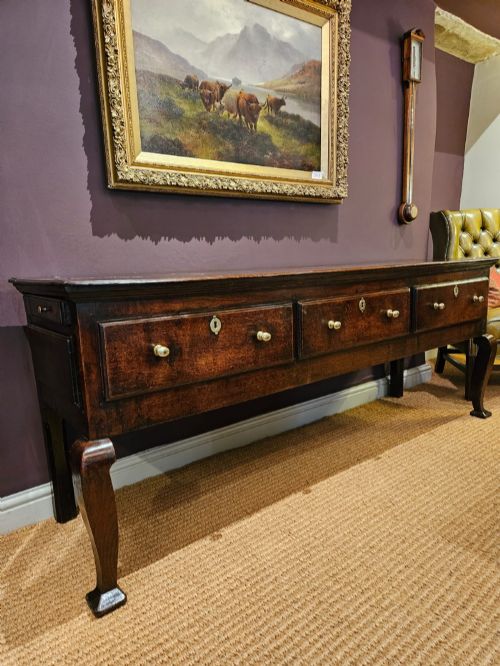
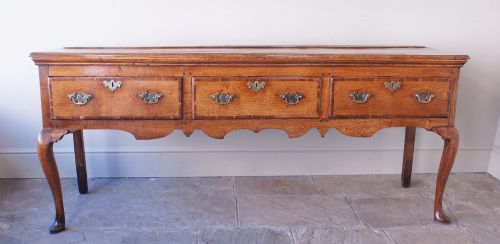
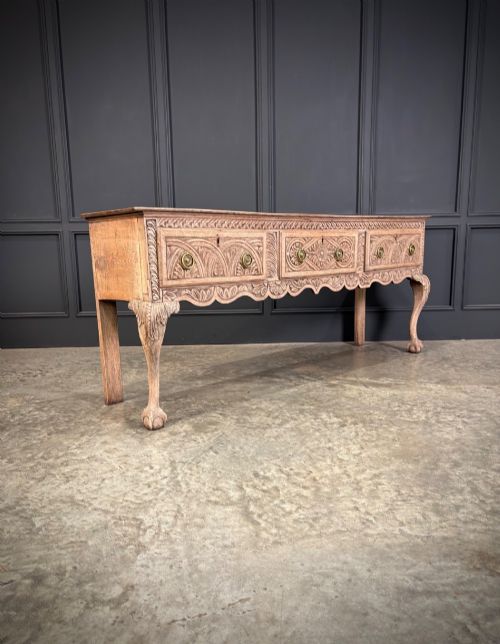
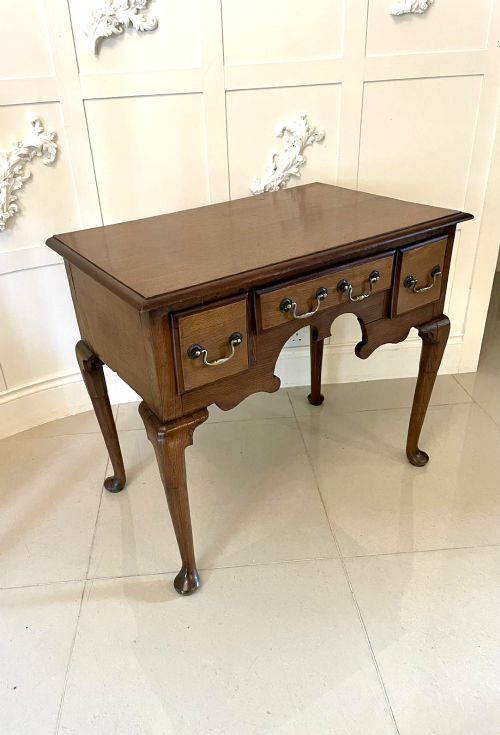
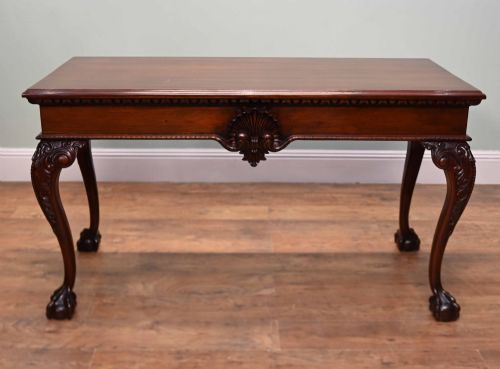
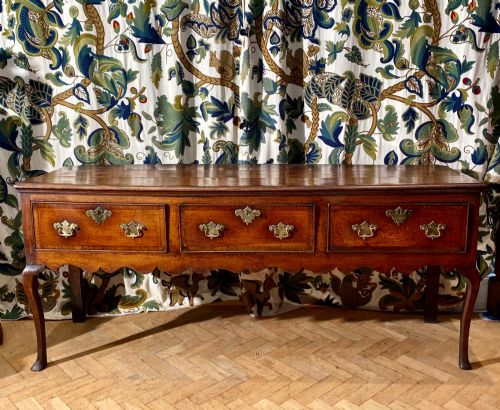
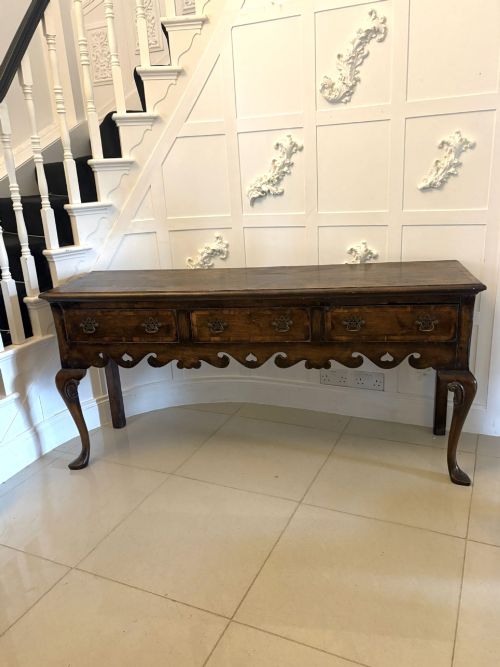
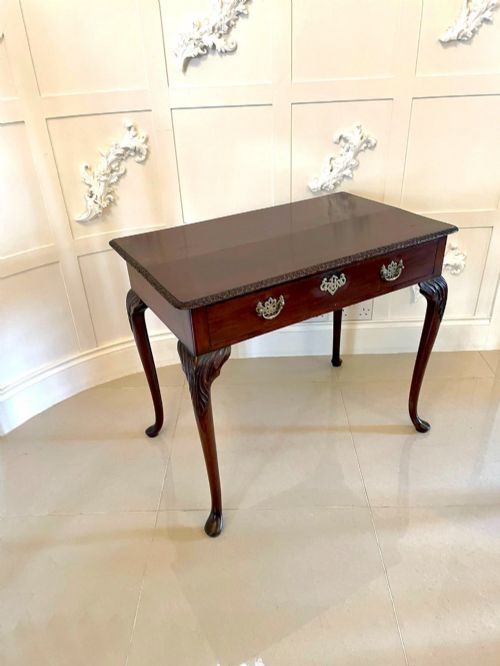
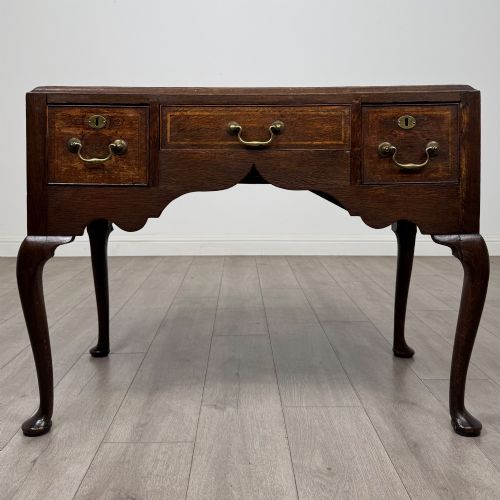
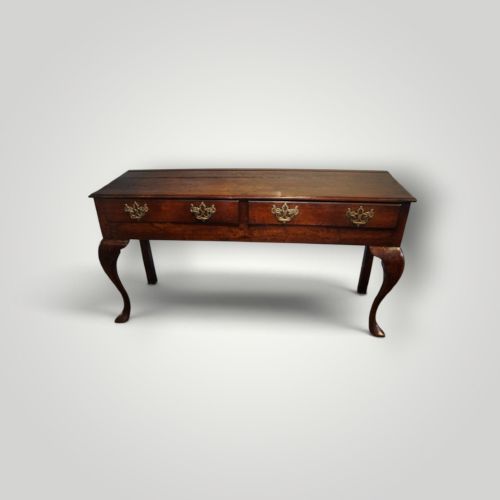
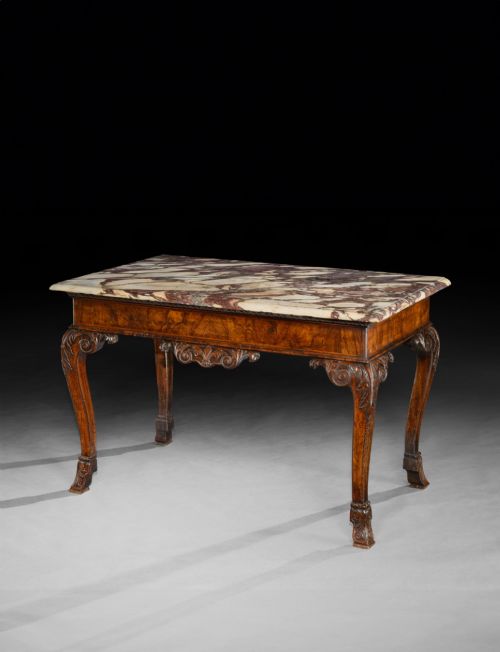
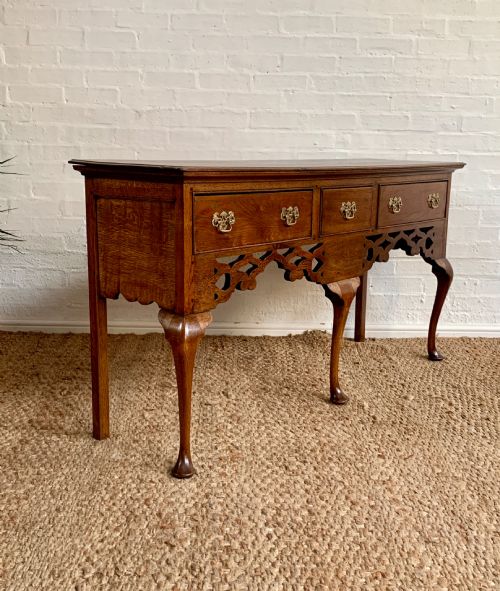
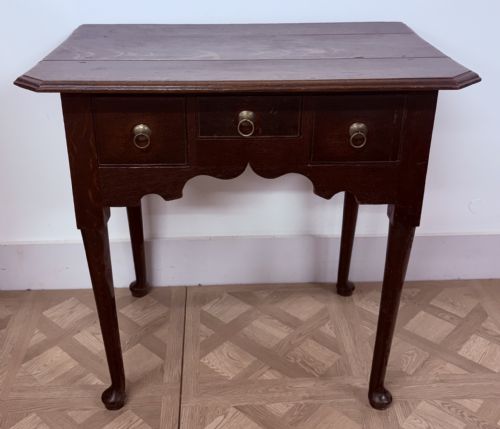
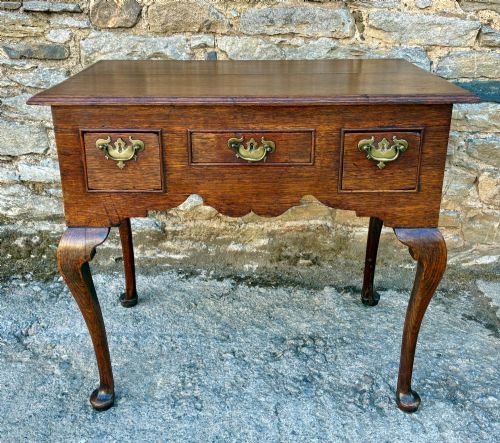
Georgian Cabriole Leg Server
A georgian cabriole leg server brings curved, fluid joinery and substantial timber into a dining room or hall.
Georgian Cabriole Leg Server
A georgian cabriole leg server encompasses a variety of serving tables, lowboys, dresser bases, and console tables designed for domestic use. The pieces span genuine 18th-century examples as well as later revivals from the Edwardian era and the 1920s or 1930s. Buyers will frequently encounter oak and walnut constructions dating from the Georgian period alongside later interpretations.
Forms range from three-drawer dresser bases and lowboys to tray top silver tables and side cabinets. The defining structural feature across these diverse serving tables is the curving cabriole leg, which lifts the timber frame off the floor with distinct grace.
How they were made
Cabinetmakers utilised solid timbers including oak, walnut, burr walnut, and mahogany, sometimes finished with marquetry inlay or paint. The curved cabriole legs required careful shaping from thick stock to maintain structural integrity while achieving a tapered, sweeping profile.
Joinery relied on traditional techniques to house drawers and secure tabletops, occasionally incorporating brass hardware for pulls and handles. Surfaces were smoothed and polished to highlight the natural grain of the wood, whether dealing with dense English oak or rich Cuban mahogany.
Georgian Cabriole Leg Server Retail Price Guide 2026
Typical asking prices for georgian cabriole leg server among the pieces listed under this phrase on Sellingantiques today, from the lower quarter to the upper quarter. They describe what is for sale here now, not the wider market.
Listings feature oak, walnut, burr walnut, and mahogany constructed across the 18th century, 19th century, Edwardian period, and 1930.
What varies in quality
The sophistication of the timber selection largely dictates the standing of a piece, with figured burr walnut and rich mahogany commanding attention above standard plain oaks. Finer examples display meticulous carving on the knees of the cabriole legs and crisp execution of drawer dovetails.
Proportion and surface finish further separate the tiers, as superior items retain deep, warm patina and well-balanced dimensions. Later revival pieces vary according to how closely they adhere to the weight and presence of genuine 18th-century work.
The Georgian Cabriole Leg Server Glossary
- Cabriole leg
- A furniture leg that bends outward in a convex curve at the knee and tapers inward in a concave curve toward the foot, often ending in a pad or hoof.
- Lowboy
- A small table with drawers, typically standing on four legs, used historically as a dressing table or side table.
- Dresser base
- The lower section of a traditional kitchen or dining room dresser, featuring surface top space above a series of drawers and cupboards.
- Marquetry
- Decorative inlay work where pieces of veneer are fitted into a wooden panel to form geometric or pictorial designs.
- Tray top
- A tabletop finished with a raised moulded edge designed to prevent items from rolling off the surface.
Georgian Cabriole Leg Server: Frequently Asked Questions
What is a cabriole leg server used for?
These tables served historically for food preparation, serving dishes, or holding silver and dining accessories in grand rooms.
Today, they function as sideboards, console tables, or hall tables that provide surface display and drawer storage.
How do I tell an 18th-century piece from a revival?
Original pieces display authentic timber oxidation, hand-cut joinery marks, and wear patterns consistent with centuries of domestic service.
Revival items from the Edwardian period or the 1930s often show more uniform machine finishing and different internal construction methods.
Are these servers made of solid wood?
Most examples utilise solid native and imported hardwoods like oak, walnut, and mahogany for their primary frames and structural elements.
Some decorative variations incorporate fine veneers, particularly on burr walnut drawer fronts and marquetry inlaid surfaces.
Where should I place a lowboy server?
Their compact proportions make them suitable for narrow hallways, dining room perimeters, or living spaces requiring subtle storage.
The finished backs on many examples also allow them to sit away from walls as freestanding console tables.