




Antique Weighing Scales
Antique weighing scales measure out domestic history through heavy brass and dark mahogany.
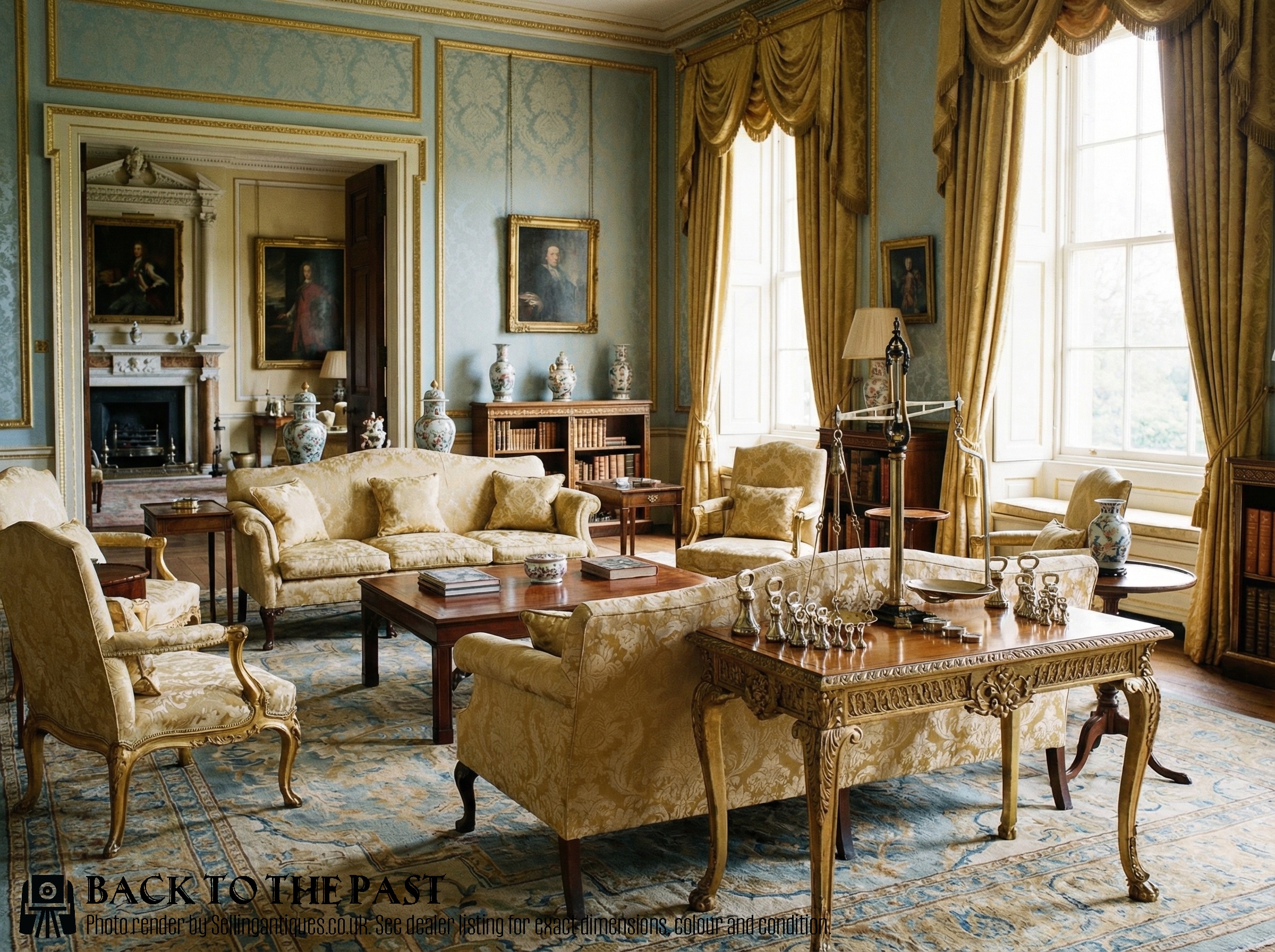
What antique weighing scales are
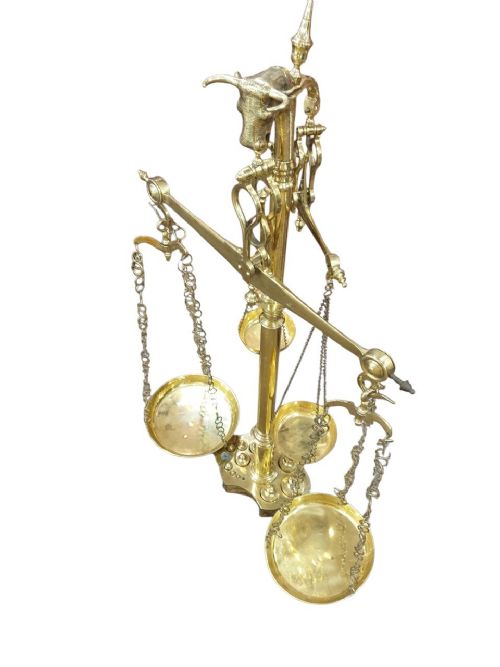
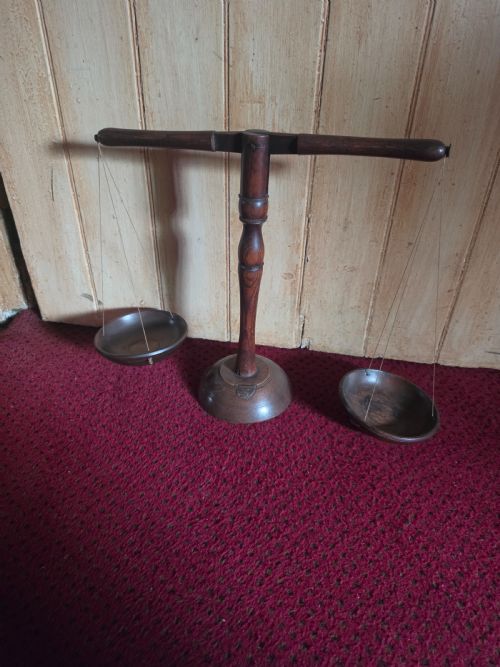
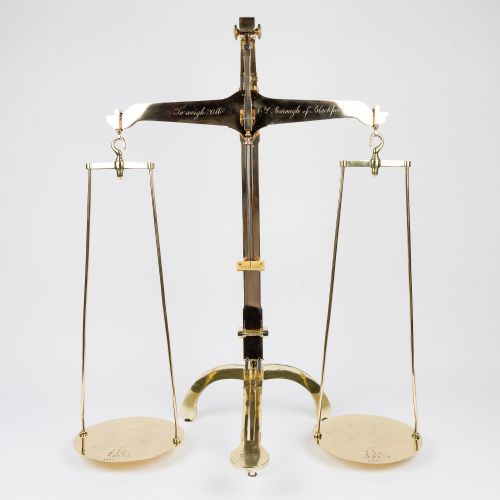
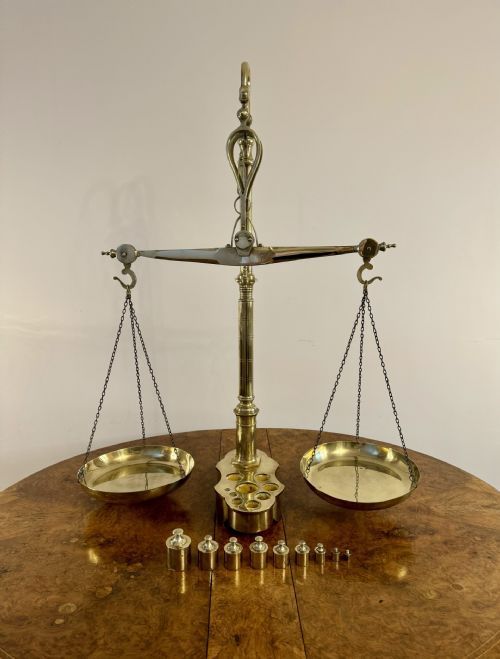
When you search for antique weighing scales, you encounter utilitarian objects built for commerce, medicine and the home. The selection spans the Victorian and Edwardian eras, featuring balance scales and beam scales designed for countertops or hanging.
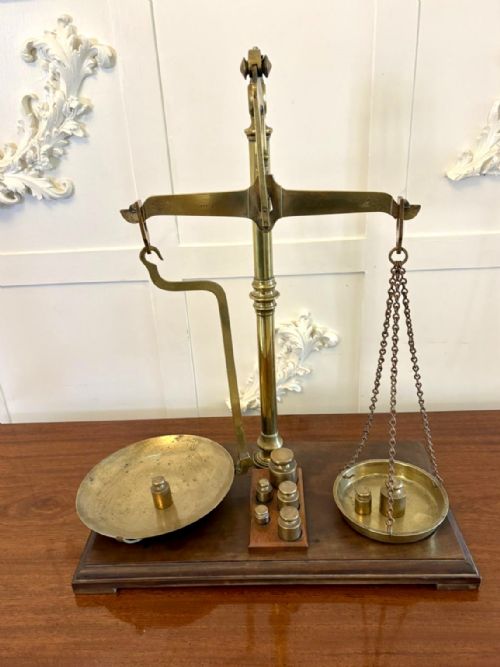
Most pieces on this page are domestic or shop equipment made from the late nineteenth century through to the 1920s. You will find brass balance beams mounted on mahogany bases alongside heavy cast iron shopkeeper setups.
Origin points vary between English makers in London and Bristol, alongside continental examples such as Dutch traditional free-hanging balance beams. The forms range from compact apothecary sets with complete weights to large industrial shop counters.
How they were made
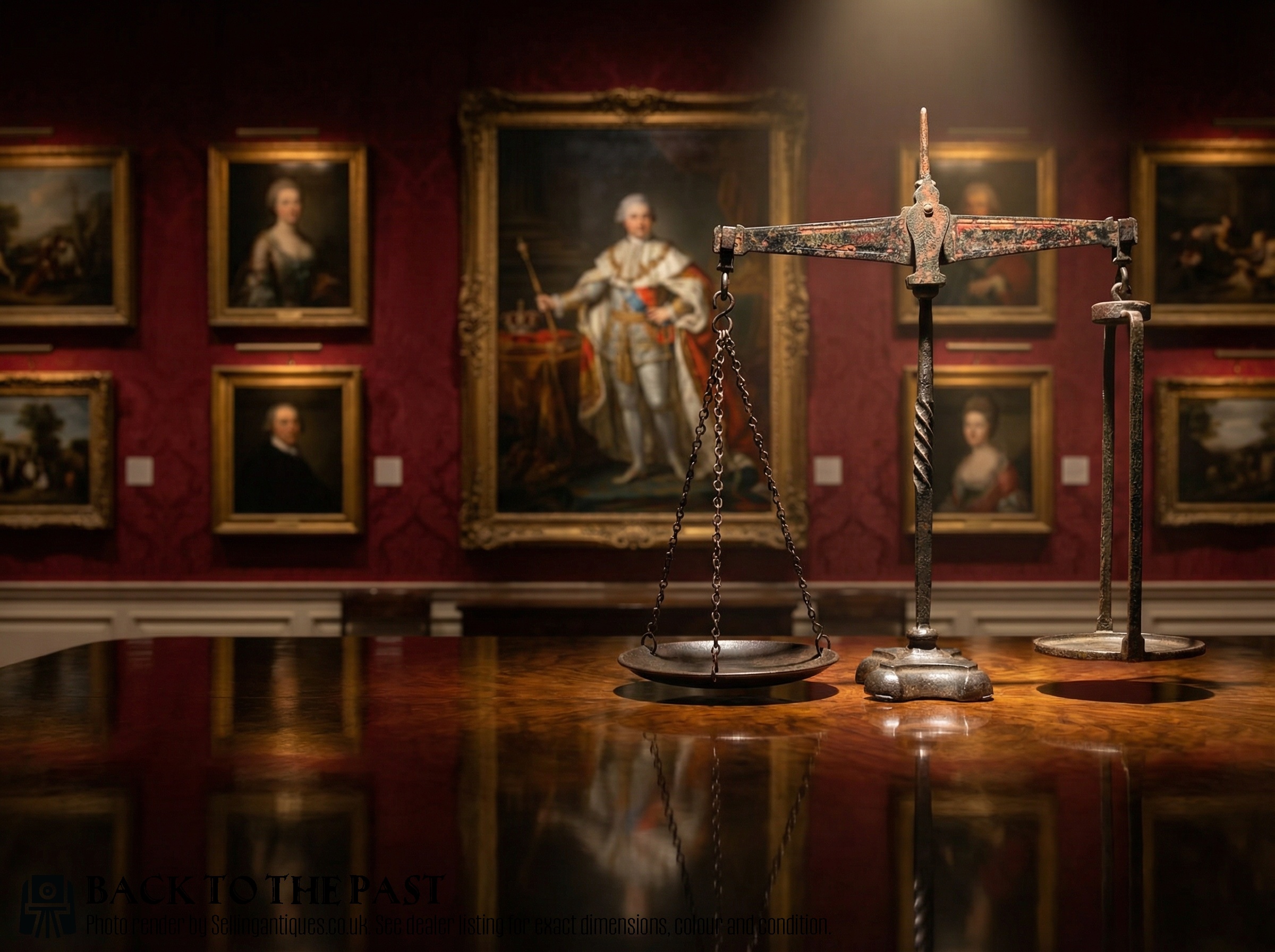
Makers constructed these scales using durable metals and dense timbers suited to daily measurement. Cast iron and wrought iron provide the structural strength for bases and framing, while bronze and brass form the sensitive balance beams and pans.
Mahogany frequently serves as the wooden base material, often housing fitted compartments for weights. Metal components show careful casting and turning, with makers such as Day & Millward and Parnall & Sons marking their brass work.
Retail Price Guide 2026
Typical UK retail prices for weighing scales, calculated from the Sellingantiques database of over a million retail prices indexed since 2003. This retail price guide relies exclusively on Sellingantiques data; no external sources or auction records are used, so the figures do not describe the wider market.
Victorian shopkeepers weighed everything from loose tea to Mellins Food, trusting brass beams that spent a century tipping for trade.
What varies in quality
The distinction between standard utility pieces and finer examples rests in the maker's finish and the completeness of the set. Named makers like De Grave & Co. or Parnall & Sons command attention through precise engineering and marked components.
Material quality and proportion dictate the upper tier of the range, particularly heavy cast iron framing paired with polished brass and intact mahogany box bases. Surviving sets retaining their original matching weights represent the more desirable examples.
Day & Millward·Parnall & Sons of Bristol·Fairbanks·De Grave & Co. London
The Antique Weighing Scales Glossary
- Balance scales
- A measuring device operating on a central pivot with two suspended pans. It determines weight by comparing an unknown load against known standards.
- Beam scales
- A traditional weighing apparatus utilising a horizontal metal rod suspended at its centre. The pans hang from each end of this pivoting bar.
- Apothecary balance
- A sensitive measuring instrument traditionally utilised by chemists for weighing medicinal ingredients. These often sit within fitted mahogany boxes.
- Countertop balance
- A weighing device configured for placement on a shop counter or dispensary surface. They are typically mounted on timber bases rather than suspended.
- Free hanging balance
- A scale designed to be suspended from a ceiling or bracket rather than resting on a flat surface. Frisian examples often use this format.
Frequently Asked Questions
How do balance scales work?
Balance scales operate on a central fulcrum that supports a pivoting horizontal beam. Placing an object on one pan requires matching weights on the other to achieve equilibrium.
The pointer indicates when the beam rests level, confirming the measured weight matches the standard masses placed opposite.
What were apothecary scales used for?
Apothecary scales measured precise quantities of medicinal powders and compounds for medical prescriptions. Chemists relied on their high sensitivity for compounding drugs accurately.
These compact sets typically featured small brass pans and delicate weights housed inside fitted wooden boxes.
How do I date antique scales?
Dating relies on maker marks, material combinations, and the prevailing decorative styles of the base and housing. Victorian examples often feature polished mahogany and heavy brass.
Edwardian and later twentieth-century pieces introduce alternative metal treatments and simpler industrial forms without ornate timber surrounds.
Can I still use antique scales?
Many surviving balance scales remain mechanically functional for basic measurement tasks. However, vintage mechanisms require professional calibration to ensure legal or exact accuracy.
Most owners utilise them primarily for decorative display within kitchens, studies, or retail spaces rather than precise modern cooking.