


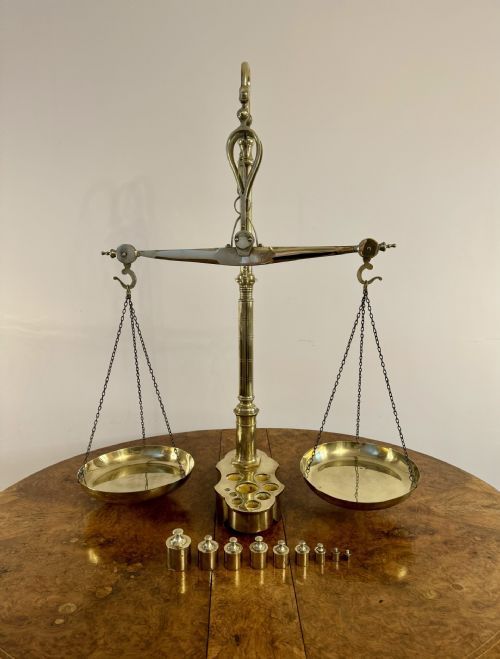


Antique Shop Scales
Antique shop scales are utilitarian survivors of commerce, built in brass and iron to weigh goods honestly on the counter.

Antique Shop Scales
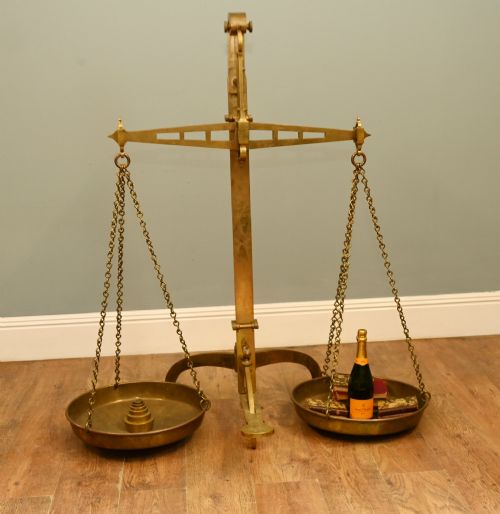
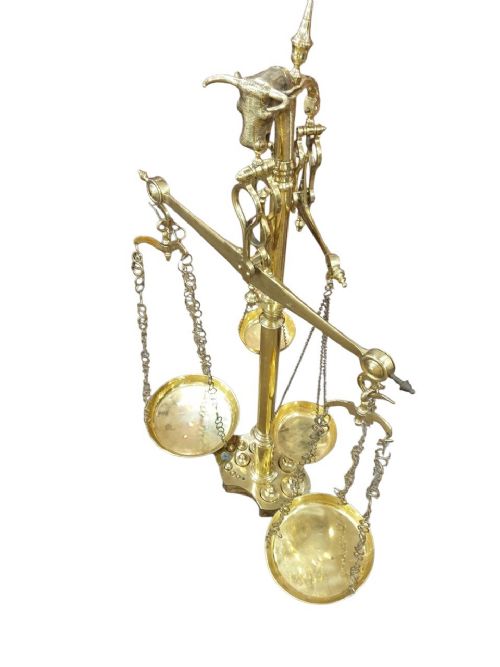
When you search for antique shop scales, you encounter heavy commercial instruments designed for everyday trade in Victorian and Edwardian groceries, butchers and chemist shops. These practical balances range from modest brass beam scales to monumental floor-standing butcher balances and rustic industrial counters.
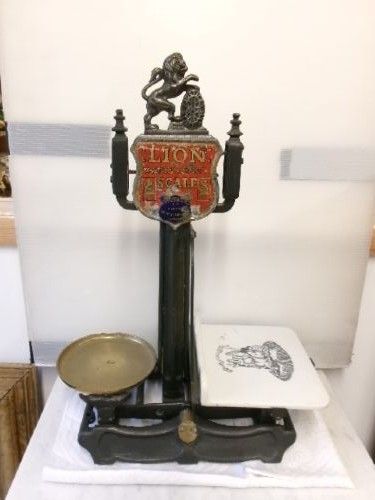
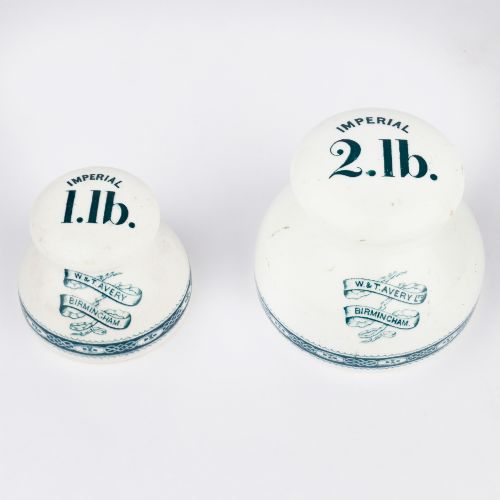
The versions you are most likely to meet on this page include balanced grocers' scales complete with ceramic advertising pans, heavy iron and copper counter models, and associated ceramic scale weights. Many of these pieces retain original maker markings from renowned firms, reflecting their heavy daily use in nineteenth and early twentieth century commerce.
How they were made
These commercial instruments combine cast iron bases and copper pans with polished brass beams, utilising robust metallurgy to withstand decades of heavy counter use. The materials are chosen for both durability and precision, ensuring the balance beam moves freely on hardened knife-edge pivots.
Ceramic elements such as scale pans and weights are fashioned from heavy ironstone or earthenware, often decorated with transfer-printed advertising for provisions like sausages or flour. Iron components are frequently painted or japanned to resist corrosion in busy retail environments.
Antique Shop Scales Retail Price Guide 2026
Typical asking prices for shop scales among the pieces listed under this phrase on Sellingantiques today, from the lower quarter to the upper quarter. They describe what is for sale here now, not the wider market.
Listings feature brass, cast iron, copper, and ironstone across Victorian, Edwardian, and early twentieth-century periods.
What varies in quality
Quality in commercial balances rests upon the crispness of the casting, the original polish of the brass, and the survival of legible maker inscriptions on the beams and ceramic pans. Better examples retain their matching original weights and exhibit minimal wear on the delicate pivot points that govern accurate weighing.
The presence of scarce advertising details, such as named grocers, co-operatives or specific municipalities, elevates an ordinary utilitarian scale into a desirable piece of social history. Superior specimens also demonstrate harmonious proportions between heavy iron bases and finely turned brass components.
W & T Avery·Day & Millward·Parnall & Sons of Bristol
The Antique Shop Scales Glossary
- Balance scales
- Weighing instruments utilising a central fulcrum and two suspended pans to determine mass by comparison with standard weights.
- Beam
- The horizontal metal bar of a scale that pivots at its centre and supports the weighing pans at each end.
- Ironstone
- A dense, durable type of earthenware developed in the nineteenth century, frequently utilised for heavy white scale pans and advertising weights.
- Chemist shop scales
- Precision weighing devices used in pharmacies, often smaller in scale and featuring delicate glass pans or enclosed wooden cases.
Antique Shop Scales: Frequently Asked Questions
How do I clean antique brass scales?
Polishing brass requires a gentle cloth and a mild proprietary cleaner to preserve the underlying metal without removing centuries of pleasing surface character. Avoid harsh abrasives that can soften crisp maker inscriptions and edge details.
Wooden bases and iron components need only a dry dusting or a very light wipe with a damp cloth. Maintaining this dry finish keeps the original patination intact.
Are these scales still accurate for weighing?
Most surviving commercial balances retain their mechanical integrity, but minor wear on the pivot points means they are generally collected for display rather than precise trade use. Their primary value lies in their decorative presence and historical associations.
If you do wish to test them, placing matched weights on either pan will demonstrate the sensitivity of the original brass beam. Levelling the scale on a flat surface is essential for proper movement.
How do I date an antique shop scale?
Dating relies on stylistic clues, such as the ornate iron casting patterns popular in the Victorian era compared to the cleaner lines of Edwardian designs. Maker marks and patent dates stamped into the brass or iron provide a reliable chronological anchor.
Ceramic advertising pans often feature specific typography and transfer-print styles associated with late nineteenth or early twentieth century commerce. Comparing the construction materials helps narrow the decade of manufacture.
Where were these scales originally used?
These instruments stood upon the wooden counters of Victorian and Edwardian grocers, butchers, and chemists to weigh dry goods, meat, and dry ingredients for customers. Larger floor-standing models served busy butcher shops where heavy carcasses required robust weighing capacity.
Co-operative societies and municipal authorities also utilised heavy brass and iron balances for trade standardisation and public markets. Each environment left distinct traces of working life upon the metal and ceramic surfaces.