



Vintage Counter Scales
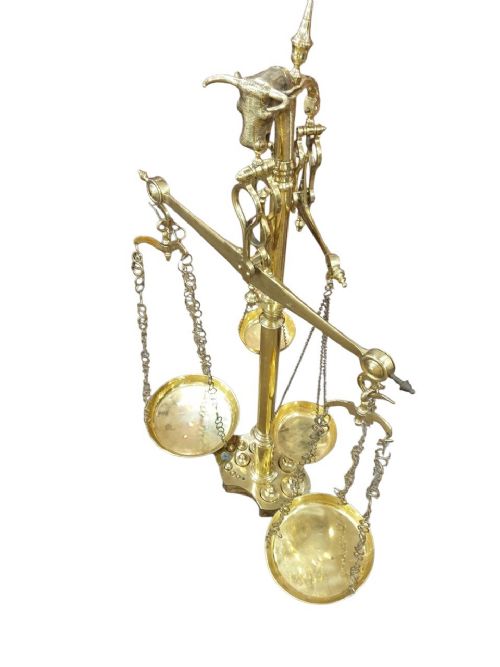
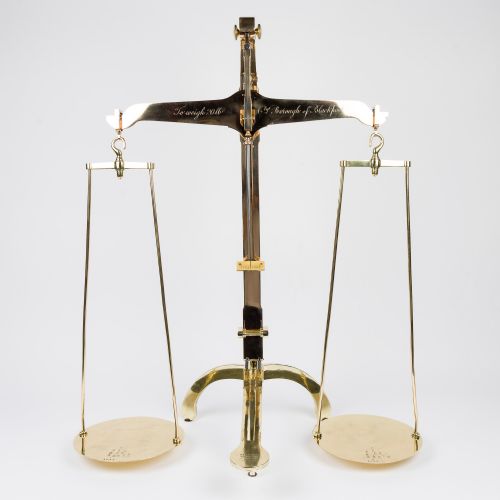
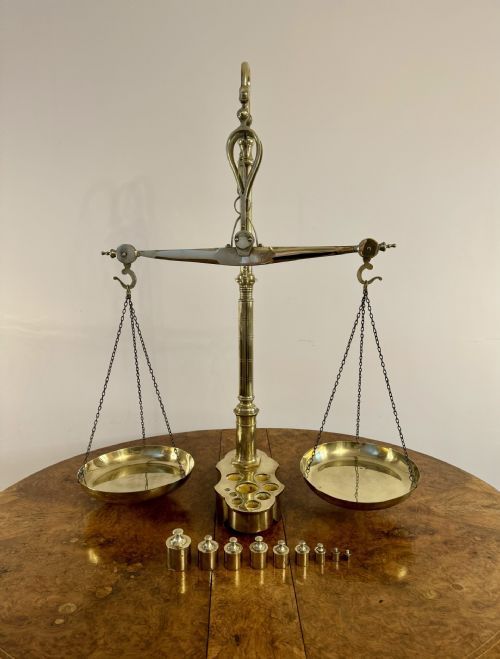
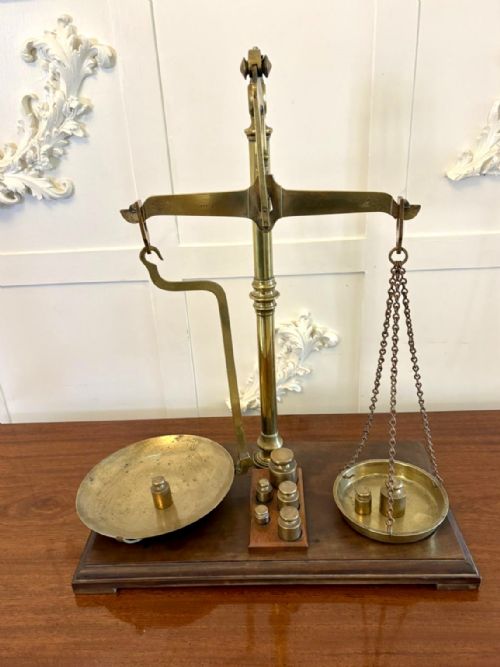
These vintage counter scales bring industrial weight and tactile precision to a kitchen, forged from brass and cast iron to measure out daily provisions.
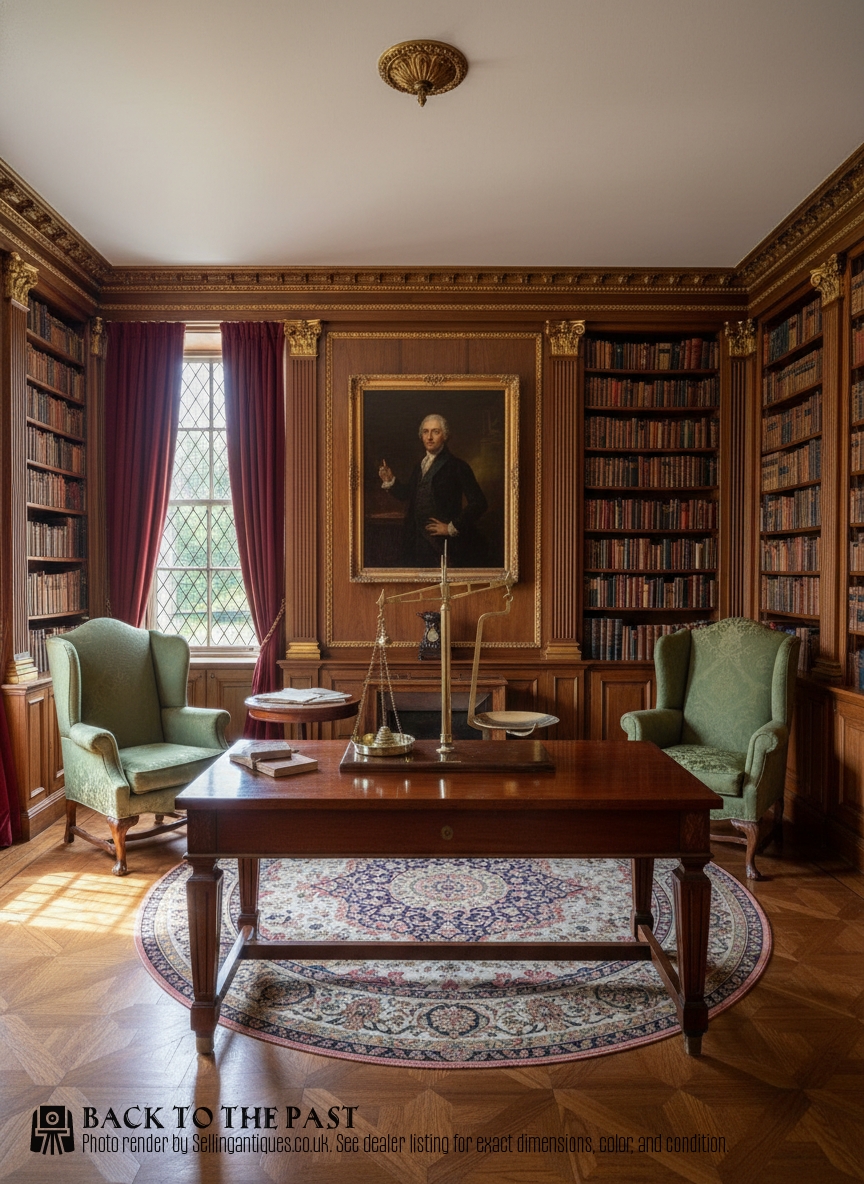
Vintage Counter Scales
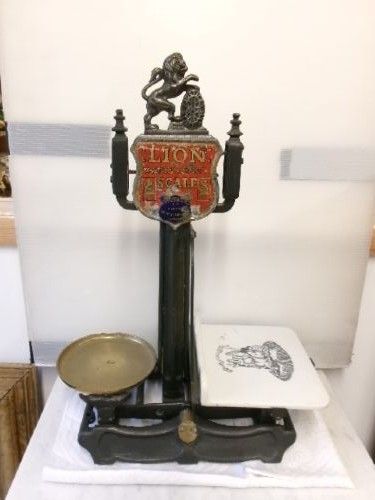
Vintage counter scales encompass heavy shop balances, grocers' scales, butcher's scales, and delicate apothecary balances used across the Victorian and Edwardian periods. Buyers search for these pieces to anchor a kitchen or pantry with functional, substantial metalwork and traditional weighing mechanisms.
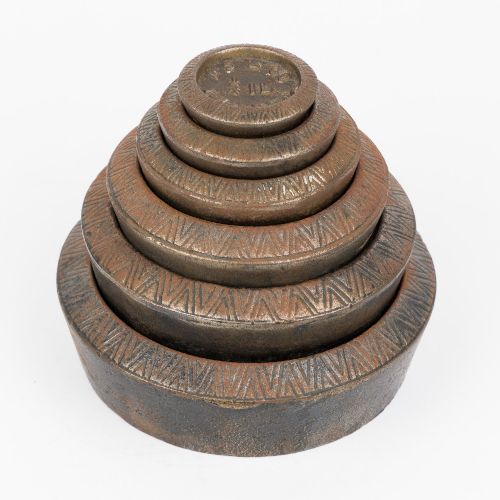
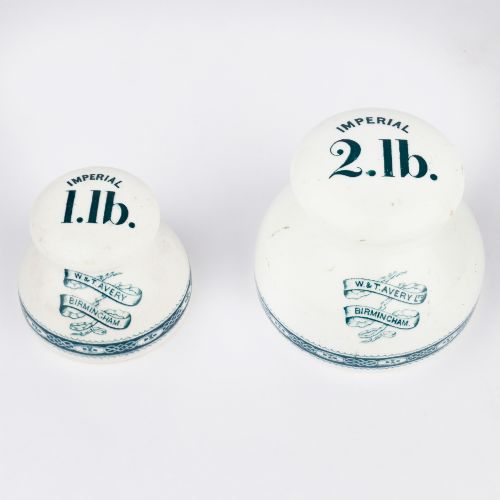
The versions most commonly met on this page range from robust brass beam scales and cast iron shop balances to regional dairy and kitchen scales. These pieces often arrive paired with matching ceramic weights, iron weights, or imperial stacking sets.
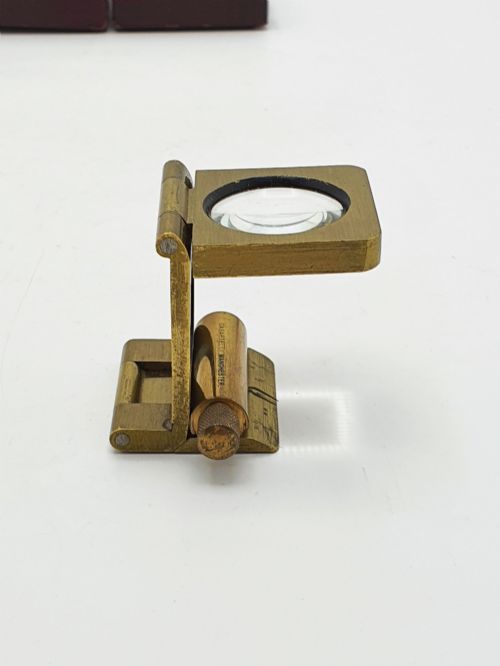
Origins stretch from 19th Century French workshops and English provincial businesses to specific makers like W & T Avery, Day & Millward, and Parnall & Sons of Bristol. The category also includes specialised items such as linen testers, magnifying glasses with measuring scales, and ceramic scale pans.
How vintage counter scales were made
Makers constructed these scales using durable combinations of cast iron, wrought iron, and polished brass, often mounted on mahogany or oak wooden bases. Copper pans and ceramic plates provided hygienic, washable surfaces for food and medicine.
Mechanisms relied on finely balanced brass beams and iron levers, paired with stamped or cast weights made of iron and ceramic. Details such as engraved maker inscriptions, city borough stamps, and wooden block stands reflect rigorous commercial and scientific standards.
Vintage Counter Scales Retail Price Guide 2026
Typical asking prices for vintage counter scales among the pieces listed under this phrase on Sellingantiques today, from the lower quarter to the upper quarter. They describe what is for sale here now, not the wider market.
Listings feature materials spanning brass, cast iron, mahogany, copper, glass, ceramic, wrought iron, and oak.
What varies in quality in vintage counter scales
Quality rests in the weight and purity of the metals used, the smoothness of the beam movement, and the presence of original components like marked ceramic pans and matching weight sets. Substantial brass beams and solid mahogany or oak bases indicate higher grade workshop production.
The presence of crisp maker stamps, local authority verification marks, and complete matching sets of weights distinguish utilitarian workshop pieces from exceptional retail or scientific instruments.
Casartelli Manchester·W & T Avery·Day & Millward·Parnall & Sons of Bristol·Fairbanks Scales·De Grave·Bartlett & Sons
The Vintage Counter Scales Glossary
- Beam scale
- A weighing instrument consisting of a horizontal lever suspended from a central pivot, with equal arms supporting pans at each end. This classic design forms the basis of many traditional counter balances.
- Apothecary balance
- A sensitive scale traditionally used by pharmacists to measure small quantities of dry ingredients and medicines. These often feature compact brass construction and fitted wooden block stands.
- Imperial stacking weights
- A set of calibrated metal weights designed to nest inside one another for orderly storage. They correspond to traditional British units of measurement.
- Linen tester loupe
- A small folding magnifying glass incorporating a measured scale at the base. These devices allowed merchants to inspect the weave and thread count of textiles.
- Scale pan
- The shallow dish suspended from a balance to hold goods being weighed. They appear in brass, copper, and glazed ceramic.
- Shopkeeper balance
- A sturdy commercial scale built for daily retail use on a shop counter. These frequently incorporate heavy cast iron bases and brass or copper pans.
Vintage Counter Scales: Frequently Asked Questions
How do I clean brass and copper scales?
Use a soft cloth to remove dust and debris without disturbing the aged patina accumulated over decades of use.
Avoid harsh chemical polishes that strip away historical character and wear on stamped maker marks.
Can these scales still weigh accurately?
Many vintage balances remain mechanically sound and capable of accurate measurement after gentle adjustment of the beam pivot.
Commercial scales require professional calibration if intended for precise modern weighing tasks.
How do I identify the period of a scale?
Examine the materials, construction methods, and any stamped maker names or city borough verification marks on the metal components.
Victorian and Edwardian examples often feature distinct cast iron frames and polished brass beams characteristic of 19th and early 20th century manufacturing.
Where were these scales originally used?
These instruments served primarily in grocery shops, butcher's shops, dairies, and apothecary dispensaries for commercial transactions.
Some specialised pieces also functioned in municipal offices and textile merchants' workshops.