




Victorian Beam Scales
Victorian beam scales bring precise mechanical engineering and rich brass and mahogany materials directly into modern interiors as striking display pieces.
Victorian Beam Scales
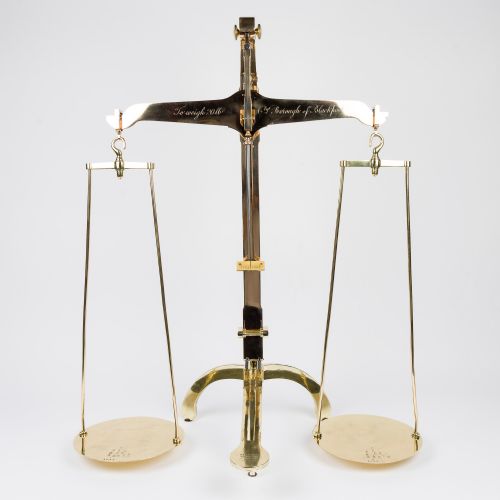
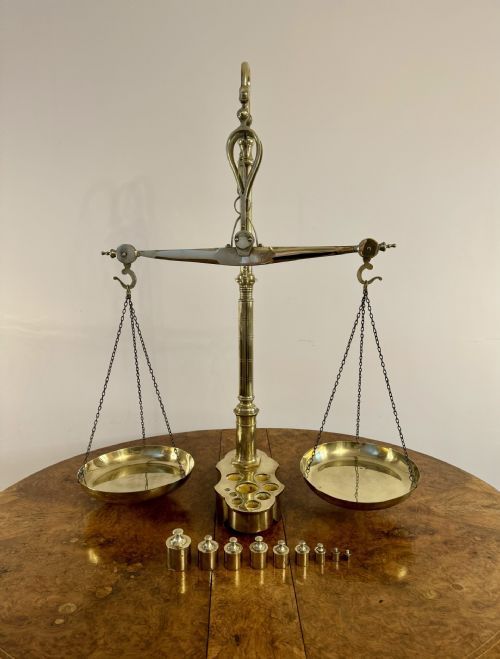
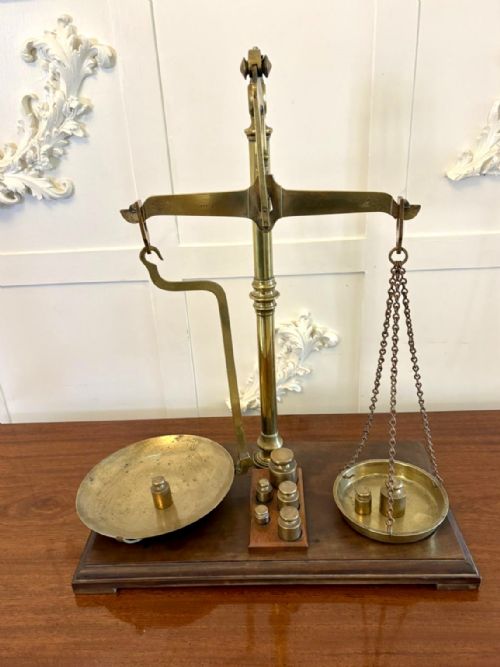
Victorian beam scales comprise mechanical weighing apparatus designed for trade, office and scientific use during the nineteenth and early twentieth centuries. The examples encountered on this page range from delicate apothecary balances and postal letter scales to heavy industrial balance scales and municipal verification instruments.
Most pieces combine a central metal beam with suspended pans, mounted on turned mahogany bases or supported by heavy cast iron and wrought iron frames. These utilitarian instruments originate from makers who supplied chemists, postal sorting rooms and local authorities with dependable weighing equipment.
Materials and construction
Makers utilised polished brass for the central beams, pans and sensitive pivots to resist corrosion and ensure smooth movement. Bases and supporting boxes were predominantly constructed from dense hardwoods like mahogany and oak, often incorporating fitted drawers to store brass weight sets.
Industrial and heavy-duty variants integrated robust cast iron and wrought iron frames to withstand rigorous daily use in trade. Glass components occasionally appeared in protective casing or indicator dials for delicate scientific instruments.
Victorian Beam Scales Retail Price Guide 2026
Typical asking prices for victorian beam scales among the pieces listed under this phrase on Sellingantiques today, from the lower quarter to the upper quarter. They describe what is for sale here now, not the wider market.
Listings feature scales spanning the Victorian era through to the 1940s, constructed from brass, mahogany, iron, copper and glass.
Assessing quality and finish
Superior quality pieces display refined casting work on the brass beams and precise graduation marks, alongside well-figured timber bases with tight joinery. Complete sets retaining their original matching brass weights command higher regard among collectors than those lacking complete component parts.
Institutional provenance, such as municipal verification stamps or maker inscriptions engraved into the metal, separates standard utilitarian items from exceptional surviving instruments. The crispness of the original finish and the absence of heavy modern replacements dictate the desirability of the piece.
Day & Millward·Parnall & Sons of Bristol·De Grave Short & Co·Bartlett & Sons·W & T Avery of Birmingham
The Victorian Beam Scales Glossary
- Beam scale
- A weighing device operating on the principle of levers, where two pans hang from equal arms attached to a central pivoting beam.
- Apothecary balance
- A sensitive scale utilised by chemists for weighing medicinal ingredients with high precision.
- Verification balance
- A heavy-duty scale employed by local authorities and inspectors to check standard weights and measures.
- Bell weight
- A type of stackable brass weight shaped like a small bell, frequently found accompanying commercial trade scales.
- Postal scale
- A compact scale designed specifically for weighing letters and parcels to determine postage rates.
Victorian Beam Scales: Frequently Asked Questions
How did these scales work?
These instruments rely on equilibrium, where an object placed on one pan is balanced by standard weights added to the opposite side until the central pointer rests at zero. The precision of the movement depends entirely on the knife-edge pivots housed within the central beam.
Operators adjusted the sensitive thumbscrews to calibrate the balance before each use, ensuring accurate measurements for trade, postal or scientific purposes.
Where were they used?
Victorian beam scales served in diverse environments ranging from high street chemists and post offices to merchant warehouses and municipal inspection offices. Apothecary versions sat on pharmacy counters, while robust iron and brass models weighed dairy produce or heavy goods.
Large verification balances operated within official local government chambers to regulate commercial weights and measures across towns and cities.
How do I display them at home?
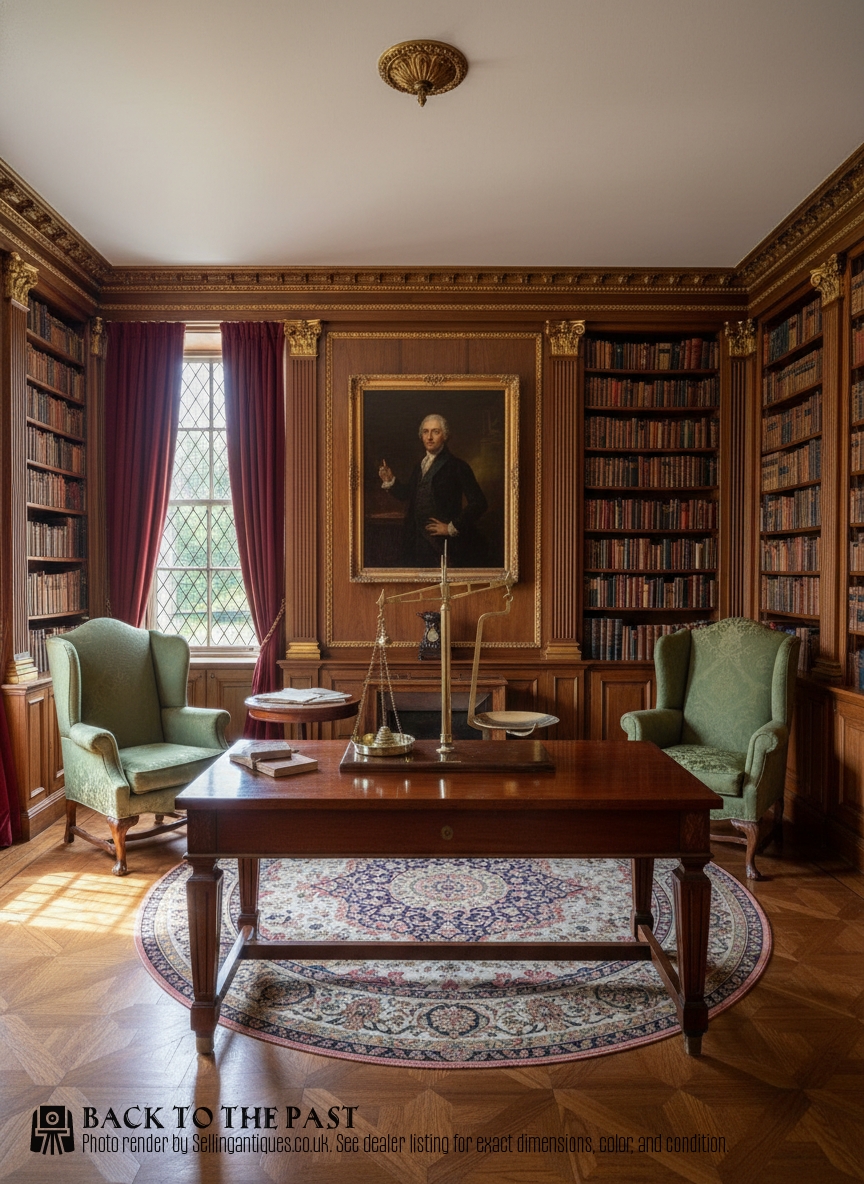
Their striking architectural forms and polished metal surfaces make beam scales popular focal points on console tables, bookshelves or large desks. Many collectors display them alongside their complete sets of nested brass bell weights to maintain the original visual balance.
Placing them away from damp areas protects the exposed brass from tarnishing and preserves the polished finish of the hardwood bases.
How do I identify different periods?
Earlier nineteenth-century examples often feature simpler mahogany box bases and hand-engraved maker signatures, reflecting traditional workshop production. Later Victorian and Edwardian models frequently incorporate heavier cast iron frameworks and stamped municipal verification marks.
Stylistic shifts from polished hardwood cabinetry towards industrial iron and copper structures help distinguish mid-century utility pieces from decorative domestic scales.