




Traditional Balance Beam
A traditional balance beam gives a room the grounded symmetry of an apothecary or a country dairy.
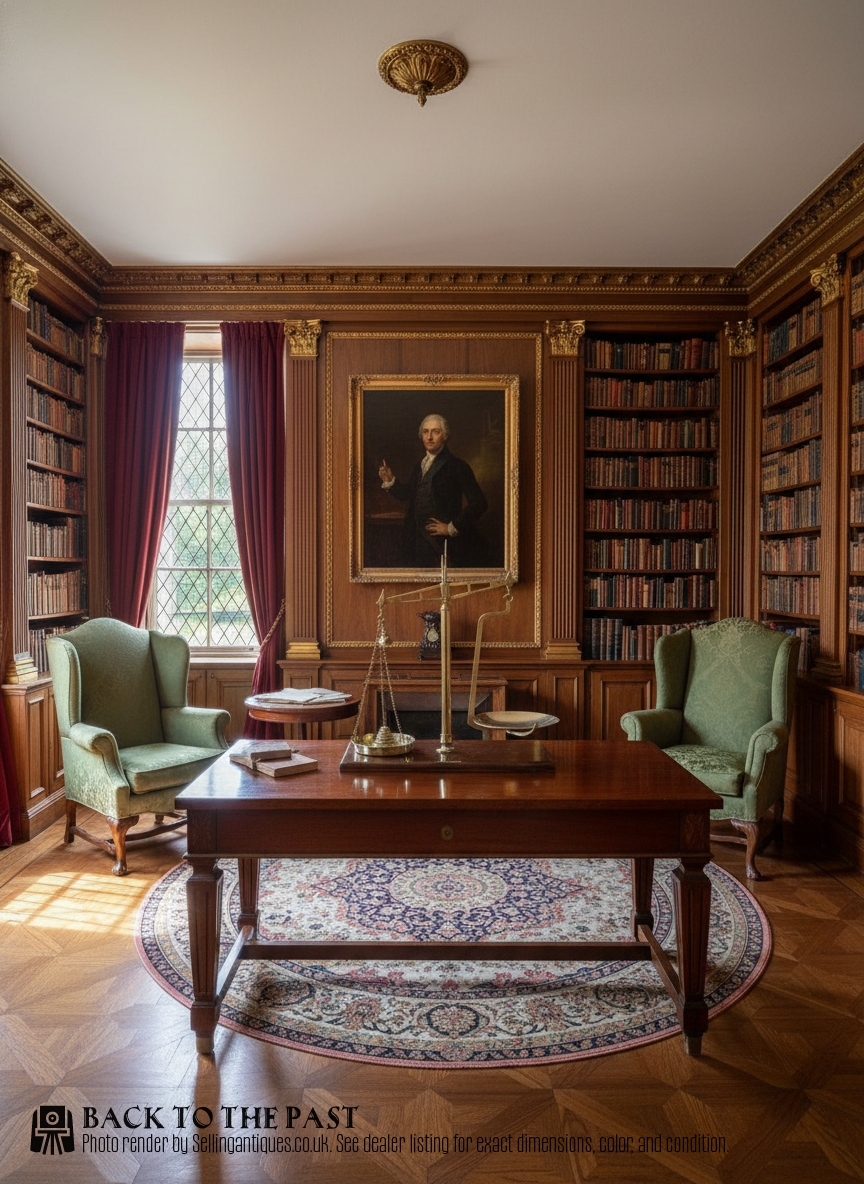
Traditional Balance Beam
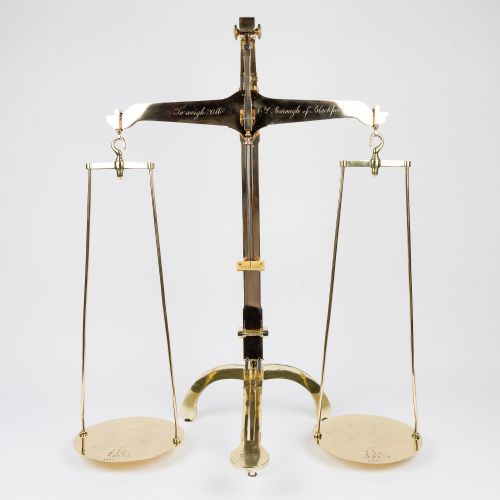
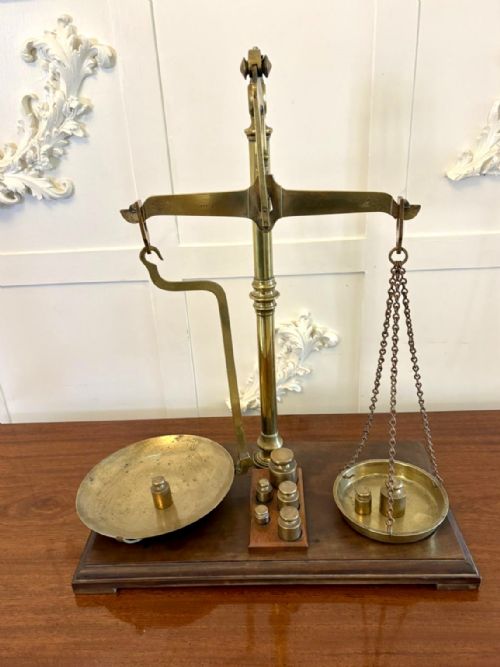
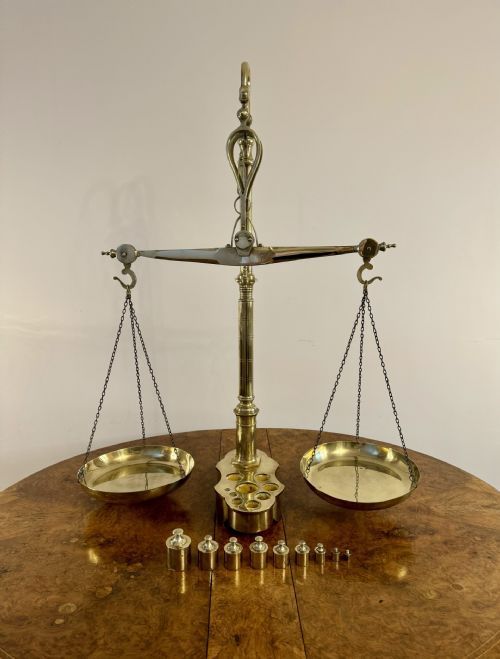
A traditional balance beam brings mechanical precision and utilitarian design into domestic and commercial settings, appearing most frequently in the form of Victorian brass and mahogany postal or apothecary scales.
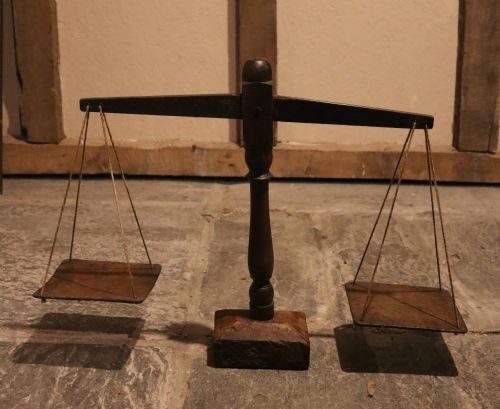
Buyers encounter diverse regional forms on this page, ranging from Georgian vernacular dairy scales in oak to Dutch colonial stick balances and robust iron workshop models.
These instruments served practical purposes in shops and homes before digital measurement, and today they function primarily as decorative objects with distinct historical character.
Materials and construction
The construction of these pieces relies on the pairing of polished brass beams and pans with seasoned hardwoods such as mahogany and oak, often mounted on fitted wooden bases.
Heavy-duty examples incorporate wrought iron and copper for structural stability and durability, reflecting the rigorous demands of daily weighing tasks.
The listings on this page span from the eighteenth century to the mid-twentieth century, featuring brass, iron, copper, oak and mahogany.
Markers of quality
Quality in these pieces rests upon the precision of the central pivot and the integrity of the original components, where matching weights and crisp maker stamps elevate the piece.
The depth of patina on the timber and the richness of the unpolished brass distinguish finer workshop production from simpler utility items.
Day and Millward·Parnall and Sons of Bristol·Bartlett and Sons
The Traditional Balance Beam Glossary
- Beam
- The horizontal bar of a scale that pivots at its centre to determine equal weight. It represents the primary mechanical element of the device.
- Apothecary scales
- Precision instruments used historically for weighing medicinal ingredients. They usually feature delicate brass pans and fine wooden cabinetry.
- Postal scales
- Compact weighing devices designed for letters and parcels, commonly housed on wooden bases with fitted slots for brass weights.
- Patina
- The surface sheen and colour developed through handling, age and polishing over many decades. It indicates genuine historical use.
Traditional Balance Beam: Frequently Asked Questions
What were traditional balance beam scales used for?
These scales served merchants, apothecaries, and households for measuring dry goods, letters, and medicinal powders with mechanical accuracy.
Their simple design allowed users to compare an unknown mass against standard metal weights placed on the opposing pan.
How do I style a balance beam at home?
A balance beam works well placed upon a sturdy wooden mantelpiece, a library desk, or a kitchen counter where its symmetry provides a focal point.
Keeping the original brass polished or letting it retain a dark finish depends entirely on the surrounding interior aesthetic.
Are the weights usually included with the scales?
Many surviving sets retain their original matching brass weights, often stored neatly in fitted wooden bases designed specifically for them.
Listings note whether a complete set of corresponding weights accompanies the main beam mechanism.
How can I tell the period of a balance scale?
Stylistic clues such as the joinery of the wooden base, the font used for maker stamps, and the metallurgy of the brass indicate the era.
Victorian examples often feature rich mahogany boxes, whilst eighteenth-century pieces lean towards simpler vernacular oak construction.