



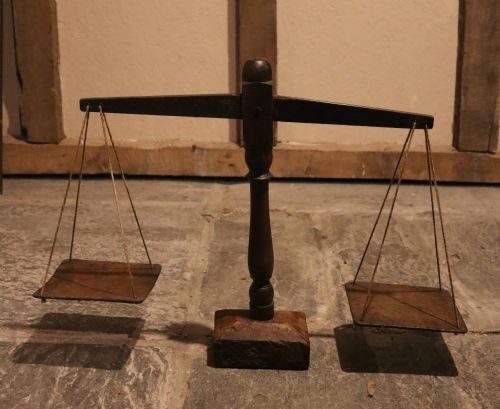


Antique Beam Scales
These antique beam scales range from apothecary balances to hefty shop counters, designed to weigh everything from letters to heavy produce with absolute precision.
Antique Beam Scales
When you search for antique beam scales, you encounter weighing instruments spanning the Georgian, Victorian, and Edwardian periods. These devices utilise a central fulcrum and balanced arms to determine weight, appearing in domestic, scientific, and commercial forms.
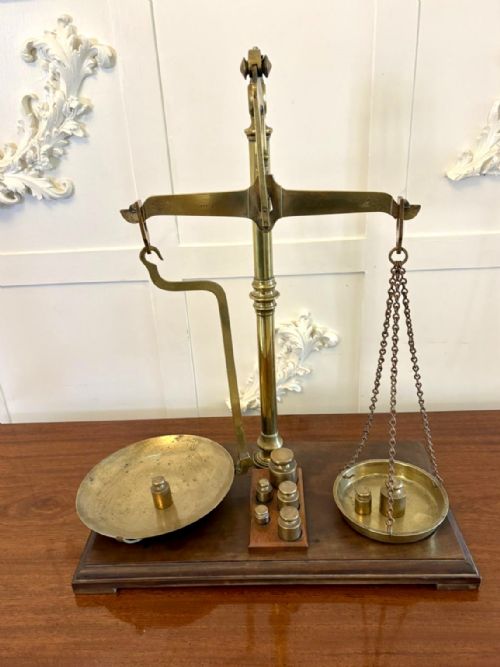
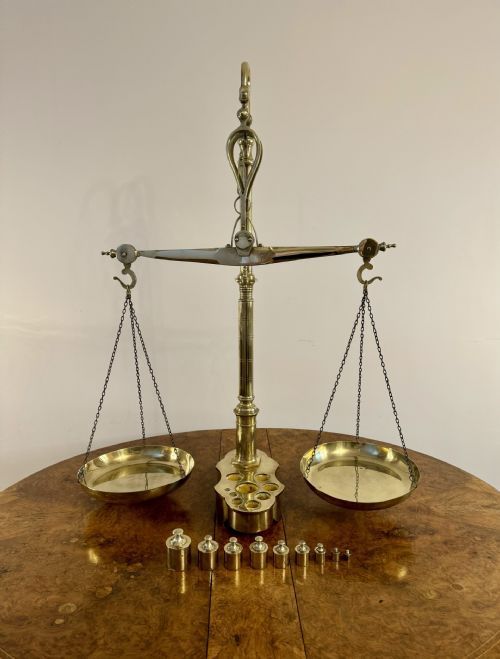
The most common examples on this page are Victorian brass and mahogany balances, often complete with their original weights. They reflect the era's rigorous need for exact measurement in trade, pharmacies, and postal offices.
Regional variations also emerge, including Dutch bushel balances, Welsh dairy scales, and industrial pieces associated with city boroughs. Each type served a specific municipal or domestic function, shaping the materials and scale of the build.
Materials and construction
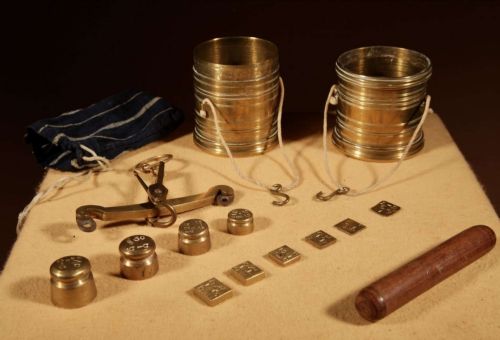
Brass and mahogany form the bedrock of domestic and pharmaceutical pieces, offering durability alongside a polished finish. Cabinet makers housed delicate apothecary balances in fitted wooden boxes, protecting the mechanism from dust and disturbance.
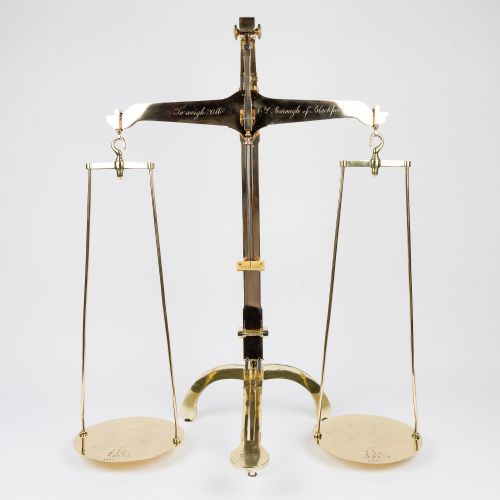
Heavier commercial and municipal models combine cast iron, wrought iron, and copper to withstand rigorous daily use. These industrial frames support long metal beams designed to handle substantial weight without flexing.
Hardwoods such as oak appear in dairy and personal weighing scales, paired with brass pans and iron fixings. The construction relies on precise pivoting points and finely calibrated arms to ensure exact readings.
Listings feature 19th Century, Edwardian, and Georgian periods, utilising brass, mahogany, iron, and oak across balance and postal scales.
Factors of quality
The distinction between ordinary and superior pieces rests on the precision of the mechanics and the completeness of the set. Examples that retain their matching weights and original maker markings command greater interest from collectors.
Materials and finish dictate the upper tier of the range, seen in heavy cast brass beams, cleanly dovetailed mahogany bases, and crisp maker engravings. Lesser examples show simpler construction, plain timber, and replaced components.
The intended use also influences the build quality, with scientific and verification balances built to higher tolerances than general household scales. Surviving paperwork, original box fittings, and municipal inscriptions elevate the standing of a piece.
Day & Millward·Parnall & Sons·De Grave Short & Co·Oertling·Bartlett & Sons
The Antique Beam Scales Glossary
- Beam scale
- A weighing device consisting of a horizontal lever with arms of equal length, suspended from a central pivot. It determines weight by balancing an unknown load against known masses.
- Apothecary balance
- A sensitive scale utilised by chemists and pharmacists for measuring medical doses. These often feature small brass pans and are housed in glass and mahogany cases.
- Chondrometer
- A specialised measuring instrument used to determine the density or bushel weight of grain. Robert Brettell Bate produced notable examples of this portable device.
- Bushel balance
- A heavy-duty scale designed to measure volume by weight for agricultural produce. Dutch examples from the nineteenth century are particularly prominent in this category.
- Verification balance
- An official scale employed by municipal inspectors to check commercial weights and measures. Makers such as De Grave and Short supplied these precise instruments to city authorities.
Antique Beam Scales: Frequently Asked Questions
What were antique beam scales used for?
These scales served diverse functions ranging from commercial trade and postal sorting to scientific chemistry and municipal weight verification. Different trades required specific designs, such as chemist balances for fine powders or shop scales for groceries.
Heavier models handled produce and dairy goods, while portable chondrometers assessed agricultural grain quality in the field. Each design matched the exact measurement demands of its period.
How do I date my beam scales?
Dating relies on stylistic clues, materials, and any stamps or inscriptions left by makers and municipal inspectors. Victorian pieces frequently utilise polished brass and mahogany, whereas Georgian examples show simpler vernacular woodwork.
Makers' names and city borough stamps often provide a direct link to specific decades of production. Comparing the mechanism type and accompanying weights helps narrow down the era.
Are original weights important?
Retaining the matching set of weights significantly enhances the completeness and historical value of the piece. Many nineteenth-century shop and apothecary balances were sold as complete sets housed in fitted wooden bases.
Finding scales with their original municipal verification stamps or matching brass weights confirms their working integrity. Lacking weights simply means sourcing appropriate period replacements for display.
How should I display beam scales at home?
Beam scales suit placement on bookshelves, sideboards, or dedicated collector cabinets where their mechanical geometry stands out. Their brass components and timber bases integrate well into both traditional and industrial interiors.
Larger floor or counter models anchor a room, while delicate apothecary boxes sit comfortably on desks. Keeping them away from excessive moisture preserves the timber and polish.