
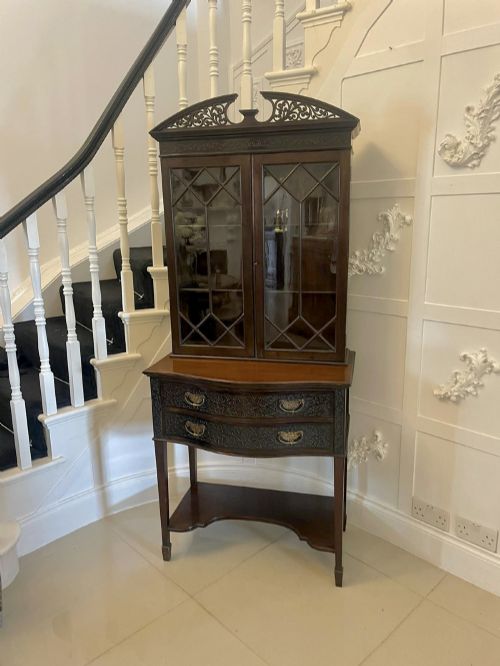
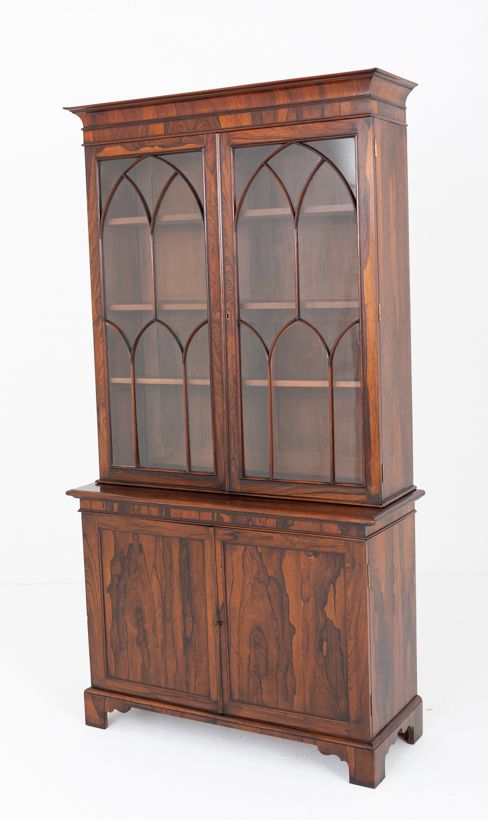
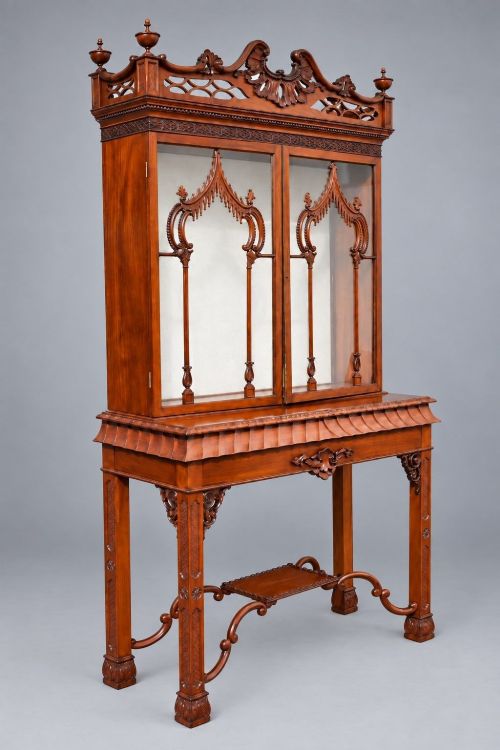
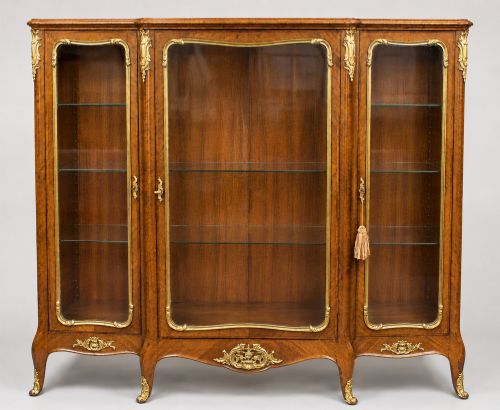
Antique Vitrine Bookcase
An antique vitrine bookcase combines glazed display storage with shelving, offering a place to preserve volumes while exhibiting curated objects.
Antique Vitrine Bookcase
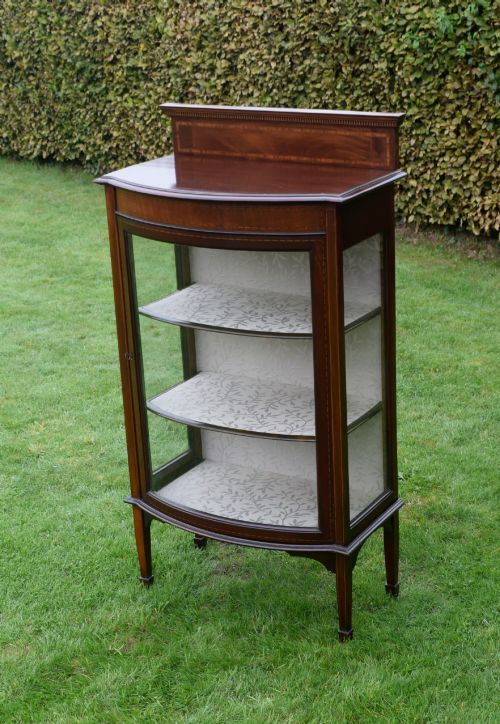
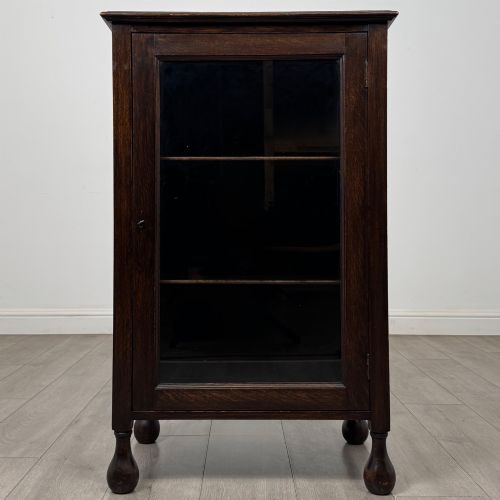
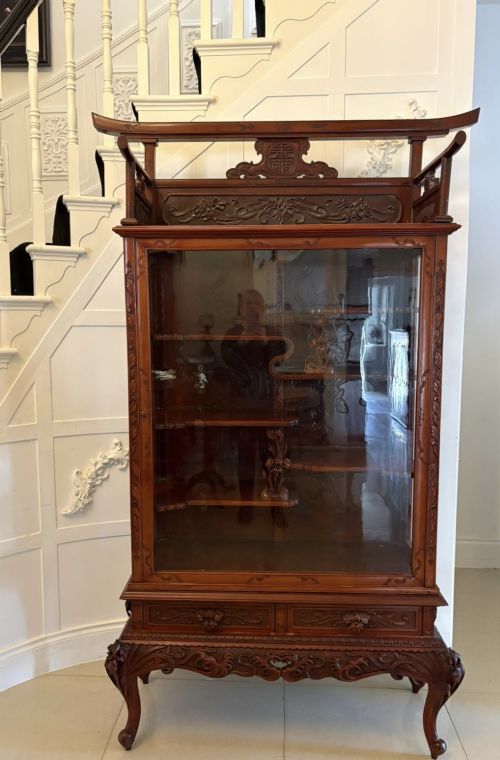
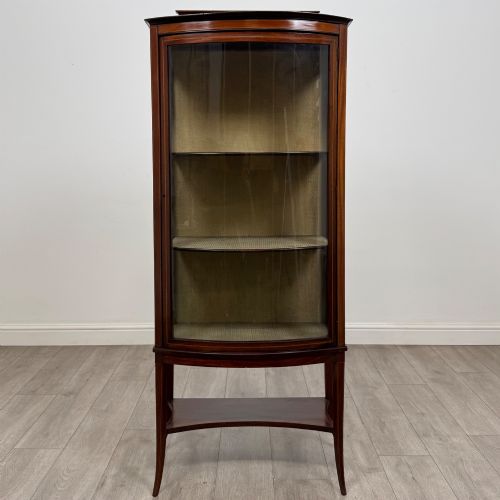
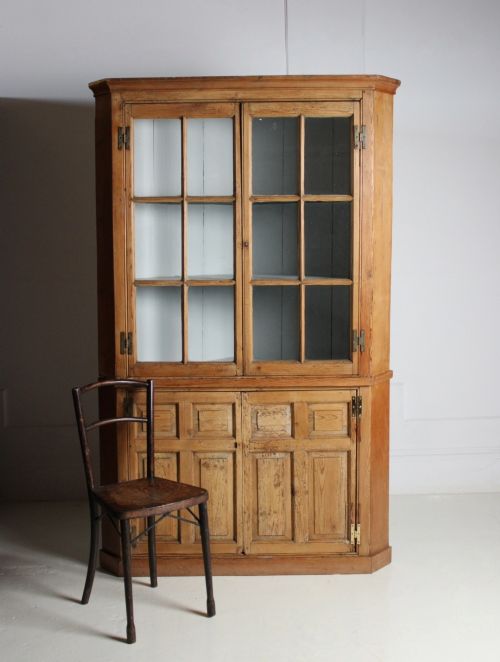
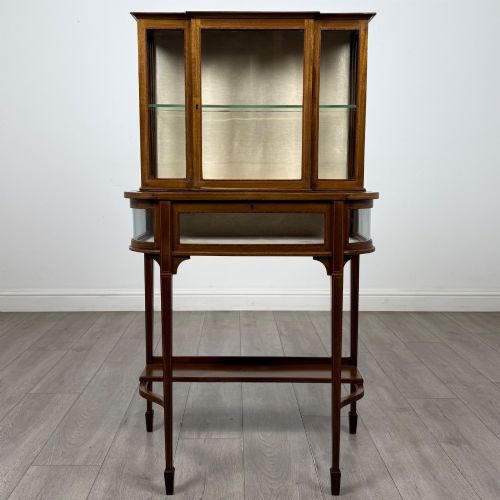
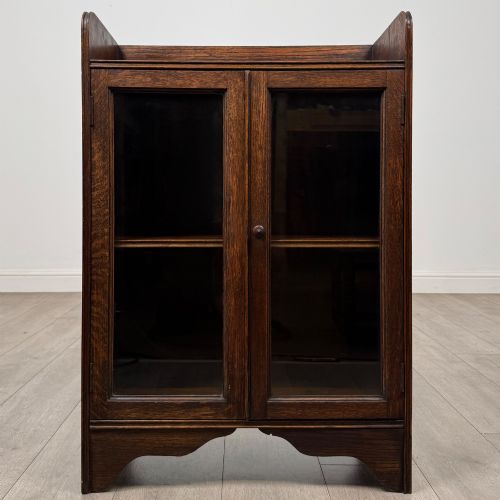
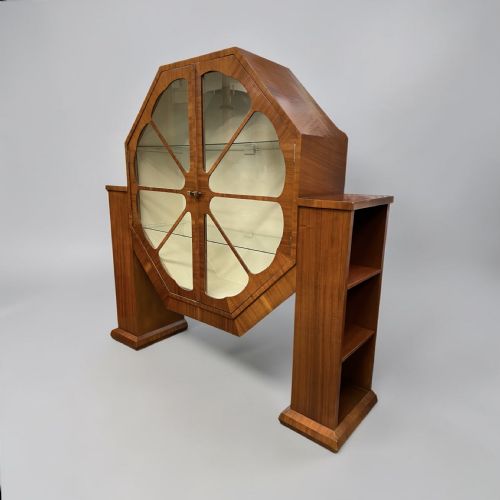
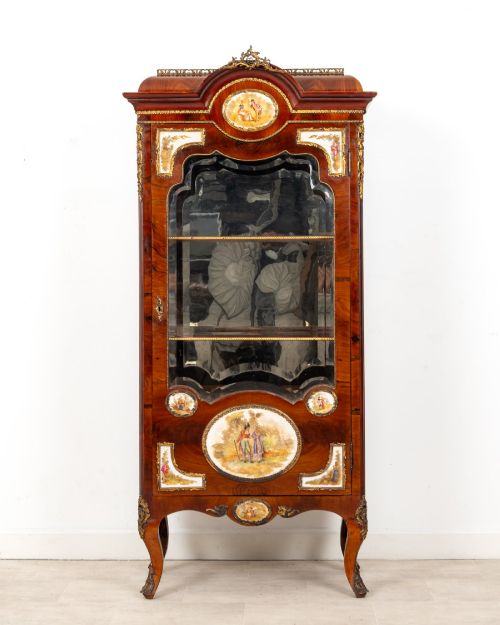
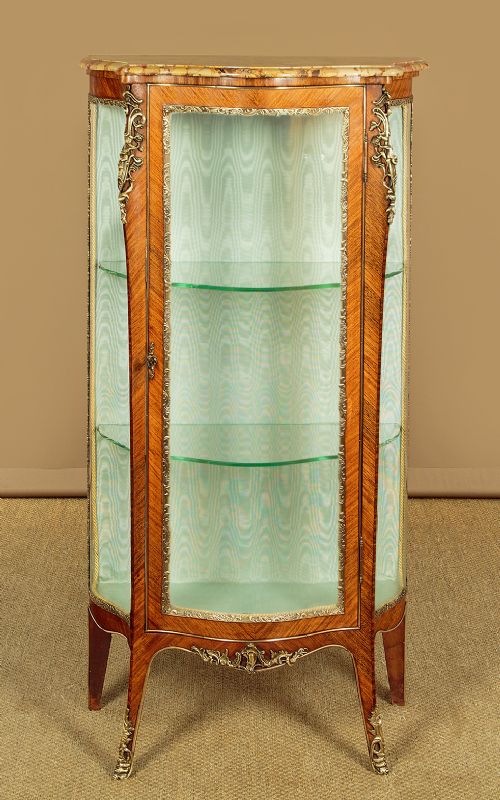
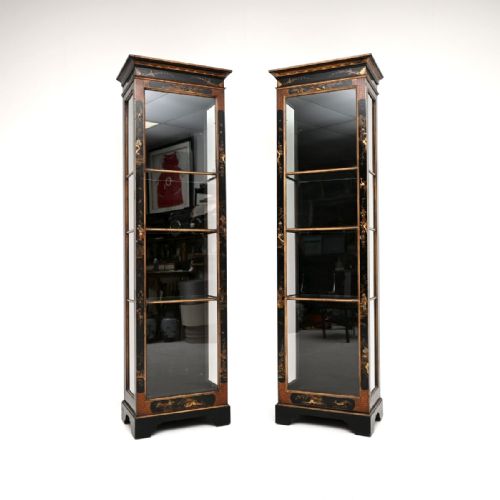
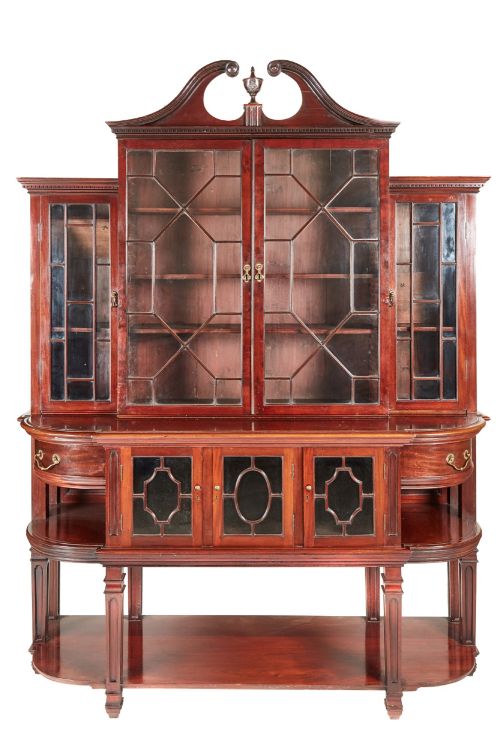
An antique vitrine bookcase functions as a dual-purpose piece of furniture, providing enclosed shelving for books alongside glass-fronted compartments intended for ornaments and porcelain. You encounter formats ranging from tall breakfront designs to smaller corner cabinets and lower side pieces.
The materials and styles span multiple periods, from Georgian mahogany iterations to Victorian satinwood and Edwardian inlaid mahogany. Many examples reflect revival movements such as Sheraton Revival, Louis XV Style, and Arts and Crafts, alongside French walnut and oak constructions.
How they were made
Cabinetmakers utilised solid timbers and selected veneers including mahogany, walnut, oak, satinwood, and rosewood, often applying marquetry, inlaid stringing, or carved details. Brass mounts, ormolu, and mirrored backs frequently supplemented the primary wooden structure.
Glazing techniques involved leaded or astragal frames holding glass panels to protect the interior contents. Fabric linings sometimes appeared behind shelves to create a contrasting backdrop for displayed items.
Some cabinets hide secret compartments behind miniature bookshelves, keeping small ledgers safe from prying eyes.
What varies in quality
The standard of timber selection and veneer matching dictates the visual depth of the cabinet surface, where superior examples exhibit continuous grain patterns and precise marquetry. Carved ornamentation and brass mounts show varying degrees of hand-chilling and definition.
Structural integrity depends on the precision of joinery in the door frames and the stability of the glazed sections. Original glass panels, intact backboards, and working locks distinguish higher grade pieces from later alterations.
Jas Shoolbred·Collinson & Lock·Hampton & Sons·Edwards & Roberts
The Antique Vitrine Bookcase Glossary
- Vitrine
- A glass-fronted cabinet designed for displaying fine objects or collections. These pieces often feature glazed sides as well as doors to maximise ambient light.
- Astragal
- A moulding profile used to divide glass panes within a door frame. In bookcase construction, wooden or brass astragals form geometric patterns across the glazing.
- Breakfront
- A large piece of furniture where the central section projects forward from the flanking wings. This architectural arrangement creates depth and breaks up long expanses of shelving.
- Marquetry
- Decorative veneer work formed by fitting together small pieces of different coloured wood or other materials to create pictorial or geometric designs. It appears frequently on cabinet friezes and doors.
- Ormolu
- Gilded bronze mounts applied to furniture for decorative accent. High quality examples show sharp chiselling and secure fixing to the wooden carcass.
Antique Vitrine Bookcase: Frequently Asked Questions
How do I clean the glass?
Use a soft microfiber cloth and a mild glass cleaning solution applied directly to the cloth rather than the wood. This prevents moisture from damaging antique finishes or seeping into vulnerable joints.
Take care around delicate astragals and painted decorations, wiping gently to avoid loosening old putty or fragile framing materials.
Can shelves be adjusted?
Many Victorian and Edwardian examples feature adjustable wooden shelves supported by brass rack strips or wooden pegs. This allows you to accommodate volumes of varying heights.
Earlier pieces often possess fixed shelving integrated directly into the structural carcass, requiring careful measurement before arranging larger books.
Where should I place it?
Position the cabinet away from direct sunlight and strong heat sources to prevent timber warping, veneer cracking, and fading of interior fabrics. Maintaining a stable room temperature preserves the wood.
Ensure the floor is level so the doors hang true and the glazed panels do not bind within their frames during opening and closing.
How do I spot a marriage?
Examine the interior carcass, backboards, and screw placements to ensure the upper display section and lower base or cornice belong together. Variations in timber species, fading patterns, or colour can indicate assembled parts.
Check that the proportions and decorative vocabulary remain consistent across the entire height of the piece.