
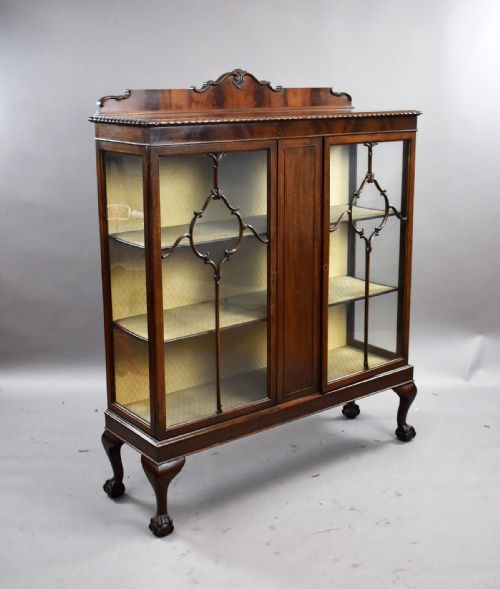


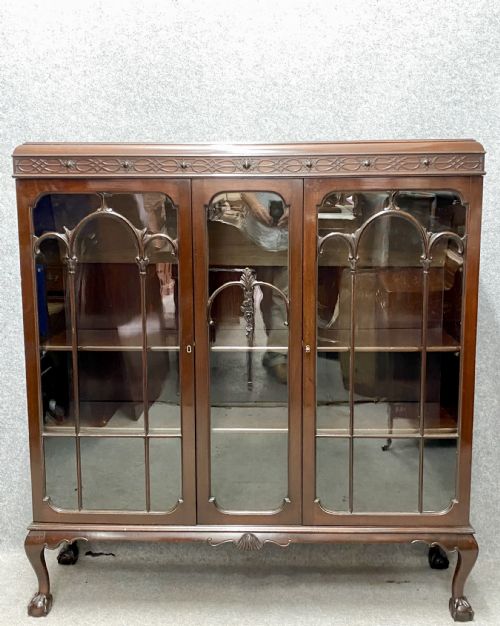


Claw Foot Display Cabinet
A claw foot display cabinet brings architectural presence and visible storage to a room, holding collections safely behind glass.
Claw Foot Display Cabinet
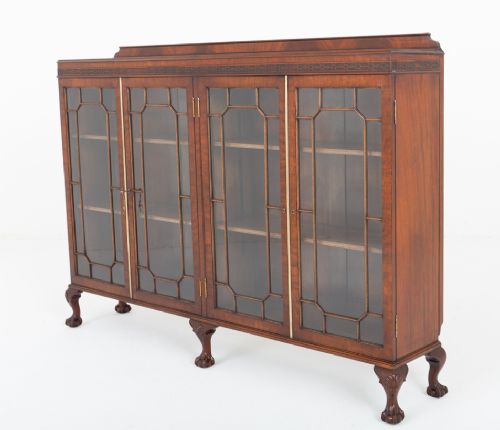
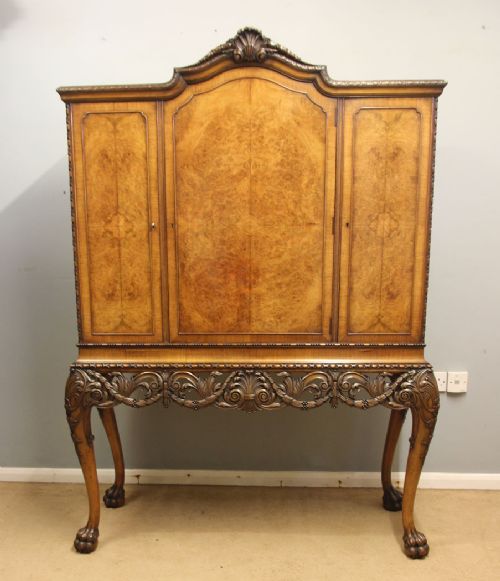
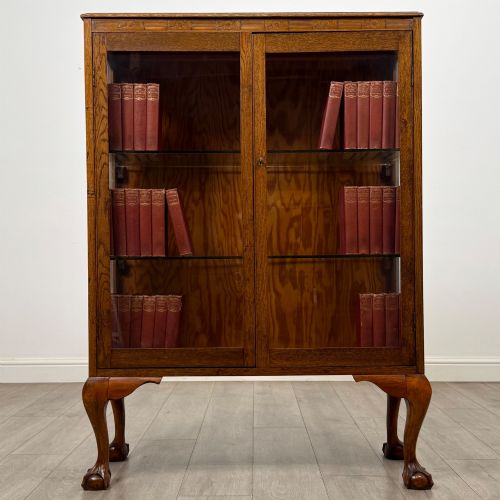
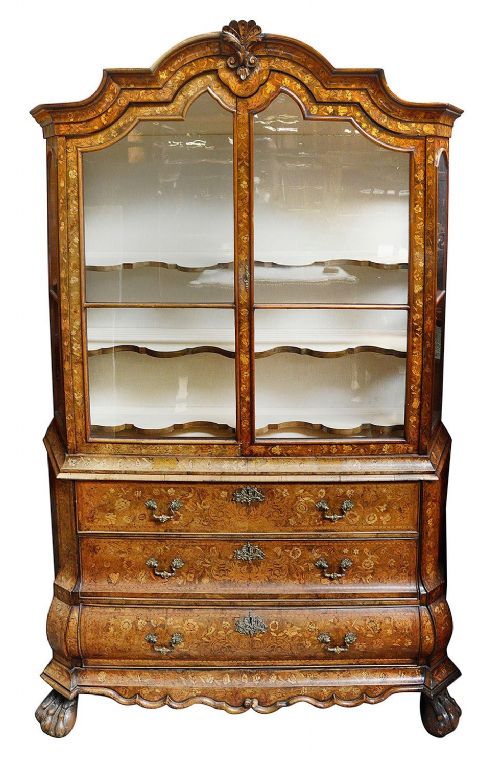
A claw foot display cabinet gathers objects behind glazed doors or within vitrines, using mahogany, walnut, burr walnut veneer, and oak. These storage pieces appear across several periods, including Edwardian iterations, the nineteenth century, and eighteenth-century Dutch marquetry forms.
The layout ranges from side cabinets and display counters to tall bookcases, incorporating Chippendale Revival, Queen Anne Revival, Dutch Baroque, and Art Deco styles. Edwardian Chippendale Revival and Regency interpretations also emerge among the selection.
Most examples rely on glazed timber frames and brass hardware, while fabric sometimes lines the interior. Buyers encounter large four-door formats alongside more compact vitrines.
How they were made
Cabinetmakers constructed these forms using solid timbers and decorative veneers such as burr walnut over foundational woods like oak and mahogany. Glass panels were fitted into wooden frames to enclose the shelved interior.
Marquetry inlay work adorns eighteenth-century Dutch pieces, combining contrasting woods in floral or pictorial patterns. Metal and brass elements provide structural reinforcement and functional hinges or handles.
Secretarial hands once stored ledgers in these very compartments, far away from sticky fingers and inquiring house guests.
What varies in quality
Quality rests in the precision of the cabinetwork and the choice of surface veneers, where figured burr walnut or detailed marquetry inlay elevates the visual impact. The crispness of carved wooden details, particularly on revival styles, distinguishes standard production from finer exhibition pieces.
Proportion and scale dictate the presence of the cabinet, with larger four-door bookcase formats demanding superior timber selection to maintain stability across extensive glazed surfaces.
The Claw Foot Display Cabinet Glossary
- Vitrine
- A glass-fronted cabinet designed for displaying fine objects or porcelain. These pieces often feature glazed sides as well as doors to maximise ambient light.
- Marquetry
- The art of applying decorative pieces of veneer to a structure to form intricate designs. Eighteenth-century examples utilise this technique extensively.
- Burr walnut
- A figured wood veneer taken from the burl growths of walnut trees. It yields complex, swirling grain patterns highly valued in cabinetmaking.
- Chippendale Revival
- A late nineteenth or early twentieth-century design movement copying mid-eighteenth-century English furniture forms. These pieces frequently employ mahogany.
Claw Foot Display Cabinet: Frequently Asked Questions
What fits inside these cabinets?
Shelved interiors accommodate porcelain, books, and decorative objects behind protective glass doors. Deeper bookcase variants allow for mixed storage of volumes and display items.
Larger four-door formats offer substantial capacity for extensive collections within a single room.
How do I date a cabinet?
Stylistic markers such as Art Deco geometric lines or eighteenth-century Dutch marquetry indicate the period of manufacture. Revival pieces from the Edwardian era often borrow earlier motifs.
Timber choice and construction methods provide further clues to the age of the cabinet.
Where should I place one?
These cabinets suit reception rooms or libraries where glazed doors protect contents from dust while maintaining visibility. Generous proportions require adequate wall space.
Positioning away from direct sunlight helps protect interior fabrics and timber surfaces.
Are the shelves adjustable?
Interior configurations vary depending on whether the piece functions as a bookcase, side cabinet, or vitrine. Many period examples feature fixed wooden or glass shelving.
Buyers should examine internal setups to confirm compatibility with specific display items.