




Bombe Chest Vitrine
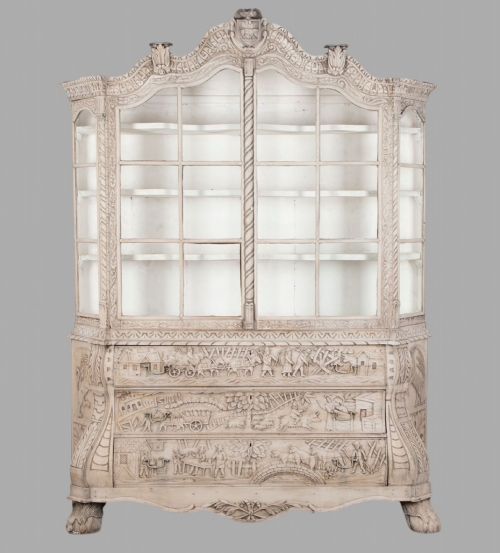
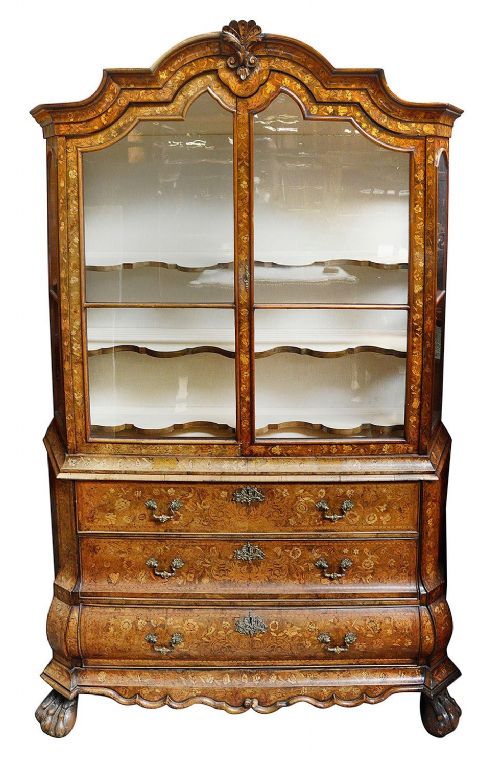
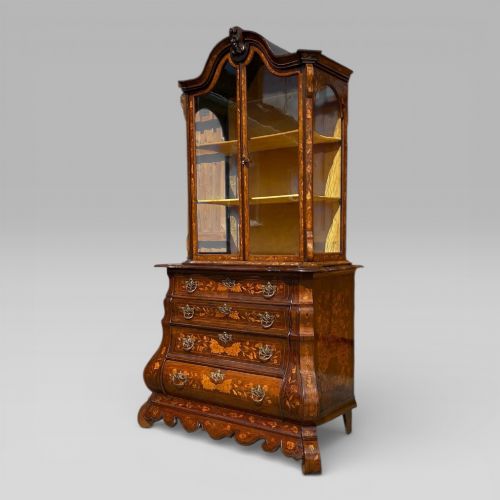
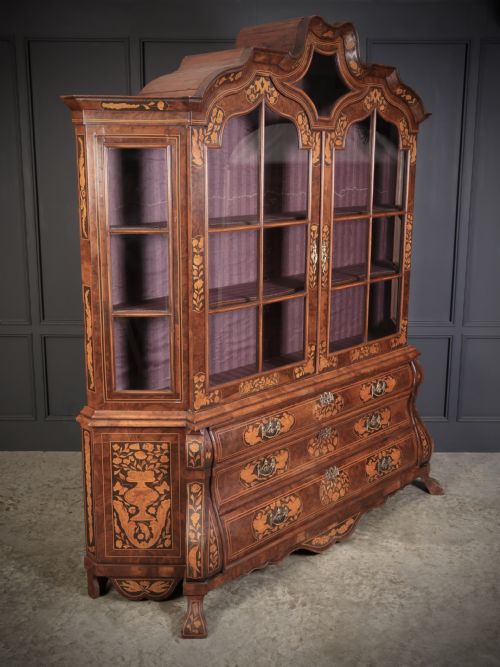
These bombe chest vitrine pieces combine serpentine storage with display space, offering a striking focal point for any room.
Bombe Chest Vitrine
A bombe chest vitrine pairs a swelling, outward-curving lower chest with a glazed display upper section, uniting two distinct furniture forms into a single grand piece. When searching for a bombe chest vitrine, buyers encounter examples predominantly rooted in Dutch traditions, spanning the eighteenth century through to later revival periods.
The lower section provides substantial cabinet storage behind curved wooden doors, while the upper vitrine houses shelving enclosed by glass panels for displaying prized objects. These dual-purpose items range from substantial eighteenth-century originals to later twentieth-century interpretations.
Dutch Baroque and Rococo styles dominate the aesthetic, bringing dramatic silhouettes and intricate craftsmanship to domestic interiors. Most pieces met on this page showcase the classic bombé profile paired with elaborate marquetry or plain timber finishes.
How they were made
Cabinetmakers constructed the swelling carcasses using native and imported timbers such as walnut, oak, and fruitwood, often building over a pine secondary structure. Achieving the characteristic outward curve required specialised shaping of the wood and skilled joinery.
Surface decoration frequently relied on intricate fruitwood marquetry and inlay work, creating floral and pictorial patterns across the curved drawer fronts and doors. Brass hardware such as escutcheons and handles completed the construction, fastened securely to the timber doors and drawers.
Listings feature walnut, oak, fruitwood, and pine materials, alongside glass and brass elements.
What varies in quality
The refinement of the bombé contour defines the sculptural success of the lower chest, with superior examples exhibiting a smooth, balanced swell on all sides. Poorer proportions result in a rigid silhouette that lacks the characteristic fluidity of the form.
The execution and complexity of the marquetry inlay set individual cabinets apart, distinguishing simpler geometric designs from elaborate pictorial floral arrangements. The choice of primary timbers, such as figured walnut versus plain painted surfaces, also marks the distinction between standard and finer examples.
Edwards & Roberts
The Bombe Chest Vitrine Glossary
- Bombé
- A swelling, outward-curving profile seen on the lower sections of chests and cabinets. This curved form requires advanced woodworking techniques to shape the wood successfully.
- Vitrine
- A glass-fronted display cabinet designed for housing and viewing collections of porcelain, glassware, or small objects. The glazed doors protect the contents while offering clear visibility from multiple angles.
- Marquetry
- The art of applying decorative veneer pieces in various woods to form pictorial or ornamental patterns. Craftsmen carefully fit these thin wood sections together before adhering them to the furniture surface.
- Fruitwood
- Timber sourced from fruit-bearing trees such as pear, apple, or cherry, frequently utilised for marquetry and fine cabinetwork. This wood offers a smooth grain and warm tones suitable for detailed inlay.
- Escutcheon
- A protective plate surrounding a keyhole, often cast in brass and shaped ornamentally. These metal fittings enhance the visual appeal of the drawer fronts and doors.
Bombe Chest Vitrine: Frequently Asked Questions
What is a bombe chest vitrine?
A bombe chest vitrine is a combination piece featuring a bulging, curved lower storage chest beneath a glass-fronted display cabinet. These cabinets serve both practical storage and decorative display functions within a room.
Originating largely from Dutch cabinetmaking traditions, they are recognised by their distinct serpentine contours and elaborate wood surfaces. The upper section allows for the display of collections, while the lower drawers conceal household items.
How do I date a bombe chest vitrine?
Dating these cabinets involves examining the primary timber species, construction methods, and stylistic details such as hardware and marquetry patterns. Eighteenth-century examples often feature hand-cut joints and walnut or fruitwood veneers.
Later revival pieces from the nineteenth and twentieth centuries may display machine-sawn elements or different secondary woods beneath the surface. Comparing the overall proportions and decorative motifs against known historical periods helps narrow down the timeframe.
Where were bombe cabinets made?
The majority of these cabinets are associated with Dutch workshops operating during the Baroque and Rococo periods. Makers in the Netherlands developed distinct regional variations of the bombé shape.
English firms also produced or retailed similar marquetry-decorated display furniture influenced by continental styles. Surviving pieces reflect the widespread exchange of design ideas across European cabinetmaking centres.
How should I care for walnut and marquetry?
Protecting fine wood furniture requires maintaining stable indoor humidity and temperature levels to prevent the veneer from lifting or cracking. Direct sunlight can fade delicate fruitwood marquetry over time.
Regular dusting with a soft, dry cloth preserves the polished surface without introducing harmful moisture or chemical residues. Avoid placing these cabinets near heat sources or damp areas.