


Carved Walnut China Cabinet
A carved walnut china cabinet brings rich timber grain and glazed display space to a room, holding porcelain and silver behind timber frames.
Carved Walnut China Cabinet
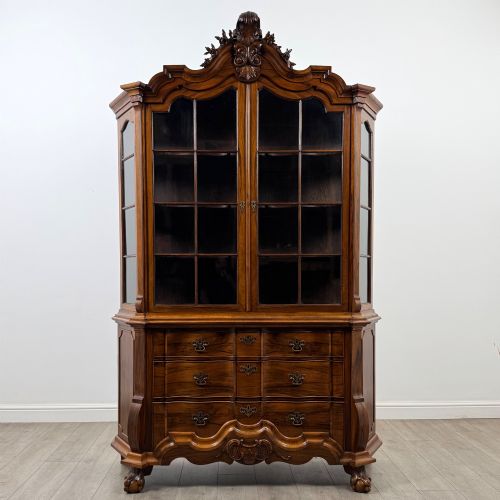
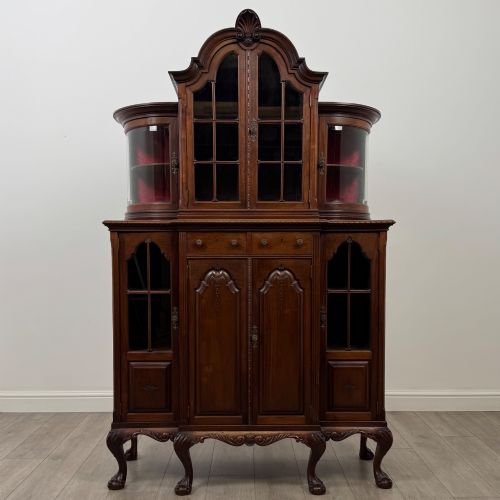
When you search for a carved walnut china cabinet, you encounter formal display furniture designed to showcase ceramics, glassware and books behind glazed doors. The examples seen here span centuries of cabinetmaking, ranging from 18th-century continental vitrines to revival pieces produced in the Victorian and Edwardian eras.
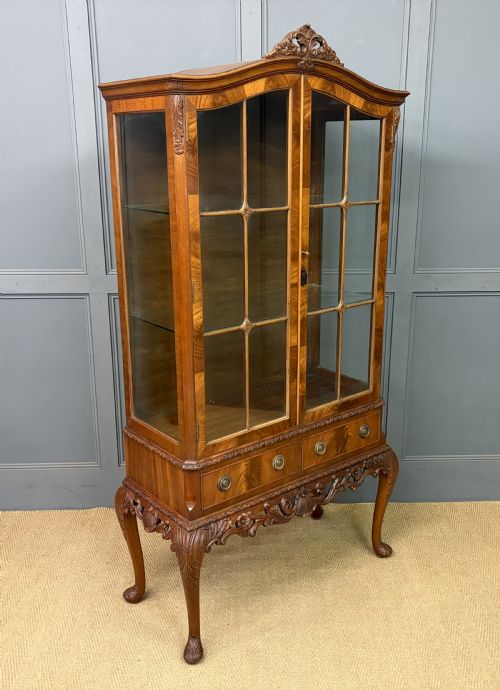
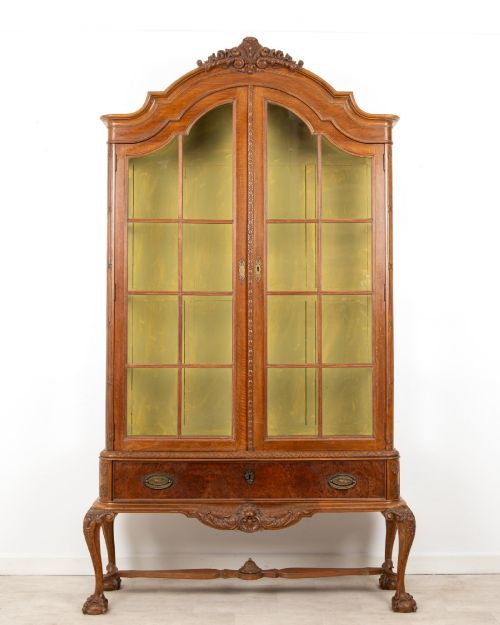
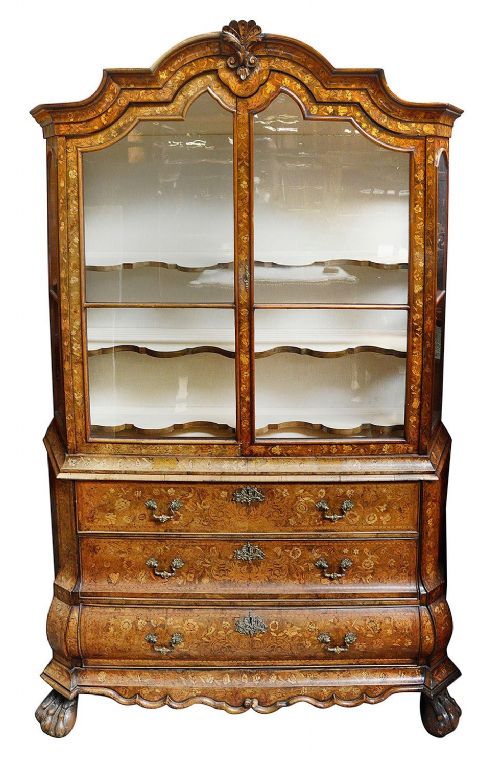
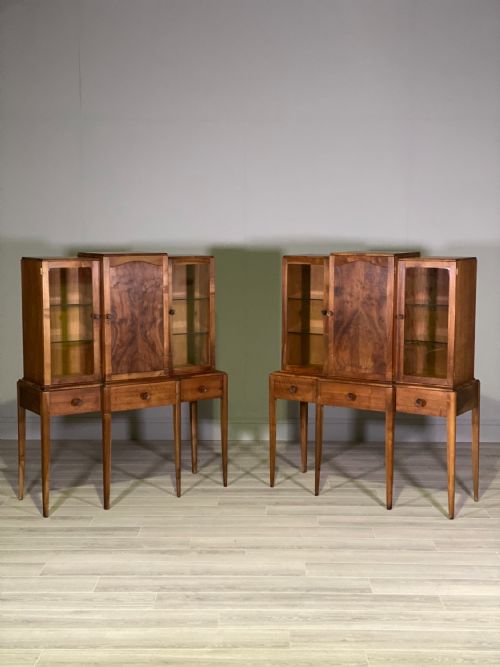
The dominant forms on this page include Dutch marquetry display cabinets, Queen Anne style cabinets with characteristic cabriole legs, and glazed bookcases in walnut and burr walnut. These pieces combine functional storage with decorative carving, often featuring shaped cornices, glass panels, and inlaid floral or geometric motifs in fruitwood.
Origins stretch across Britain, France, Italy and the Netherlands, reflecting diverse regional tastes in domestic display. Whether formed as tall standing bookcases, wall-hanging cabinets, or bombe chests with upper display sections, each piece uses walnut timber as its primary visual anchor.
How they were made
Cabinetmakers built these pieces using solid walnut and structural secondary timbers such as oak, pine and fruitwood. Surfaces were frequently veneered with figured burr walnut or enriched with marquetry inlay in contrasting light and dark woods.
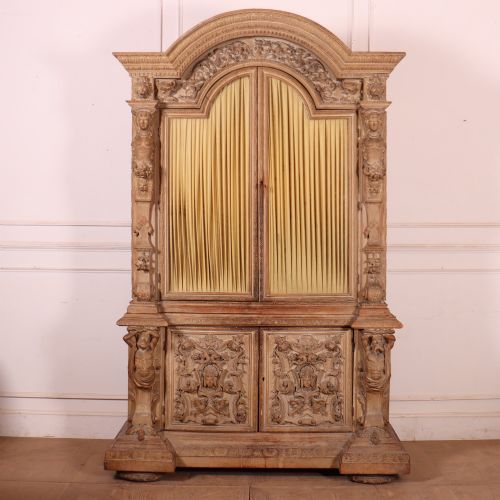
Carving was executed by hand directly into the solid walnut framing, particularly along cornices, friezes and cabriole legs. Glazed doors utilised timber glazing bars to hold individual panes of glass, while brass hinges, locks and keyplates secured the doors.
Some Dutch marquetry cabinets conceal tiny secret drawers behind inlaid friezes, built for hiding love letters from the taxman.
What varies in quality
Quality rests upon the depth and crispness of the hand carving, the choice of highly figured veneer grains, and the refinement of proportions. Superior examples display balanced marquetry work, harmonious joinery, and well-chosen timber selections that age with a warm patina.
The complexity of the carcass construction also separates standard production from exceptional work, seen in curved bombe fronts, serpentine cornices, and integrated base chests with fitted drawers. Original brass hardware and undamaged glass panes further distinguish the finest examples.
Maple & Co.·Arthur Reynolds Of Ludlow
The Carved Walnut China Cabinet Glossary
- Vitrine
- A glass-fronted display cabinet used primarily for porcelain and curiosities. These pieces often feature glazed sides to maximise light penetration.
- Marquetry
- Decorative veneer work forming pictures or patterns using various tinted woods and fruitwoods. This technique requires meticulous hand-cutting and fitting.
- Burr walnut
- Timber taken from a tree growth displaying intricate, swirling grain patterns. Cabinetmakers sliced this wood into veneers for high-status furniture fronts.
- Bombe
- A swelling, outward-curved form characteristic of continental furniture. This contoured shape demands advanced joinery and shaping skills.
- Cabriole leg
- A furniture leg that curves outward and then tapers inward, typically ending in a pad or claw foot. It forms a key element of Queen Anne style design.
Carved Walnut China Cabinet: Frequently Asked Questions
What fits inside a walnut china cabinet?
These cabinets suit porcelain dinner services, crystal glassware, and small decorative objects behind protective glass doors. Adjustable shelving inside many of these pieces accommodates varied collection heights.
Lower base sections on cabinet-on-chest forms provide enclosed drawer storage for linens and flatware away from light.
How do I distinguish 18th century cabinets?
Eighteenth-century pieces typically show hand-cut dovetails, older secondary woods like oak or fruitwood behind the walnut, and traditional marquetry or carving techniques particular to Dutch and Italian workshops.
Later revival pieces from the Victorian and Edwardian eras often use standardised machine-cut elements and different internal construction methods.
Where should I place a walnut cabinet?
Position these cabinets away from direct sunlight and strong heat sources to protect the walnut veneer and prevent timber splitting. Stable indoor humidity keeps the wood stable and preserves the antique glue and polish.
Wall-hanging versions require secure fixing to solid masonry or properly located wall studs to support the combined weight of timber and glass.