




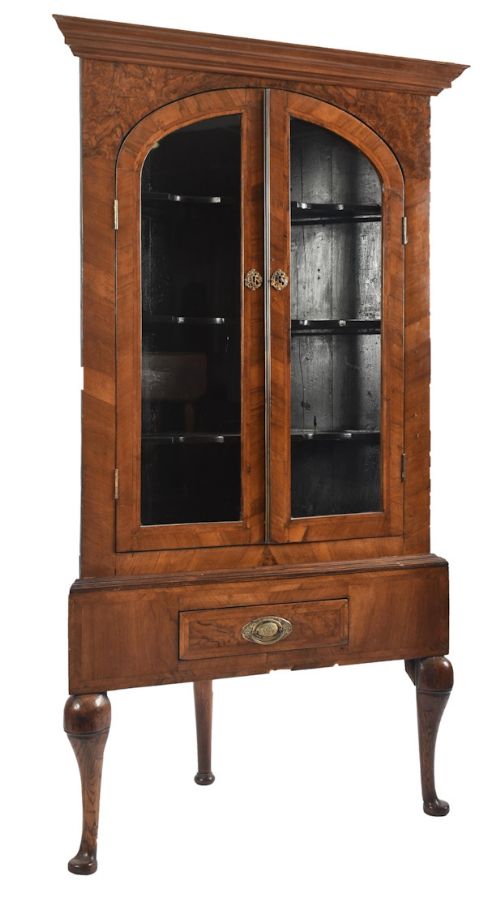
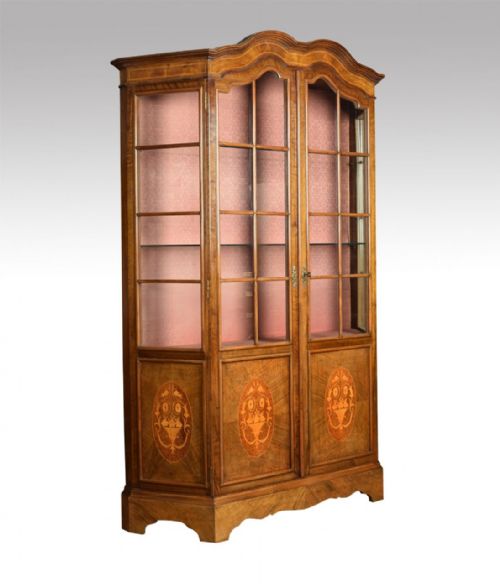


Dutch Walnut Glass Cabinet
A dutch walnut glass cabinet brings centuries of craftsmanship into a room, offering both display and storage through timber and glass.
Dutch Walnut Glass Cabinet
A dutch walnut glass cabinet is a functional piece of furniture designed for displaying treasured items behind glazed doors. These cabinets frequently appear from the eighteenth and nineteenth centuries, alongside revival and traditional pieces from the early twentieth century.
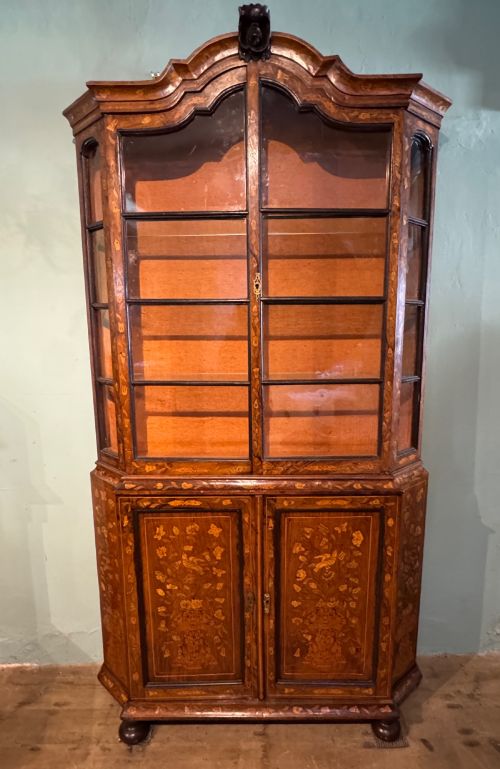
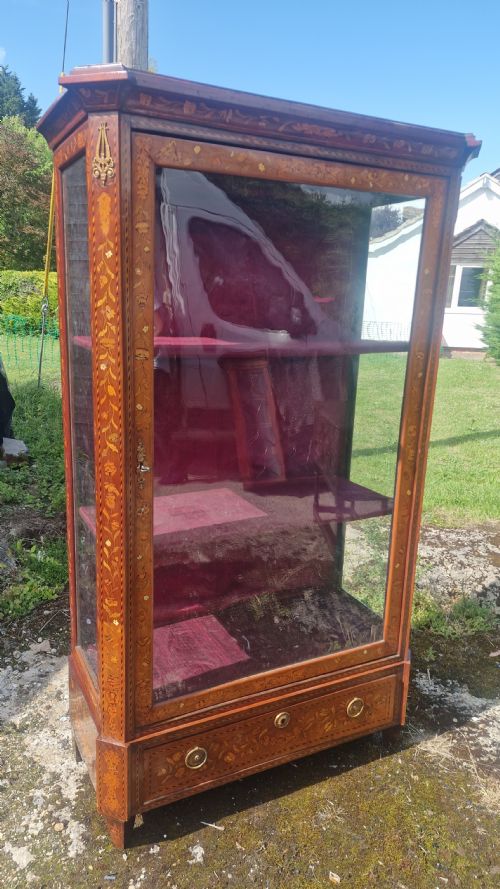
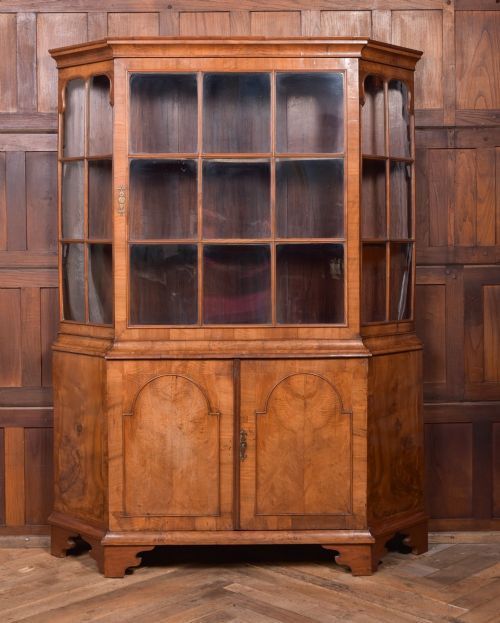
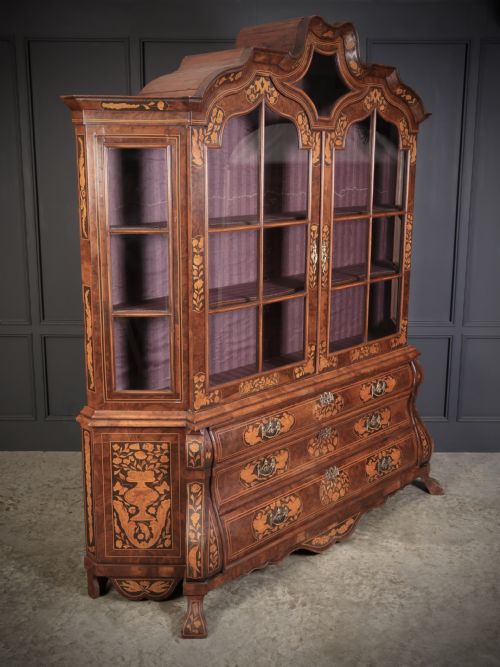
The most common forms on this page include tall display cabinets, glazed corner cupboards, and dramatic bombe shaped cabinets. They combine structural walnut timber with glass panels to showcase collections while keeping dust at bay.
Originating in the Netherlands, these pieces often feature elaborate marquetry inlay work using fruitwood alongside the primary walnut. Buyers encounter variations ranging from rectilinear glazed cupboards to sweeping baroque revival forms.
How they were made
Cabinet makers built these pieces using solid walnut and burr walnut veneers applied to secondary woods like oak or mahogany. Glass panes were fitted into timber frames to create the characteristic display doors.
Marquetry decoration was executed by hand, cutting intricate floral and pictorial designs from contrasting fruitwoods and inlaying them directly into the walnut ground. Brass hardware such as hinges and keyplates completed the construction.
Structural complexity varied significantly, particularly in bombe shaped cabinets which required skilled curving of both timber and veneer. Glazed doors demanded precise joinery to support heavy glass panels securely.
Current listings span the eighteenth century through to the 1930s, featuring walnut, fruitwood, brass, and velvet materials across display and corner cabinet forms.
What varies in quality
The sophistication of the marquetry inlay divides standard examples from exceptional ones. Finer cabinets display meticulous floral detailing and balanced composition across curved or flat surfaces alike.
Timber selection also dictates the hierarchy, with burr walnut and carefully matched grain patterns commanding greater visual depth. The execution of complex forms, such as bombe shaping, separates basic cabinet work from master construction.
The Dutch Walnut Glass Cabinet Glossary
- Marquetry
- Decorative veneer work forming pictures or patterns by assembling small pieces of various woods. In these cabinets, fruitwood is frequently inlaid into walnut to create floral motifs.
- Bombe
- An outward-swelling curved shape found on the front and sides of certain cabinets. This undulating contour demands advanced woodworking skill.
- Vitrine
- A glass-fronted display cabinet intended for showing porcelain, glassware, or small ornaments. The term is often used interchangeably with display cabinet.
- Burr walnut
- Timber taken from a tree growth or burl, yielding highly figured and swirling grain patterns. It is prized for its decorative appearance on cabinet doors and panels.
- Fruitwood
- Dense timber derived from fruit-bearing trees such as pear or apple, traditionally used in contrasting inlay work. It provides lighter tones against darker walnut backgrounds.
Dutch Walnut Glass Cabinet: Frequently Asked Questions
What is a dutch walnut glass cabinet?
A dutch walnut glass cabinet is a glazed storage and display piece originating from or styled after traditional Dutch furniture. These cabinets utilise walnut timbers, frequently decorated with floral marquetry inlay.
They serve primarily to exhibit tableware, books, or collections behind protective glass doors while adding historical character to an interior.
How were these cabinets used historically?
Historically, these cabinets functioned as high-status furniture for displaying precious ceramics, glassware, and curiosities in the home. The glazed panels kept dust away from delicate items while allowing guests to admire them.
Lower sections or internal shelves often provided concealed storage for household goods that did not require public viewing.
How do I distinguish eighteenth century from later revival pieces?
Dating relies on examining construction methods, timber ageing, and stylistic conventions such as Baroque or Rococo proportions. Eighteenth-century examples show hand-cut joinery and period-specific marquetry techniques.
Later pieces from the nineteenth and twentieth centuries often adopt revival styles, reflecting historical aesthetics using contemporary workshop practices of their era.
Where should I place a corner cabinet?
Glazed corner cabinets fit naturally into the intersecting angles of a room, making efficient use of otherwise neglected space. They draw the eye upward and anchor empty corners with architectural timber and glass.
Placement should avoid direct sunlight to protect the walnut timber and any internal velvet lining from fading over time.