




Antique Turkmen Gul Chuval
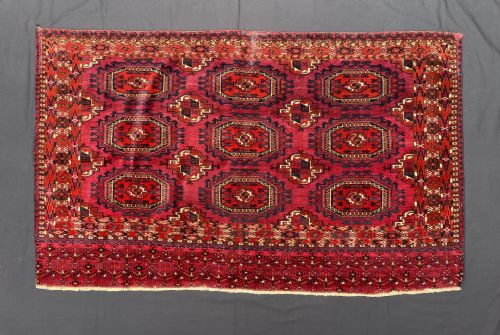
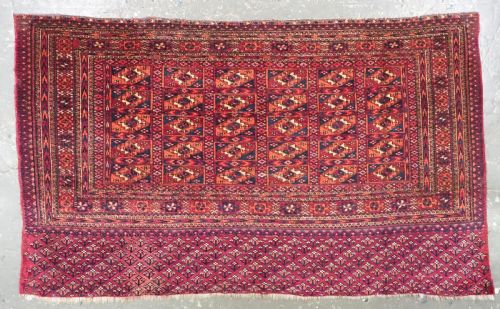
An antique turkmen gul chuval is a tribal storage bag face woven with repeating medallion motifs, prized by collectors for rich madder tones and intricate geometry.
Antique Turkmen Gul Chuval
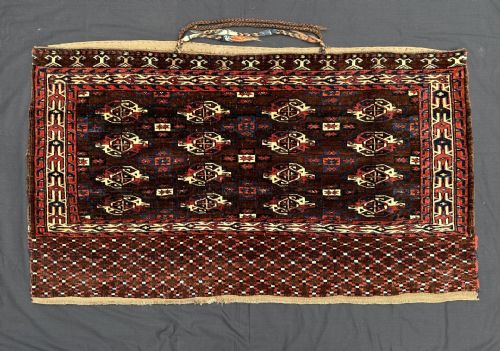
The antique turkmen gul chuval represents nomadic utility transformed into textiles, originally constructed as large tent storage bags by Central Asian tribes. Collectors primarily encounter these pieces as chuval faces, occasionally complete with their plain weave backs or hanging loops intact.
Tribal groups such as the Tekke, Yomut, and Ersari produced these storage sacks across the Turkmen steppes and oases during the nineteenth century. Each piece displays distinct tribal layouts, ranging from ordered rows of primary guls to more expansive multi-gul formats.
How They Were Made
Weavers relied principally on hand-spun wool foundations, knotting dense wool piles using natural dyes derived from local plants and minerals. Artisans frequently integrated cotton and silk highlights to accentuate specific motifs and borders.
The construction combined intricate pile weaving for the main field with flat-woven details at the lower skirts, known as elems. Completed pieces often utilised sturdy plain weave backs to withstand heavy domestic use in nomadic tents.
Listings feature pieces dated across the nineteenth century, utilising wool, natural dyes, cotton, and silk.
What Varies In Quality
Knot density and structural fineness define the baseline execution, where exceptionally tightly woven examples display crisper geometric precision in the primary guls. The handling of secondary motifs, such as turreted attachments or floral elem panels, introduces substantial variation across different tribal workshops.
Colour saturation and the vibrancy of the red ground dictate visual impact, influenced directly by the quality of natural dye application. Preserved pile depth and the presence of original backing materials further separate standard tribal examples from superior survivals.
Tekke Tribes·Yomut Tribes·Ersari Tribes·Saryk Tribes·Kizil Ayak
The Antique Turkmen Gul Chuval Glossary
- Chuval
- A large tent storage bag traditionally used by Turkmen nomads for household possessions. These items were essential for keeping belongings organised inside the yurt.
- Gul
- A repeating primary medallion or tribal crest repeated across the field of the textile. Each design often signifies the specific tribe or clan responsible for the weaving.
- Torba
- A smaller storage bag variant produced alongside larger chuvals by nomadic tribes. These narrower sacks served similar domestic storage functions within the tent.
- Tekke
- A prominent Turkmen tribal group known for producing finely knotted chuvals with orderly gul arrangements. Their weaving typically exhibits meticulous precision and balanced palettes.
Antique Turkmen Gul Chuval: Frequently Asked Questions
What is an antique turkmen gul chuval used for?
These textiles functioned as large storage sacks inside nomadic tents, holding bedding, clothing, and household goods. Their sturdy construction protected contents from damp ground and dust.
Today, collectors mount these bag faces as wall art or display them as decorative carpets. Their rich coloration and geometric guls suit both traditional and modern interiors.
How do I tell Tekke and Yomut chuvals apart?
Tekke pieces generally feature structured rows of guls paired with refined elem panels and deep madder red tones. Their knotting tends to be extremely fine and regular.
In contrast, Yomut chuvals often display alternative gul geometries and distinct border arrangements. Their palette can include varied secondary shades and more expansive spacing.
What is a gul on these rugs?
A gul is the major octagonal or medallion motif repeated systematically across the textile field. These tribal crests identify the specific weavers and regional traditions.
Variations include Salor guls adopted by other tribes, turreted designs, and the scarce aina gul format. Each pattern reflects distinct cultural heritage.
Why do some chuvals have plain backs?
Many surviving pieces retain their original utilitarian plain weave wool backing and hanging loops. These additions show how the bags hung against yurt lattice walls.
Most surviving examples are simply bag faces separated from their backs over time. Complete pieces with backs intact remain particularly prized by advanced collectors.