


Antique Tripod Dining Table
An antique tripod dining table brings warmth to a room while offering a flexible surface that clears away easily when the meal ends.
Antique Tripod Dining Table
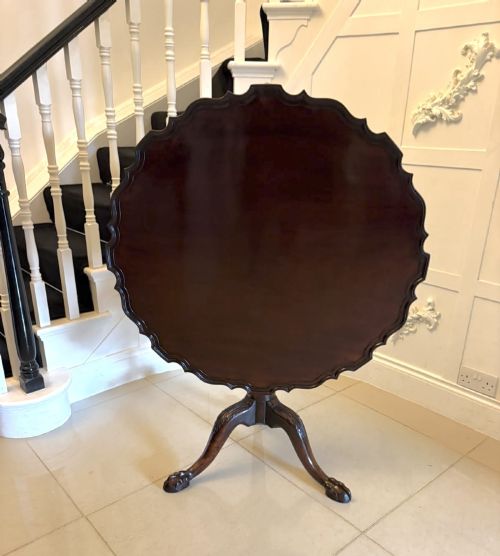
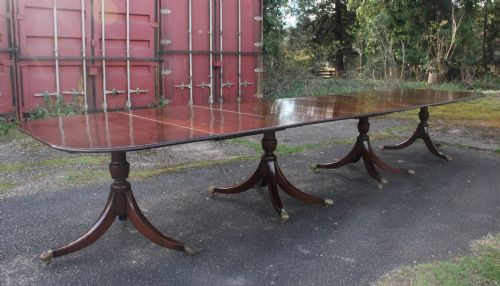
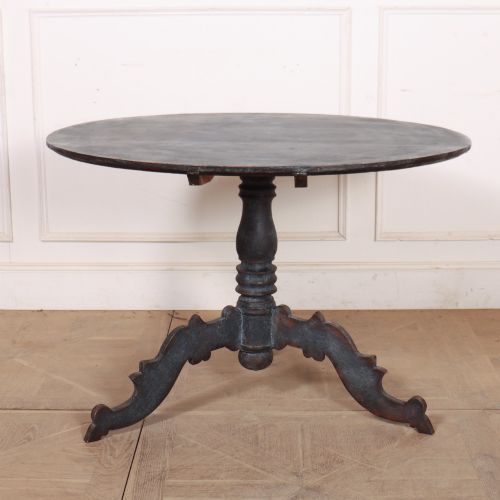
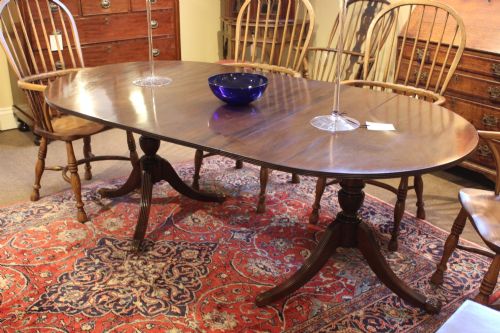
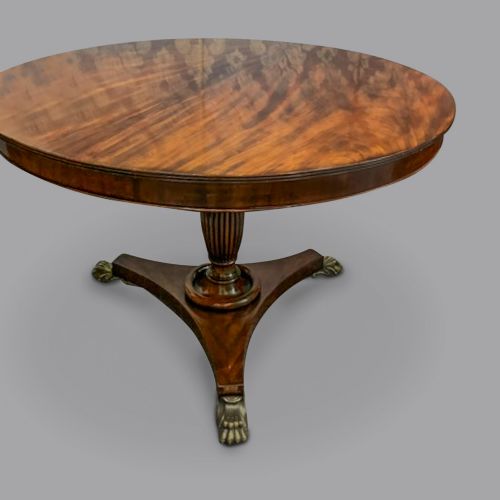
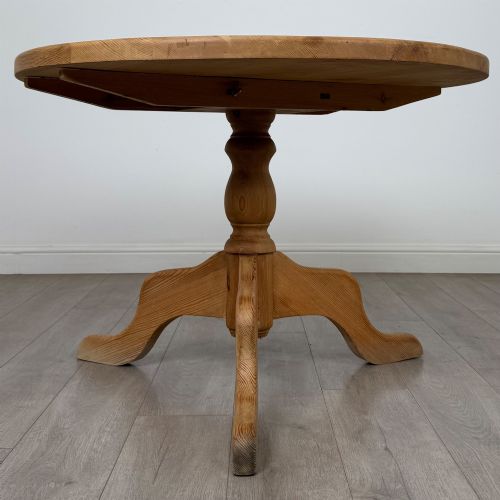
When you search for an antique tripod dining table, you find pieces resting on a central pillar supported by three feet. These examples span the eighteenth and nineteenth centuries, taking forms that served for dining, supper, and breakfast.
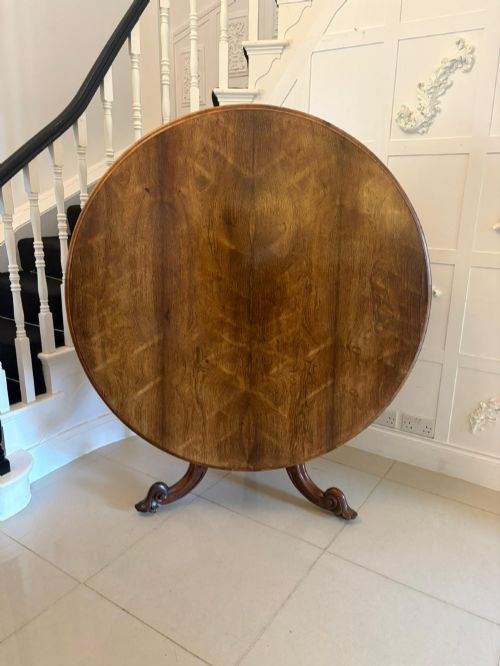
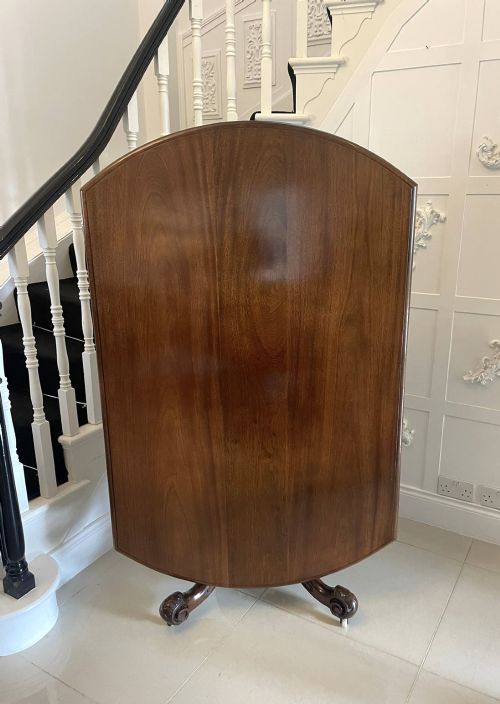
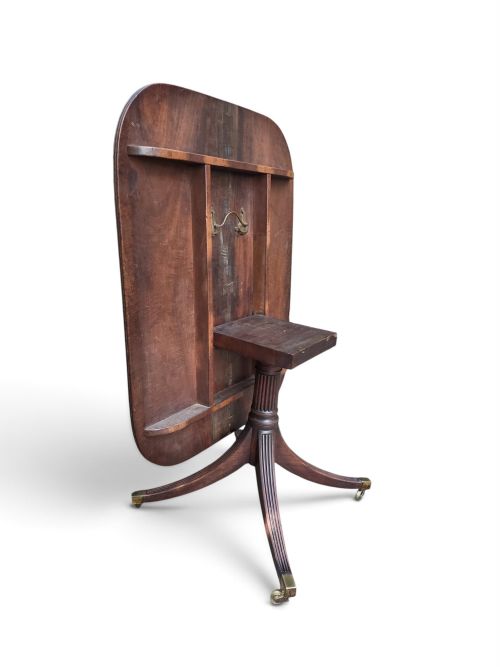
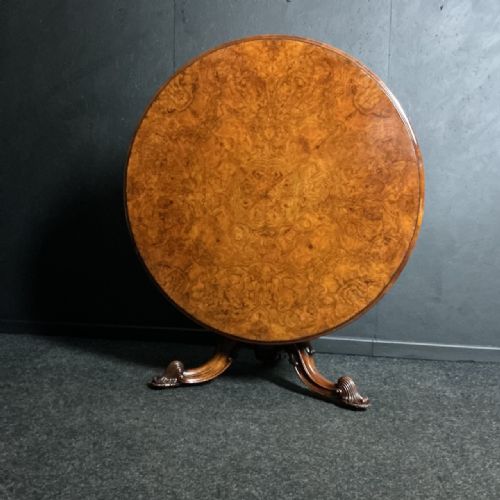
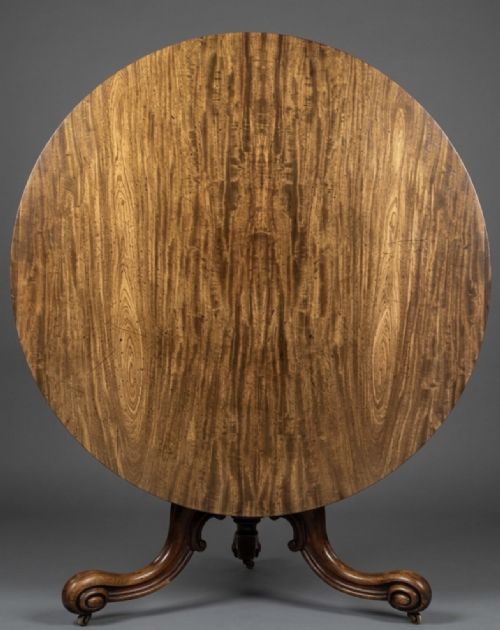
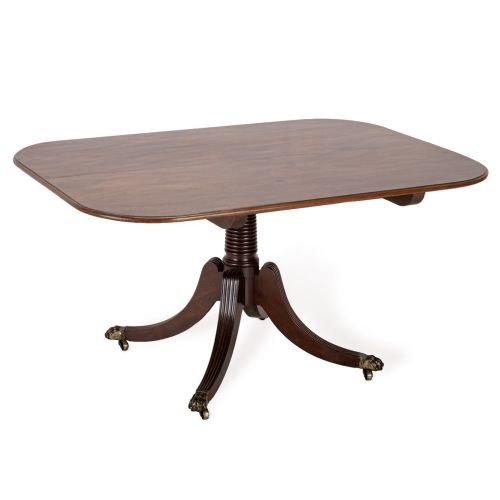
The most common versions on this page are tilt-top and centre tables originating from the Georgian and Victorian eras. Makers designed these single-pedestal tables to save space in smaller rooms or to tilt upright against a wall when not in use.
How they were made
Cabinet makers utilised dense timbers such as mahogany, walnut, and rosewood, frequently selecting figured veneers and flame mahogany for the top surfaces. They turned the central pillars on lathes and joined the three legs using robust housing joints to support the weight above.
Many examples feature brass mechanisms or tilting catches that allow the circular top to pivot ninety degrees. Workshops also applied hand-carved details to the knees of the tripod legs and polished the timber with shellac to build a durable finish.
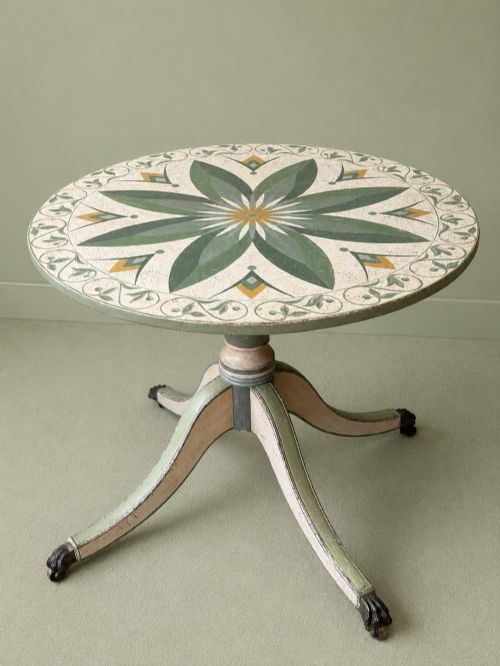
Listings span the eighteenth, nineteenth, and early twentieth centuries, featuring mahogany, rosewood, walnut, pine, and painted wood.
What varies in quality
The division between ordinary and exceptional tables rests in the choice of timber and the crispness of the carving. Superior examples feature single-piece mahogany tops and finely sculpted tripod bases with natural movement in the carved foliage.
Stability dictates the utility of a pedestal table, where tighter joints in the block beneath the top prevent the surface from wobbling. Refined proportions in the turning of the pillar and the sweep of the legs separate workshops of high skill from standard production.
The Antique Tripod Dining Table Glossary
- Tilt-top table
- A table with a hinged top that pivots vertically so the piece can stand flat against a wall when unoccupied.
- Tripod base
- A support structure comprising three legs radiating from a central turned pedestal.
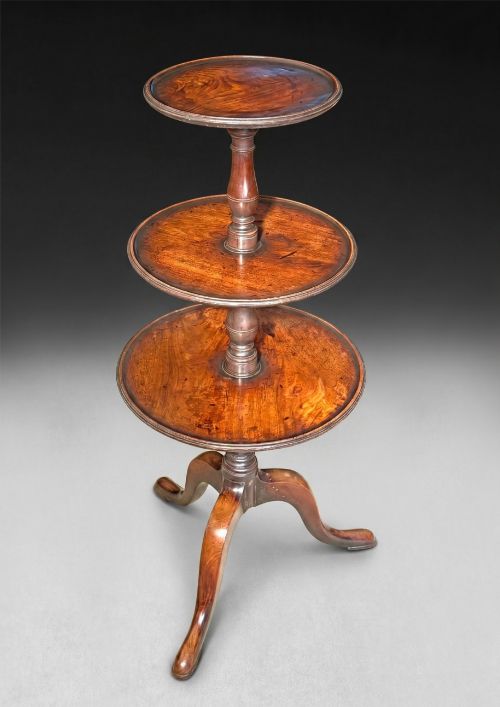
- Dumb waiter
- A tiered serving stand or table used to hold dishes and cutlery during a meal without requiring servants in the room.
- Snap-top
- An alternative term for a tilt-top table, held in its horizontal position by a brass catch or spring latch.
- Flame mahogany
- Timber veneer cut from the branch junction of a mahogany tree, creating a distinctive flickering flame pattern.
Antique Tripod Dining Table: Frequently Asked Questions
How do you use a tilt top table?
These tables function as standard dining surfaces during meals and tilt upright against the perimeter wall afterwards to free up floor space in the room.
The pivoting mechanism relies on a catch beneath the top that releases the surface from its horizontal position.
What is a dumb waiter?
A dumb waiter is a multi-tiered stand or table designed to hold extra plates, glasses, and dishes beside the dining table during formal meals.
Georgian examples frequently feature graduating circular tiers supported on a single central tripod pillar.
How do I date a mahogany pedestal table?
Dating relies on observing the timber species, the turning style of the central column, and the construction of the leg joints beneath.
Georgian pieces often display simpler, heavier mahogany turnings, while Victorian versions incorporate denser rosewood and heavier carved ornamentation.
Will a round pedestal table fit four chairs?
Circular pedestal tables provide flexible seating because the absence of corner legs allows diners to space chairs evenly around the circumference.
Tables measuring around forty-eight inches across comfortably accommodate four people for dining.