



Victorian Painted Tilt Table
These victorian painted tilt tables combine clever folding tops with hand-applied decoration, offering both compact storage and distinct surface artistry.
Victorian Painted Tilt Table
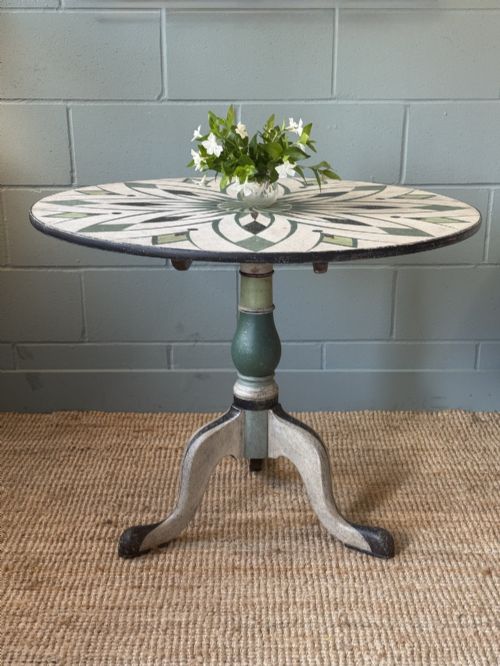
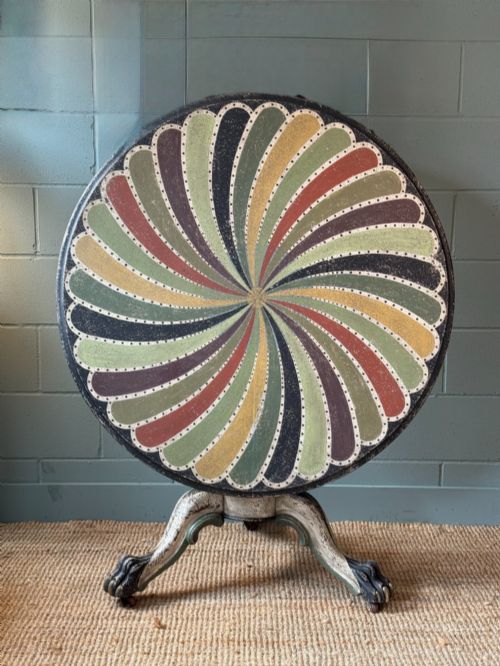
A victorian painted tilt table is a versatile piece designed with a hinged top that folds vertically when not in use, saving valuable floor space in nineteenth-century rooms. You will find these examples appearing across various forms including occasional tables, wine tables, side tables, and larger dining or breakfast tables.
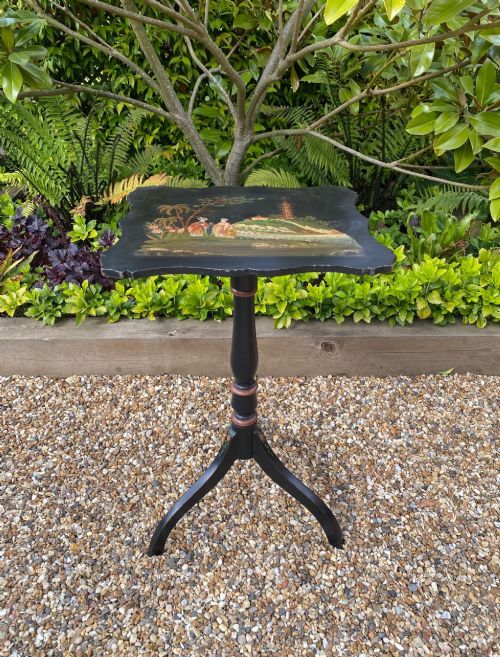
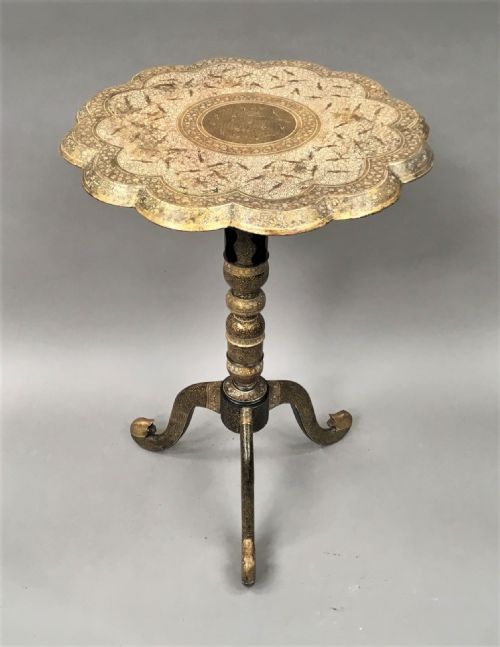
The aesthetic of a victorian painted tilt table ranges from formal Chinoiserie and Japanned finishes to folk art and country floral motifs. Many pieces hail from the nineteenth century, specifically spanning decades from eighteen hundred to eighteen eighty, reflecting both British craftsmanship and imported influences.
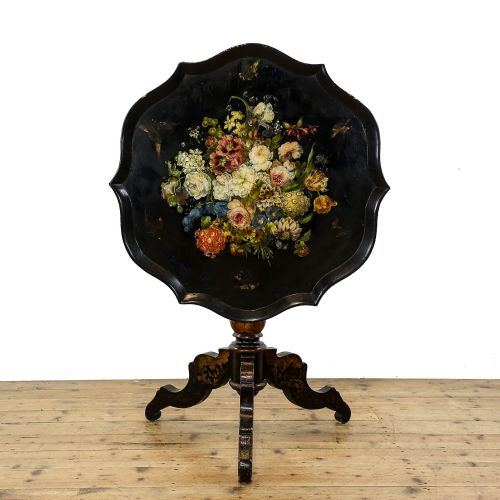
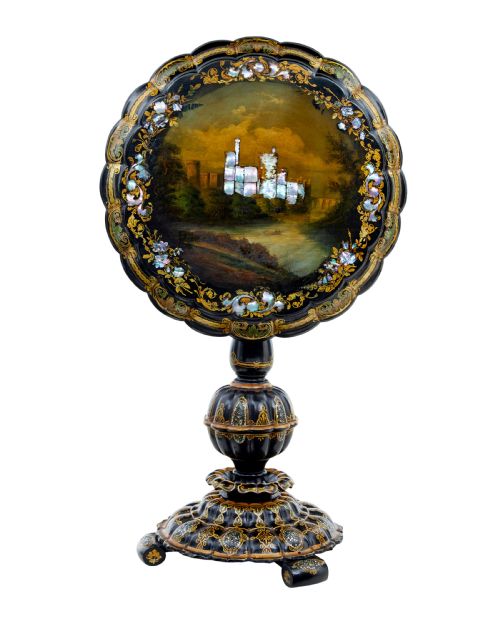
Makers utilised timber, papier-mâché, and lacquer as foundational bases before applying detailed brushwork, gilding, and mother of pearl inlay. Whether you encounter a tripod side table or a heavier pedestal breakfast table, the tilting mechanism remains the unifying mechanical feature across all listed variations.
Materials and construction
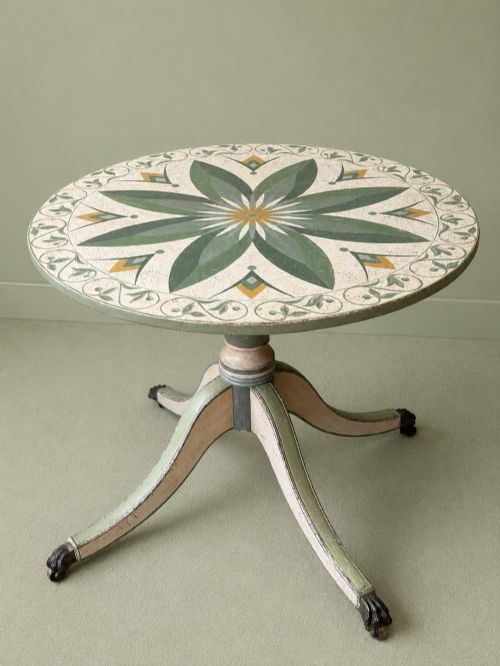
Carpenters constructed the primary structures using solid timber or moulded papier-mâché, pairing a central pillar with tripod feet or heavier lion paw feet to support the weight of the tilting top. The brass catch and pivot mechanism allowed the circular surface to lock securely in a horizontal position or fold flat against the pedestal.
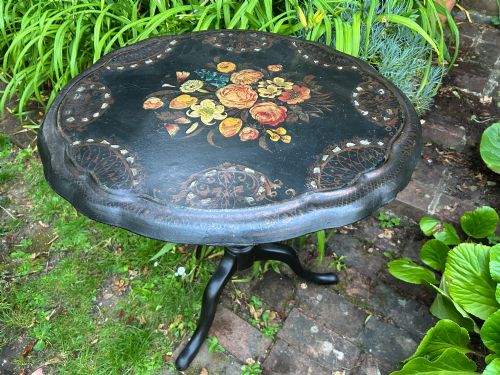
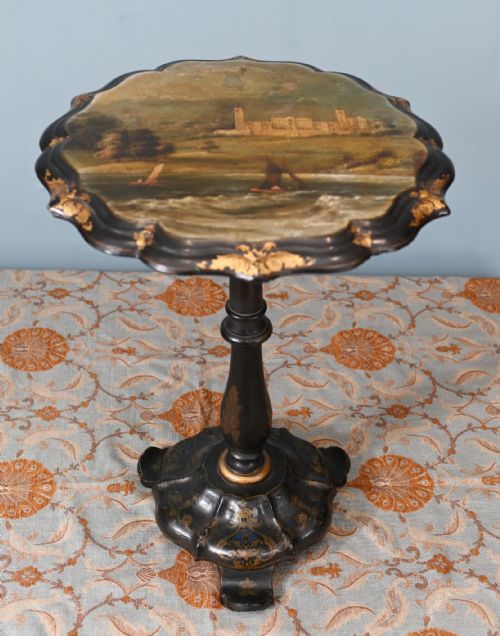
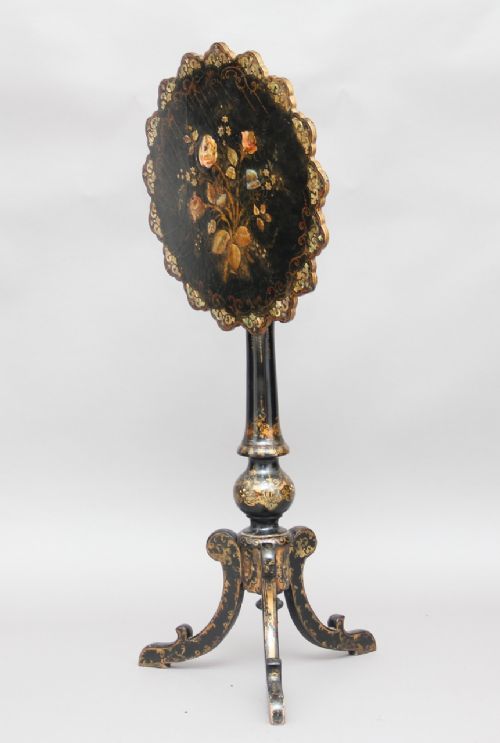
Surface decoration involved layers of paint, lacquer, and japanning, often enhanced with hand-painted floral patterns, petal designs, or intricate Chinoiserie scenes. Artisans frequently integrated mother of pearl inlay and gilt highlights into the dark lacquer grounds to create depth and luminous contrast.
The listings span the Victorian era, nineteenth-century imports, and vernacular folk art traditions.
Assessing craftsmanship
Quality rests in the precision of the joinery and the stability of the tilting mechanism, ensuring the top sits perfectly flat when lowered without excessive play in the pivot. Finer examples display crisp, highly detailed brushwork and secure inlay rather than coarse or hastily applied later embellishments.
The integrity of the underlying papier-mâché or timber base dictates longevity, as warping or structural fatigue compromises the balance of the tripod support. Original painted surfaces hold distinct visual appeal compared to later decorative interventions applied over plain wood.
The Victorian Painted Tilt Table Glossary
- Tilt top
- A table mechanism featuring a hinged surface that pivots from horizontal to vertical, allowing the piece to stand flat against a wall when not in use.
- Japanning
- A European imitation of East Asian lacquerwork, created by applying layers of dark varnish and curing them to achieve a glossy, durable finish.
- Chinoiserie
- European artistic interpretations of Chinese and East Asian decorative motifs, frequently featuring pagodas, figures, and landscapes rendered in paint or gilt.
- Papier-mâché
- A composite material made from paper pulp mixed with glue and resin, pressed into moulds and hardened to form smooth, lightweight furniture blanks.
- Mother of pearl
- An iridescent inner layer of mollusc shell, cut into thin pieces and inlaid directly into lacquer or wood surfaces to catch the light.
Victorian Painted Tilt Table: Frequently Asked Questions
How do you use a tilt table?
These tables function as standard round surfaces for lamps, drinks, or dining when the top is locked in the horizontal position. Release the brass catch underneath to pivot the surface upright, transforming the furniture into a flat decorative panel that occupies minimal floor space.
Historically, this design allowed servants to clear rooms quickly or permitted owners to push unused furniture against the perimeter of a parlour. Today, living with one offers the same practical flexibility in smaller sitting rooms or hallways.
Are these tables sturdy?
The stability depends entirely on the condition of the central pivot and the tightness of the tripod leg joints. A well-adjusted mechanism holds the top firm without wobbling during everyday use.
When placed on level flooring, a solid wood or papier-mâché pedestal base distributes weight evenly across the feet. Checking the tightness of the screws and hinges ensures the table remains safe for supporting items.
How do I spot original paint?
Original painted surfaces show microscopic craquelure, uniform wear consistent with age, and pigments that have settled naturally into the grain or lacquer base. Later painted additions often sit entirely on top of the surface without integrating into the older substrate beneath.
Examining the piece under magnification reveals whether the brushwork matches the period of the timber or papier-mâché blank. Descriptions frequently note when floral or scenic decoration represents a later enhancement rather than first-generation artistry.
What is papier-mâché furniture?
Papier-mâché furniture consists of thick paper pulp and binding agents pressed under heavy pressure into durable structural forms, then baked and sanded smooth. This technique created lightweight yet resilient tabletops that accepted dark lacquer and mother of pearl inlay exceptionally well.
Craftsmen in nineteenth-century workshops utilised this method to produce ornate occasional and wine tables with sleek, seamless contours. These pieces require careful placement away from excessive moisture to preserve the integrity of the compressed material.