


Painted Circular Centre Table
A painted circular centre table brings striking presence and practical surface space to a room, anchoring the floor plan with distinct historic character.
Materials and construction methods
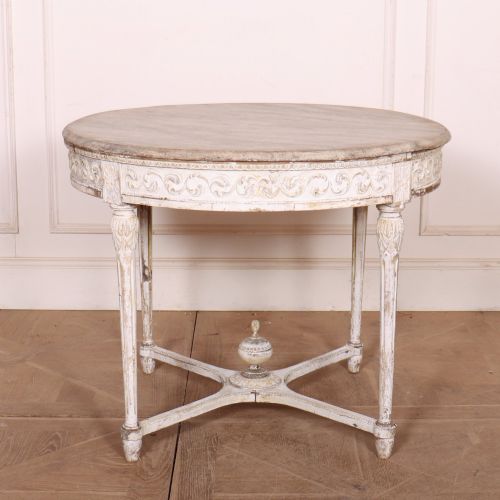
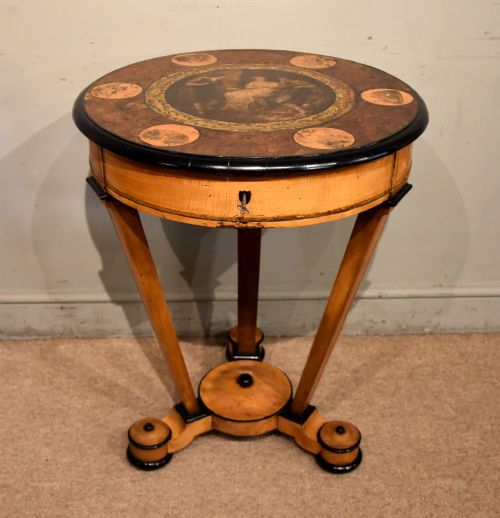
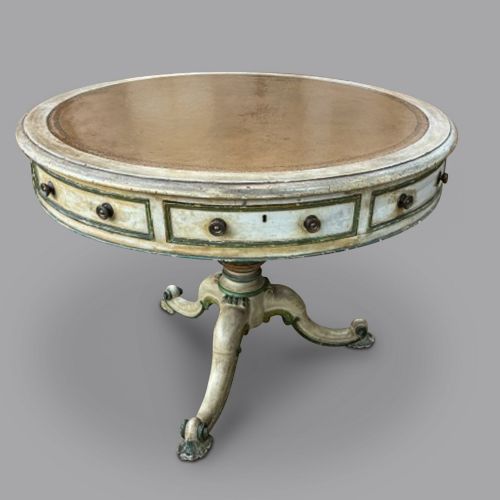
Carpenters constructed the primary frames of these tables using solid timbers like pine, oak, birch, and sycamore, often employing a central pedestal or four-legged base to support the round top. Tilt-top mechanisms and drum table structures required precise joinery to ensure the surface remained stable during daily use.
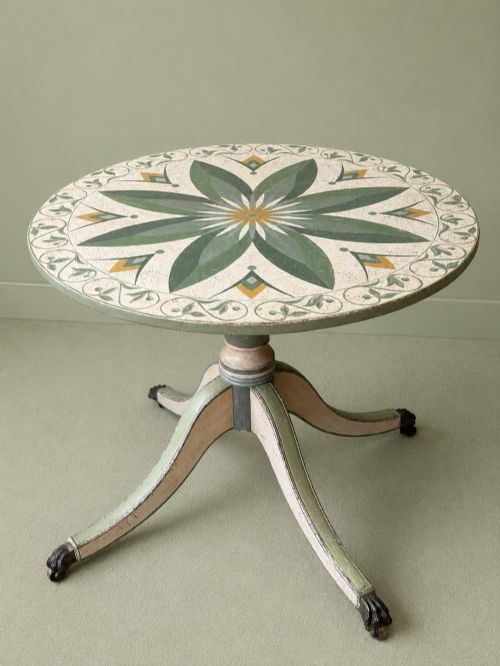
Surfaces received decorative finishes through hand painting, sometimes layered over gesso or combined with parcel-gilt and parcel-silvered accents to define carved mouldings. Inset marble slabs provided durable, cool tops on French gueridons and related models, resting directly within the wooden framework.
Judging the quality of construction and finish
Quality rests upon the crispness of the timber carving and the stability of the central pedestal or leg assembly, where lesser pieces may show looseness or heavy repairs over time. The integrity of the painted surface, whether an original layered finish or a later decoration, determines the visual depth of the piece.
Finer examples integrate heavy, well-fitted marble slabs or articulate complex turning and parcel-gilt details with precision. The proportion between the circular top and the supporting base dictates the overall elegance and balance of the table in a room.
Some nineteenth-century breakfast tables arrived with tilt-top mechanisms so staff could hide them away after the morning porridge.
The Painted Circular Centre Table Glossary
- Gueridon
- A small French table, often round and supported by a single central pillar or three legs, frequently topped with marble. These pieces served historically as stands for lights or decorative objects.
- Tilt-top table
- A table designed with a hinge mechanism that allows the circular top to pivot vertically when not in use, saving floor space. This form became popular in British and European homes during the eighteenth and nineteenth centuries.
- Drum table
- A type of circular table featuring a deep, cylindrical top resembling a drum, often fitted with drawers around the perimeter. They typically stand on a robust central pillar with tripod feet.
- Gustavian
- A Swedish neoclassical style characterised by pale painted finishes, restrained carving, and functional elegance. It draws inspiration from French Louis XVI design interpreted through a Scandinavian aesthetic.
Painted Circular Centre Table: Frequently Asked Questions
Where should I place a centre table?
A centre table works best freestanding in the middle of a large room, entrance hall, or library where people can walk around it.
It provides an ideal surface for a central lamp, floral arrangement, or collection of books, functioning as both a decorative anchor and a practical table.
How do I care for a painted wood surface?
Dust the painted surface regularly with a soft, dry cloth and avoid using harsh chemical cleaners or abrasive pads that can strip the finish.
Keep the table away from direct sunlight and strong heat sources to prevent the wood beneath from expanding and the paint from cracking.
What is a tilt-top table used for?
A tilt-top table served historically as an adaptable piece that could be pushed against a wall to clear floor space when not in use.
In modern rooms, the tilting mechanism remains a practical feature for moving the table or simply appreciating the craftsmanship underneath the top.