



Antique Transferware Charger
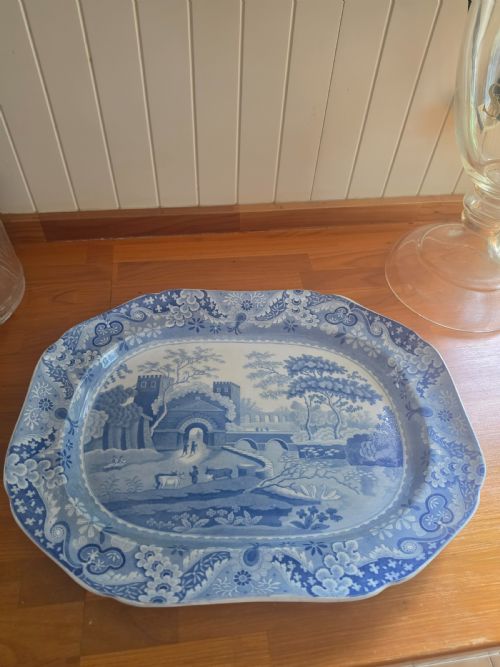
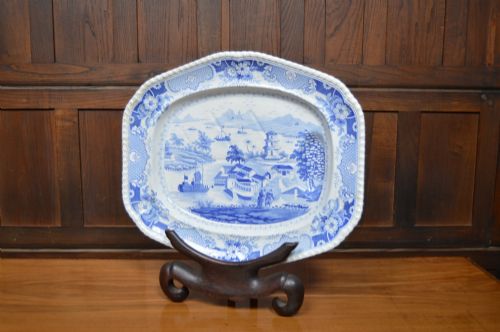
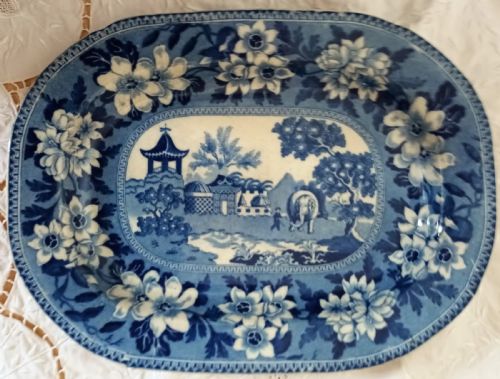
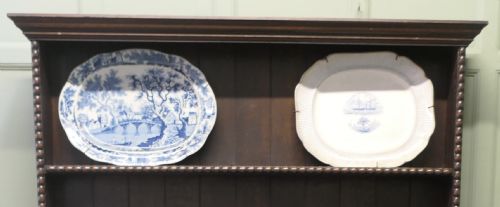
An antique transferware charger is a large ceramic display piece or serving platter carrying a printed blue and white scene.
Antique Transferware Charger
When you search for an antique transferware charger, you encounter large serving platters and display plates produced across the eighteenth and nineteenth centuries. These pieces display intricate printed scenes ranging from architectural views to maritime battles and classical landscapes.
The versions most common on this page date from the Georgian and Victorian eras, with English factories dominating the selection. You find substantial earthenware and pearlware bodies bearing rich blue prints that served practical dining functions or ornamental purposes in large households.
How they were made
Potters shaped bodies from earthenware, pearlware, creamware, and stone china before applying printed designs using engraved copper plates. The transfer printing technique allowed workshops to apply detailed pictorial patterns onto ceramic surfaces with a consistency hand-painting could not match.
After the paper transfer of the blue pigment onto the biscuit fired clay, artisans coated the pieces in a transparent glaze. Subsequent kiln firing fixed the design permanently beneath a glossy surface that protected the blue transfer print from daily wear.
Listings feature earthenware, pearlware, and stone china spanning the Georgian, Regency, and Victorian periods.
What varies in quality
The clarity of the printed transfer dictates visual success, separating sharp, deeply inked architectural views and marine scenes from muddy or blurred impressions. Finer pieces maintain crisp outlines across expansive platter surfaces without smudging in the glaze.
The weight and refinement of the ceramic body also establish grade, with early pearlware and improved stone china exhibiting thinner, more uniform construction than heavier utilitarian earthenware dishes.
Spode·John Rogers And Son·Caughley·William Adam·Copeland And Garrett·Liverpool Herculaneum·Minton
The Antique Transferware Charger Glossary
- Transferware
- Ceramic pieces decorated by transferring a printed design from an engraved copper plate onto the clay body using tissue paper and pigment. This innovation transformed pottery production in British factories.
- Charger
- A large decorative plate or serving platter traditionally used for ceremonial dining or as an under-plate for smaller courses. These substantial pieces provide a wide surface for pictorial transfer prints.
- Pearlware
- A refined earthenware developed in the late eighteenth century featuring a subtle bluish glaze that pooled in crevices to mimic Chinese porcelain. It forms the base for many early blue and white items.
- Stone China
- A durable, dense ceramic body introduced in the nineteenth century to compete with imported porcelain. It resists chipping and supports large, heavy serving platters.
- Chinoiserie
- A European artistic style reflecting Chinese motifs and imaginary landscapes, frequently utilised in blue and white transfer printing. These fantastical garden and pavilion scenes proved immensely popular.
Antique Transferware Charger: Frequently Asked Questions
What is an antique transferware charger?
An antique transferware charger is a large ceramic serving platter or display plate decorated with a printed blue and white scene applied from an engraved copper plate.
These pieces were produced in British potteries during the Georgian and Victorian periods, combining utilitarian dining functions with detailed pictorial artistry.
How do I identify the period?
Period identification relies on ceramic bodies, glaze characteristics, and registry marks. Early pieces often utilise pearlware with a bluish glaze tint, while later Victorian examples employ heavier earthenware and stone china.
Subject matter and border designs also shift over time, moving from eighteenth century chinoiserie towards topographical nineteenth century views.
Were these chargers used for food?
Many large platters served practical roles at the dining table for presenting joints of meat or large courses in substantial households.
Other examples functioned purely as decorative wall or sideboard pieces, particularly when they featured elaborate pictorial scenes that would be obscured by food.
How do I care for antique transferware?
These ceramic pieces require gentle hand washing in warm water with mild soap to protect the historic glaze and ceramic body from thermal shock and abrasive damage.
Displaying them securely on plate stands or hanging them with padded wire hangers prevents accidental chips and structural strain.