

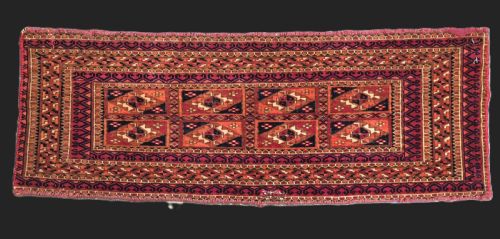
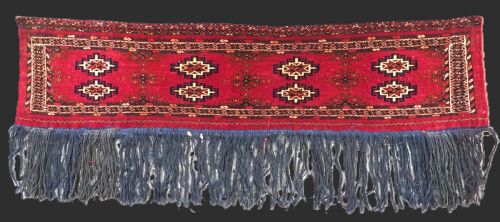
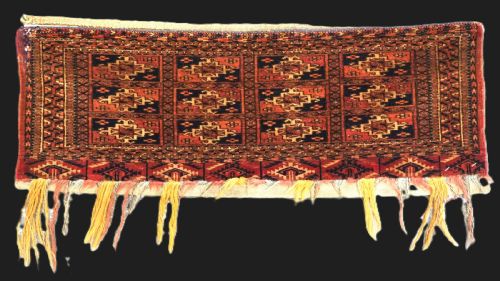


Antique Torba Rug
An antique torba rug represents a Central Asian tribal bag face woven for utility and dowry display.
Antique Torba Rug
When you search for an antique torba rug, you are looking at utilitarian storage sacks made by nomadic and tribal groups across Central Asia. These pieces typically function as tent bags or bedding bags, often woven as part of a bride's dowry by weavers from Turkmen tribes such as the Tekke, Yomut, Saryk and Ersari.
You will most commonly encounter bag faces on this page rather than complete sacks with backs. These square or oblong textile fragments display intricate tribal guls and geometric motifs designed to face outward inside a felt tent or yurt.
Wool and Natural Dyes
These textiles rely primarily on hand-spun wool and natural dyes to create dense, durable pile surfaces. Some examples incorporate cotton for foundation structures or supplementary silk highlights to emphasise specific motifs within the design field.
Weavers employ traditional knotting techniques alongside flatweave methods, sometimes finishing pieces with plain weave backs and tassels. The structural integrity depends on tightly packed wool foundations designed to withstand the rigours of nomadic life.
Some bag faces double as vanity storage, proving that nomads appreciated a tidy dressing table inside their felt tents.
Weave Density and Design Complexity
The standard of a weaving is judged by the fineness of its knotting and the crispness of its drawing. Pieces with a very fine weave and precise geometric placement stand apart from coarser examples.
The palette and completeness also influence the piece, particularly where original backs, tassels or uncommon guls survive intact. Unusual designs and balanced proportions elevate certain bag faces above standard tribal production.
The Antique Torba Rug Glossary
- Torba
- A small Turkmen wall pocket or storage bag used within the yurt. These items frequently feature prominent guls arranged in rows across the face.
- Gul
- A primary medallion or repeating tribal motif used across Central Asian rugs and bag faces. Different tribes utilise distinct gul designs to signal lineage and identity.
- Mafrash
- A larger rectangular storage bag or bedding sack. These pieces share similar flatweave and pile techniques with smaller torbas.
- Kap
- A general term for a tribal bag or container. They are encountered as fragments or complete faces preserved from nineteenth-century nomadic households.
- Flatweave
- A textile constructed without pile by interweaving warp and weft threads. Examples include banded designs and simplified utilitarian structures.
Antique Torba Rug: Frequently Asked Questions
What is an antique torba rug used for?
These textiles served as functional storage bags inside nomadic tents across Central Asia. Families utilised them to hold personal belongings, bedding or household goods.
Over time, collectors removed the bag faces to display them as decorative wall hangings or small floor rugs. Their compact dimensions suit modern interior spaces where large carpets might overwhelm a room.
How do I identify a Tekke torba?
Tekke bag faces typically feature orderly rows of octagonal guls, such as the gul design, executed in rich madder reds and deep aubergine tones. They often display precise knotting and balanced geometric borders.
Comparing the repeating motifs against known tribal patterns helps distinguish Tekke weaving from Yomut or Saryk alternatives. The choice of secondary ornaments and ivory ground accents also provides strong clues to tribal origin.
Are these pieces complete bags?
Many examples on this page survive as bag faces rather than complete sacks. The original back panels and side cords frequently wore out through daily use and were detached.
Some listings do retain their original plain weave backs, tassels or hanging loops. Complete specimens offer a more authentic glimpse into how the nomadic household originally deployed them.
How should I care for a tribal bag face?
Protect the wool textile from direct sunlight to prevent natural dyes from fading over the years. Gentle vacuuming with a low suction attachment helps remove surface dust without disturbing the pile.
Mounting the textile flat or supporting it properly if hung on a wall relieves tension from the ancient foundation. Professional cleaning should only be undertaken by specialists familiar with antique vegetable-dyed wool.