



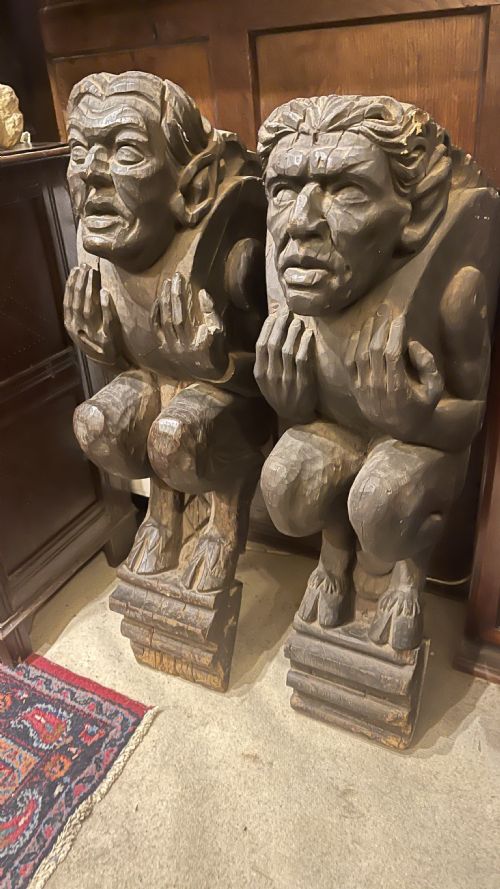


Antique Timber Corbel
An antique timber corbel brings robust architectural presence indoors, offering structural weight and sculptural depth to a room.
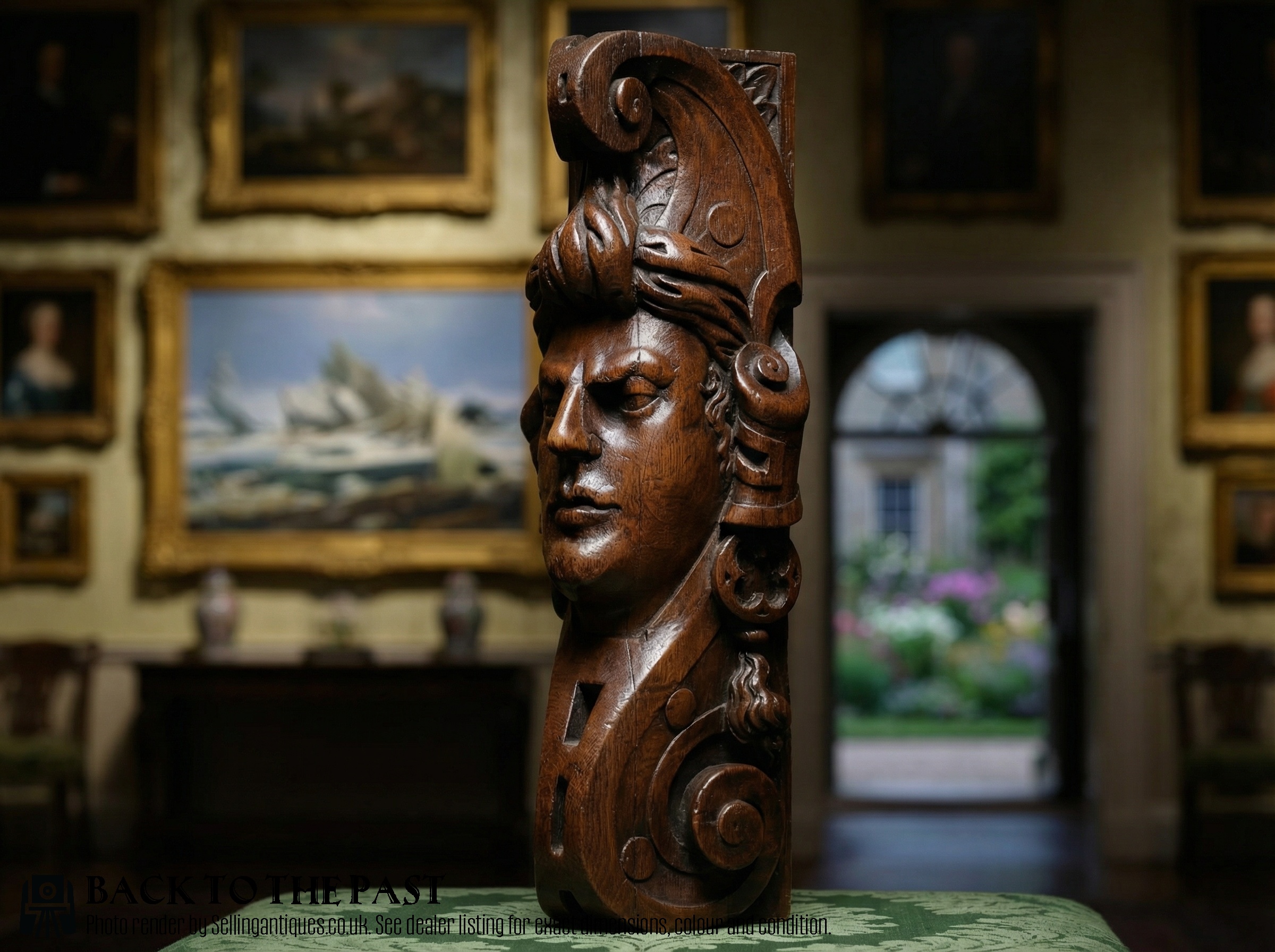
Antique Timber Corbel
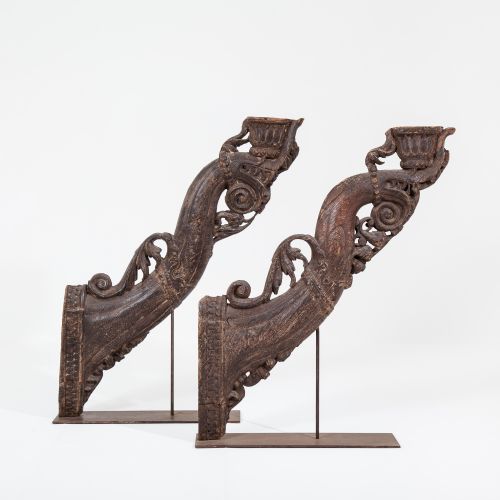
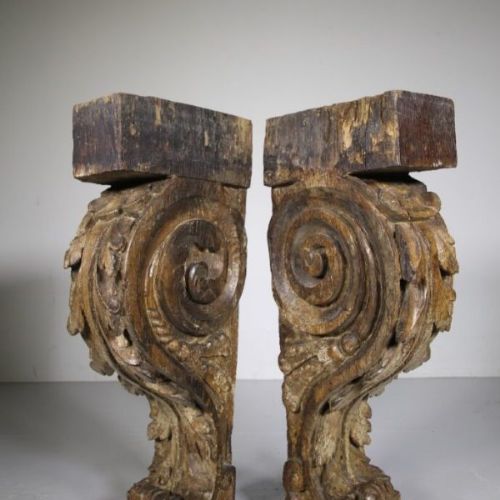
An antique timber corbel functions as a projecting bracket that historically supported beams, shelves, or roof structures. The examples found here span architectural salvage, wall sculptures, and carved fragments originating across the sixteenth to nineteenth centuries.
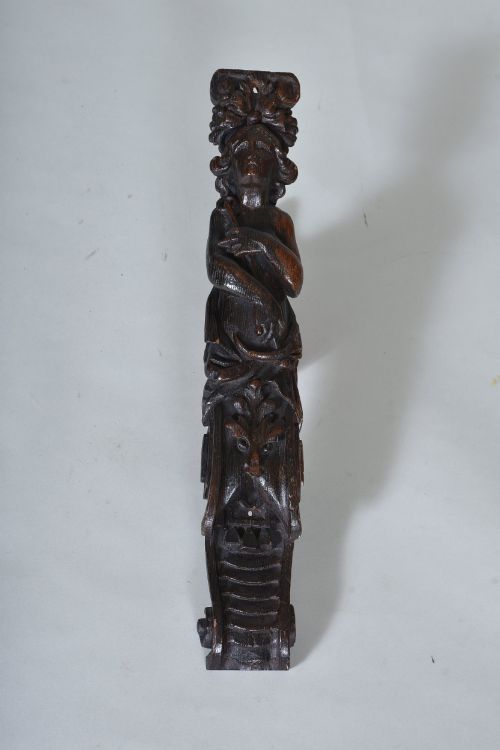
Buyers will encounter single pieces alongside matched pairs shaped as lions, angels, human figures, or classic architectural capitals. These objects range from heavy seventeenth-century oak carvings to eighteenth-century continental pieces and nineteenth-century pine or walnut adaptations.
The form shifts from utilitarian support brackets to ornate figural sculptures like caryatids and ceiling bosses. Most items on this page lean heavily towards ecclesiastical or domestic architectural salvage from British, continental, and global traditions.
Materials and construction methods
Carvers shaped these pieces primarily from dense hardwoods like oak and walnut, alongside occasional uses of pine and general carved timber. Artisans relied on hand chisels and gouges to build deep relief details directly into the heavy grain.
Many fragments retain traces of historic paint finishes or dark wax surfaces accumulated over centuries of exposure. Joinery marks and mounting apertures often remain visible on the reverse, showing how the bracket once anchored into stone or timber walls.
Listings feature hard timbers like oak and walnut, alongside painted pine and architectural elements dating from the sixteenth century onwards.
Assessing quality in carved timber brackets
Quality rests entirely in the sharpness and depth of the hand carving, particularly across facial expressions, hair, and acanthus foliage. Master carvers achieved three-dimensional lifelike volume that commands the eye, whereas lesser work appears flat and mechanical.
The integrity of the timber itself dictates value, as stable old-growth oak or walnut with minimal structural loss outlasts degraded material. Patina also plays a major role, where untouched surfaces with centuries of age outrank stripped or heavily restored timber.
The Antique Timber Corbel Glossary
- Corbel
- A structural piece of stone, wood, or metal jutting from a wall to carry a superincumbent weight. In timber, these are carved into brackets or figural forms.
- Caryatid
- A sculptured female figure serving as an architectural support taking the place of a column or a pillar. They frequently appear as wall brackets.
- Ceiling Boss
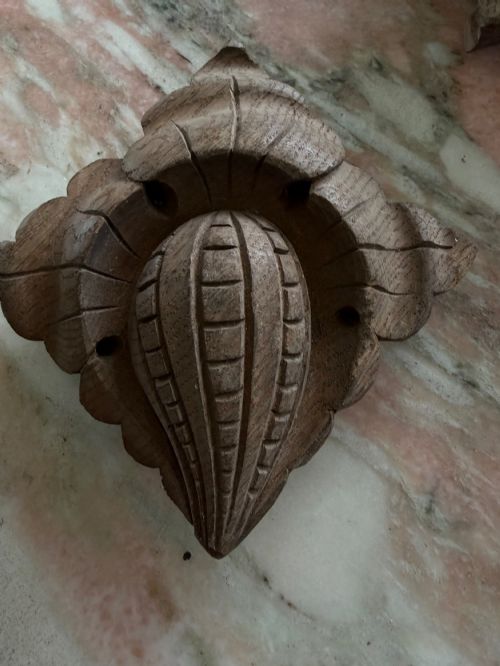
- A knob or projection of wood, stone, or plaster, often carved, placed at the intersection of ribs in a ceiling or vault. They are rescued as decorative architectural fragments.
- Capital
- The topmost member of a column, mediating between the column and the load resting upon it. Versions seen here are carved from wood as standalone decorative objects.
- Architectural Salvage
- Building materials and decorative elements rescued from structures slated for demolition or renovation. This includes corbels, brackets, and panels.
Antique Timber Corbel: Frequently Asked Questions
How do I mount a heavy timber corbel on the wall?
Most heavy corbels require custom steel brackets or hidden threaded rods anchored securely into masonry or wall studs. Because these pieces were originally load-bearing architectural elements, they possess substantial weight.
Consult a professional joiner to assess the rear mounting points and ensure the wall structure can safely support the protrusion.
Can I use an antique corbel as a shelf bracket?
These pieces make exceptionally sturdy shelf brackets when paired with a matching timber board laid across the top flat surfaces. Ensure the projection matches the depth of your chosen shelf.
Position the brackets into wall studs to safely hold the weight of books or display items.
How do I clean historic carved wood?
Dust the carvings gently with a soft, dry natural bristle brush to remove surface particles without disturbing the aged patina. Avoid using wet cloths, harsh detergents, or modern furniture polishes.
An occasional application of microcrystalline wax can protect dry antique timber if recommended by a conservator.
What is the difference between a corbel and a capital?
A corbel projects horizontally from a vertical wall to support an upper load, whereas a capital sits directly atop a column or pilaster to cushion the weight above. Both served structural roles in historic buildings before being repurposed as wall sculptures.
Capitals tend to follow classical architectural orders like Corinthian, while corbels often take figural or scroll forms.
How can I tell a seventeenth-century oak carving from a later copy?
Early oak displays distinctive shrinkage cracks, tool marks from hand adzes or chisels, and a dry, oxidised surface colour acquired over centuries. True sixteenth and seventeenth-century pieces also show peg holes and structural cuts relevant to early construction.
Later copies often feature uniform machine tooling, lighter non-historic pine or softwoods, and artificial distress marks.