




Dark Oak Corbel
These dark oak corbel pieces are substantial architectural carvings that anchor a room with centuries of heavy timber character.
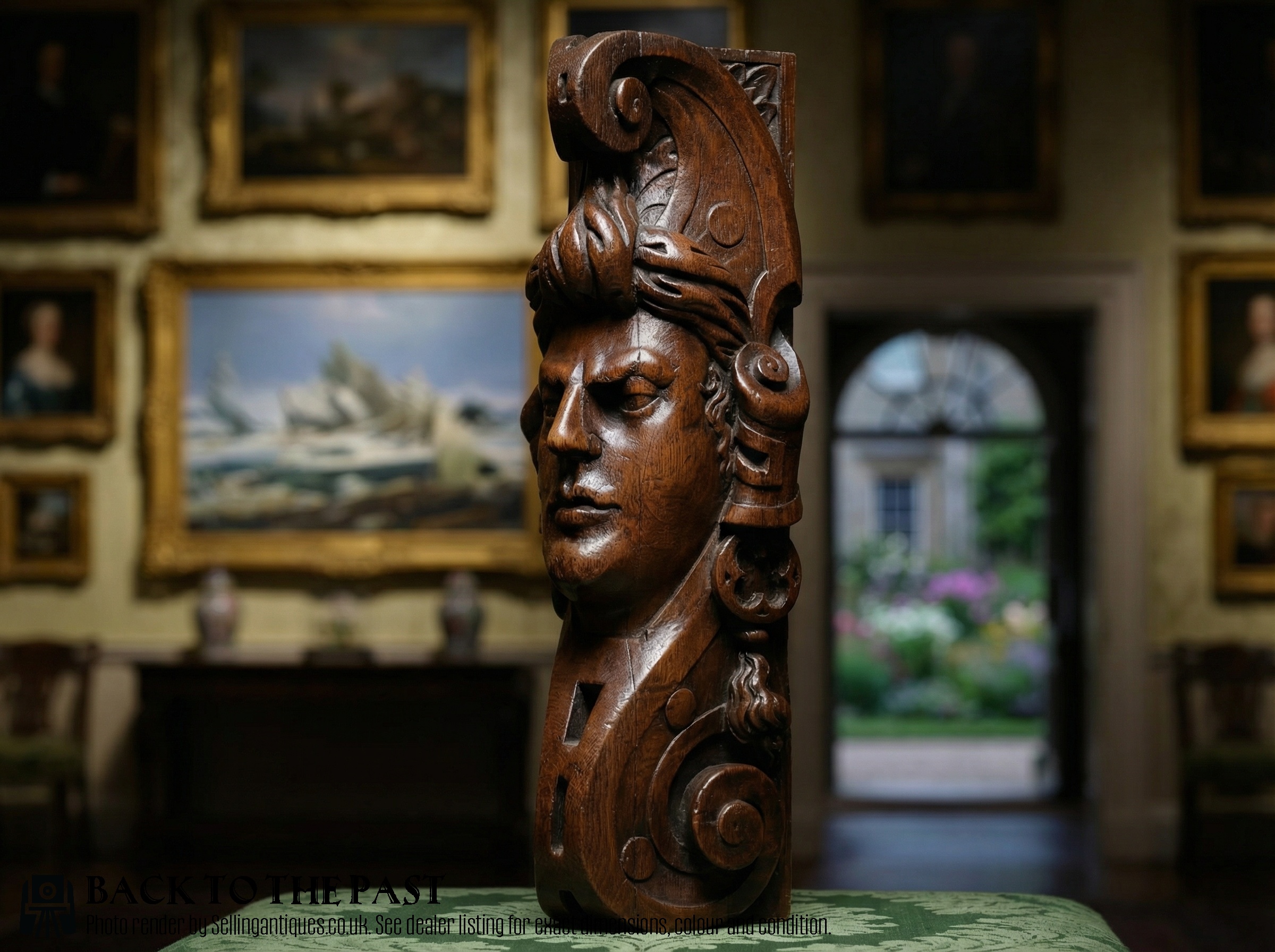
Dark Oak Corbel
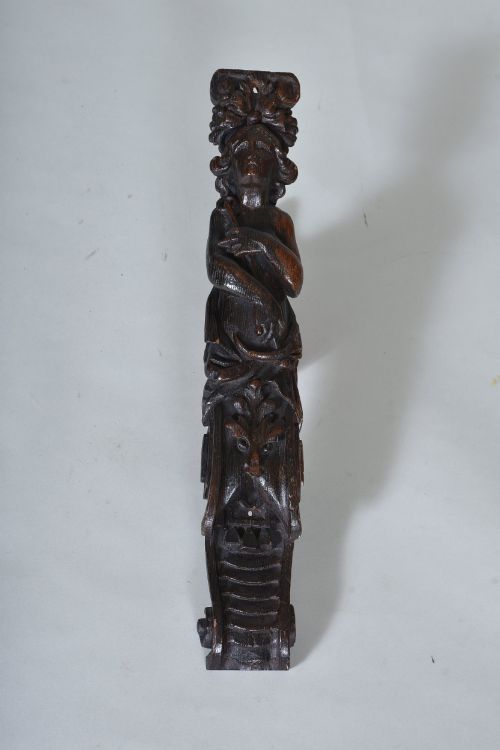
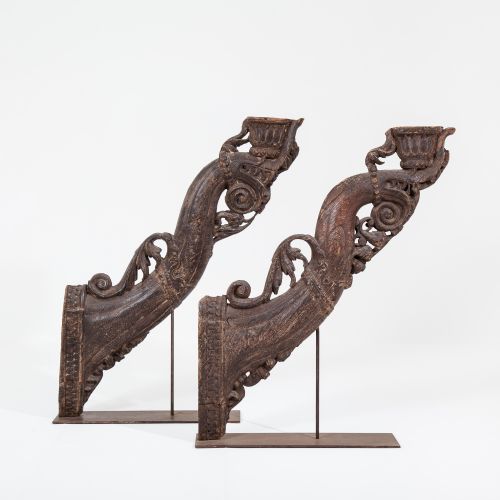
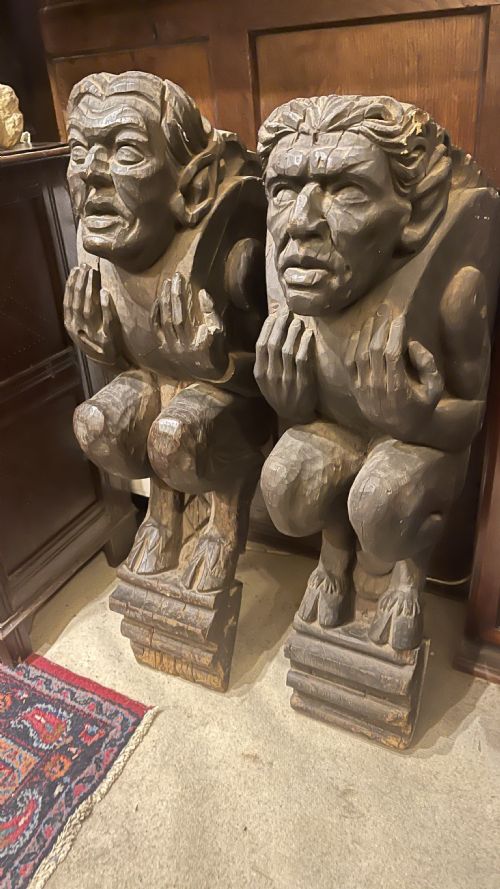
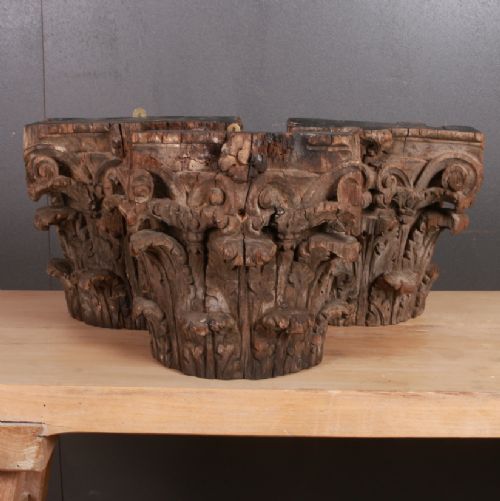
When you search for a dark oak corbel, you encounter architectural salvage and carved fragments spanning from the sixteenth century through the nineteenth century. These structural supports and wall brackets take forms such as medieval men, angels, and caryatids shaped from dense wood.
The versions most commonly met on this page include seventeenth-century continental fragments, pairs of eighteenth-century brackets, and Victorian Black Forest wall pieces. Each object carries the physical marks of its original building context, whether pulled from ecclesiastical settings or domestic timber frames.
Materials and construction
These pieces rely on oak and dark oak, frequently shaped through manual carving techniques that define early European joinery. Selected examples incorporate iron pins or brackets to secure the heavy wooden blocks.
Makers cut and carved the timber while green or seasoned, applying hand tools to create deep relief figures, capitals, and architectural fragments. Occasional remnants of gold leaf survive on specific ecclesiastical carvings from the turning of the eighteenth century.
Some seventeenth-century oak corbels preserve the distinct likeness of a medieval man who has spent four hundred years staring at the living room wall.
Judging the work
Quality rests in the depth and articulation of the carved relief, separating confident figurative work from routine timber shaping. Pieces depicting human figures or angels demonstrate the carver's command over expression and bodily proportion.
The integrity of the surviving oak surface and the honesty of the architectural fragment dictate the piece's standing. Strong examples retain crisp chisel work and natural dark patination built across centuries of exposure.
The Dark Oak Corbel Glossary
- Corbel
- A structural member projecting from a wall to support a weight inside or outside a building. It usually takes the form of a moulded or carved block of timber.
- Caryatid
- A sculpted female figure serving as an architectural support taking the place of a column or a pilaster. These carved supports appear on seventeenth-century wall brackets.
- Ecclesiastical Gothic
- A style of architecture and ornamentation associated with medieval churches and religious buildings. This visual language informs the carved angels and pointed details found on early timber fragments.
- Architectural salvage
- Building elements rescued from structures slated for demolition or alteration. These fragments preserve historic woodwork for modern display.
- Black Forest carving
- Highly detailed woodwork produced in the mountainous region overlapping Germany and Switzerland during the nineteenth century. This tradition produced decorative wall brackets and sculptural fittings.
Dark Oak Corbel: Frequently Asked Questions
What is a dark oak corbel?
A dark oak corbel is a projecting architectural bracket carved from heavy timber, designed originally to support weight beneath a beam, shelf, or balcony. These pieces function as decorative wall brackets and sculptural fragments.
Surviving examples on this page date from the sixteenth century to the nineteenth century, showing styles from the medieval period through Victorian times.
How were corbels used originally?
Builders integrated these heavy carved elements into stone or timber structures to bear the load of projecting upper floors, roof timbers, or interior chimney breasts. They stood high on walls where structural support met decorative display.
Many examples originate from ecclesiastical buildings or substantial domestic properties where woodwork demonstrated the status of the construction.
How do I hang a heavy wooden corbel?
Because these architectural fragments are solid oak and weigh considerable amounts, mounting requires fixing directly into wall studs or masonry using heavy-duty concealed steel brackets. The flat back surfaces typically provide stable contact points for secure attachment.
Consult a professional installer to assess the weight distribution before hanging any substantial timber wall sculpture.
How do I tell sixteenth-century oak from later copies?
Early pieces display tool marks left by primary hand chisels rather than mechanical saws, alongside the deep, dry grain contraction typical of centuries-old oak. Wear patterns match structural placement rather than artificial distressing.
Comparing the style of carving, such as sixteenth-century Flemish motifs or seventeenth-century continental details, helps place the object in its correct period context.