

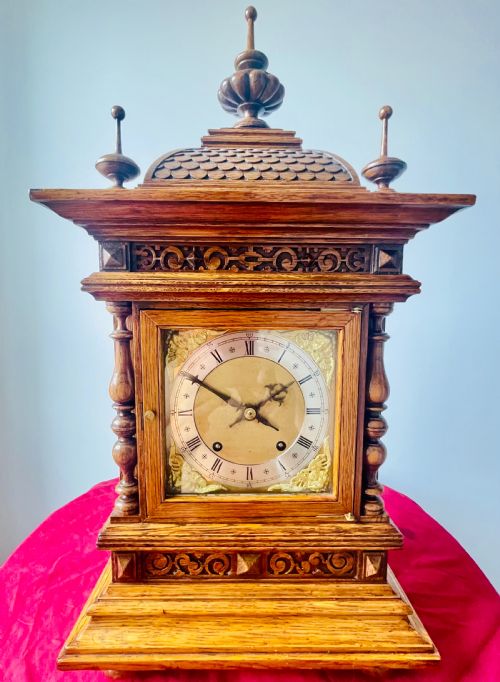
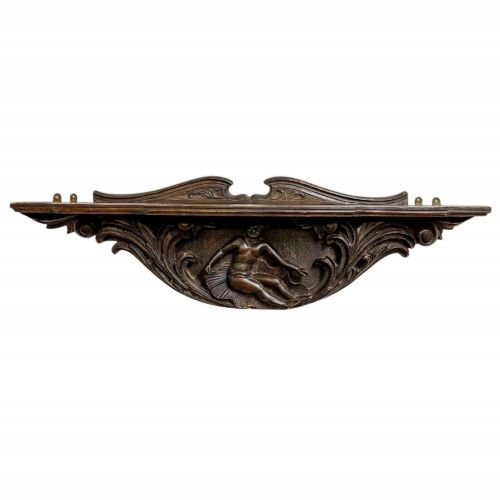
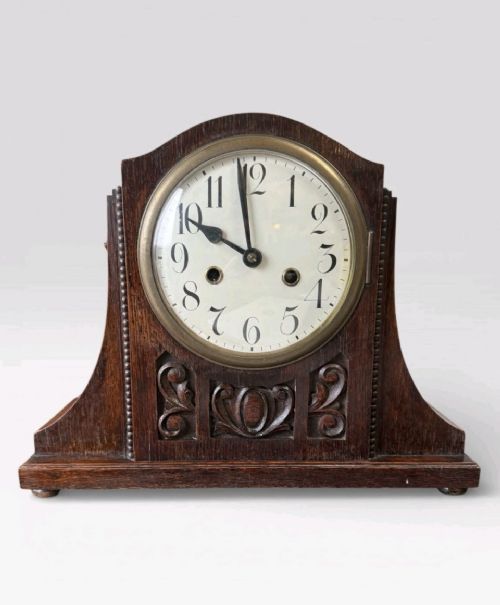

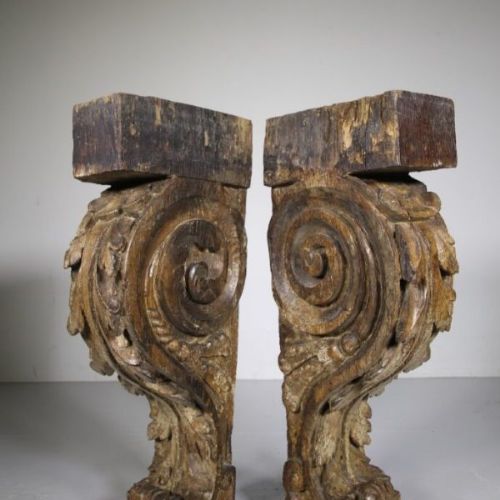
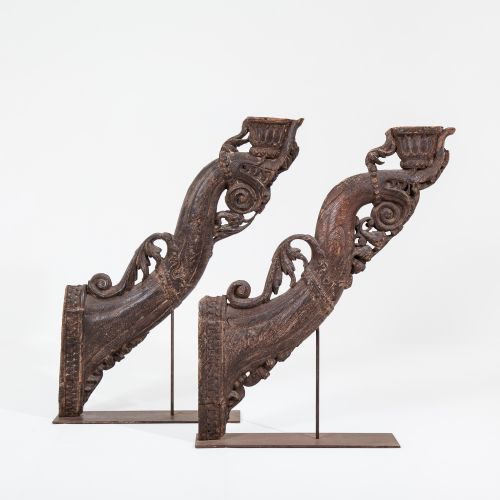


Carved Oak Bracket
A carved oak bracket carries weight and ornament on a wall, holding shelves, figures or clocks with solid architectural presence.
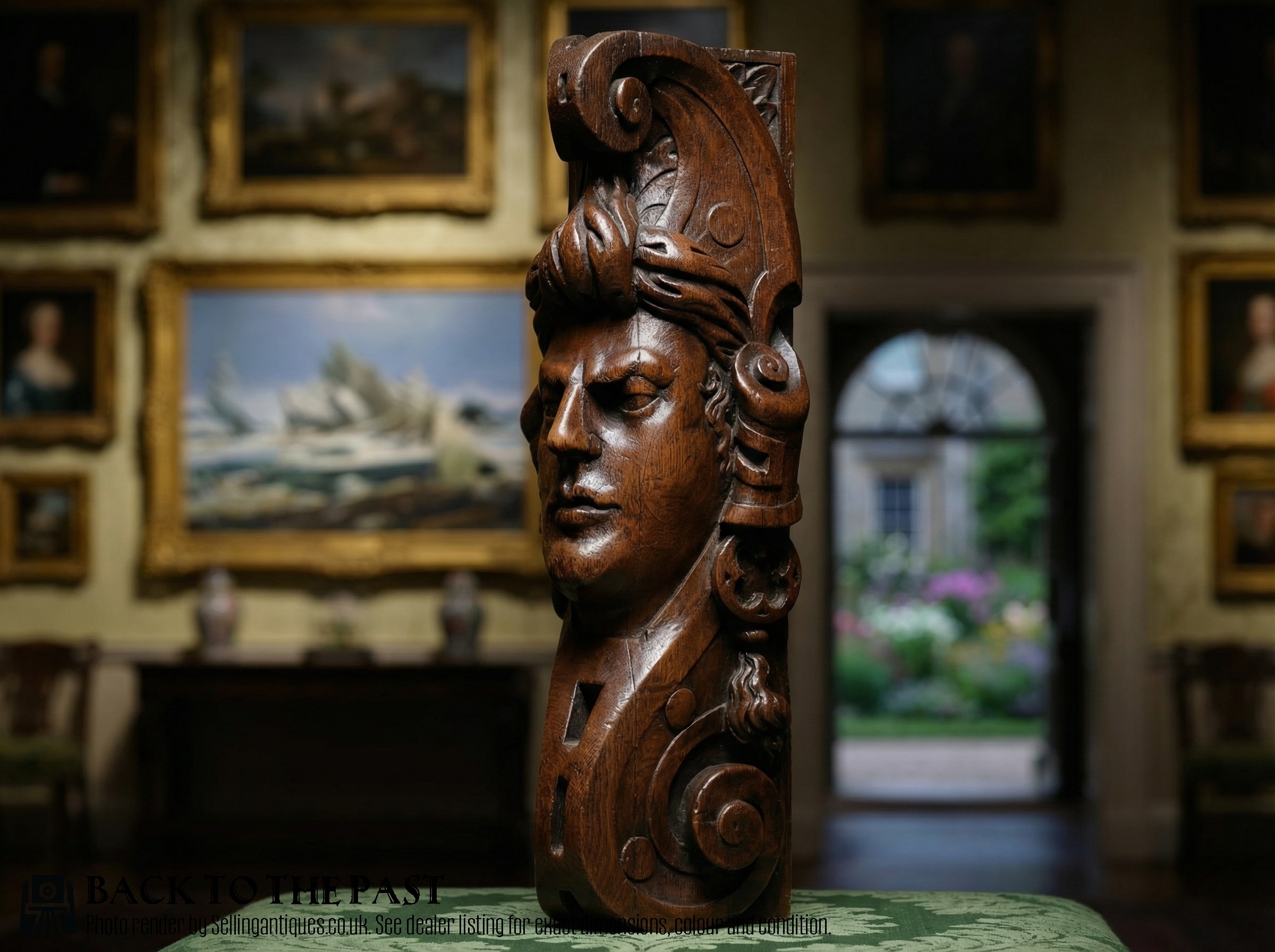
Carved Oak Bracket
When searching for a carved oak bracket, collectors encounter structural supports, architectural salvage and wall sconces spanning multiple centuries. The selection ranges from 17th-century figural corbels and Gothic revival pieces to Victorian and Black Forest animal carvings.
Many examples emerge in matched pairs, originally designed to shoulder heavy loads or frame doorways in period buildings. Architectural fragments and purpose-built wall shelves dominate the forms found in these archives.
Distinctions in Quality
Quality rests on the depth of the carving and the crispness of the chisel work. Finer pieces display anatomical precision in human and animal figures, whereas lesser examples rely on shallow tool marks and simplified detailing.
The integrity of the timber also dictates value, with well-preserved grain and minimal dry rot separating museum-grade architectural fragments from heavily restored utilitarian salvage.
Carved Oak Bracket Retail Price Guide 2026
Typical asking prices for carved oak bracket among the pieces listed under this phrase on Sellingantiques today, from the lower quarter to the upper quarter. They describe what is for sale here now, not the wider market.
Listings feature oak material alongside brass, glass, iron, ceramic and steel across pieces dated from the 16th century to the 1920s.
Winterhalder And Hofmeier·George Wadham
The Carved Oak Bracket Glossary
- Corbel
- A structural piece of stone or wood projecting from a wall to carry a weight. In oak, these often take the form of figures or scrolls.
- Caryatid
- A carved female figure serving as an architectural support taking the place of a column or a pillar. These frequently appear on 17th-century wall supports.
- Fusee
- A conical pulley used in clock movements to maintain equal power as the mainspring unwinds. This mechanism is common in higher-grade bracket clocks.
- Gothic Revival
- An architectural style that began in the mid-18th century and applied medieval forms to furniture and fixtures. Pieces in this taste feature pointed arches and tracery.
- Pediment
- A triangular or curved upper support of a door, window or architectural shelf. Salvaged examples often appear mounted with integrated display shelves.
Carved Oak Bracket: Frequently Asked Questions
What were carved oak brackets used for?
These pieces served primarily as structural supports for beams, mantelpieces and overhanging shelves in traditional architecture. They also functioned as decorative wall brackets for displaying clocks, lighting or sculptural objects.
Over time, many of these elements were salvaged from dismantled buildings to be repurposed as standalone wall shelves or decorative art pieces in period interiors.
How do I mount an antique wall bracket safely?
Because these pieces are carved from solid oak, they often carry considerable weight before placing any additional load on the shelf. Secure mounting requires locating wall studs or utilising heavy-duty masonry anchors suited to the specific wall type.
Check the integrity of any existing historical fixing points on the back plate to ensure the timber can bear the downward pressure without splitting.
How can I tell a 17th-century bracket from a Victorian copy?
Seventeenth-century pieces typically show the tool marks of hand adzes and early saws, along with timber shrinkage appropriate to centuries of ageing. The style of the carving, such as stiff-leaf foliage or early figurative work, usually matches the vernacular of the period.
Victorian makers frequently produced Gothic and Flemish revival pieces that mimicked these earlier designs, but the grain structure, patina and fastening methods generally betray a 19th-century origin.
Are pairs of brackets harder to find than singles?
Matched pairs are significantly scarcer because architectural elements often suffered asymmetric damage or separation during building demolitions over the centuries. Surviving pairs usually command greater interest from collectors seeking balanced wall displays.
Single brackets frequently appear as standalone shelf supports or sculptural wall sconces.