

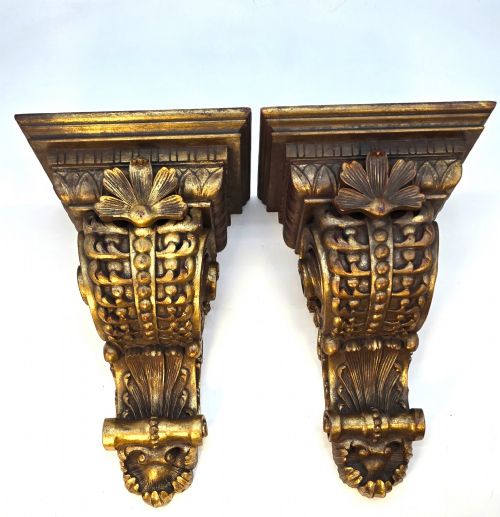


Carved Wood Sconce Bracket
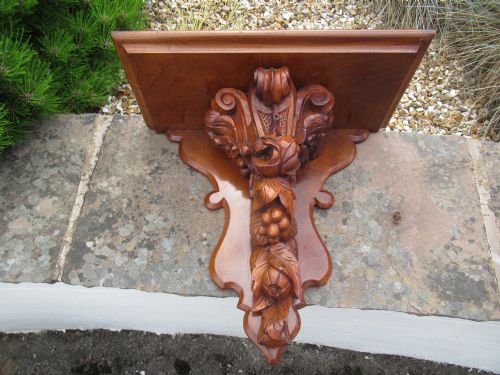
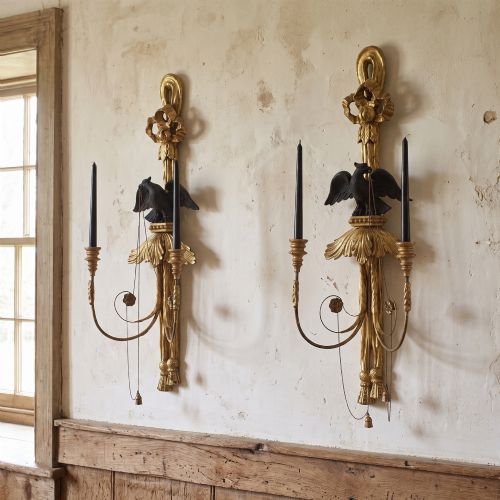
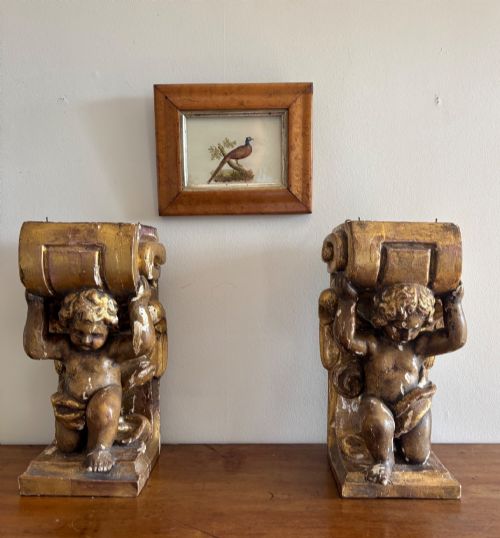
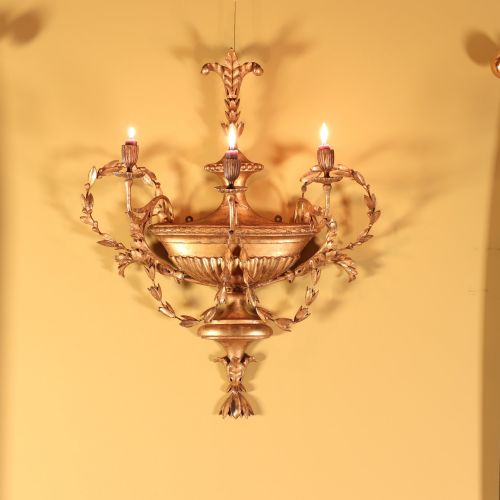
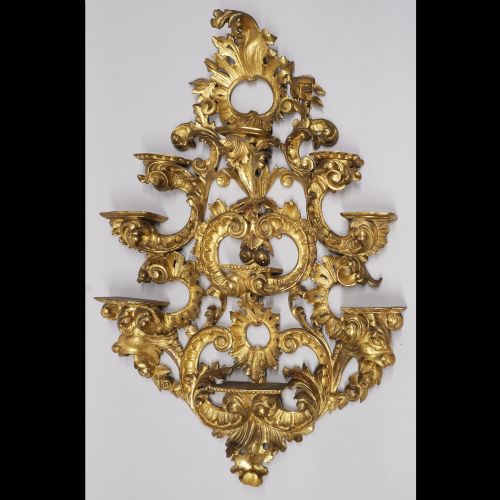
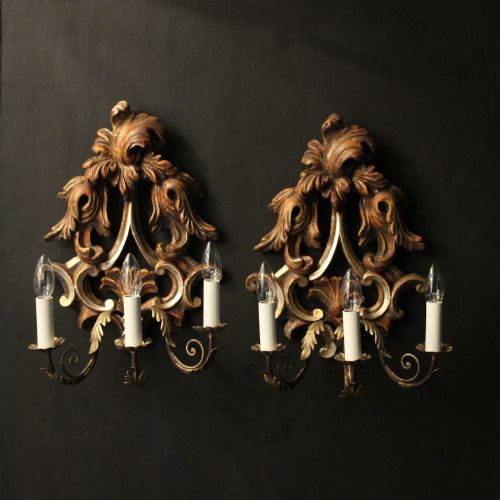
These carved wood sconce brackets bring architectural weight and candlelit warmth to a wall, combining carved timber with giltwood and gesso.
Carved Wood Sconce Bracket
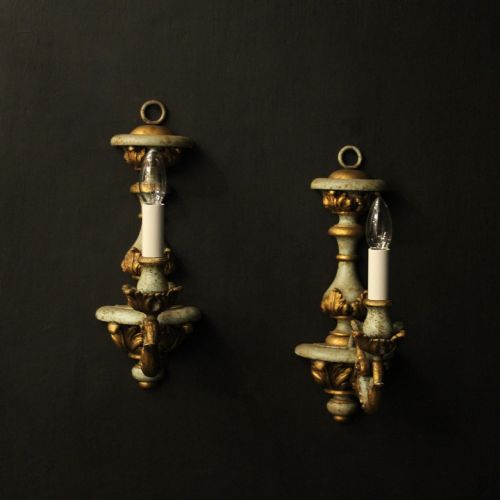
A carved wood sconce bracket serves as a structural wall shelf or a functional light fitting designed to hold candles or electric bulbs. These pieces appear in forms ranging from simple display ledges to elaborate Italian and Florentine multi-arm wall lights.
The selection here draws heavily from the nineteenth and early twentieth centuries, alongside eighteenth-century architectural examples. Buyers encounter walnut, oak, and pine bodies finished with gilded surfaces or polychrome paint.
Many listings comprise matched pairs, particularly in Baroque, Rococo, and Neoclassical styles. Items function as standalone display brackets or integrate candle branches and mirror elements.
Materials and Construction
Carvers shaped solid timber bases from oak, walnut, and pine using hand chisels and gouges to achieve scrolling foliage, cherubs, and animal forms. Architectural elements often relied on dense hardwoods to support weight.
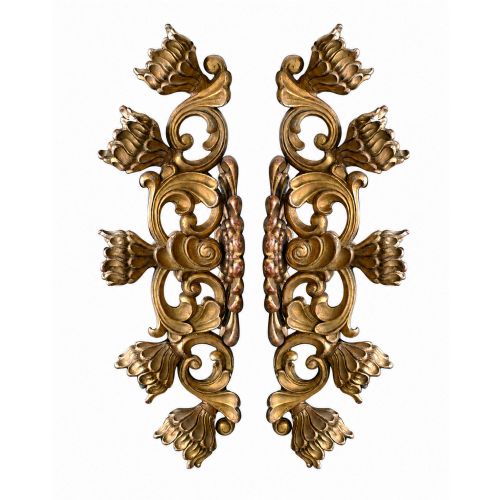
Gilders applied layers of gesso over the carved wood before laying gold leaf, silver leaf, or metal powder. This traditional water-gilding technique produced the reflective surfaces seen on Florentine and French sconces.
Several carved wooden cherubs gaze steadfastly from these walls, watching rooms change over centuries while holding fast to their gilded branches.
Distinctions in Quality
The crispness of the hand-carving determines the artistic merit of a carved wood sconce bracket, with superior pieces showing deep undercut foliage and expressive figures rather than shallow, mechanical shaping. Master carvers defined drapery and feathers with distinct, sharp edges that catch the light.
The preparation of the ground layer under the gilding dictates how well the surface ages. Finely smoothed gesso retains the brilliance of gold leaf, whereas heavy or degraded ground layers obscure the carved details underneath.
The Carved Wood Sconce Bracket Glossary
- Gesso
- A plaster mixture applied to wood surfaces to provide a smooth base for gilding. It fills minor pores in the timber before gold leaf is applied.
- Giltwood
- Timber coated with gold leaf or gold paint. This finish characterises much of the Continental wall lighting on this page.
- Polychrome
- Painted in several colours. This decoration appears frequently on Italian and Florentine wall brackets.
- Pricket
- A sharp spike on a candleholder designed to secure a candle in place. This form appears on older ecclesiastical and domestic light fittings.
- Appliqué
- A wall-mounted decorative fixture or sconce. The term is often used interchangeably with wall light or bracket.
Carved Wood Sconce Bracket: Frequently Asked Questions
How do I hang a heavy carved wood sconce bracket?
Secure the bracket directly into wall studs or use appropriate heavy-duty wall anchors rated for the weight of the timber and gesso. Many pieces feature integrated hanging loops or mounting plates on the reverse.
Ensure the wall structure bears the load before placing objects or candles on the shelf.
Were these brackets meant for candles or electricity?
Most antique pieces originated for wax candles or oil before later conversion to electricity during the twentieth century. Original prickets and drip pans indicate candle use.
Wiring can be checked or updated by a professional electrician while retaining the antique fittings.
How do I tell Italian Baroque from Neoclassical styles?
Baroque pieces display heavy scrolling, dramatic asymmetry, and exuberant foliage intended to create dynamic movement. Neoclassical examples feature restrained symmetry, classical columns, urns, and straight lines.
Study the overall silhouette and ornament motifs to identify the design period.