






Antique Style Nesting Tables
Antique style nesting tables deliver practical surface space that tucks neatly away when not in use, appearing across Edwardian and Victorian forms.
Antique Style Nesting Tables
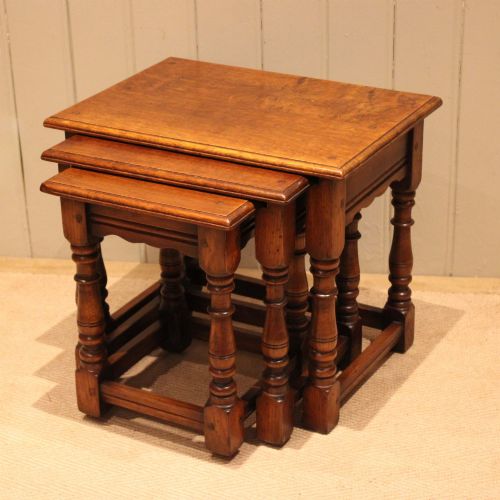
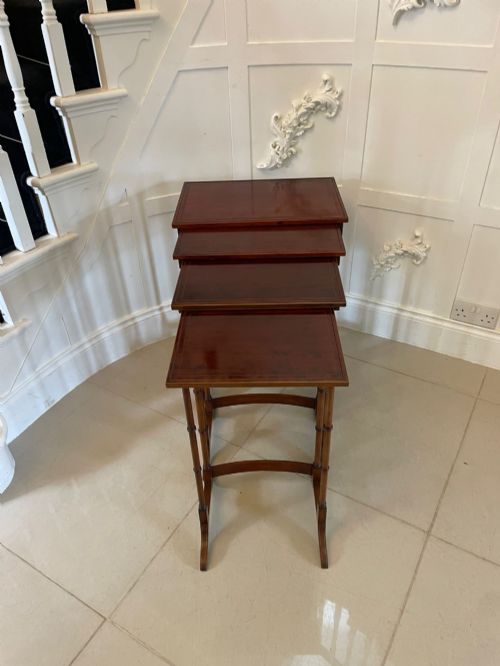
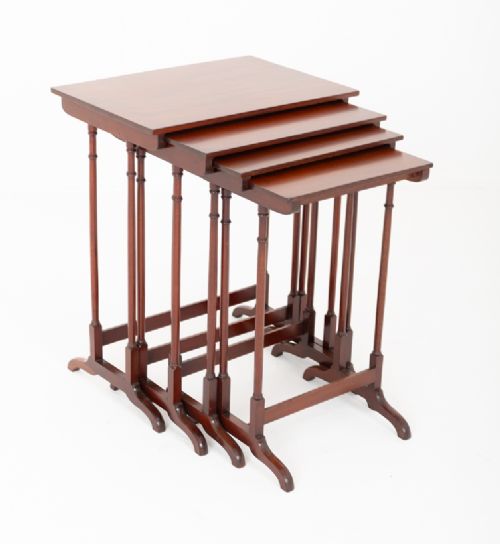
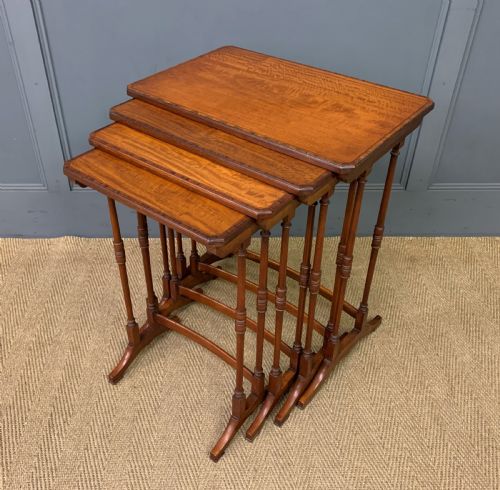
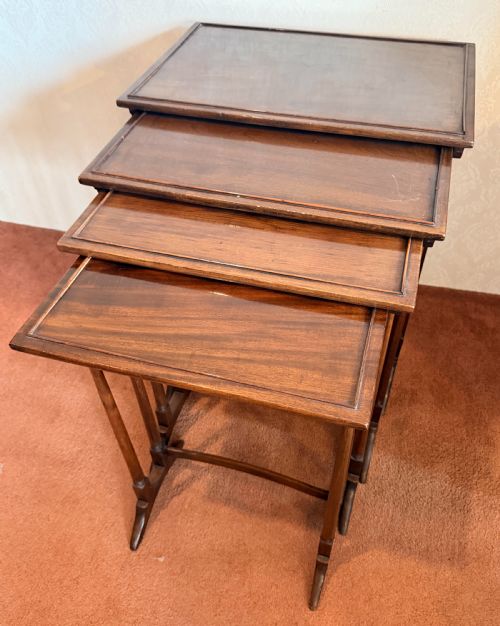
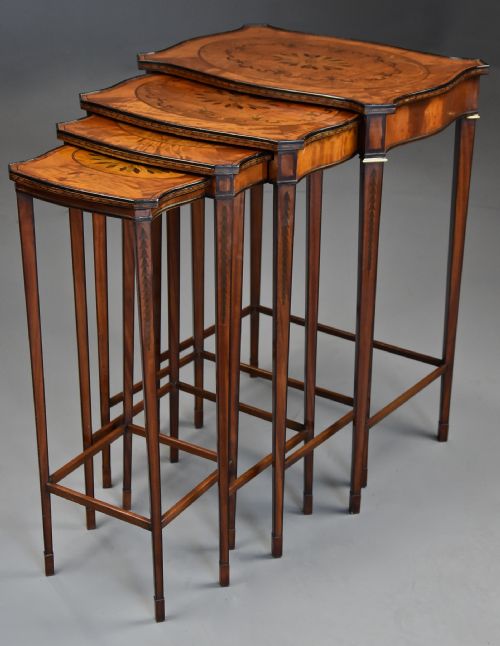
When you search for antique style nesting tables, you encounter sets of graduated tables designed to slide beneath one another in a single footprint. The listings here present sets containing three, four, or five tables, frequently called quartetto sets in period pieces.
The most common examples on this page date from the Edwardian era and the nineteenth century, adopting styles from the Georgian, Regency, and Sheraton periods. These sets appear primarily in mahogany, satinwood, and walnut, often finished with inlay or crossbanding.
Makers such as Waring and Gillow also contributed to this form, producing matching tables intended for flexible use as occasional, coffee, or lamp tables. Their design allows multiple surfaces to occupy the space of one until needed around a room.
How they were made
Cabinet makers constructed these tables using solid hardwoods such as mahogany, walnut, and oak, frequently applying veneer surfaces of yew, satinwood, or rosewood to the tops. Boxwood inlay and crossbanding provide decorative borders on many Edwardian and nineteenth-century examples.
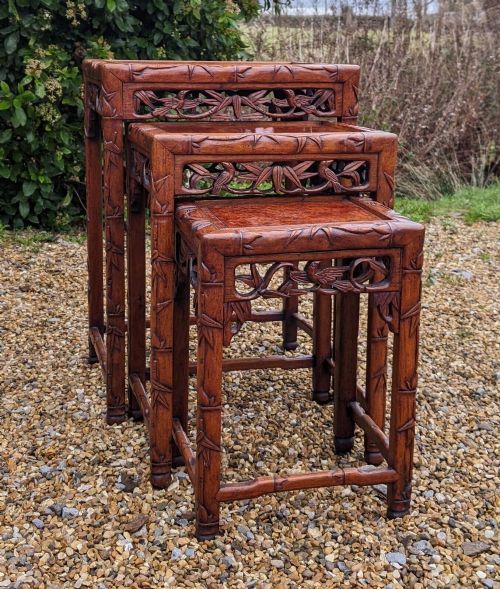
Construction techniques include square tapered legs and turned supports, paired with boxwood or ebony stringing. Lacquered finishes and hand-carved details appear on Chinese export and Chinoiserie variations within the material evidence.
Mahogany and satinwood dominate the materials recorded in these listings, complemented by walnut, oak, and rosewood.
What varies in quality
The standard of timber selection and veneer matching defines the upper tier of these pieces, alongside the precision of boxwood inlay and crossbanding. Superior sets maintain structural stability and smooth sliding action across every table in the nest without loosening joints.
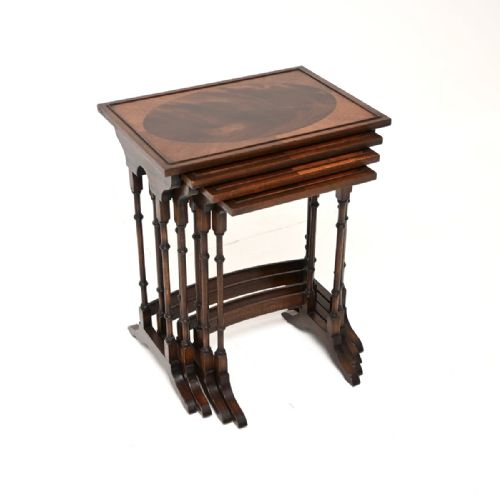
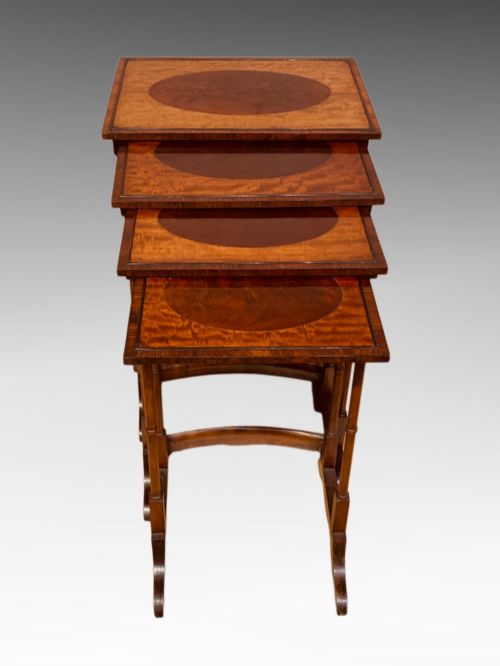
Design complexity also separates standard items from finer examples, such as serpentine forms, oval tops, or five-table quartetto configurations rather than basic three-table sets. The crispness of carved details on Chinoiserie and Chinese export versions marks the difference between workshop output levels.
Waring & Gillow
The Antique Style Nesting Tables Glossary
- Quartetto
- A set of four nesting tables designed to slide one beneath another. This term appears frequently in Edwardian and nineteenth-century descriptions.
- Crossbanding
- A strip of veneer applied to the border of a tabletop with the grain running perpendicular to the centre panel. It creates a neat framing effect on mahogany and satinwood surfaces.
- Stringing
- A thin inlay of contrasting wood, often boxwood, set flush into the surface to form decorative lines. It defines the edges and legs of many inlaid tables.
- Parquetry
- Geometric patterns formed by small pieces of wood veneer fitted together on a tabletop. Walnut versions utilise this technique for decorative effect.
- Chinoiserie
- European imitation of traditional Chinese artistic styles, seen on lacquered and carved occasional tables. These pieces often feature hand-painted or gilt motifs.
Antique Style Nesting Tables: Frequently Asked Questions
What are nesting tables used for?
These tables provide supplementary surfaces for drinks, lamps, or books that deploy instantly when guests arrive. Between uses, the smaller tables slide completely beneath the largest one to conserve floor space.
Historically termed quartetto sets when numbering four, they function across reception rooms as flexible side or coffee tables.
How do I identify Edwardian nesting tables?
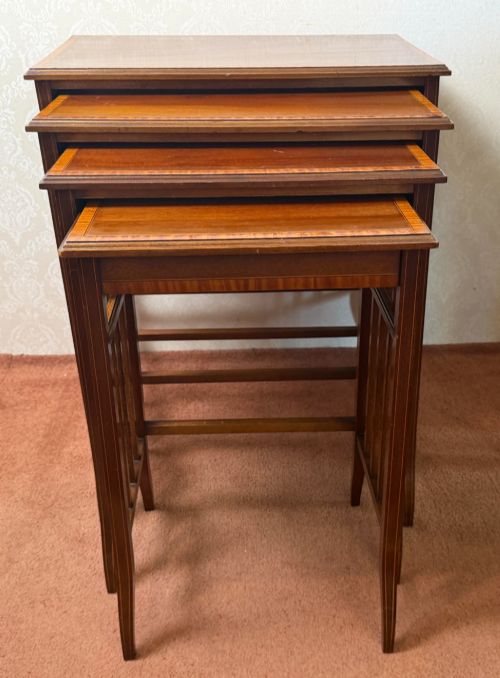
Edwardian examples often feature satinwood crossbanding, mahogany construction, and delicate boxwood stringing reflecting the Sheraton revival style. They frequently arrive as sets of four matching occasional tables with slender square tapered legs.
Makers of this period focused on lighter woods and refined inlay work compared to heavier Victorian counterparts.
What is a quartetto nest?
A quartetto nest consists specifically of four graduated tables designed to stack inside one another. This configuration represents a staple form of nineteenth-century and Edwardian occasional furniture.
The term derives from the Italian for a group of four.
Are these tables solid mahogany or veneer?
Surviving pieces utilise a combination of solid hardwoods for frames and legs, paired with premium veneers such as satinwood, yew, and rosewood for the tabletops. Crossbanding and parquetry tops rely on thin veneer layers applied to stable base timbers to create decorative geometric designs.
This method prevented warping while displaying varied grain patterns across the nested surfaces.