


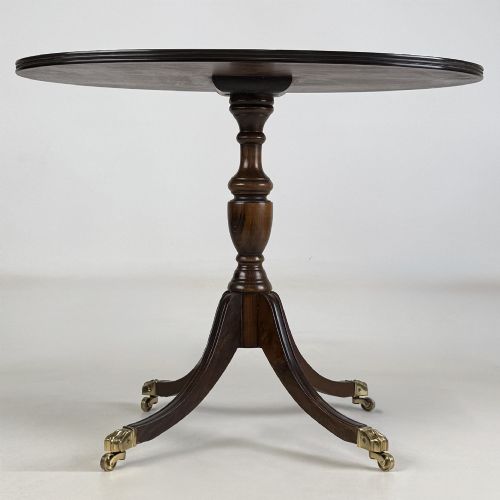
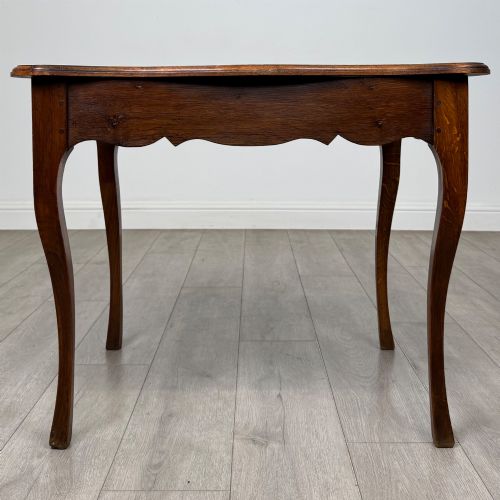
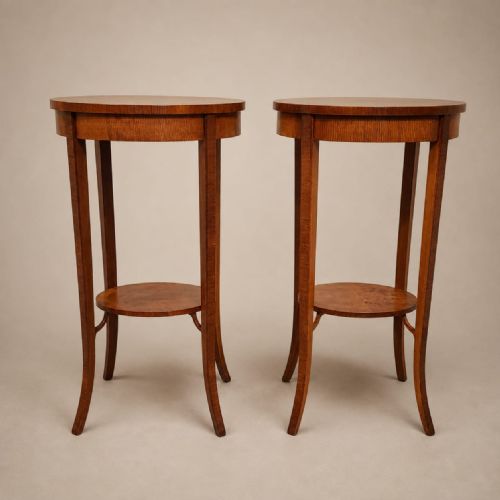
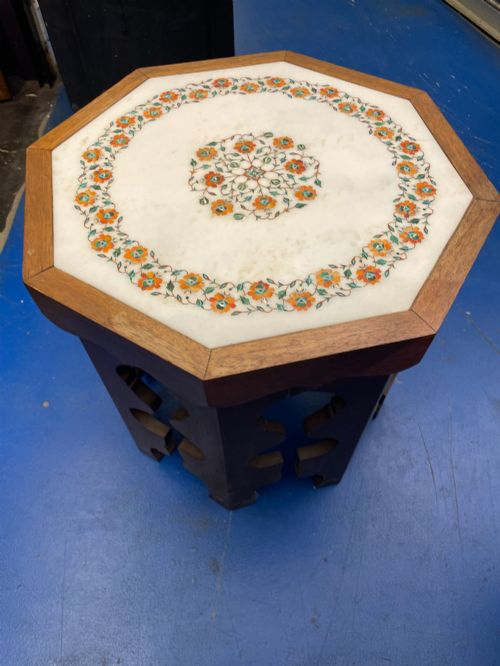
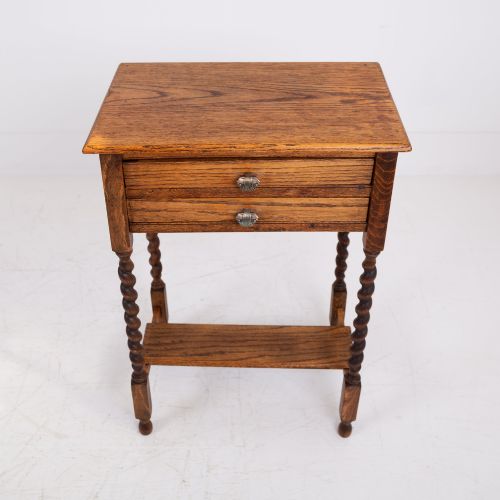
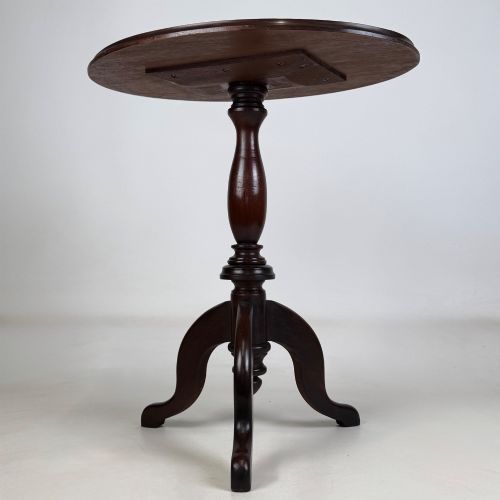
Antique Style End Tables
These antique style end tables serve smaller spaces beside a sofa or bed, bringing period timber and proportion into daily use.
Antique Style End Tables
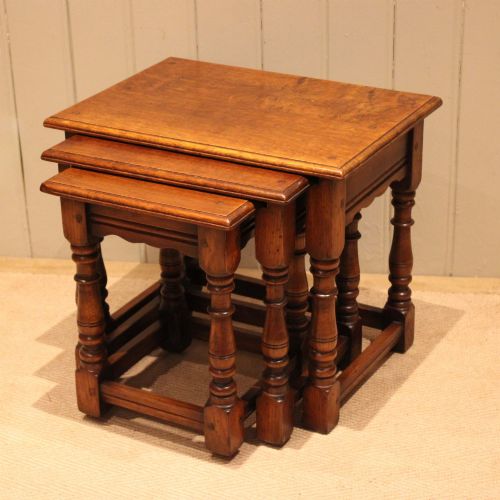
When you search for antique style end tables, you encounter smaller support pieces built to sit beside seating or beds. The selection spans side tables, occasional tables, bedside tables, lamp tables, nests of tables, and corner tables.
The material record reaches from the seventeenth century through Victorian and Edwardian decades up to the nineteen-thirties. Pieces from nineteen-twenty and the Edwardian era appear most frequently, alongside revival styles looking back to Georgian and Jacobean forms.
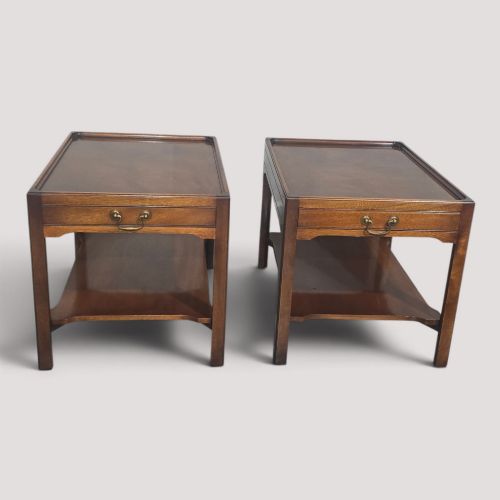
Makers and workshops constructed these smaller surfaces for practical utility in parlours and drawing rooms. Pairs occur often in the listings, designed to flank a sofa or fireplace with matching timber and height.
Materials and construction
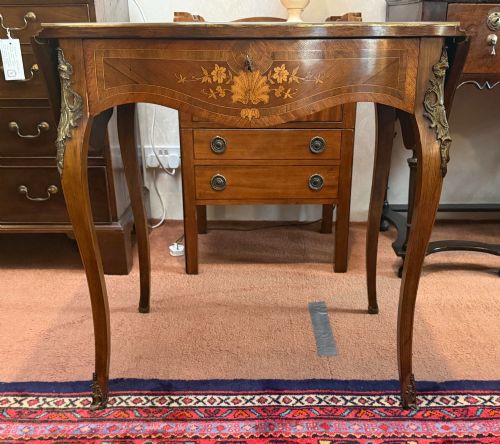
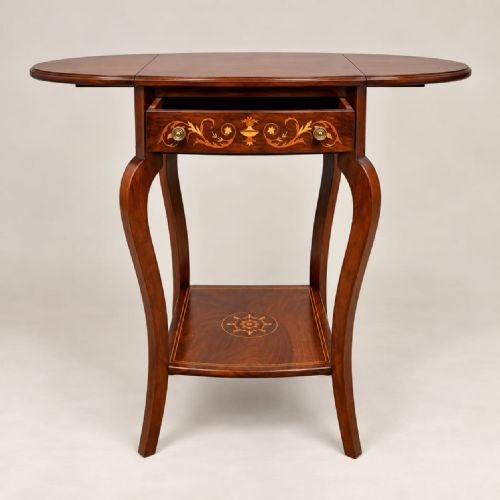
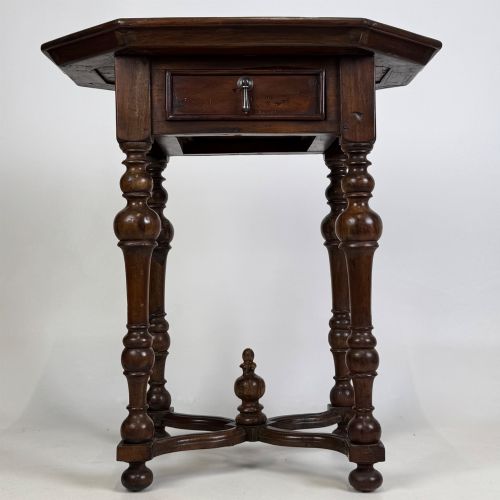
Cabinet makers utilised dense hardwoods such as mahogany, oak, walnut, rosewood, satinwood, and yew wood. Timber selection defined the character of each piece, often enhanced by figured veneers or marquetry inlay.
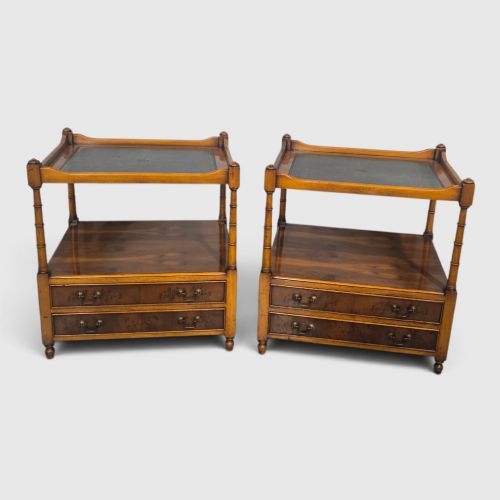
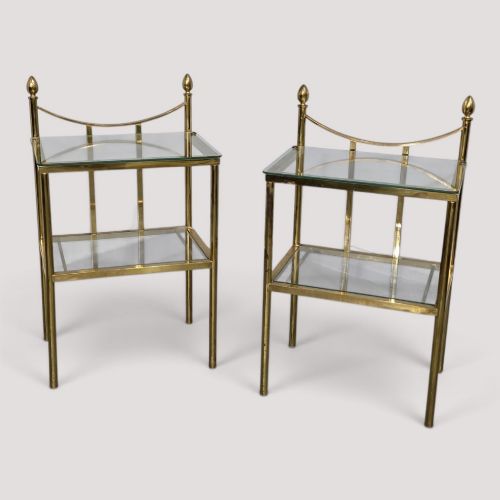
Metal components such as brass galleries, drop handles, and framework appeared on specific revival and etagere designs. Joinery methods included chip carving, bobbin-turning, and structural framing suited to supporting lamps and small objects.
Listings span from seventeenth-century oak through Victorian rosewood to nineteen-thirties brass etageres and mahogany lamp tables.
Standards of craftsmanship
Quality rests in the selection of timber grain and the precision of the joinery. Figured mahogany or burr oak veneers show intentional placement by the maker rather than random assembly.
Proportion and decorative restraint separate standard production from finer examples. Subtle details such as painted floral decoration, brass galleries, or chip-carved mouldings elevate the execution of the piece.
The Antique Style End Tables Glossary
- Occasional table
- A small, movable table designed for minor tasks in a living space. These pieces could be shifted easily around a room as needed.
- Nest of tables
- A set of graduated tables designed to fit one beneath another to save floor space. They slide out when extra surface area is required.
- Marquetry
- Decorative veneer work formed by fitting together small pieces of wood, shell, or ivory to create patterns. It appears frequently on tabletops from eighteenth and nineteenth century traditions.
- Drop leaf
- A tabletop with hinged flaps on one or both sides that fold down to reduce the footprint. Brackets swing out to support the leaves when raised.
- Etagere
- An open shelving unit or side table with multiple tiers for displaying small objects. Brass and wood versions provide open surfaces at varying heights.
Antique Style End Tables: Frequently Asked Questions
What is an end table?
An end table is a small piece designed to sit beside a sofa, armchair, or bed to hold lamps, books, or drinks.
In period interiors, these were often called side tables, lamp tables, or occasional tables depending on their exact function.
How do I date an antique table?
Dating relies on identifying the primary wood species, construction methods, hardware, and stylistic revival markers. Edwardian and nineteen-twenty examples often show machine assistance alongside traditional hand joinery.
Earlier pieces from the eighteenth and nineteenth centuries display distinct tool marks and timber ageing consistent with their period of origin.
Are these tables sold in pairs?
Many listings include matching pairs of lamp or bedside tables. These were created to flank a fireplace, sofa, or bed symmetrically.
Single tables also appear frequently for standalone placement in smaller corners or hallways.
What woods were commonly used?
Mahogany, oak, and walnut form the majority of the timber selection across these pieces. Cabinet makers also employed satinwood, rosewood, and yew wood for specific decorative effects.
Inlays and veneers made extensive use of figured grains to add visual depth to the top surface.