

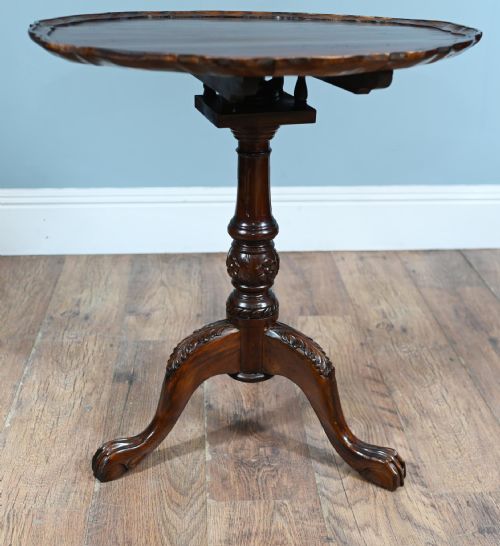
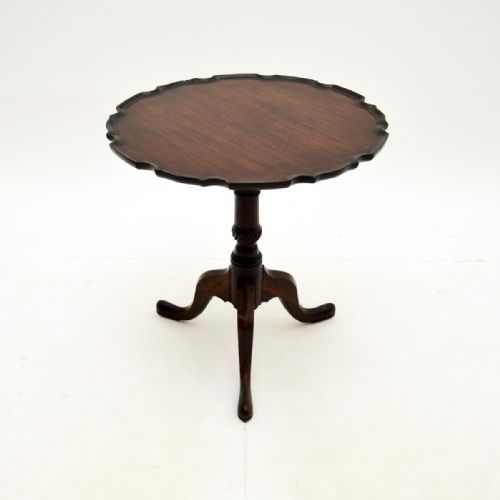


Chippendale Style Lamp Table
A chippendale style lamp table brings centuries of British cabinet-making tradition to a room, offering both practical surface space and distinct period character.
Chippendale Style Lamp Table
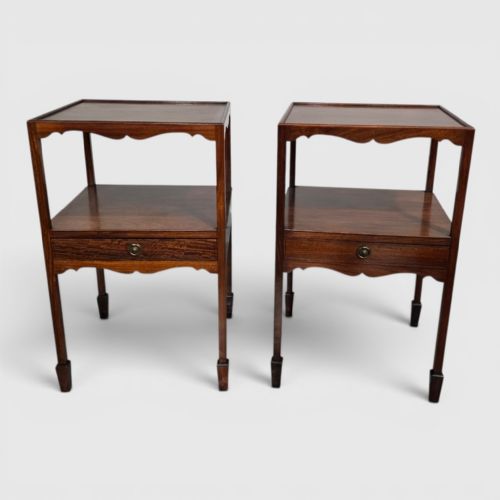
A chippendale style lamp table serves as a compact surface for lighting or display, drawing on eighteenth-century design principles executed across the nineteenth and twentieth centuries. These pieces appear frequently as wine tables, occasional tables, or bedside cabinets originating from the Edwardian era up to the 1930s.
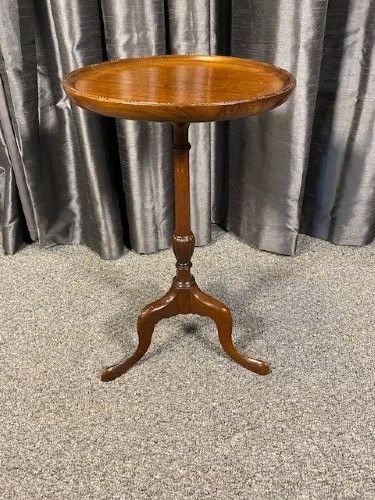
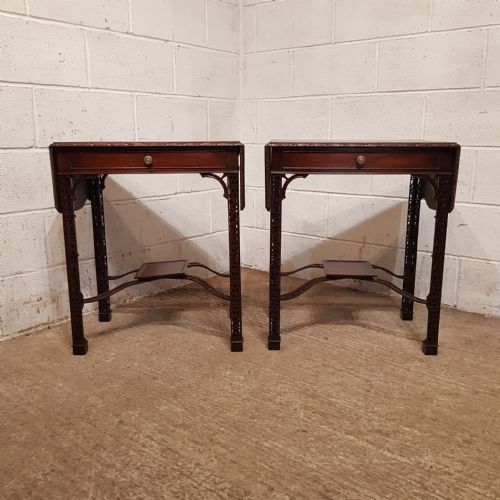
Makers produced these tables in various forms, including tilt-top pedestals, drop-leaf side tables, and occasional stands with intricate carved details. Mahogany forms the backbone of these selections, alongside oak, figured walnut, and occasional painted timber finishes.
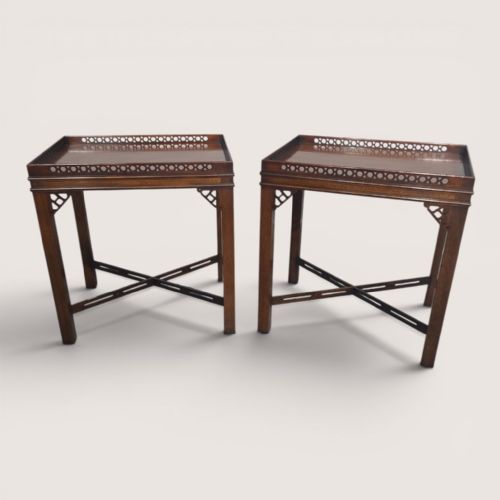
The aesthetic borrows heavily from Georgian and Chinese Chippendale influences, showing specific stylistic revivals rather than strict eighteenth-century origin. Buyers encounter individual pieces and matched pairs intended to function practically while anchoring a traditional interior scheme.
Materials and construction methods
Mahogany dominates the physical record of these tables, supplemented by solid and figured walnut, oak, and brass hardware. Timber selection dictated the weight and durability of the piece, with cabinet-makers often employing mahogany for its fine grain and stability.
Carving and joinery define the execution, utilising techniques passed down through generations of British workshops. Details such as pie crust edges, tray tops, and tripod bases required skilled hand-tooling to achieve balanced proportions.
Surface treatments range from polished timber finishes to gold leaf and painted surfaces, sometimes incorporating inset materials like onyx or marble. These decorative elements reflect the varied revivals spanning from the Victorian period through the early twentieth century.
Cabinet-makers occasionally added heart-shaped tops to small occasional tables, offering a charming romantic touch to Victorian hallways.
Assessing construction and design standards
The standard of carving on the legs and edges distinguishes standard production from superior work. Crisp detailing in the wood indicates a maker with advanced proficiency.
Timber selection and grain matching across table tops and drop leaves reveal the original maker's investment in materials. Figured walnut and select mahogany command attention through rich visual depth.
Stability and structural integrity in the pedestal or leg joints ensure the table performs its function reliably over time. Original brass fixtures and uncompromised structural glue lines support long-term durability.
S & H Jewell London·Edwards and Roberts
The Chippendale Style Lamp Table Glossary
- Chippendale Revival
- A late nineteenth and early twentieth-century movement recreating the distinctive aesthetic of Thomas Chippendale. Cabinet-makers used mahogany to interpret mid-eighteenth-century motifs for contemporary homes.
- Tripod Table
- A small occasional table supported by a pillar on three spreading feet. This form allowed the top to tilt on many wine and lamp tables.
- Pie Crust Edge
- A raised, carved border shaped in undulating curves resembling pastry work. Artisans carved this directly into the solid timber top of high-status tables.
- Tilt-Top
- A table mechanism allowing the surface to pivot upright when not in use. This space-saving design appeared frequently on eighteenth and nineteenth-century occasional stands.
- Tray-Top
- A table surface featuring a raised wooden rim designed to prevent items from sliding off. This practical detail appeared on bedside cabinets and lamp stands.
Chippendale Style Lamp Table: Frequently Asked Questions
What is a chippendale style lamp table?
A chippendale style lamp table is a small occasional or wine table influenced by eighteenth-century design, typically produced during the nineteenth or early twentieth centuries.
These pieces provide a compact surface for lighting and display while adding historical character to a room.
How were these tables used originally?
Original owners placed these tables beside seating or beds to hold candles, lamps, or small personal items. Their portability allowed servants to move them easily around the home as needed.
Tilt-top variants also served a space-saving function when stored against walls between uses.
Are these tables solid mahogany?
Most of the listings recorded here feature solid mahogany or mahogany veneers applied to secondary timbers. Cabinet-makers utilised mahogany for its strength and suitability for detailed carving.
Other materials like oak and figured walnut also appear across various revival periods.
How do I date a lamp table?
Dating relies on stylistic markers, construction techniques, and material wear consistent with specific eras like the Edwardian period or the 1920s. Revival pieces often combine eighteenth-century motifs with turn-of-the-century manufacturing methods.
Examining the underside and joint construction helps determine the approximate age.
How do I live with antique lamp tables?
These versatile tables fit easily beside modern sofas, armchairs, or beds as functional surfaces. Regular dusting and occasional wax polishing help maintain the timber finish.
Protecting the surface from excessive moisture preserves the antique polish.