


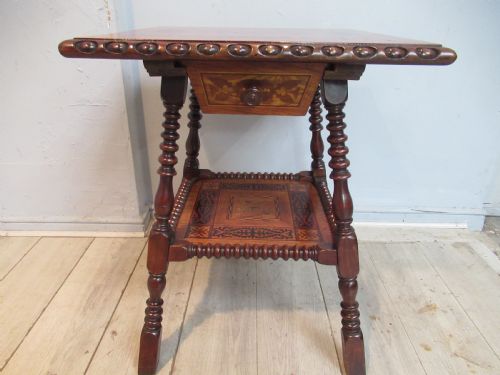


Decorative Wood End Tables
Decorative wood end tables bring character and warmth to a room, offering surface space alongside seating while showcasing traditional timber craftsmanship.
Decorative Wood End Tables
Decorative wood end tables comprise occasional tables, side tables, lamp tables, and nests of tables designed for domestic utility and display. The selection spans the nineteenth century, Victorian era, and early twentieth century, incorporating regional influences such as Kashmiri, Anglo-Burmese, and Chinese production alongside European revival styles.
Buyers will encounter forms ranging from single tiered side tables to sets of nest tables and painted wooden surfaces. These pieces function practically beside seating while introducing distinct period craftsmanship and decorative carving or lacquerwork into an interior scheme.
How they were made
Makers utilised solid timbers and veneers including mahogany, satinwood, boxwood, and hardwood, often combining structural framing with decorative surface treatments. Construction methods relied on traditional joinery appropriate to the period, supporting both sturdy utility and intricate detailing.
Surface ornamentation involved hand carving, paintwork, red lacquer, and cane inserts, alongside inset marble tops on specific European examples. These decorative techniques required skilled artisan labour, whether producing French Regence carved decoration or regional Kashmiri and Burmese patterns.
Listings feature periods spanning the nineteenth century through the 1930s, incorporating mahogany, lacquer, cane, and painted wood.
What varies in quality
Quality in these tables is determined by the precision of the joinery and the integrity of the timber used in construction. Finer examples display crisp, hand-carved detailing and well-balanced proportions that demonstrate the maker's mastery.
The sophistication of the surface finish also distinguishes better pieces, whether through deeply layered lacquer, refined painted decoration, or well-figured mahogany veneers. The harmony between structural stability and ornamental flourish separates standard production from superior craftsmanship.
The Decorative Wood End Tables Glossary
- Nest of tables
- A graduated set of smaller tables designed to stack neatly beneath one another when not in use. This practical space-saving form gained popularity during the late nineteenth and early twentieth centuries.
- Occasional table
- A light, movable table intended for intermittent use around a sitting room or parlour. These versatile pieces often served specific domestic functions such as holding lamps or reading material.
- Lacquer
- A durable, glossy finish applied in multiple layers to wooden surfaces, frequently associated with Asian decorative arts. This technique produces a smooth, protective coating rich in colour and visual depth.
- Cane
- Strips of woven rattan material utilised for panels in seating or table shelves. This lightweight weave adds textural contrast to solid wood furniture frames.
- Satinwood
- A lustrous timber native to India and Sri Lanka with a golden yellow sheen. Cabinetmakers favoured it for fine inlay work and contrasting veneers.
Decorative Wood End Tables: Frequently Asked Questions
What is a lamp table?
A lamp table is a small occasional table specifically scaled to hold a lighting fixture beside a chair or sofa. These pieces provide a convenient surface without dominating the floor space of a room.
Historically placed in parlours and drawing rooms, they combined functional utility with decorative timber work to complement interior lighting arrangements.
How do I use a nest of tables?
A nest of tables offers flexible surface area that expands when entertaining guests and contracts for daily living. The individual tables separate easily to hold drinks or books.
When not in use, the smaller tables slide sequentially under the main table, preserving floor space while maintaining a cohesive decorative display.
What defines a side table?
A side table is a versatile small table traditionally positioned against a wall or beside upholstered seating. It provides a stable surface for decorative objects, clocks, or daily accessories.
These pieces vary widely in height and silhouette, reflecting the specific design preferences of their respective periods.
How do I identify a Victorian table?
Victorian tables often exhibit robust timber construction utilising mahogany or painted finishes, frequently drawing upon historical revival styles such as Gothic or French influences. The period embraced both elaborate carved decoration and practical domestic forms.
Examining the underside and joinery can help confirm nineteenth-century production methods and material authenticity.