






Pair Marble End Tables
Pair marble end tables bring distinct stone surfaces and balanced proportions to a room, offering surface space beside seating.
Pair Marble End Tables
When searching for pair marble end tables, buyers encounter matching sets designed for placement beside seating or beds. These pieces function as side tables, lamp tables, bedside tables, and plant stands.
The selections span multiple eras, notably the nineteenth century and the early twentieth century, alongside specific stylistic revivals. French Louis XVI style, Neoclassical revival, and Qing dynasty examples appear frequently across the listings.
How they were made
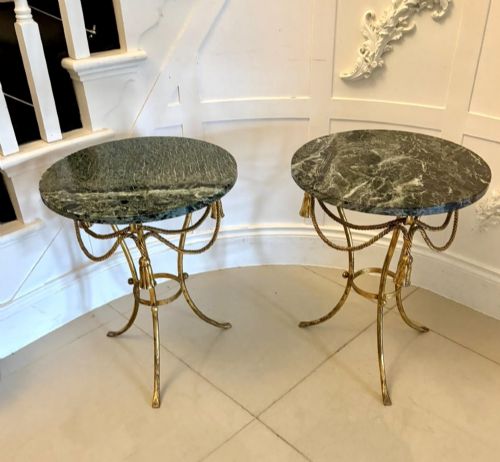
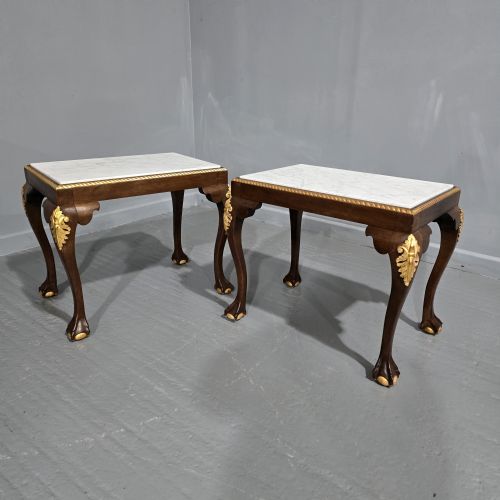
Construction relies upon cabinet timbers including mahogany, kingwood, rosewood, and painted wood, paired with inset stone surfaces. Workshops incorporated verde marble and rouge marble into wooden frames.
Metal mounts in brass, gilt metal, and gilt bronze provide structural accents and decorative edging. Carved hardwood forms utilise traditional joinery without relying on modern adhesives.
Several pairs are officially listed as kidney bean shaped, proving that tables can occasionally possess a healthy dose of dietary whimsy.
What varies in quality
Distinction across the range rests upon the selection of timber and stone, alongside the precision of the carving. Finely figured mahogany and meticulously matched marble slabs elevate a pair above standard production.
The integration of metalwork, whether cast bronze mounts or turned brass framing, demonstrates the maker's hand. Signed works by cabinetmakers carry distinct craftsmanship that separates them from unattributed pieces.
F. Linke
The Pair Marble End Tables Glossary
- Verde marble
- A dark green stone often variegated with lighter veining. It provides a striking surface on twentieth-century lamp tables.
- Kingwood
- A dense, heavily figured timber native to Brazil used in French veneer work. It brings rich colour variation to cabinet surfaces.
- Gilt bronze
- Copper alloy coated with a layer of gold, frequently utilised for decorative mounts. It adds metallic contrast to wood and stone.
- Qing dynasty
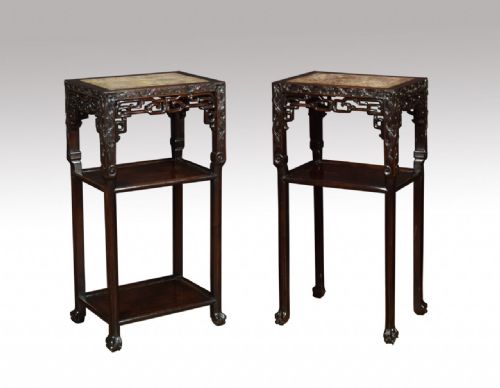
- The final imperial dynasty of China, spanning from the seventeenth to the early twentieth century. Pieces from this era often feature carved hardwood and inset marble tops.
- Louis XVI style
- A neoclassical aesthetic characterised by straight lines and classical symmetry. It influences many nineteenth-century French tables.
Pair Marble End Tables: Frequently Asked Questions
Where should I place them?
These pieces sit comfortably beside sofas, armchairs, or beds where surface space is required for lighting or small objects.
Matching pairs allow for symmetrical placement within a room layout, balancing the visual weight of seating arrangements.
How do I clean marble?
Maintenance requires mild soap and warm water applied with a soft cloth to avoid scratching the polished surface. Acidic substances should remain away from the stone to prevent etching.
Regular dusting preserves the natural lustre of the marble top without stripping the historical patina from the surrounding timber or metal.
Are all the tops real stone?
The listings feature genuine stone surfaces such as verde marble and rouge marble, though archive records also note occasional faux marble finishes.
Inspecting the underside or edge of the top reveals the natural veining and cool temperature characteristic of quarried stone.
How do I identify the period?
Dating relies upon timber selection, construction methods, and stylistic cues linked to specific design revivals. Nineteenth-century examples often display denser hardwoods and classical French motifs.
Twentieth-century pieces tend to embrace cleaner lines or specific revival movements like Hollywood Regency.