




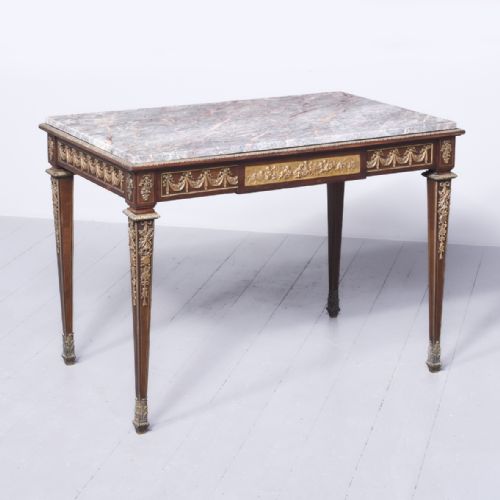
Gilded Mahogany Side Tables
Gilded mahogany side tables bring rich timber warmth and bright metallic lustre together, offering a striking display surface for any room.
Gilded Mahogany Side Tables
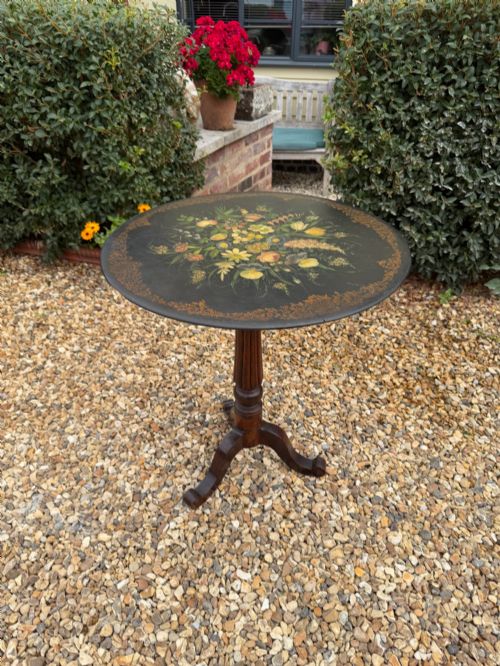
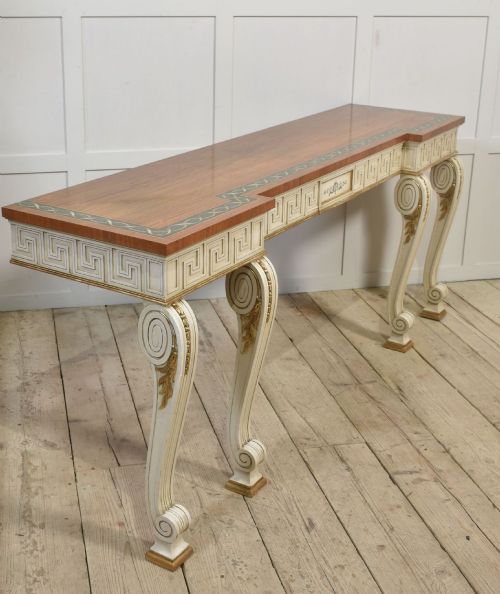
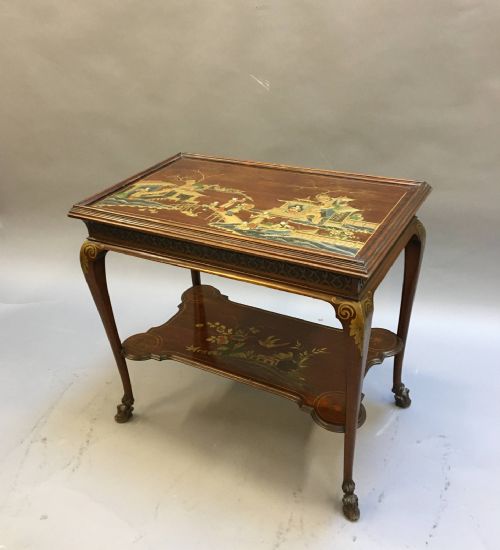
Gilded mahogany side tables appear in several distinct forms across the nineteenth and early twentieth centuries, spanning console tables, card tables, and occasional tables. These pieces combine deep hardwood structures with bright metallic detailing to create functional display surfaces.
The Victorian period and the wider nineteenth century supply many of the examples seen here, often drawing on French tastes and classical vocabularies. Buyers encounter everything from compact lamp tables to large freestanding centre tables set with marble tops.
Stylistic influences range from Regency and Chippendale adaptations to Louis XVI and Chinoiserie interpretations. Each variant serves a specific domestic purpose, whether placed against a wall as a console or positioned centrally in a room.
How they were made
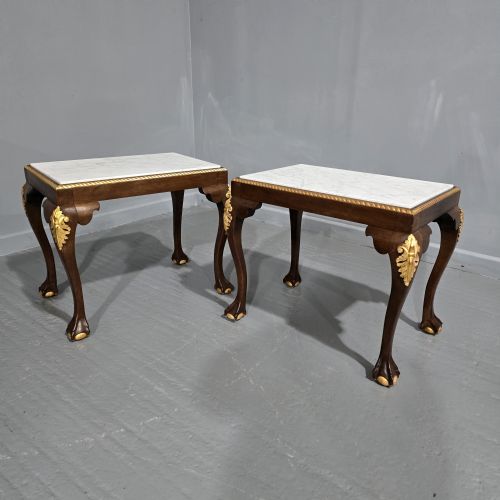
Cabinetmakers constructed these tables using solid and figured mahogany, often mounting marble slabs onto the timber framework for durable top surfaces. Hardwood carcasses provide the structural integrity required to support heavy stone and metal elements.
Listings span the nineteenth and early twentieth centuries, featuring mahogany, marble, brass, and ormolu across forms from console tables to occasional stands.
What varies in quality
The refinement of the carving and the weight of the cast ormolu mounts dictate the overall calibre of a table. Superior examples display crisp detail in the gilded brass work and careful selection of figured mahogany veneers.
Construction methods also separate standard production from exceptional cabinet work, particularly in the joinery of the frames and the quality of the marble inserts. Tables that retain their original gilding and integrated mounts command greater appreciation from collectors.
Gillows
The Gilded Mahogany Side Tables Glossary
- Ormolu
- Gilded bronze mounts applied to furniture for decorative effect. This technique was widely utilised in French and French-inspired neoclassical pieces during the nineteenth century.
- Console table
- A table designed to stand against a wall, frequently secured to it with brackets or resting on distinct front legs. These tables often feature marble tops and elaborate front aprons.
- Figured mahogany
- Timber exhibiting distinctive patterns in the grain, such as flame or fiddleback figures. Cabinetmakers selected these boards for prominent surfaces to create visual depth.
- Card table
- A folding table designed for gaming, featuring a hinged top that opens to reveal a baize-lined playing surface. Many examples from the nineteenth century double as console tables when closed.
- Gilding
- The application of gold leaf or powder to a surface to impart a metallic gold appearance. On these tables, it highlights carved wooden details and structural mouldings.
Gilded Mahogany Side Tables: Frequently Asked Questions
What is a gilded mahogany side table?
These pieces are functional domestic tables constructed primarily from mahogany timber and embellished with gold leaf, gilt, or brass ormolu. They serve as decorative display surfaces or specific furniture types such as card and console tables.
The inventory on this page spans the nineteenth and early twentieth centuries, encompassing Victorian interpretations of French neoclassical and Louis styles alongside simpler lamp and occasional tables.
How were these tables used originally?
Owners placed them in principal reception rooms to display lamps, decorative objects, or porcelain. Card tables additionally provided a surface for evening games.
Larger console and centre tables stood against walls or in the middle of drawing rooms to project status and taste through their rich materials and classical styling.
How do I identify a Victorian piece?
Victorian examples often incorporate heavy mahogany timbers combined with cast brass mounts, marble tops, or French-inspired stylistic cues. The construction frequently reflects industrial advancements while maintaining traditional hand-finishing.
Dates within this era range from the mid-nineteenth century through to later revival pieces around nineteen hundred, showing shifts toward Louis XVI and Chinoiserie aesthetics.
Where should I place one at home?
A side or lamp table fits easily beside a sofa or in a hallway, offering a surface for lighting and small items. Console tables work best against a flat wall, often positioned beneath a mirror or artwork.
Freestanding centre tables require more space to be appreciated from all angles, making them suitable for the middle of a study or drawing room.