

Antique Sterling Salts
Antique sterling salts bring small-scale silver craftsmanship to the table, pairing structured metalwork with contrasting glass liners.
Antique Sterling Salts
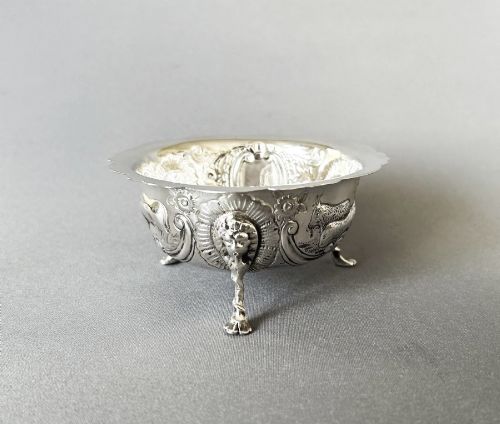
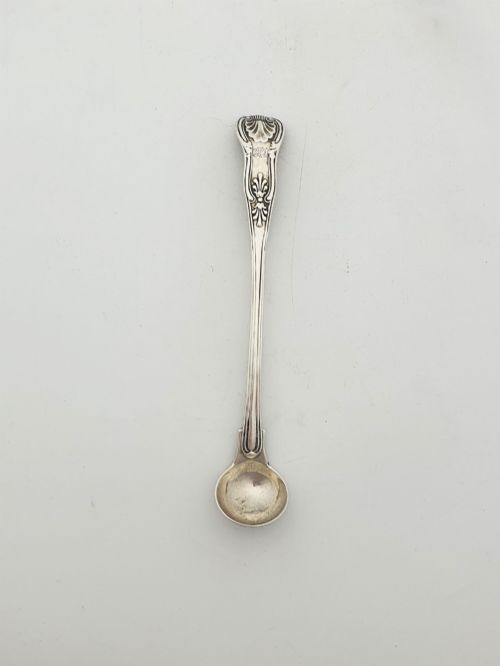
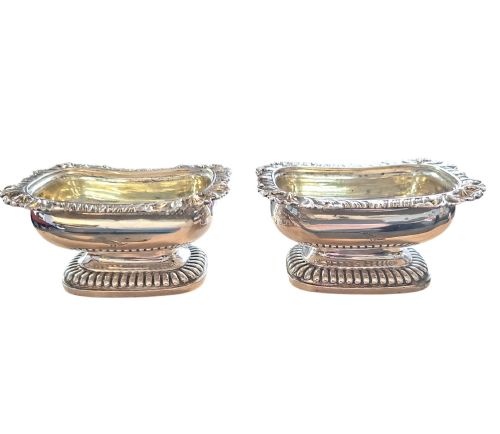
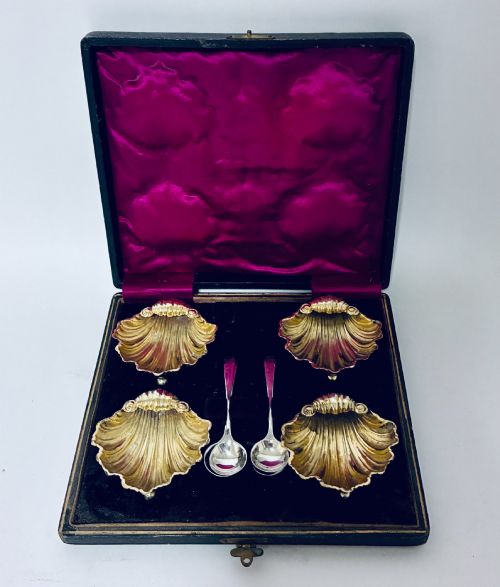
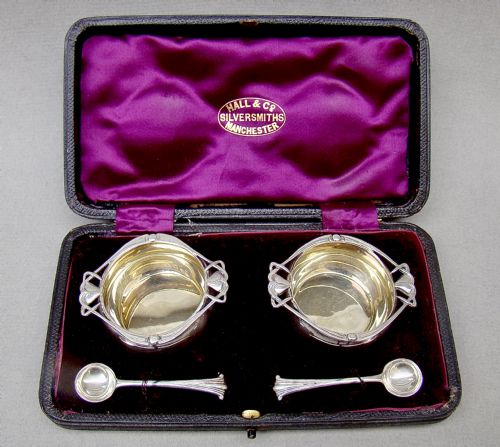
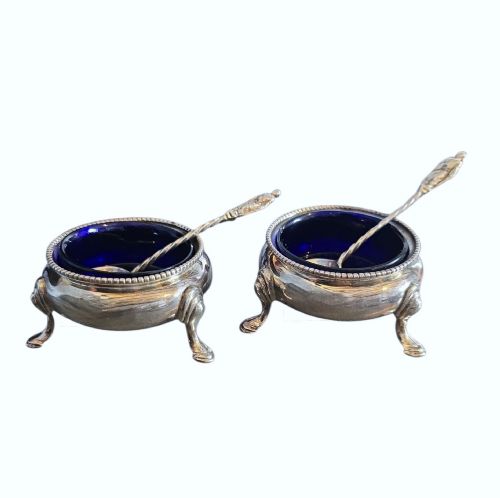
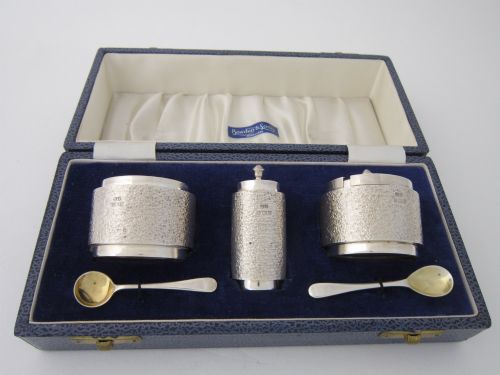
When you search for antique sterling salts, you encounter small open cellars, closed pots, and miniature boxes designed for condiments, alongside novelty forms shaped like animals or shells. The majority of pieces appearing here take the form of open salt cellars, frequently paired with matching spoons and fitted with blue glass liners.
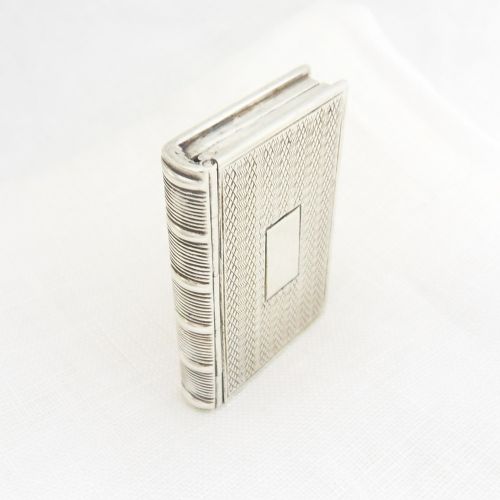
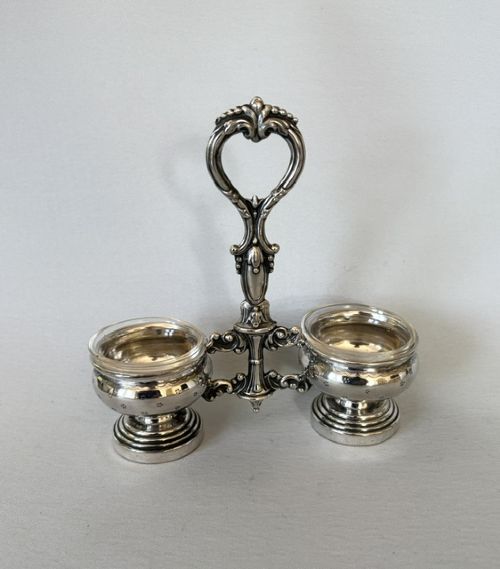
The selection spans several periods, moving from Georgian salt boats and William IV book-form pieces to Victorian chased dishes and Edwardian wirework frames. Makers employed diverse regional idioms, incorporating Chinese export work, French double stands, and Hindu deities alongside domestic British designs.
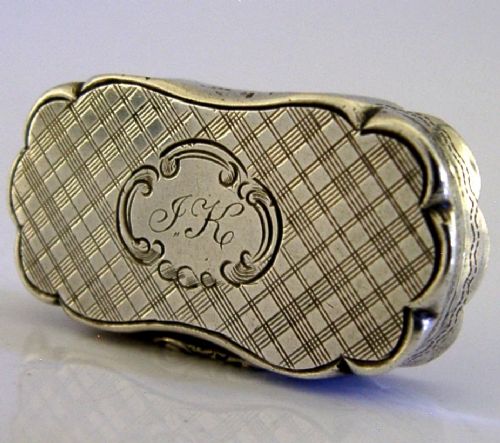
Beyond standard table salts, related cruet components such as mustard pots, pepper shakers, and vinaigrettes appear frequently within this grouping. These companion vessels share the same miniature scale and precious metal construction as the open cellars.
Materials and construction
Silversmiths constructed these pieces primarily from solid sterling silver, utilising casting, piercing, and repoussé chasing to create textured surfaces like foliate scrolls and serpentine profiles. Frames often incorporated silver gilt or wirework to support delicate internal components.
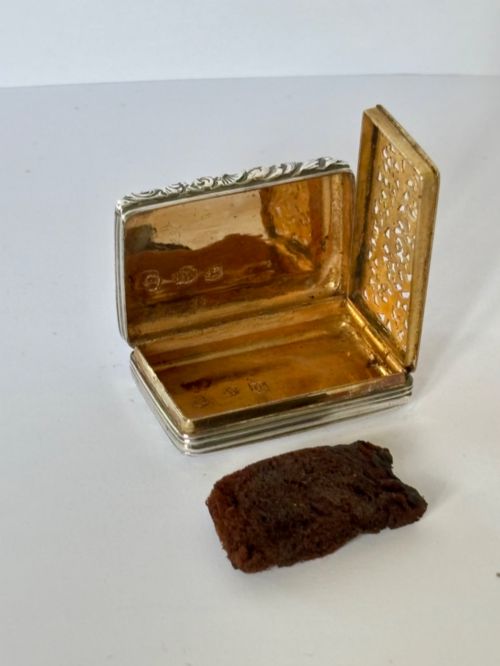
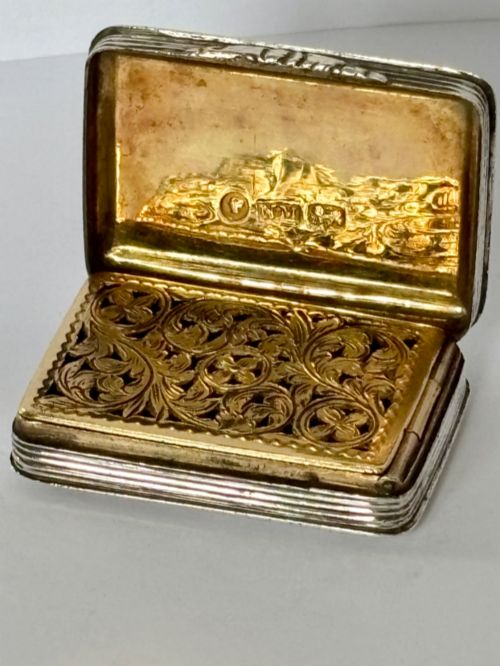
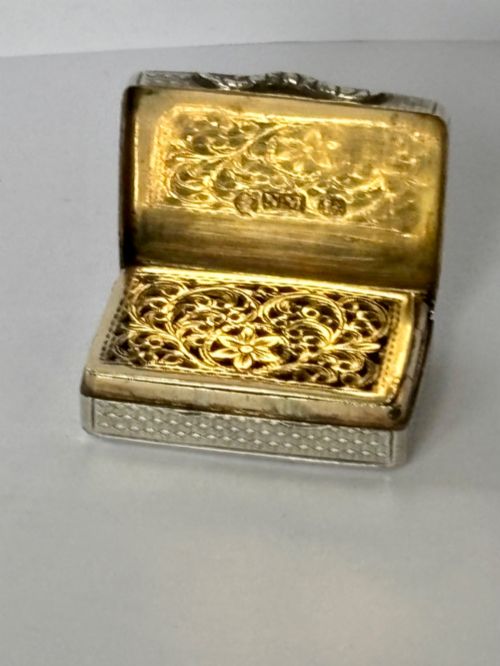
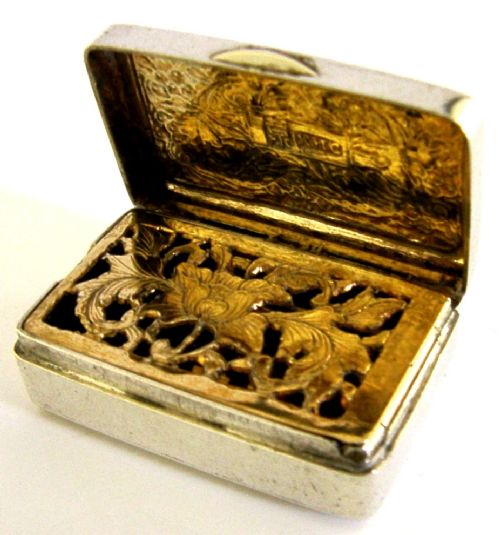
Transparent and opaque glass liners - most notably in shades of cobalt blue and opaline - were blown and fitted inside open silver cellars to protect the metal from corrosive salt. Specialised boxes like vinaigrettes additionally integrated internal pierced grilles alongside velvet, satin, or leather linings.
Antique Sterling Salts Retail Price Guide 2026
Typical asking prices for sterling salts among the pieces listed under this phrase on Sellingantiques today, from the lower quarter to the upper quarter. They describe what is for sale here now, not the wider market.
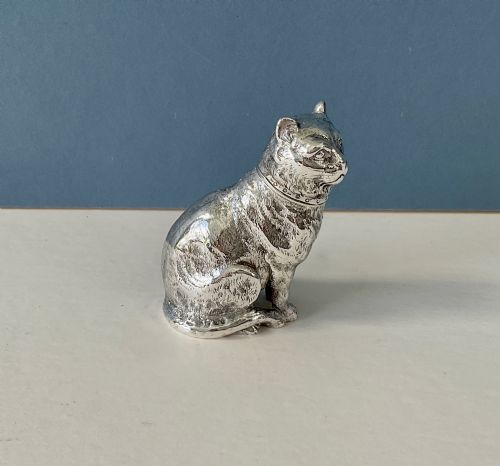
Several miniature condiment containers take the form of detailed hunting horns, dogs, and cats.
Distinguishing quality in the metalwork
Quality rests upon the crispness of the chasing and the structural integrity of pierced metal panels, where finer examples display deep, deliberate hand-tooling rather than soft, mass-produced stamping. The weight of the silver and the precision of hinged lids on closed pots also separate utilitarian work from superior output.
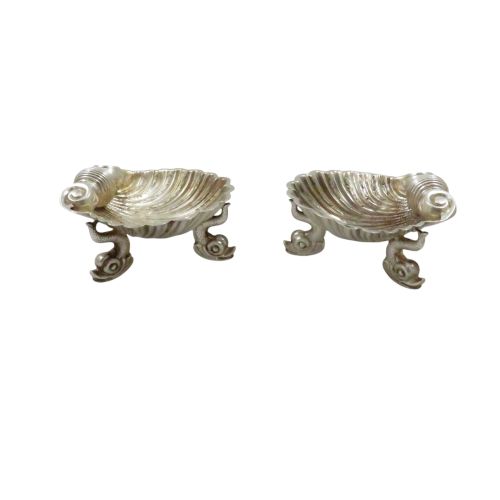
The survival of original fitted cases, matching spoons, and undamaged coloured glass liners elevates an individual piece. Artisanal finesse is further evidenced by specialist additions like dolphin feet, agate inlays, or novelty configurations involving movable wings and animal forms.
Beare Falcke·Taylor and Perry·Thomas Johnson·Georg Jensen·Sampson Mordan·Edward Smith·Barnards·William Neale·Josiah Williams and Co·Nathaniel Mills
The Antique Sterling Salts Glossary
- Vinaigrette
- A small ornamental box featuring an internal pierced grille, designed to hold a sponge soaked in aromatic vinegar. These portable containers date predominantly from the Georgian and Victorian eras.
- Salt cellar
- An open vessel placed on the dining table to hold salt before individual shakers became common. They frequently require glass liners to protect the sterling silver.
- Cruet set
- A matched group of condiment containers, including bottles, pots, and salt cellars, held within a shared frame or stand. They organise multiple table seasonings together.
- Silver gilt
- Sterling silver that has been coated with a thin layer of gold on the interior or exterior surfaces. This technique provided a richer colour and protected the silver from tarnishing.
- Chasing
- A metalworking technique where the silversmith hammers patterns into the front surface of the silver from the outside. This displaces metal to create raised decorative motifs like foliage or scrolls.
Antique Sterling Salts: Frequently Asked Questions
What is an antique sterling salt?
These small silver vessels held salt for dining before the invention of modern table shakers. They include open cellars with glass inserts and small enclosed boxes.
Craftsmen produced them in various forms, from simple Georgian salt boats to elaborate Victorian novelty shapes like shells and animals.
How were antique vinaigrettes used?
Vinaigrettes served as personal scent containers holding a sponge soaked in aromatic vinegar. Owners carried them in pockets or purses to ward off unpleasant odours.
The internal pierced grille allowed the scent to escape while holding the wet sponge securely in place.
How do I care for silver salt cellars?
Wash silver salts gently in warm soapy water and dry them thoroughly after use to prevent salt corrosion. Avoid harsh chemical dips that strip away the aged patina.
Remove glass liners before cleaning the metal frame to protect both materials from damage.
How are different periods identified?
Silversmiths marked their work with hallmarking stamps indicating the assay office, date letter, and maker's mark. These tiny stamped symbols provide precise manufacturing years.
Stylistic shifts, such as Georgian simplicity versus Victorian chased foliate detail, also help distinguish the era of creation.