


Antique Sterling Salt Dish
An antique sterling salt dish brings small scale silverwork to the table, offering functional elegance that collectors prize for its intricate detail and historic craftsmanship.
Antique Sterling Salt Dish
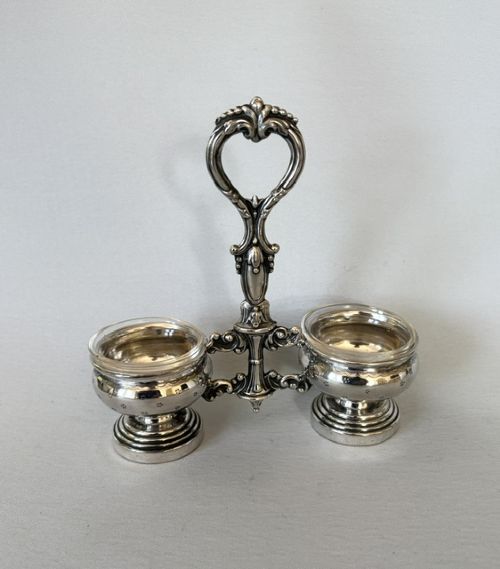
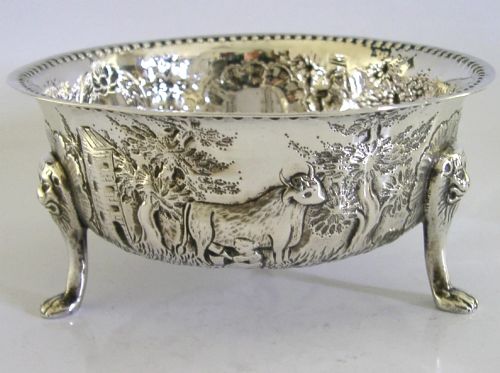
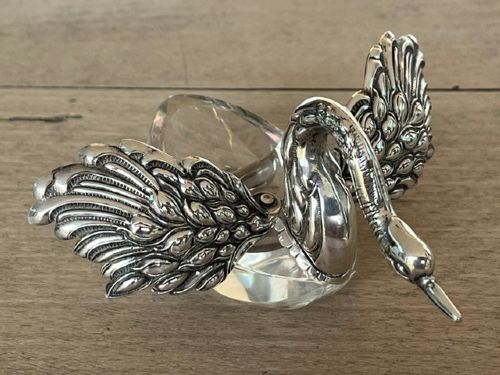
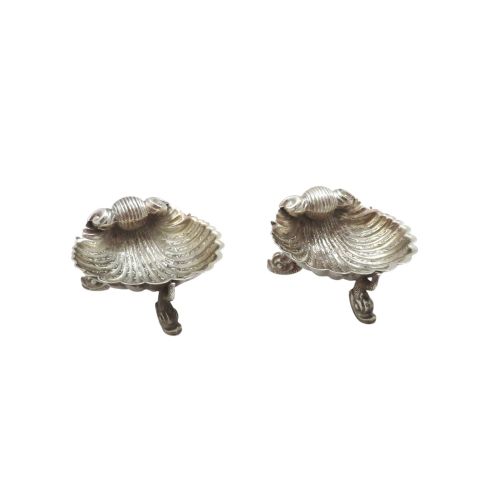
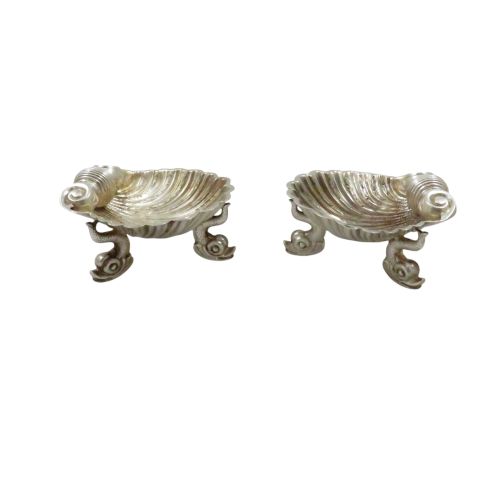
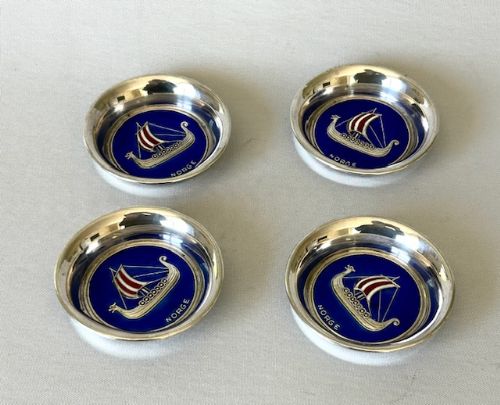
An antique sterling salt dish serves as a small open vessel designed to hold seasoning at the dining table. When exploring this category, a buyer encounters forms ranging from simple bowls to sculptural pieces modelled on shells, animals, and boats.
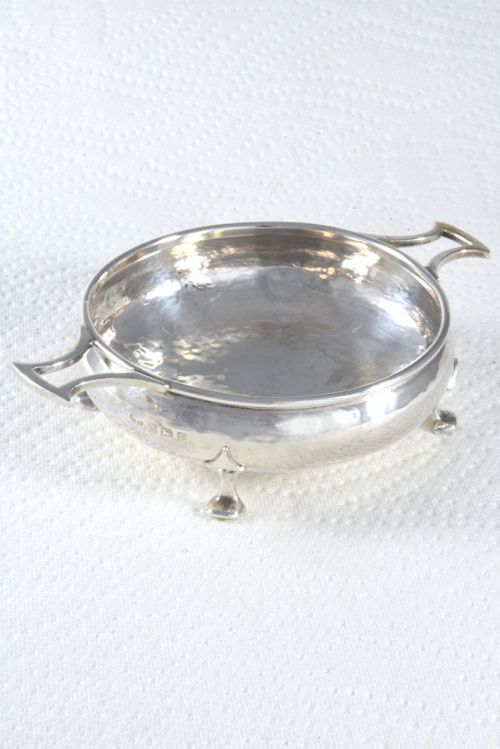
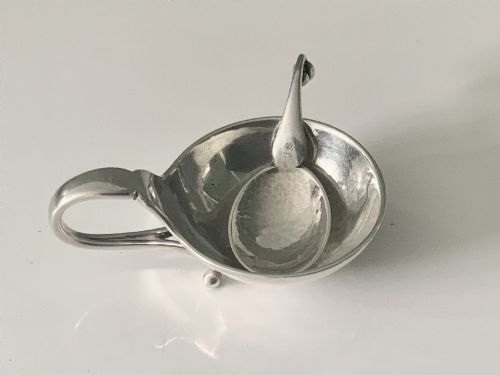
The pieces appearing on this page span the Georgian, Victorian, and Edwardian periods, alongside later twentieth century examples. Salt cellars and small condiment stands dominate the selection, often accompanied by matching spoons or original glass liners.
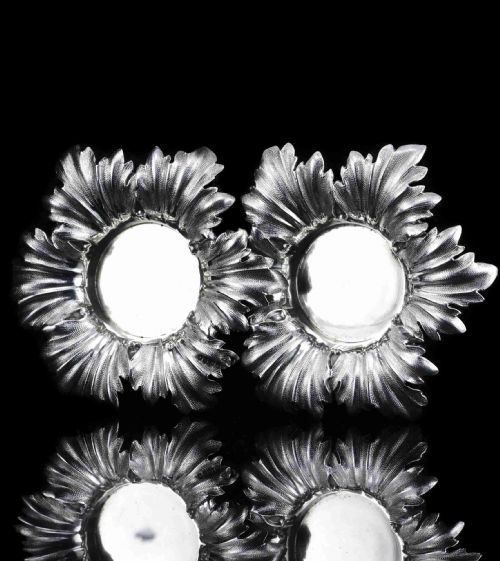
Makers utilised various silhouettes, including pedestal dishes, tub shapes, and multi-lobed designs. Many incorporate naturalistic floral motifs or classical French Rococo styling.
Materials and construction
Silversmiths constructed these salt dishes primarily from sterling silver, shaping the metal through casting, hammering, and detailed chasing. Many examples feature interior gilding, known as vermeil or silver gilt, which protected the silver from corrosion caused by salt.
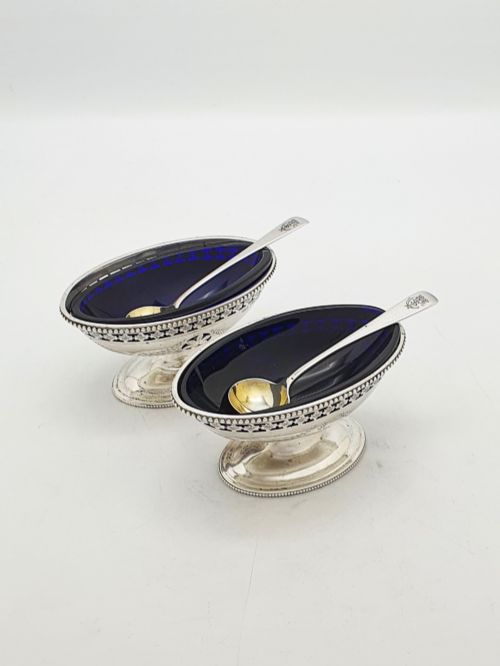
Removable liners made from cobalt glass or crystal frequently insert into the silver framework. Workshops also employed specialised techniques such as repoussé and foliate chasing to ornament the outer surfaces of the bowls and stands.
Listings feature sterling silver and crystal components paired with cobalt glass liners across Georgian, Victorian, and Edwardian periods.
Assessing quality in silver salt cellars
Quality rests upon the crispness of the chasing and the weight of the silver used in the construction. Pieces displaying sharp, hand-tooled foliate patterns or complex figural designs command greater attention than plain, mass-produced stampings.
The survival of original components significantly influences desirability. Complete sets, matching spoons, and undamaged cobalt glass or crystal liners indicate a higher level of preservation.
Barnards·William Bateman·Edward Farrell·Georg Jensen·Paul Storr·Thomas Smily·Vale Brothers and Sermon
The Antique Sterling Salt Dish Glossary
- Sterling silver
- A silver alloy containing substantial purity by weight, standardly marked for British manufacture.
- Cobalt glass
- A deep blue coloured glass frequently used for removable liners inside open salt cellars.
- Vermeil
- A layer of gold applied over sterling silver to provide a decorative finish and prevent tarnishing.
- Chasing
- A metalworking technique where the smith pushes the surface of the silver inward to create raised designs from the front.
- Pedestal dish
- A small bowl or vessel elevated upon a stem and a footed base.
Antique Sterling Salt Dish: Frequently Asked Questions
How were salt cellars used on historic dining tables?
Before the widespread adoption of free-flowing table salt in shakers, open salt cellars sat near diners for individual use. Guests pinched salt from the dish using small spoons or their fingers to season food.
Wealthier households maintained matched sets placed at intervals along the length of the dining table. Elaborate condiment stands often held multiple salts alongside other seasonings.
Can I still use these silver salt dishes today?
These pieces function well for modern dining provided they receive proper care. Salt is corrosive, so silver cellars require prompt cleaning and drying after use to protect the metal.
Glass or crystal liners help prevent direct contact between the salt and the silver. Hand washing preserves the finish better than automated dishwashing.
How do I identify the period of a silver salt?
British pieces typically feature hallmarks stamped directly onto the silver, including date letters that indicate the exact year of assay. Maker marks and standard sterling marks help narrow down the origin.
Stylistic cues also reveal the period, such as Rococo revival curves in the Georgian era or the cleaner lines of Edwardian and Arts and Crafts examples.
Why do some salt cellars have blue glass liners?
Blue glass liners protect the silver exterior from the corrosive chemical action of salt. The rich cobalt colour also created a striking visual contrast against the polished silver framework.
Original glass liners add to the historical completeness of the piece. Replacements are common, so surviving original glass is particularly valued by collectors.