


Silver Condiment Cellar Pair
A silver condiment cellar pair brings functional elegance to a dining table through fitted glass liners and precious metal mounts.
Silver Condiment Cellar Pair
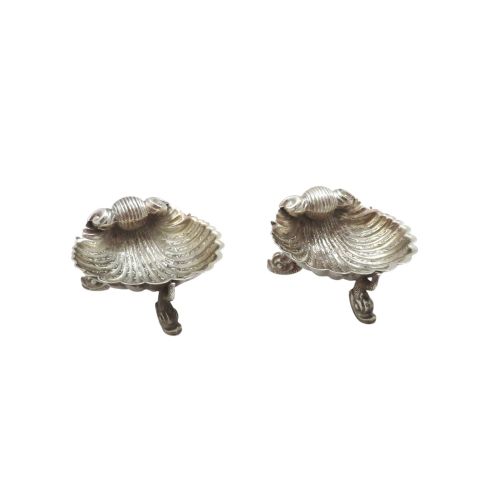
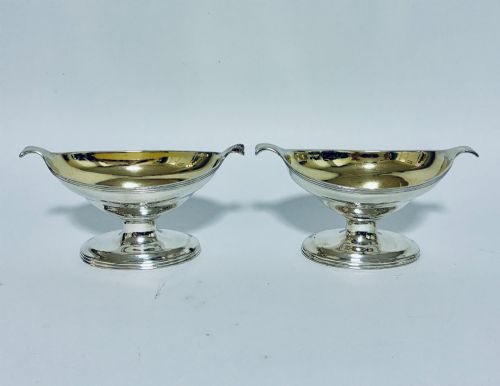
A silver condiment cellar pair comprises two matching small vessels designed for holding table salt or other seasonings during a meal. These functional dining accessories appear primarily in Victorian, Edwardian, and Georgian periods, showcasing diverse forms from simple boats to novelty animal shapes.
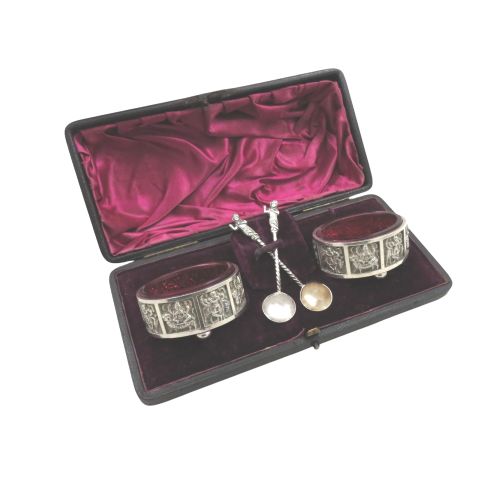
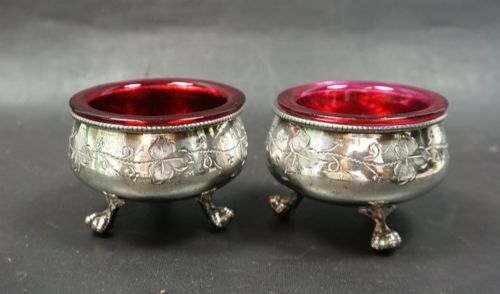
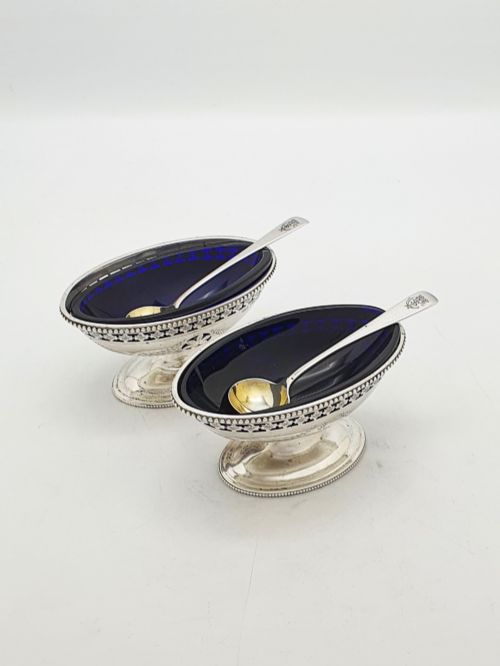
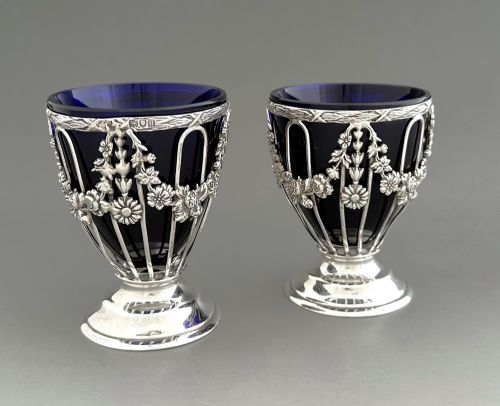
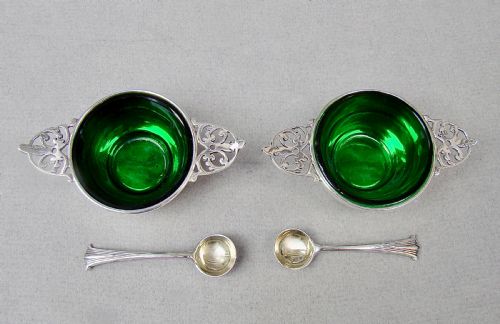
Buyers encounter traditional cauldron designs, boat-shaped vessels, and fitted cased sets complete with original spoons. Many examples utilise contrasting coloured glass liners, notably cobalt and cranberry hues, visible through open wirework or pierced silver frames.
Origins stretch across English provincial assay offices as well as continental workshops, spanning the eighteenth, nineteenth, and early twentieth centuries. Table salts remain the most common iteration within this grouping, frequently accompanied by matching condiment spoons.
What varies in quality
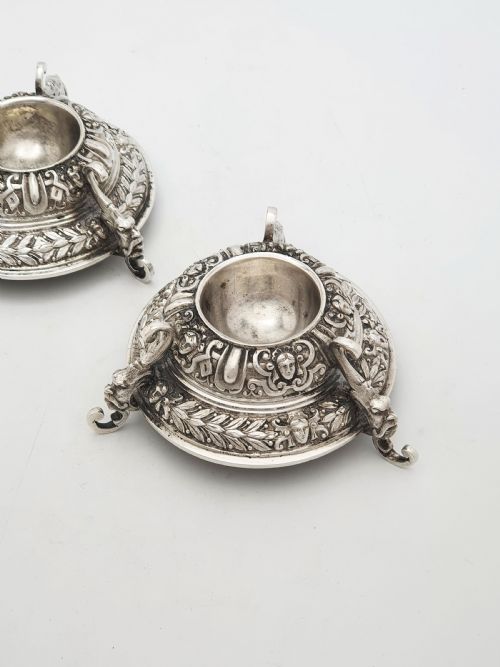
The distinction between standard production and superior craftsmanship rests in the crispness of chased decoration, the weight of the silver, and the preservation of original components. Heavier gauge metal resists denting, while fine piercing displays uniform symmetry across both matched vessels.
Completeness dictates lasting appeal, particularly the presence of matching original spoons and intact coloured glass liners free from chips. Maker marks and clear hallmarks add historical definition, distinguishing standard utilitarian wares from distinguished workshop output.
The selection spans Georgian, Victorian, and Edwardian eras alongside specific years like 1837 and 1902.
Josiah Williams And Co·Sampson Mordan·Thomas Johnson·Edward Wood·Vale Brothers And Sermon
The Silver Condiment Cellar Pair Glossary
- Open salt
- A small tabletop bowl designed to hold loose salt rather than dispensing it through shaker holes. Diners used a small spoon or fingers to take a pinch.
- Liners
- Removable glass inserts placed inside open salt cellars to protect the metal from the corrosive properties of salt. Cobalt and cranberry glass are traditional choices.
- Cruet set
- A matched collection of bottles, jars, or cellars mounted together on a stand for holding various condiments and seasonings at the table.
- Gilt
- A thin layer of gold applied to the interior surface of a silver vessel. This technique prevented the salt from tarnishing the bare silver.
- Repoussé
- A metalworking technique where the artisan hammers the design from the reverse side to form raised ornamentation on the front.
Silver Condiment Cellar Pair: Frequently Asked Questions
How were salt cellars used?
Diners used salt cellars by placing them individually or shared upon the dining table for guests to season their food. A miniature spoon accompanied the cellar to transfer the salt to the plate.
Before the widespread adoption of free-flowing table salt in shakers, open cellars held coarse or flake salt. Wealthier households maintained matching pairs or larger sets to ensure each guest had direct access.
Are original glass liners important?
Original glass liners are crucial because they match the exact interior dimensions and historical period of the silver mount. Finding replacements that fit older handmade frames presents a significant challenge.
Coloured glass liners also contribute to the visual aesthetic of open wirework designs. Their absence or replacement alters the completeness of the piece.
How do I date antique silver salts?
Hallmarks stamped onto the silver provide the most reliable method for dating these pieces through assay office symbols and date letters. Stylistic cues, such as Georgian neoclassical shapes or Victorian revival motifs, offer secondary indicators.
Case designs and accompanying documentation can also assist in establishing the approximate decade of manufacture. Comparing piece construction with established maker records narrows the timeline further.
Can I use them for dining today?
These cellars function effectively for modern dining when fitted with protective glass liners that prevent direct contact between salt and metal. Cleaning requires mild agents to preserve the antique silver surface.
Many collectors continue to use antique salt cellars during formal meals or as decorative display pieces on sideboards. Regular gentle maintenance keeps the silver bright without wearing down chased details.