


Antique Silver Clasp
These small fastening mechanisms and fastened items reveal the detailed metalwork of past centuries, offering collectors practical history.
Antique Silver Clasp
An antique silver clasp encompasses functional fastenings and decorated pieces where the closure forms the central design, ranging from small necklace hooks to large waist belt buckles and purse mounts. These items cross multiple categories, appearing on wearable jewellery, leather accessories, and garments.
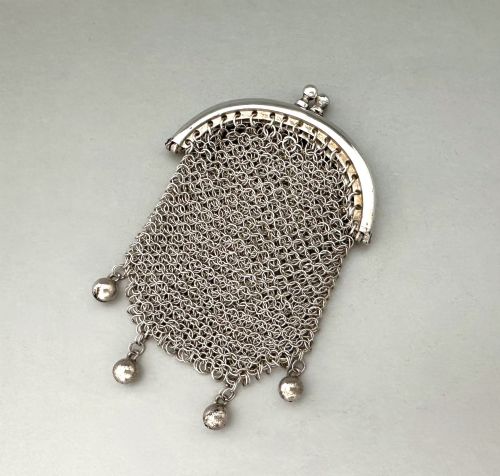
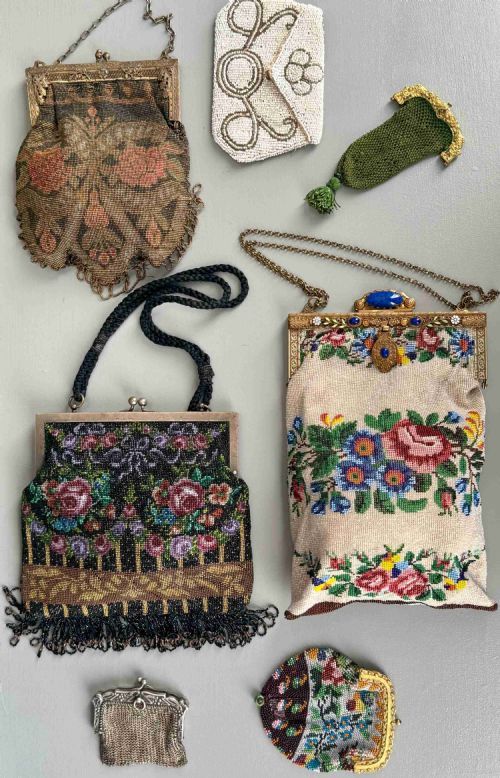
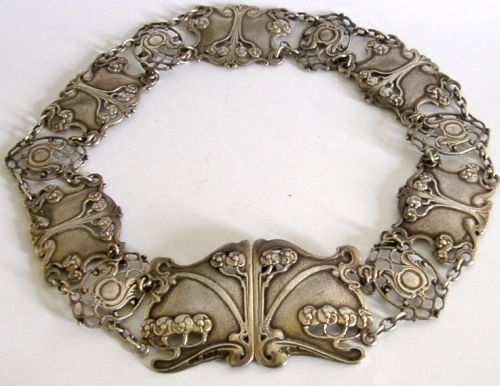
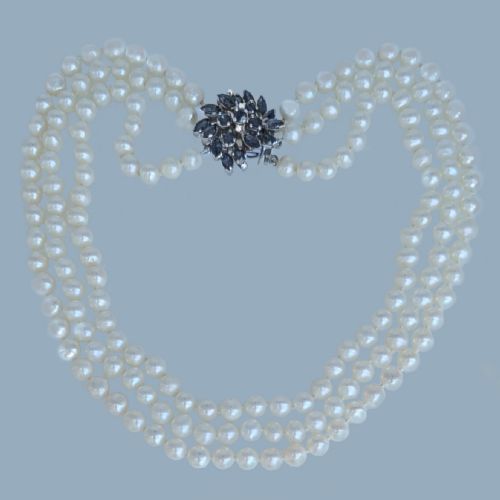
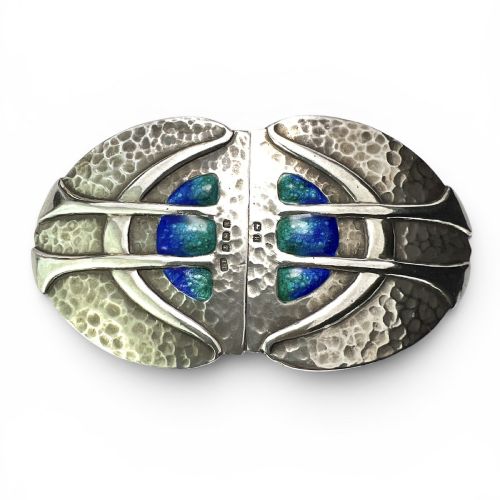
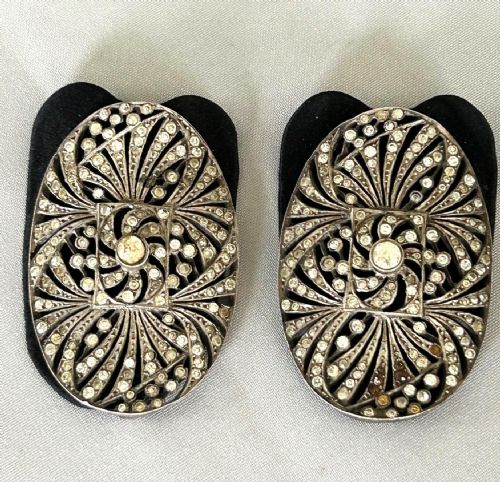
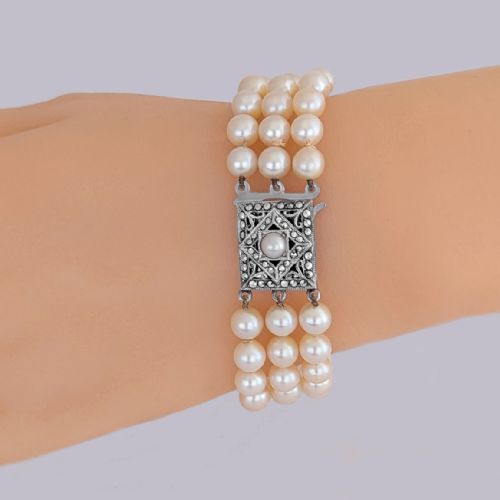
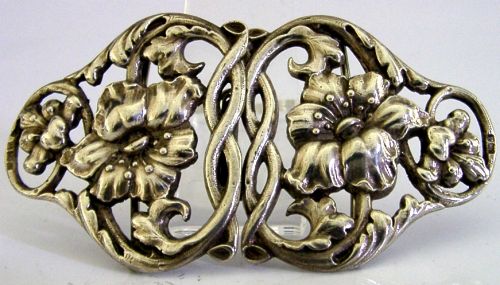
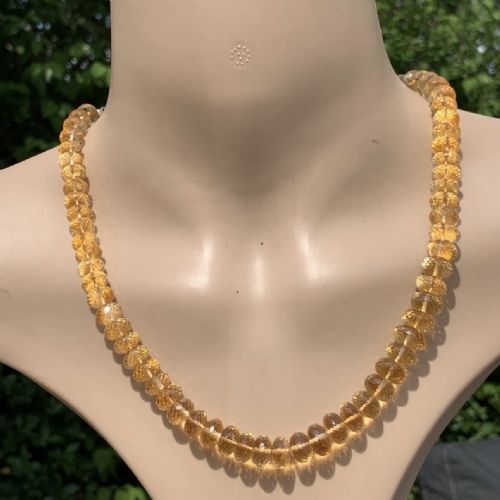
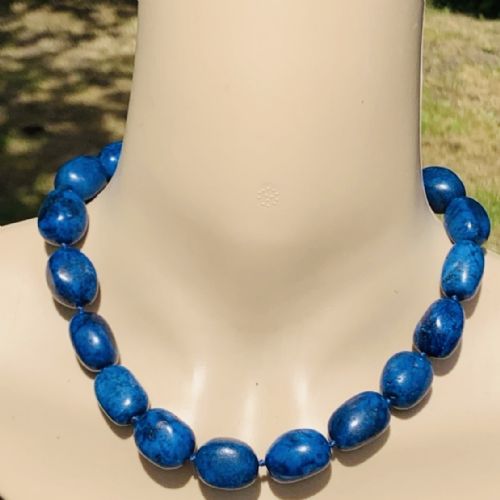
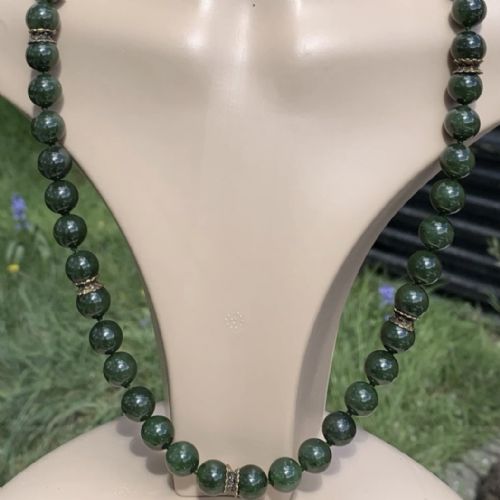
The selection on this page leans heavily toward larger dress fastenings like belt buckles and shoe buckles alongside functional watch chains, bead necklaces, and evening bags fitted with metal mounts. Pieces span from the eighteenth century through the Georgian, Victorian, and Edwardian eras into mid-century modern designs.
Buyers encounter items originating from British workshops, continental Europe, and further afield, reflecting diverse cultural uses for fastened silver accessories. Many examples combine silver with enamel, paste glass, or semi-precious stones to draw the eye directly to the fastening point.
How they were made
Metalsmiths utilised solid sterling silver and silver gilt, often shaping the metal through casting, stamping, or delicate filigree wirework. These structural components provide the durable foundation required for items subject to daily tension and wear.
Decoration relied heavily on applied vitreous enamel, hand engraving, and the setting of paste glass, crystal, turquoise, or pearls into the silver frame. Artisans combined these decorative elements directly into the clasp mechanism to merge utility with ornament.
Materials appearing across current selections include sterling silver, silver gilt, enamel, steel, paste glass, leather, fabric, and cultured pearls.
What varies in quality
Quality rests in the crispness of the cast or hand-chased details across the silver surface, separating mass-produced stamped items from master-carved or heavily worked examples. Finer pieces maintain sharp definition in floral, figural, or geometric motifs without softening from excessive polishing.
The integrity of the mechanism itself dictates overall standard, with superior items retaining sturdy hinges, secure tongue catches, and original components that operate smoothly. Additionally, the preservation of fragile supplementary materials like applied enamel, tiny seed pearls, or hand-cut paste stones significantly elevates the piece.
James Fenton·Henry Matthews·Liberty's·Mikimoto
The Antique Silver Clasp Glossary
- Sterling silver
- An alloy containing ninety-two point five percent silver by mass, with the remainder usually copper. This standard composition provides the durability needed for functional clasps and buckles.
- Paste glass
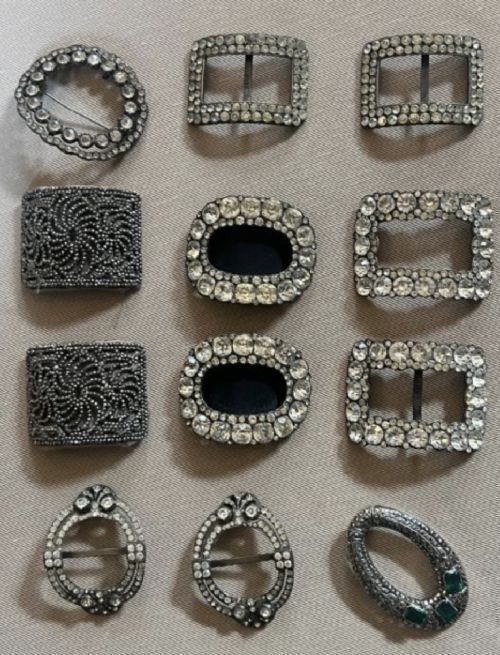
- High-refractive-index lead glass cut and polished by hand to imitate diamonds or coloured gemstones. Georgian jewellers frequently set paste into silver shoe buckles and chatelaine mounts.
- Silver gilt
- Silver objects coated with a thin layer of gold through fire gilding or electroplating. This technique offers the rich appearance of solid gold while utilising a silver base.
- Filigree
- Delicate jewellery-making technique using fine threads of silver twisted and soldered together in openwork patterns. It creates lightweight yet visually intricate clasp frames.
- Choker buckle
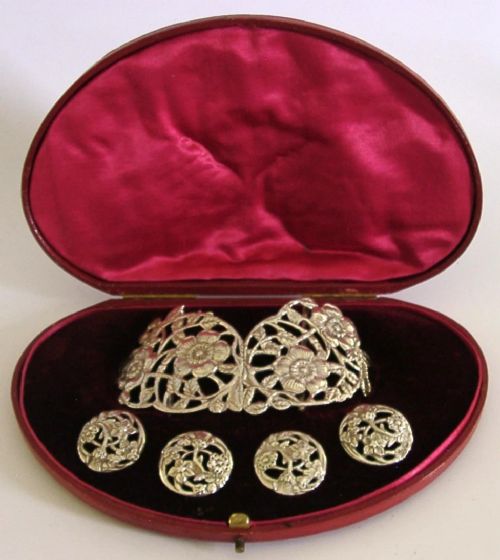
- A decorative fastening designed to sit closely at the neck as a collar or choker. These items adapt belt buckle motifs into neckwear.
Antique Silver Clasp: Frequently Asked Questions
How do I wear an antique belt buckle today?
Many antique belt buckles can be mounted onto custom leather bands or integrated into fabric sashes for modern wear. They function best as statement accessories over dresses, coats, or tailored trousers.
Ensure the pin or prong mechanism matches the thickness of your chosen strap without putting undue stress on the antique silver hinge.
How were shoe buckles used in the eighteenth century?
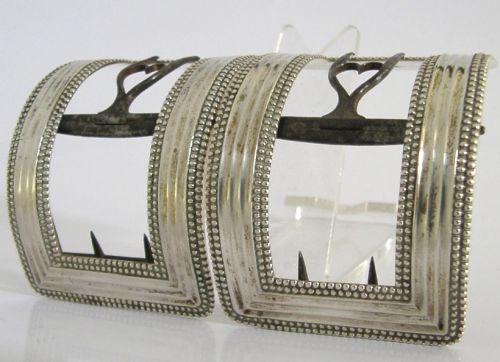
Georgian shoe buckles fastened over the instep of low-heeled shoes using a rigid metal tongue that fitted through a leather strap. They served as detachable accessories shifted between different pairs of formal footwear.
These pieces were engineered to catch candlelight at evening gatherings, which explains the heavy use of reflective paste glass and cut steel.
What is the difference between a watch chain and a fob?
A watch chain is the primary flexible link strand worn across a waistcoat or pinned to a garment to secure a pocket watch. The fob refers specifically to the ornamental medallion, seal, or small trinket suspended from the end of that chain.
Both components were frequently made of solid silver and engraved with regional sports club crests or family initials.
How should I clean antique silver clasps?
Maintenance requires gentle dusting with a soft microfiber cloth to remove surface grime without stripping the aged patina. Harsh liquid dips should be avoided, particularly on items featuring enamel, paste glass, or fabric backings.
Store pieces in dry conditions away from direct sunlight to protect vulnerable settings like turquoise stones or pearls.