


Silver Belt Buckle
When you handle a silver belt buckle from the past, you hold a tangible piece of personal adornment shaped by changing Victorian and Edwardian fashions.
Silver Belt Buckle
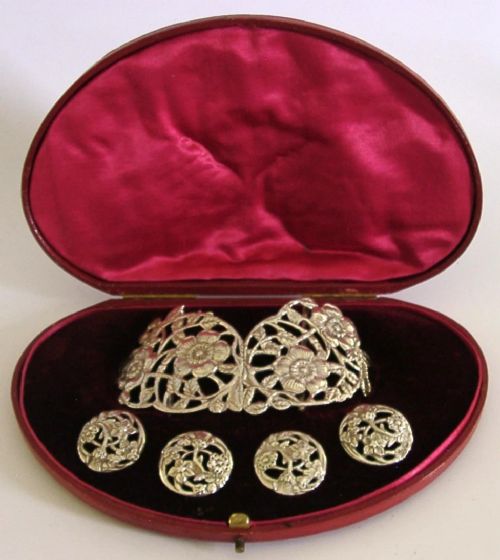
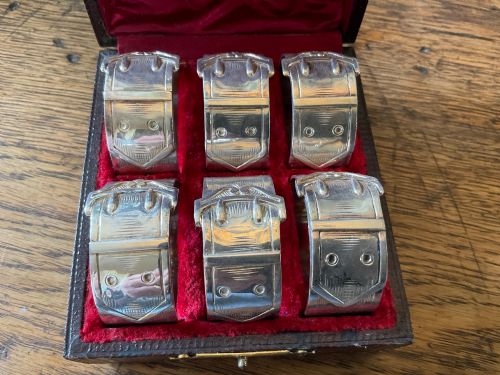
A silver belt buckle is an accessory designed to fasten waistbands, often appearing alongside nurses' uniform buckles and matched sets of buttons or napkin rings.
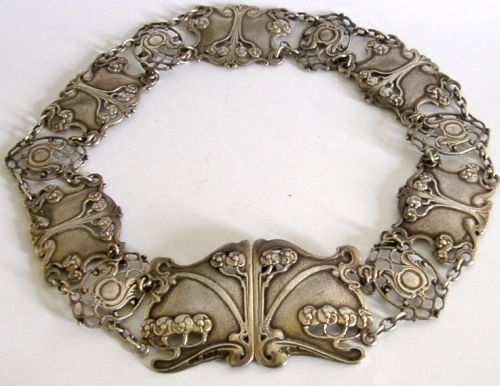
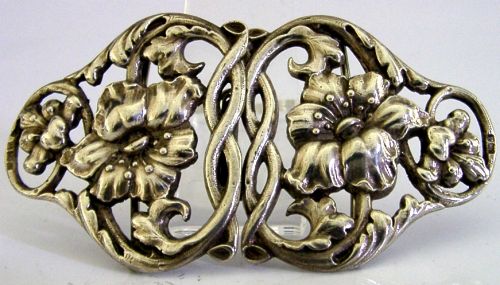
Most examples found here date from the late nineteenth century and the early decades of the twentieth century, encompassing Victorian, Edwardian, and Art Nouveau aesthetics.
Makers produced these items in various regional workshops across Britain, continental Europe, and beyond, yielding forms that range from cast floral motifs to hinged clasps.
How they were made
Silversmiths utilised casting and piercing techniques to shape sterling silver and silver gilt into intricate scrollwork, figurative scenes, and organic shapes.
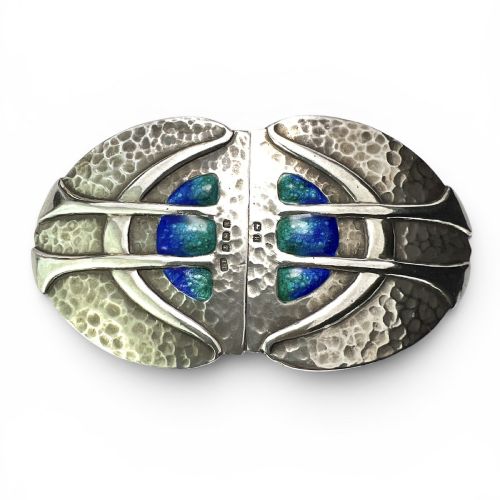
Colour was frequently introduced through vitreous and guilloche enamel, while some regional variations incorporated niello or turquoise stones directly into the metal frame.
Silver Belt Buckle Retail Price Guide 2026
Typical asking prices for silver belt buckle among the pieces listed under this phrase on Sellingantiques today, from the lower quarter to the upper quarter. They describe what is for sale here now, not the wider market.
Listings feature items spanning the nineteenth century up to the 1960s, executed in sterling silver, silver gilt, enamel, and leatherette.
What varies in quality
The standard of a silver belt buckle depends on the crispness of the cast relief and the complexity of the hand-pierced openwork. Pieces that retain unblemished enamel and clear hallmarks demonstrate superior original craftsmanship.
James Fenton·Walker And Hall·Henry Matthews·James Dixon And Sons·Levi And Salaman·Cornelius Saunders And Frank Shepherd·William Hutton And Sons·Archibald Knox
The Silver Belt Buckle Glossary
- Sterling silver
- A silver alloy consisting of 92.5 percent pure silver and 7.5 percent other metals, typically copper. This standard composition is frequently stamped with assay office hallmarks.
- Guilloche enamel
- A decorative technique where transparent enamel is layered over machine-turned metal engraving. It produces repeating geometric patterns beneath a glossy coloured surface.
- Niello
- A black metallic alloy of sulphur, silver, lead, and copper used as an inlay on engraved silver. The contrasting dark background highlights the bright metal design.
- Silver gilt
- Silver objects that have been coated with a thin layer of gold on the surface. This finish provides the warm appearance of solid gold while utilising a silver base.
- Assay mark
- Official stamps applied to precious metals indicating purity, the place of testing, and the year of manufacture. These marks allow researchers to date British items precisely.
Silver Belt Buckle: Frequently Asked Questions
What is a nurses buckle?
A nurses buckle is a specific type of clasp worn on the fabric belts of uniform dresses during the Victorian and Edwardian periods. These items were often given as presentation pieces for graduation or long service.
Many examples feature solid silver construction with pierced scrolling designs or figurative motifs related to healthcare, such as the goddess Diana or nursing symbols.
How do I date a silver buckle?
Dating a British silver buckle relies primarily on the hallmarks stamped into the metal by official assay offices. These marks typically include a maker's mark, a purity standard, and a date letter.
Stylistic indicators also help identify the period, such as the flowing organic lines characteristic of Art Nouveau pieces made around 1900.
Were these worn on everyday belts?
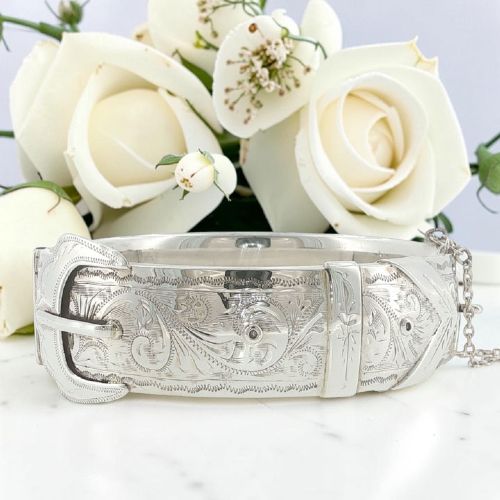
These accessories were frequently attached to fabric waistbands or specialised belts as part of fashionable dress during the late nineteenth and early twentieth centuries. Some heavier versions were designed to support waist cinches or elaborate garments.
Today, collectors often display them as standalone art objects or mount them on replacement ribbon belts for historical wear.
What styles are most common?
Art Nouveau and Victorian designs dominate the available selection, reflecting the high volume of production during those eras. You will frequently encounter floral motifs, cherubs, and scrolling foliage.
Regional styles from continental Europe and Asia also appear, demonstrating distinct local metalwork techniques like niello and filigree.