



Antique Silver Buckle
An antique silver buckle fastens history onto fabric, offering solid sterling, enamel, and paste glass forms from Georgian and Edwardian hands.
Antique Silver Buckle
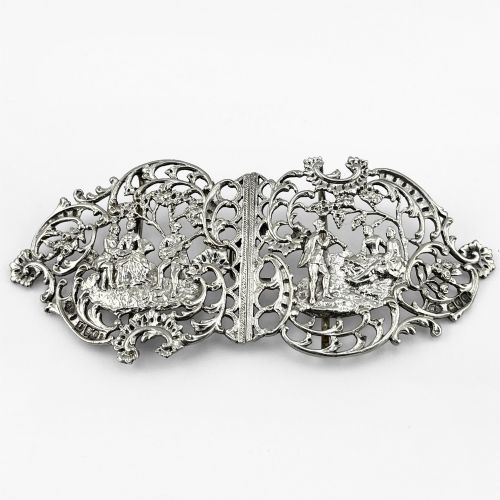
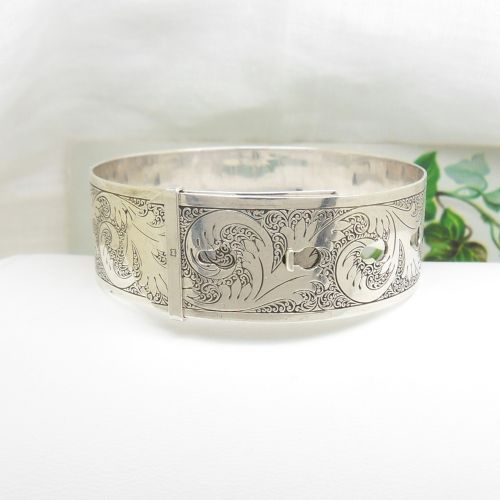
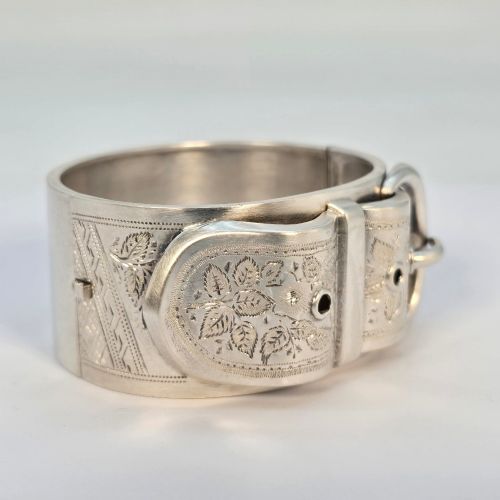
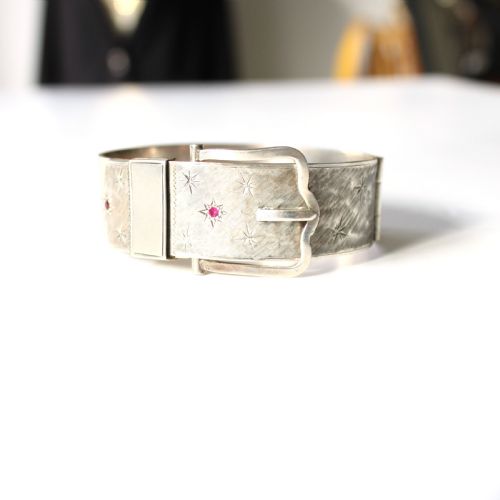
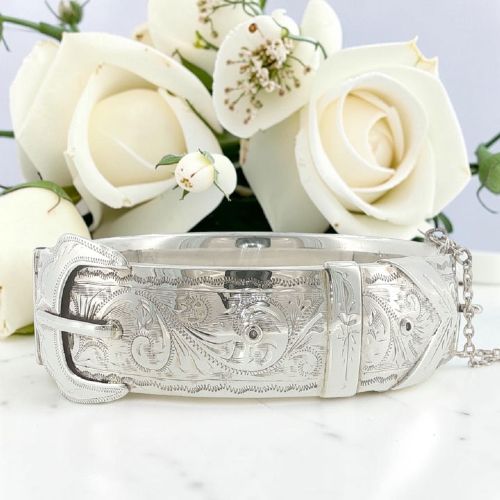
An antique silver buckle appears in several distinct forms across this selection, primarily as shoe buckles, belt buckles, and decorative clasps. Buyers encounter smaller accessories alongside waist fastenings, with pieces spanning the eighteenth, nineteenth, and early twentieth centuries.
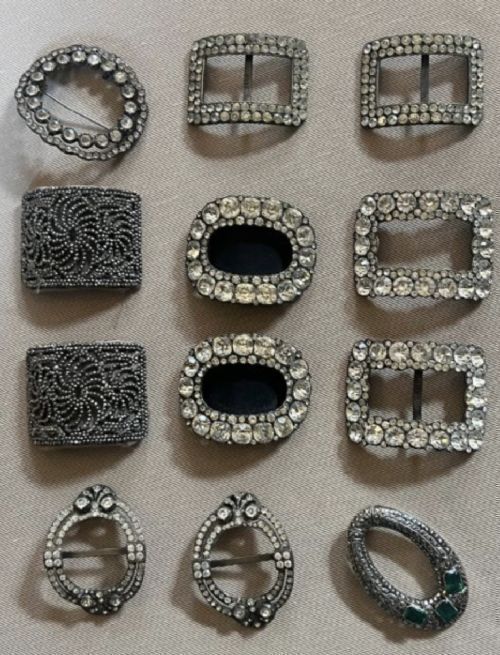
Shoe buckles from the Georgian period feature heavily alongside Edwardian and Victorian belt fastenings. The inventory includes items cast in solid sterling silver, alongside gilt metals, steel, and variants set with paste glass.
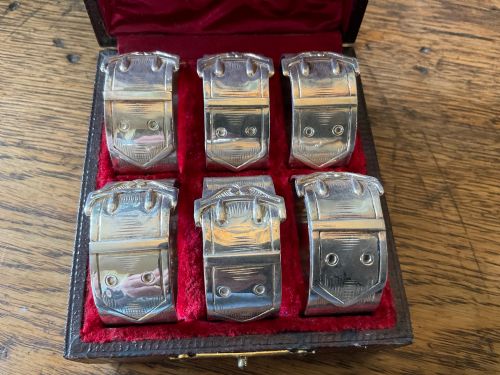
Regional and stylistic variations emerge through Austro-Hungarian, Straits Chinese, and Arts and Crafts examples. Napkin rings and photo frames modelled in the shape of buckles also surface within the groupings.
Materials and Working Methods
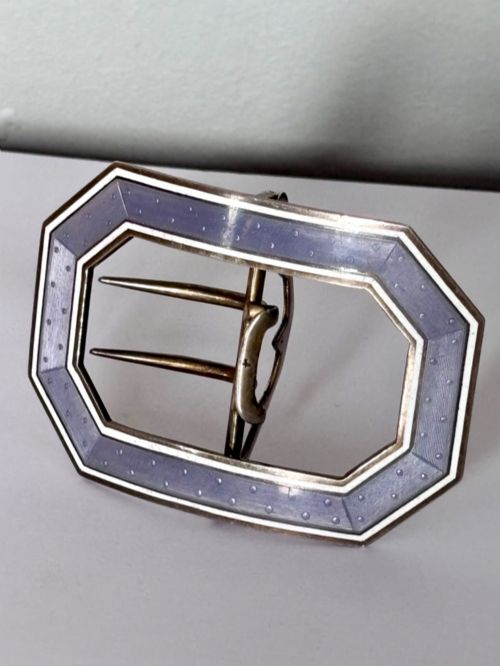
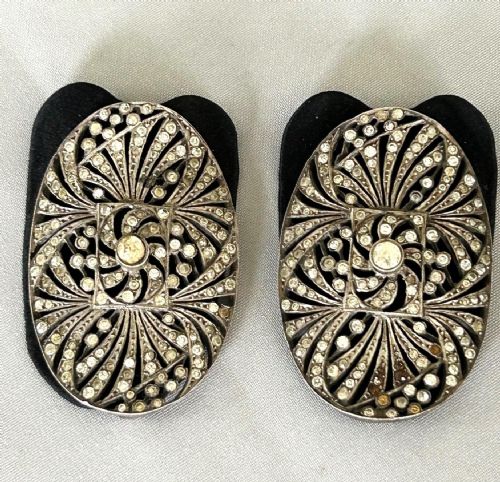
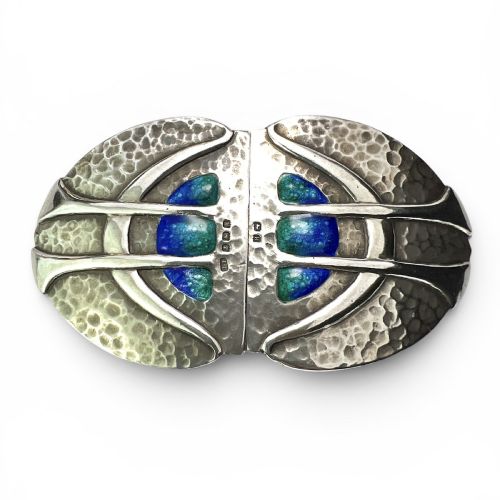
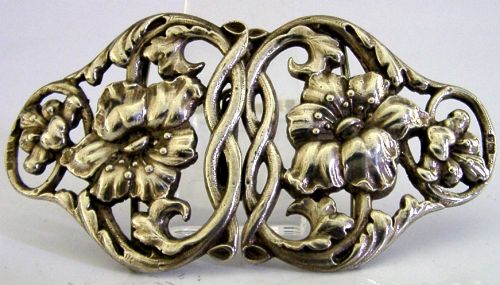
Silversmiths utilised solid sterling silver and silver gilt, employing casting and filigree techniques to shape the metal. Enamel and vitreous enamel add colour to Edwardian designs, while paste glass and crystal provide scintillation in Georgian footwear accessories.
Compositions occasionally incorporate velvet backing or steel components, particularly in eighteenth-century shoe variants. Maker techniques range from stamped English hallmarks to intricate regional handwork found in Turkish and Peranakan items.
Antique Silver Buckle Retail Price Guide 2026
Typical asking prices for silver buckle among the pieces listed under this phrase on Sellingantiques today, from the lower quarter to the upper quarter. They describe what is for sale here now, not the wider market.
Listings feature solid sterling silver, silver gilt, and steel alongside decorative elements like velvet, paste glass, and vitreous enamel.
Distinctions in Quality
The standard of an antique silver buckle rests on the crispness of its cast ornament and the security of its settings. Pieces displaying hand-chased details or precise enamel work stand apart from simpler stamped productions.
The integrity of applied paste glass, the weight of the solid sterling silver, and the preservation of original gilding dictate the standing of individual examples. Maker marks and clear Birmingham assay stamps also anchor a piece within its historical tier.
James Fenton·Henry Matthews·Peter Behrens for Osiris·Liberty's
The Antique Silver Buckle Glossary
- Paste glass
- Faceted glass used to imitate gemstones in eighteenth and nineteenth-century jewellery and shoe accessories. It is typically hand-set into metal mounts.
- Vitreous enamel
- Glass powder fused to metal through high-temperature firing. This technique creates a glossy, durable coloured surface found frequently on Edwardian pieces.
- Silver gilt
- Silver objects coated with a thin layer of gold. This treatment provides the visual warmth of gold while utilising a silver base.
- Filigree
- Delicate openwork jewellery created by twisting and soldering fine silver wire into intricate patterns. It appears frequently in older shoe and belt accessories.
- Sterling silver
- An alloy consisting of pure silver and other metals, usually copper, standardised for durability. British pieces often bear hallmarks denoting this composition.
Antique Silver Buckle: Frequently Asked Questions
How were antique shoe buckles worn?
Georgian shoe buckles attached directly to the instep of formal footwear using straps and prongs. They secured low buckled shoes popular during the eighteenth century.
Over time, footwear fashions changed, shifting the primary use of similar metalwork towards belts and sashes by the Victorian era.
What periods do these buckles cover?
The pieces span from the eighteenth century through the Georgian, Victorian, and Edwardian eras. Later examples reach into the early twentieth century, including 1950s nurse buckles.
Stylistic shifts trace a path from heavy paste-set shoe clasps to fluid Art Nouveau enamel designs and Arts and Crafts metalwork.
How do I identify an Edwardian silver buckle?
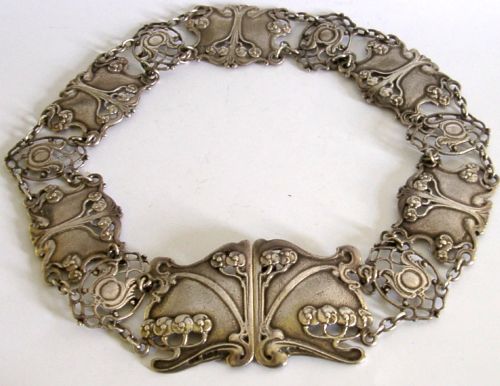
Edwardian examples often feature characteristic Art Nouveau whiplash lines, organic motifs, and colourful vitreous enamel. Hallmarks frequently point to Birmingham assay offices and makers active around 1900 to 1910.
These pieces generally prioritise flowing botanical forms and lighter framing compared to earlier Georgian styles.
Can I wear an antique belt buckle today?
Many belt buckles adapt easily to modern wear provided the fastening loop or pin remains intact. Collectors often pair them with compatible fabric sashes or custom belts.
Heavier sterling silver and gilt versions suit occasional evening wear, while smaller designs function as statement accessories.