


Victorian Silver Buckle
A victorian silver buckle is a fastening or decorative ornament of solid metal or plated form, prized for intricate detail.
Victorian Silver Buckle
A victorian silver buckle encompasses traditional belt fastenings, nurse's buckles, and adapted jewellery forms like bangles and brooches. The selection draws heavily from the Victorian period alongside later interpretations spanning into the twentieth century.
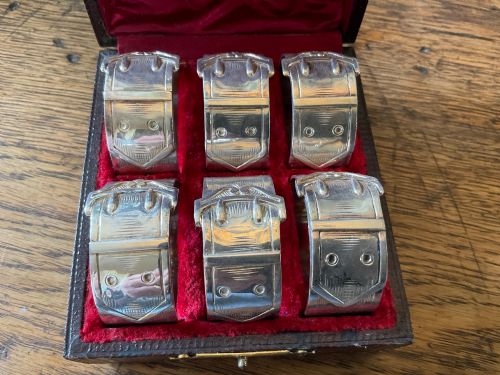
Buyers frequently encounter functional belt buckles alongside pieces converted into bracelets, lockets, and napkin rings. These objects bridge practical costume accessory use and decorative ornamental design.
Origins range from English assay offices such as Birmingham and London to continental workshops including Austro-Hungarian and French makers. Such variety reflects the extensive application of the buckle motif across domestic and personal items.
Materials and construction methods
Sterling silver, solid silver, and silver plate form the primary structural metals, often complemented by silver gilt for enhanced surface richness. Workshops employed techniques like piercing, engraving, and enamelling to decorate the metal surfaces.
Selected examples incorporate additional materials including turquoise, garnet, agate, velvet, and wood to augment the visual impact. These diverse components were integrated into the metal framework through secure setting and mounting methods.
Listings feature Victorian, Edwardian, and mid-century periods, utilising sterling silver, silver plate, turquoise, agate, and wood.
Assessing quality in silver buckles
Quality rests upon the crispness of the chased or pierced ornament and the depth of the metalwork relief. Finer examples display meticulous hand-finishing across every scroll, shamrock, and angelic motif.
The integrity of the material and the sophistication of any incorporated stones or enamel work distinguish exceptional items. Pieces bearing clear hallmarks and maker marks further command attention through verified provenance.
Cornelius Saunders and Frank Shepherd·William Hutton and Sons·Constantine and Floyd·W and C Manton
The Victorian Silver Buckle Glossary
- Sterling silver
- A silver alloy containing 92.5 percent pure silver by mass and 7.5 percent other metals, usually copper. This standard composition provides durability while maintaining a bright metallic lustre.
- Silver gilt
- Silver that has been coated with a thin layer of gold on its surface. This technique creates a warm two-tone appearance without requiring solid gold construction.
- Nurse's buckle
- A large, often two-piece ornamental buckle worn on uniforms by hospital staff during the late nineteenth and early twentieth centuries. These pieces frequently feature pierced floral or angelic designs.
- Agate
- A common rock formation consisting of chalcedony and quartz, showing outgrowths of varied colours. Scottish examples often incorporated these patterned stones into traditional silver mounts.
- Assay office
- A body that tests the purity of precious metals and stamps items with hallmarks. Marks from Birmingham and London establish the exact year and place of testing.
Victorian Silver Buckle: Frequently Asked Questions
How were nurse's buckles worn?
Nurse's buckles were typically attached to wide fabric belts worn as part of formal hospital uniform attire. The two-piece designs allowed the buckle to fasten securely across the front waistline.
Over time, these substantial silver fasteners transitioned from functional uniform components into collectible decorative items and cherished keepsakes.
What is a buckle bangle?
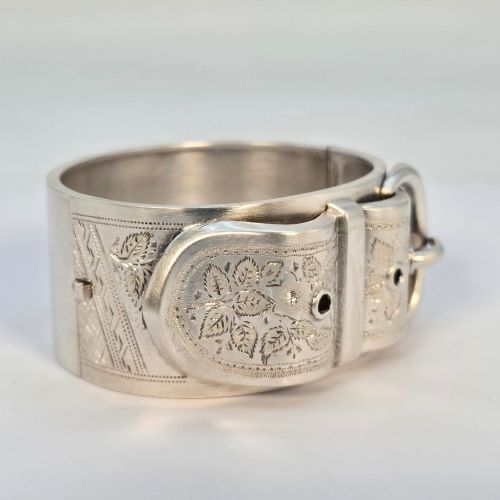
A buckle bangle is a rigid bracelet fashioned to resemble a buckled belt, often incorporating a hinged opening. Victorian jewellers frequently adapted the symbolism of the buckle, which traditionally represented steadfastness and loyalty, into wearable arm ornaments.
These bracelets range from plain solid silver bands to heavily engraved or gem-set pieces incorporating agate and turquoise.
How do I spot a Birmingham hallmark?
Birmingham hallmarks on these silver pieces typically feature an anchor symbol alongside standard fineness marks and date letters. These tiny stamped symbols provide official verification of the metal quality and the year of manufacture.
Examining the marks with a loupe reveals the specific assay office and helps distinguish nineteenth-century production from later reproductions.
Can I wear an antique silver buckle daily?
Antique silver buckles and converted jewellery can be worn regularly provided they receive appropriate care and gentle handling. Solid silver and sterling pieces withstand normal wear well, though items with delicate enamel or set stones require greater caution.
Storing pieces safely when not in use prevents surface scratching and preserves the intricate metalwork details.