


Antique Belt Clasp
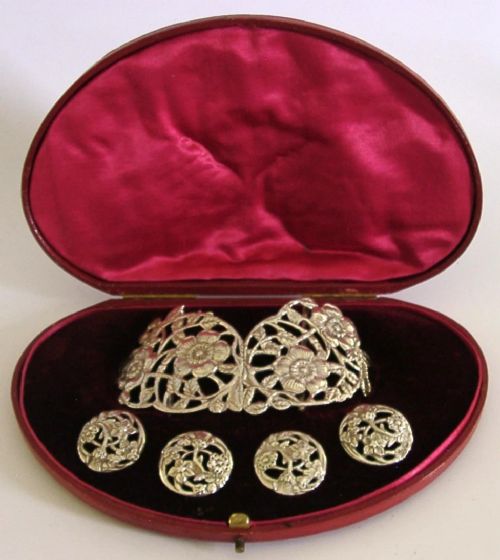
An antique belt clasp fastens costume and habit with cast and enamelled metal, bringing nineteenth and twentieth-century dress to life.
Antique Belt Clasp
An antique belt clasp covers functional waist fasteners issued from the eighteenth century to the mid-twentieth century. The selection spans domestic nursing insignia, regional dress accessories, and formal attire spanning Victorian, Edwardian, and later periods.
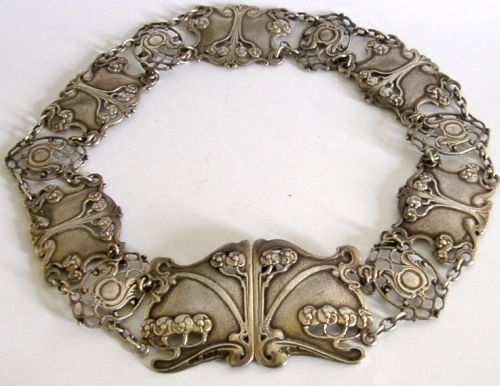
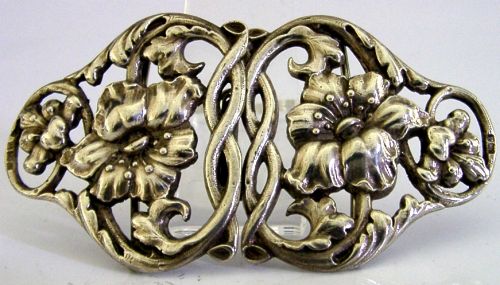
Art Nouveau designs dominate the available forms alongside Arts & Crafts, Renaissance Revival, and Straits Chinese iterations. Pieces appear in solid silver, silver gilt, gold, pewter, and jade.
The objects function as belt buckles, waist belt clasps, and choker buckles. They serve both utilitarian dress requirements and decorative costume ornament.
How they were made
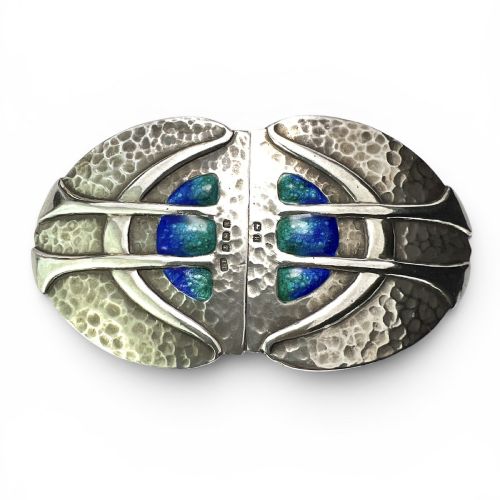
Maker workshops employ casting, chasing, and damascene techniques on sterling silver, silver gilt, solid silver, and 18K yellow gold. Vitreous enamel and paste stones add colour and texture to metal bases.
Specialised items incorporate organic elements such as velvet, leatherette, and white jade. Gold and silver components demonstrate period-specific hallmarks and regional assay marks.
Materials span sterling silver, 18K yellow gold, pewter, white jade, and vitreous enamel across Victorian and Edwardian periods.
What varies in quality
Quality separates by the crispness of the cast relief and the intact state of applied enamel or paste stones. Maker attribution also elevates certain pieces.
Material choice differentiates standard silver iterations from gilt metals, gold, and carved white jade items. Hand-finished details on Art Nouveau plant motifs contrast with simpler cast forms.
James Fenton·Henry Matthews·Piel Freres·Peter Behrens
The Antique Belt Clasp Glossary
- Sterling silver
- A silver alloy containing 92.5 percent silver by mass, frequently utilised in British belt buckles of the nineteenth and twentieth centuries.
- Vitreous enamel
- Glass fused to a metal surface through firing, applied to create coloured decoration on Art Nouveau and Edwardian clasps.
- Silver gilt
- Silver coated with a thin layer of gold, providing the appearance of solid gold while utilising a silver base.
- Damascene
- The art of inlaying different metals into a dark oxidized steel background, seen in French pieces.
- Paste
- Cut and polished lead glass used as imitation gemstones in period jewellery and buckles.
Antique Belt Clasp: Frequently Asked Questions
How were antique belt clasps worn?
These pieces fasten waistbands on dresses, nurses' uniforms, and ceremonial sashes. They sit centrally at the front of the garment as a visible decorative accessory.
Heavier examples anchor complete belts in leather or textile, while smaller variations secure choker collars and specialised costume elements.
What periods do these clasps represent?
The inventory spans the eighteenth century through the mid-twentieth century. Victorian, Edwardian, and Art Nouveau styles feature prominently alongside earlier Qianlong period items.
Mid-century examples include specific occupational pieces like staff nurse buckles from the nineteen-thirties and fifties.
Are these items made of solid silver?
Many listings specify sterling silver, solid silver, or silver gilt construction. Others incorporate 18K yellow gold, pewter, and white jade.
Enamel, paste stones, and damascene steel also appear across French, English, and Austro-Hungarian pieces.
How do I identify an Art Nouveau clasp?
Art Nouveau pieces display characteristic organic motifs, flowing plant stems, and enamel work typical of the turn of the twentieth century. Makers such as James Fenton and Peter Behrens produced distinct examples in this style.
These designs often pair cast silver with vibrant vitreous enamel panels.