


Antique Dress Buckles
These antique dress buckles span three centuries of metalwork, offering intricate fastening pieces that transform modern outfits with authentic historical detail.
Antique Dress Buckles
When you search for antique dress buckles, you encounter functional fasteners designed for shoes, belts, and garments across multiple eras. The most common examples on this page date from the Georgian period through to the Art Nouveau and Art Deco movements, reflecting changing fashions in dress and ornamentation.
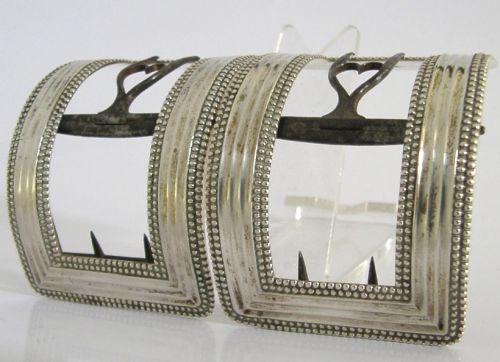
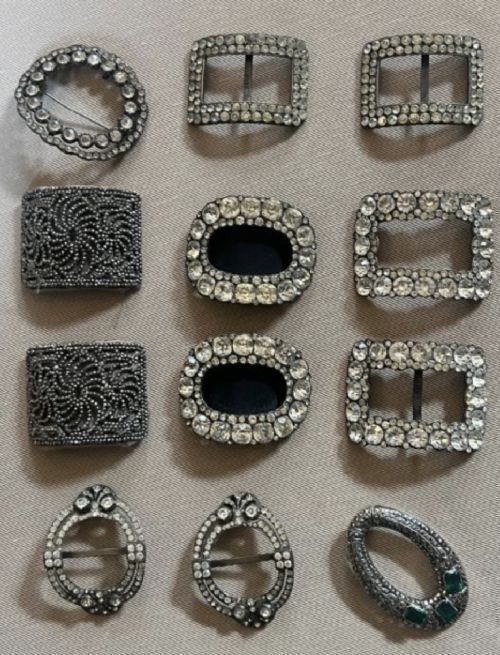
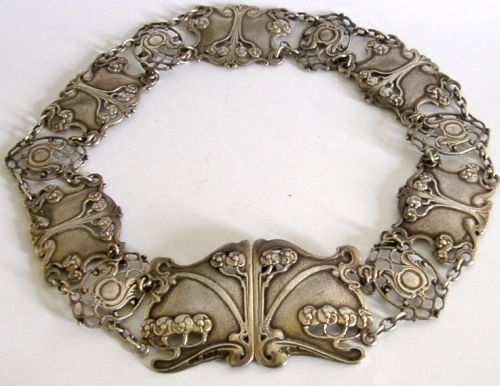
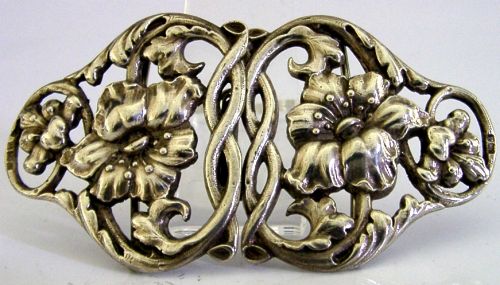
Early forms include large paste and crystal shoe buckles from the eighteenth century, alongside solid sterling silver specimens. Later pieces shift towards waist belts, incorporating the flowing organic lines of the Edwardian Arts and Crafts and Art Nouveau styles.
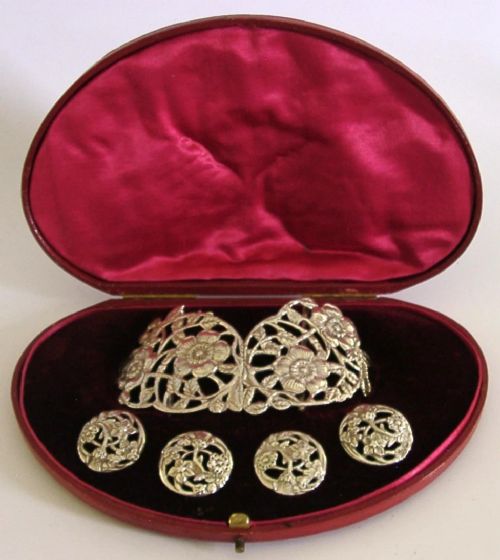
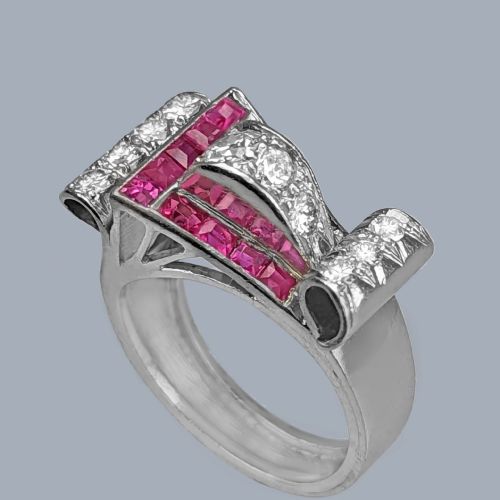
Materials range from base metals set with glittering paste glass to heavy cast sterling silver, gold, and enamel. Some iterations take the form of rings and cased button sets rather than standard garment clasps.
How they were made
Metalsmiths utilised casting, stamping, and filigree wirework to shape sterling silver, gold, pewter, and steel into elaborate frames. Cast silver pieces often carry hallmarks indicating specific British assay offices and makers.
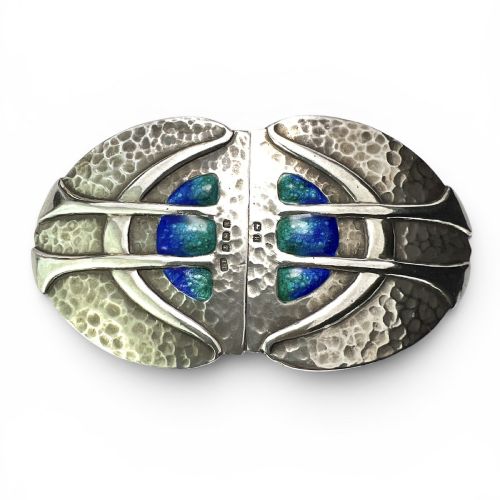
Decoration relied heavily on hand-set paste glass, glittering crystals, and vitreous enamel applied in vibrant floral or abstract patterns. Some items integrate organic elements such as leatherette, velvet, jade, and delicate gold damascened designs.
Listings feature items spanning the Georgian period, the Victorian era, and twentieth-century movements including Art Deco and Art Nouveau.
What varies in quality
Quality depends on the crispness of the casting and the security of the settings for stones like paste glass, garnets, and turquoise. Hand-finished details in enamel work and delicate filigree distinguish superior workshop production from standard output.
The integrity of the original fastening mechanism and the presence of legible hallmarks or maker attributions elevate the status of a piece. Complete cased sets or matched pairs of shoe buckles demonstrate higher preservation standards.
James Fenton·Henry Matthews·Piel Freres·Peter Behrens
The Antique Dress Buckles Glossary
- Paste glass
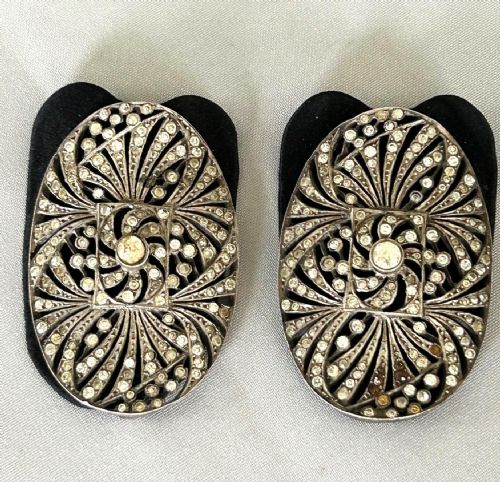
- Faceted glass high in lead content, cut and polished to imitate gemstones like diamonds. It appears frequently in eighteenth-century shoe buckles.
- Vitreous enamel
- Glass fused to metal under high heat to create smooth coloured decoration. This technique defines many Edwardian silver designs.
- Filigree
- Delicate openwork formed from twisted gold or silver threads soldered together. It creates lace-like patterns on metal frames.
- Damascene
- The art of inlaying different metals into a dark oxidized steel background. It creates intricate contrasting patterns on nineteenth-century pieces.
- Qianlong Period
- An era of Chinese imperial history spanning the eighteenth century. Items from this time employ carved materials like white jade.
Antique Dress Buckles: Frequently Asked Questions
How were antique shoe buckles worn?
Eighteenth-century shoe buckles attached directly to the instep of low-heeled footwear using leather tongues or metal prongs. They served as removable accessories that could be transferred between different pairs of shoes.
Wealthy individuals displayed these glittering paste and silver fasteners to signal status during social gatherings and court events.
What is the difference between Georgian and Art Nouveau buckles?
Georgian buckles typically feature symmetrical designs set with hand-cut paste glass or steel filigree, designed to catch candlelight. They prioritise geometric sparkle and formal arrangement.
Art Nouveau pieces embrace asymmetrical, flowing organic lines inspired by nature, often incorporating colourful enamel work and stylised plant motifs.
Can I still wear an antique belt buckle?
Many antique belt buckles function effectively with modern belts if the back loop or prong configuration matches current strap dimensions. Sturdy silver and metal specimens from the Edwardian period handle regular use well.
Delicate pieces set with fragile paste or enamel benefit from careful handling and occasional rather than daily wear.
How do I identify silver hallmarks on buckles?
British silver buckles often display tiny stamped marks indicating the sterling standard, the assay office city, and a date letter. These symbols reveal the exact year and location of manufacture.
Continental European pieces and unmarked items rely on style, metal testing, and construction methods for dating.