


Edwardian Sterling Buckle
These edwardian sterling buckle pieces bring together period silverwork and enamel, offering a wearable piece of early twentieth-century design that collectors prize.
Edwardian Sterling Buckle
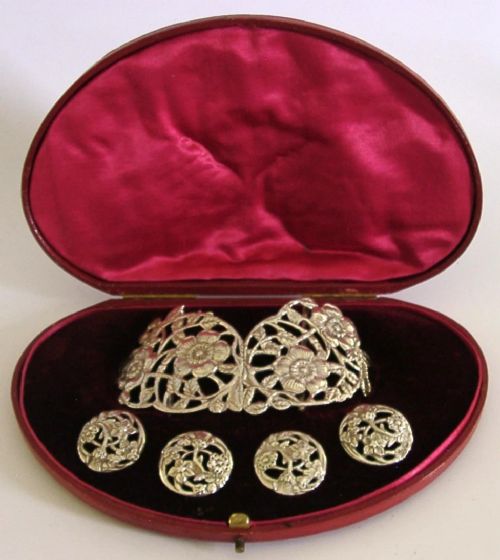
When you search for an edwardian sterling buckle, you are looking at belt fastenings and related silver objects created during the early twentieth century. The selection on this page centres primarily on belt buckles, alongside cased sets of buttons, picture frames, napkin rings, and nurses' buckles spanning the Edwardian era into the mid-twentieth century.
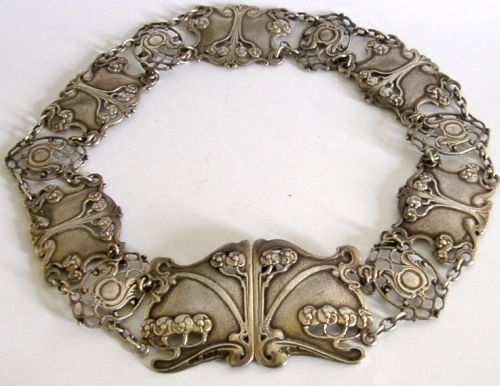
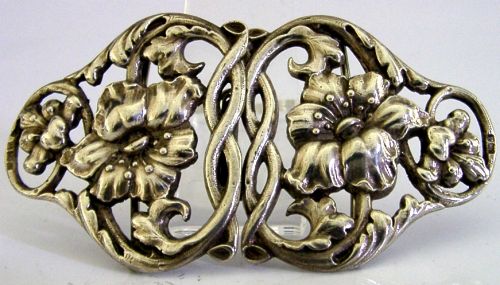
The dominant aesthetic draws heavily from the Art Nouveau and Arts and Crafts movements, featuring organic motifs and fluid lines in solid silver. You will also encounter plain pierced scrollwork designs alongside pieces stamped with English hallmarks from Birmingham.
Makers such as James Fenton, Henry Matthews, and Liberty's appear in the record, marking the higher end of these silver accessories. Alongside standard belt buckles, the listings include variants adapted for nurses' uniforms and household display items styled after the buckle form.
What varies in quality
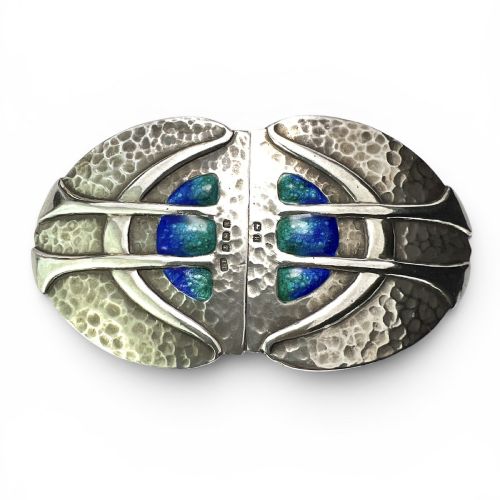
The distinction between standard production and fine pieces often rests on the presence of enamel work and the complexity of the cast or pierced design. Simple stamped or pierced scrollwork sits at one end, while intricate polychrome enamel panels by known silversmiths represent a higher standard of craftsmanship.
Associated presentation cases and maker marks from prominent firms like Liberty's or specific silversmiths elevate certain items above unmarked or plain utilitarian pieces. The integration of structural elements like matched button sets further separates comprehensive ensembles from individual belt fastenings.
Object forms span standard belt buckles, nurses' uniform fasteners, framed photographs, and napkin rings housed in fitted cases.
James Fenton·Henry Matthews·Liberty's
The Edwardian Sterling Buckle Glossary
- Sterling silver
- A silver alloy containing 92.5 percent pure silver and 7.5 percent other metals, usually copper. This standard composition provided the necessary durability for functional belt fastenings.
- Vitreous enamel
- Glass powder fused to a metal surface through high-temperature firing. It provides vibrant, durable colour decoration on silver buckles.
- Art Nouveau
- An international style of art and design characteristic of the late nineteenth and early twentieth centuries. It is defined by organic, flowing lines and natural motifs.
- Arts and Crafts
- A design movement valuing traditional craftsmanship and simple forms over mass production. It influenced many metalwork pieces from the Edwardian period.
- Hallmark
- An official stamp applied to precious metals indicating purity, origin, and maker. Birmingham assay marks frequently appear on these pieces.
Edwardian Sterling Buckle: Frequently Asked Questions
What is an edwardian sterling buckle?
An edwardian sterling buckle is a silver belt fastening made during the reign of King Edward VII or the surrounding early twentieth-century period. These items range from plain pierced scroll designs to elaborate enamelled Art Nouveau creations.
Many were designed as decorative accessories for fashionable dress, while others served practical uniform roles for nurses or were presented in fitted velvet cases with matching buttons.
How do I wear an antique belt buckle?
Most belt buckles from this period attach to a fabric or leather belt via a rear loop or prong mechanism. Due to their delicate nature, particularly those with glass enamel, many collectors choose to display them rather than use them daily.
If you plan to wear one, ensure the belt width matches the reverse fixings to avoid stressing the silver or antique joints.
Are all these buckles made of solid silver?
The listings include sterling silver, solid silver, and silver components paired with enamel and glass elements. Hallmarks stamped into the metal typically confirm the silver standard and point to assay offices such as Birmingham.
Non-silver materials appear primarily in associated items like velvet-lined presentation boxes or leatherette cases.
How can I tell Art Nouveau from Victorian styles?
Art Nouveau pieces feature asymmetrical, flowing lines inspired by natural forms like vines, flowers, and whiplash curves. Victorian and late Victorian styles often rely on heavier, more symmetrical geometric or traditional scroll patterns.
Both styles overlap during the transitional Edwardian period, so examining the specific motifs helps clarify the design influence.