


Antique Side Table with Leaves
An antique side table with leaves offers flexible surface space and compact storage, combining practical drop-leaf functionality with period craftsmanship.
Antique Side Table with Leaves
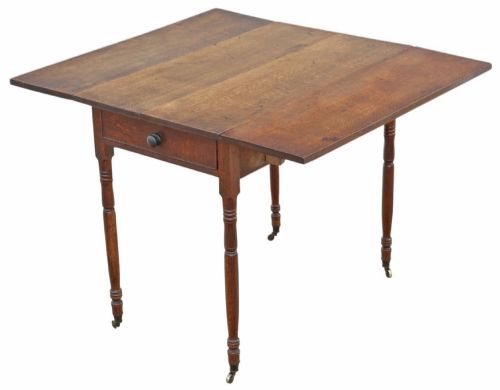
When you search for an antique side table with leaves, you encounter various flexible designs created to expand when needed and fold away compactly. The selection on this page spans periods from the seventeenth century through the early twentieth century, including Georgian, Regency, Victorian, and Edwardian eras.
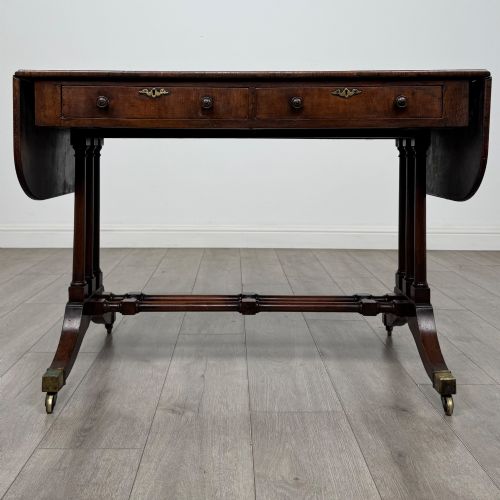
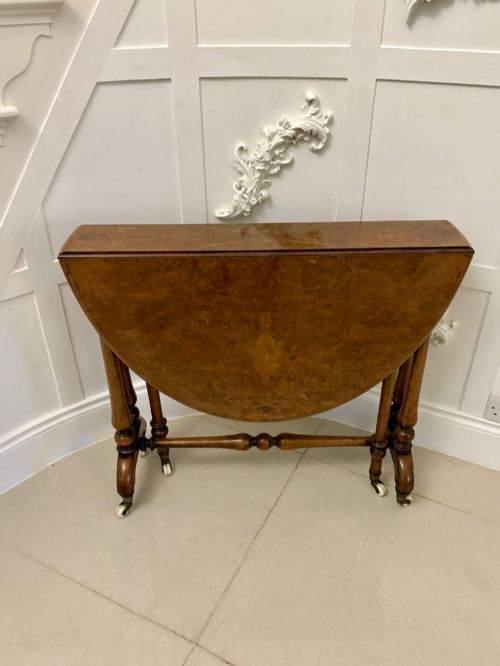
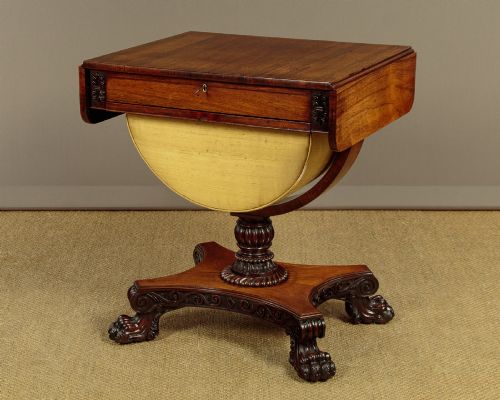
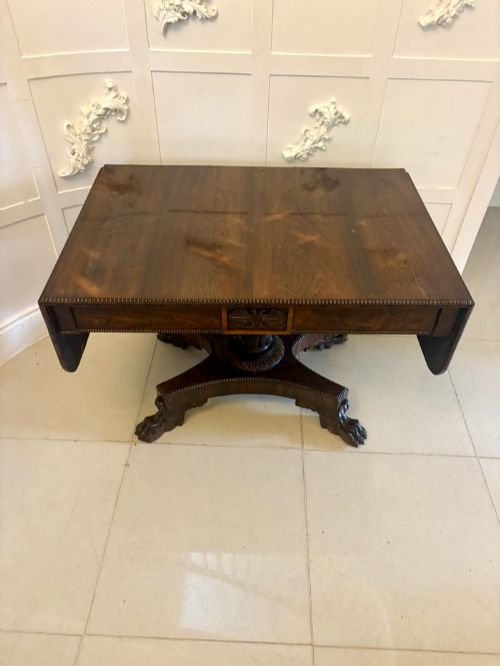
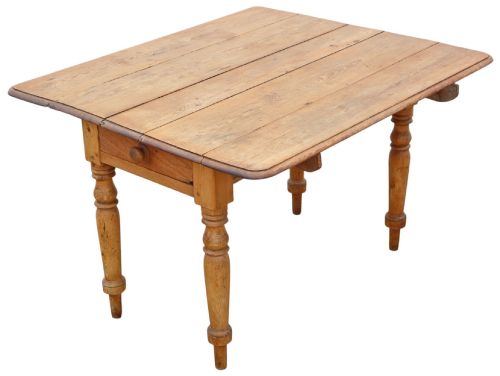
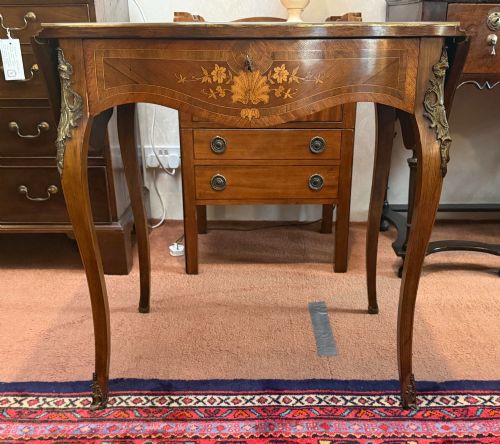
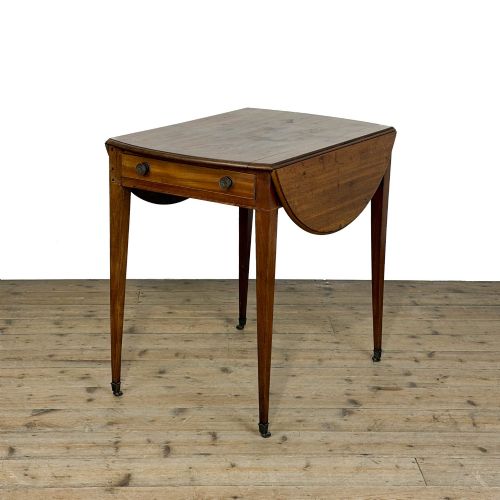
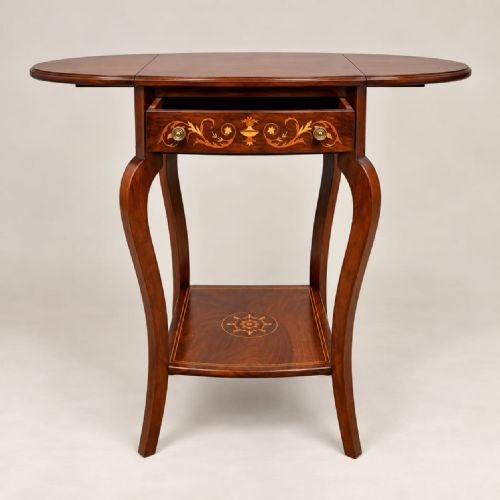
The primary forms appearing in these listings include Pembroke tables, sofa tables, drop-leaf tables, and gateleg designs. These pieces often incorporate drawers, bamboo-turned legs, or satinwood inlay, originating from workshops across Britain and Europe in woods like mahogany, pine, and burr walnut.
Materials and Construction
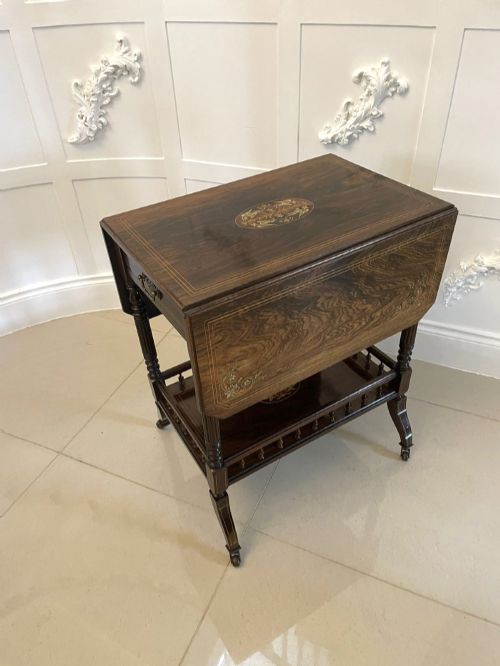
Cabinetmakers constructed these tables using dense timbers such as mahogany, rosewood, burr walnut, and oak, frequently adding cross-banding in satinwood or partridge wood. Folding mechanisms rely on hinged drop-leaves, gateleg frames, or swing-out supports designed to bear weight securely when extended.
Joinery techniques involve precision dovetailing for drawers and robust framing for drop-leaf hinges and legs. Brass castors, locks, and handles appear regularly on pieces intended for frequent movement between rooms.
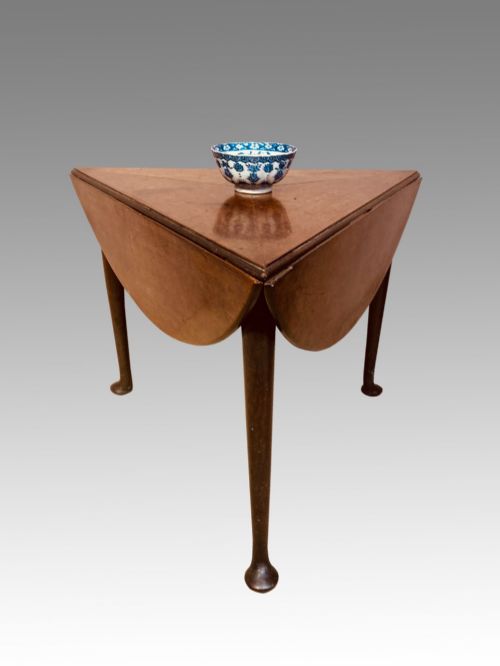
One miniature Sutherland table waits patiently to host very small tea parties.
Evaluating Craftsmanship
Quality in these tables rests on the selection of timber veneers, the precision of the inlay work, and the stability of the folding mechanism. Superior examples display figured grain patterns, such as Cuban mahogany or burr walnut, matched symmetrically across the leaves and top.
The integration of working drawers with original brass hardware and the smooth operation of drop-leaf supports separate standard utility tables from finer parlor and drawing-room pieces.
Johnstone and Jeanes·Jenks and Woods
The Antique Side Table with Leaves Glossary
- Pembroke table
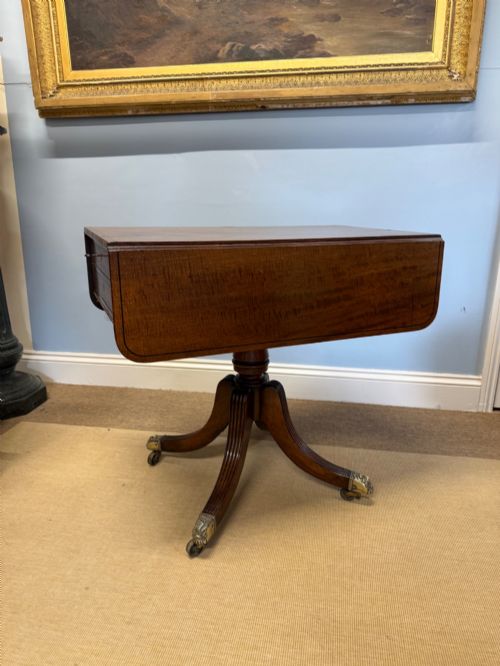
- A small rectangular table with hinged drop leaves on either side, frequently fitted with a drawer. This form gained popularity during the eighteenth century for versatile use in sitting rooms.
- Sofa table
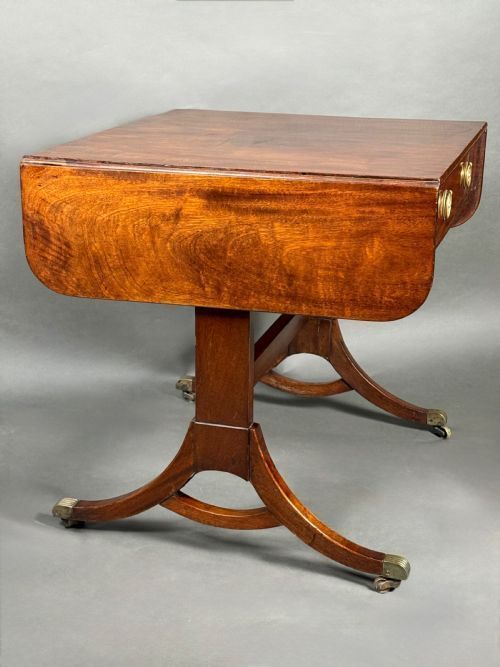
- A long, narrow table designed to stand in front of a sofa, typically featuring drop leaves at each end and twin pedestal supports or trestle feet. These emerged during the Regency period.
- Gateleg table
- A table with hinged leaves supported by legs that swing outward like a gate. This construction provides robust support for large drop leaves.
- Sutherland table
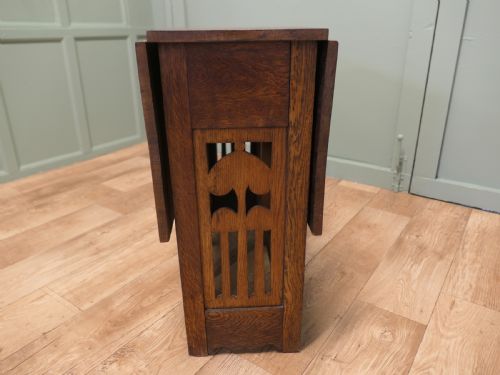
- A narrow table with exceptionally slender drop leaves that fold down almost vertically. It was introduced during the Victorian era to save space in smaller rooms.
- Cross-banding
- A decorative border of veneer laid around the perimeter of a table top, with the grain running perpendicular to the central panel. This technique frames the primary wood.
Antique Side Table with Leaves: Frequently Asked Questions
How do I use a drop-leaf table daily?
Raise the hinged leaves and swing out the supporting legs or brackets to create an extended surface for dining or writing. Lower the flaps when floor space is required.
Keep the timber away from direct heat sources and moisture to prevent the leaves from warping or the hinge screws from loosening over time.
Can I use an antique side table as a desk?
Many examples, including Pembroke and writing tables, incorporate built-in drawers and ample surface area for working. Ensure the height matches your chair for comfortable daily use.
Protect the antique polished wood surface with a blotter or leather pad if you plan to write directly on the table.
How do I identify a Regency period table?
Regency tables frequently feature dark timbers like mahogany and rosewood, often paired with brass inlay, reeded legs, and sabre feet. The lines tend to draw inspiration from classical Greek and Roman forms.
Look for robust construction combined with restrained decorative elements typical of the early nineteenth century.