



Vintage Gate Leg Table
A vintage gate leg table offers a practical drop-leaf surface that expands when guests arrive and folds down neatly against a wall.
Vintage Gate Leg Table
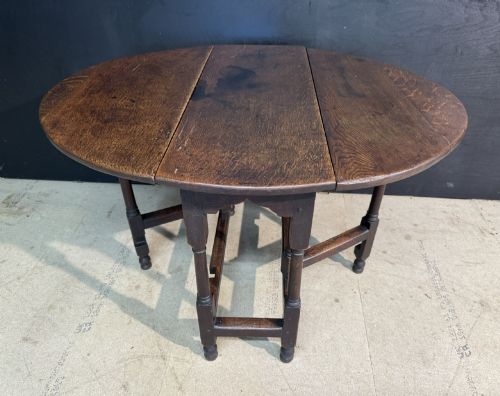
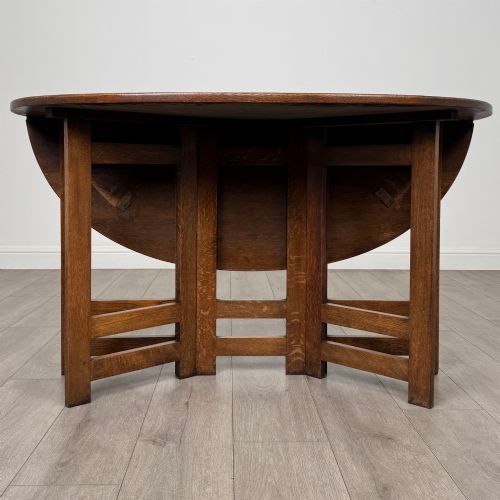
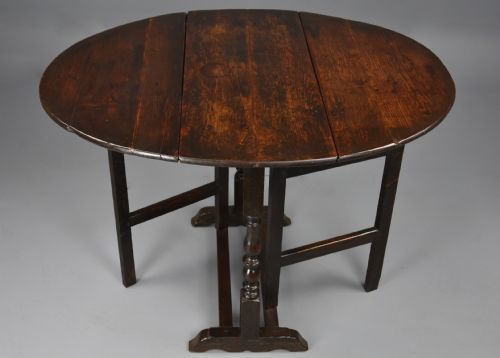
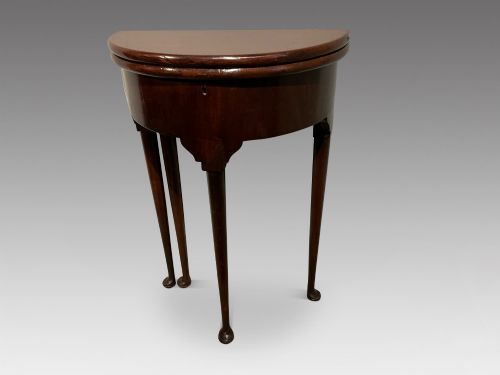
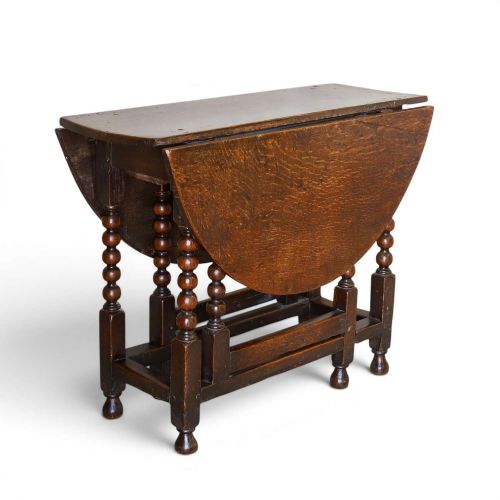
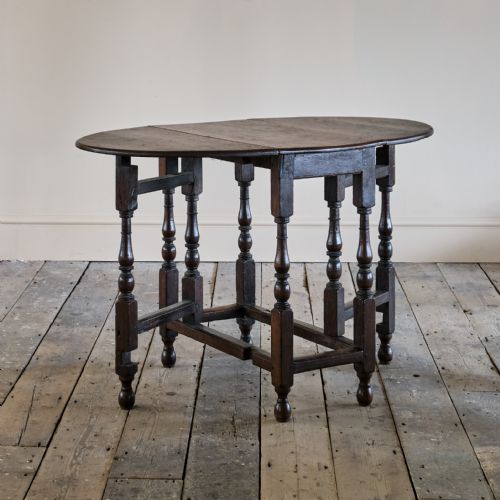
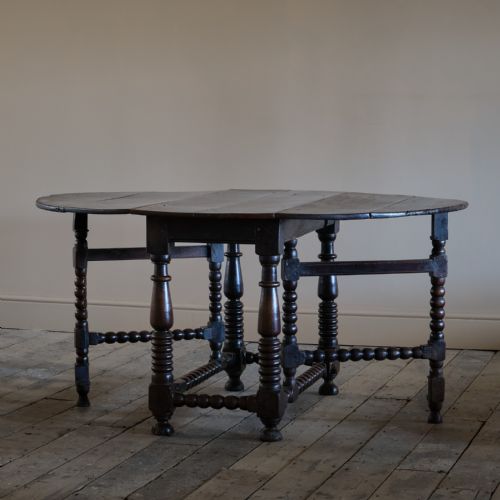
A vintage gate leg table provides a flexible dining or occasional surface through hinged leaves supported by swinging legs. When you search for a vintage gate leg table, you encounter practical furniture designed to save space in smaller rooms while retaining traditional charm.
The pieces appearing on this page span several centuries, with seventeenth-century oak examples sitting alongside eighteenth-century models and later Edwardian or twentieth-century variations. Oak and mahogany dominate the selection, forming sturdy dining tables, side tables, and compact coffee tables.
Earlier seventeenth-century examples frequently feature notable turnings and rich patination, whilst later nineteenth-century and Edwardian pieces often utilise mahogany or walnut with slimmer profiles. Buyers typically select these tables for daily dining or as occasional surfaces in hallways and living spaces.
Factors influencing quality
The calibre of a vintage gate leg table depends significantly on the choice of timber and the preservation of its original surface finish. Pieces retaining a deep, natural patina and sound structural framing demonstrate superior craftsmanship compared to examples with heavily altered surfaces.
The integrity of the gate mechanism determines how smoothly the folding leaves operate and whether the surface remains level when extended. Finer examples display precise turning on the legs and tight joinery that resists wobbling during daily use.
Vintage Gate Leg Table Retail Price Guide 2026
Typical asking prices for vintage gate leg table among the pieces listed under this phrase on Sellingantiques today, from the lower quarter to the upper quarter. They describe what is for sale here now, not the wider market.
Listings feature oak, mahogany, walnut, and satinwood, spanning the seventeenth century through to the Edwardian period and the twentieth century.
The Vintage Gate Leg Table Glossary
- Gateleg table
- A table with hinged leaves supported by one or more swinging legs that move like a gate. This design allows the surface area to expand or contract easily.
- Bobbin turning
- A type of woodturning shaped like a series of rounded bobbins or spools linked together. It appears frequently on seventeenth-century and Victorian framework.
- Drop-leaf
- A hinged flap of wood attached to a fixed table top that folds down when not in use. It provides adaptable surface space for dining or writing.
- Patina
- The deep sheen and surface character developed on wood over decades of handling and polishing. Collectors value undisturbed patination as a sign of age.
- Sutherland table
- A narrow style of gate leg table featuring exceptionally slender legs and very small drop leaves. It was designed to occupy minimal floor space when fully folded.
Vintage Gate Leg Table: Frequently Asked Questions
How do I seat people comfortably?
A vintage gate leg table allows you to drop one or both leaves to adjust the footprint depending on the room layout. When fully opened, the swinging legs lock into position to support extra diners.
Consider the clearance needed for the legs when they swing outwards to hold the leaves. Oval and rectangular tops dictate chair placement around the perimeter.
Are these tables sturdy enough for daily dining?
Solid timber construction gives these tables the durability required for everyday family meals. The hinged framework supports downward pressure when the leaves are raised properly.
Checking the stability of the gate mechanism ensures the flaps remain secure during use. Placing the table on an even floor prevents strain on the pivot joints.
How do I tell seventeenth-century tables apart from later revivals?
Seventeenth-century pieces typically display heavy oak construction with pegged joints, hand-turned bobbin legs, and deep patination developed over centuries of wear. Tool marks and construction quirks often reveal early hand-working methods.
Later revival pieces from the Victorian or Edwardian eras generally exhibit cleaner machine-sawn timber and different secondary woods. Examining the underside and hinges helps clarify the manufacturing period.
How should I care for the wood surface?
Maintaining the finish involves dusting with a soft cloth and applying appropriate wax polish periodically to nourish the timber. Avoiding direct sunlight and excessive heat protects the wood from warping or splitting.
Using coasters and placemats safeguards the polish against moisture rings and heat marks. Gentle cleaning preserves the historic patina valued by collectors.