
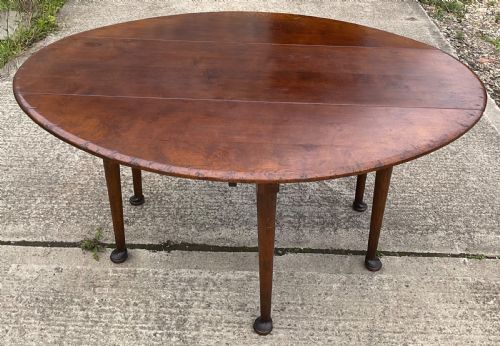


Georgian Dropleaf Table
A georgian dropleaf table is a versatile timber piece with folding flaps that offers a generous surface for dining or writing while saving space.
Georgian Dropleaf Table
When you search for a georgian dropleaf table, you encounter practical timber furniture designed to expand when needed and fold away against a wall. The versions you are most likely to meet on this page range from large dining formats that seat six to eight guests down to smaller side, lamp, and Pembroke tables intended for occasional use.
The material evidence shows these tables primarily in solid mahogany or oak, often displaying oval or rectangular top configurations supported by folding gatelegs or drop leaves. Many examples date from the eighteenth and nineteenth centuries, including pieces produced in the Georgian, Regency, and William IV periods, alongside later revival pieces.
How They Were Made
Cabinetmakers utilised dense timbers such as mahogany and oak for the primary framework and leaves, ensuring the hinged flaps could bear weight when extended. Joinery relied on sturdy pivoting hinges, rule joints to bridge the fixed centre top to the dropping leaves, and occasionally pedestals or gatelegs for extra support.
Surface finish and detailing often incorporated boxwood inlay, satinwood, brass fittings, and occasionally gold leaf or lacquered wood in specific Chinoiserie styles. These decorative elements highlight the transition from plain utilitarian country furniture to refined urban parlour pieces.
Listings feature timbers like mahogany, oak, and satinwood, alongside periods spanning from the early eighteenth century through the Regency era and into later revival styles.
What Varies in Quality
Quality rests upon the choice of timber and the precision of the rule joint, which dictates how cleanly the leaves drop and meet the main top. Finer examples display well-figured mahogany or richly grained oak, alongside crisp boxwood inlay and stable, robust leg structures.
Proportion and scale also distinguish the work, as smaller Pembroke and occasional tables require delicate turning or inlay to succeed visually. The integrity of the gateleg mechanism and the original brass hardware further elevate the standing of a piece.
The Georgian Dropleaf Table Glossary
- Rule joint
- A moulded joint connecting the fixed top of a table to its dropping leaves so the hinge remains hidden when open. This clever carpentry prevents gaps and creates a smooth surface.
- Pembroke table
- A small occasional table featuring two hinged flaps on opposite sides and usually a single drawer. It was popular for breakfasting or writing.
- Gateleg table
- A table with legs that swing outward on a hinged frame to support the folding leaves. This design provides sturdy under-framing for large dining surfaces.
- Cross-banding
- A decorative border of veneer laid around the perimeter of a tabletop with the grain running perpendicular to the centre. It frames the primary wood of the piece.
- Pad foot
- A simple rounded foot resting flat on the floor, frequently seen on eighteenth-century oak and mahogany furniture. It offers a subtle, understated termination to a cabriole or straight leg.
Georgian Dropleaf Table: Frequently Asked Questions
How do I use a dropleaf table daily?
Keep the flaps dropped against the sides for compact placement in a hallway or against a living room wall as a side table. Raise both leaves and pull out the supporting gatelegs whenever you need a full surface for dining or workspace.
Ensure heavy items rest centrally over the fixed portion rather than purely on the folding flaps to maintain balance. Regular light polishing preserves the timber surface against everyday wear.
Were these tables used for dining?
Larger versions in mahogany and oak served primarily as dining or supper tables in Georgian homes where rooms needed multiple functions. Their folding design allowed households to clear floor space between meals.
Smaller formats functioned as Pembroke tables for breakfast or side tables for holding lamps and writing materials.
What is a Pembroke table?
A Pembroke table is a compact form featuring short drop leaves on two opposing sides and a fitted drawer beneath the top. It serves as a versatile piece for occasional writing or small meals.
Many examples in the listings include inlaid details like boxwood or are supported on pedestals.